
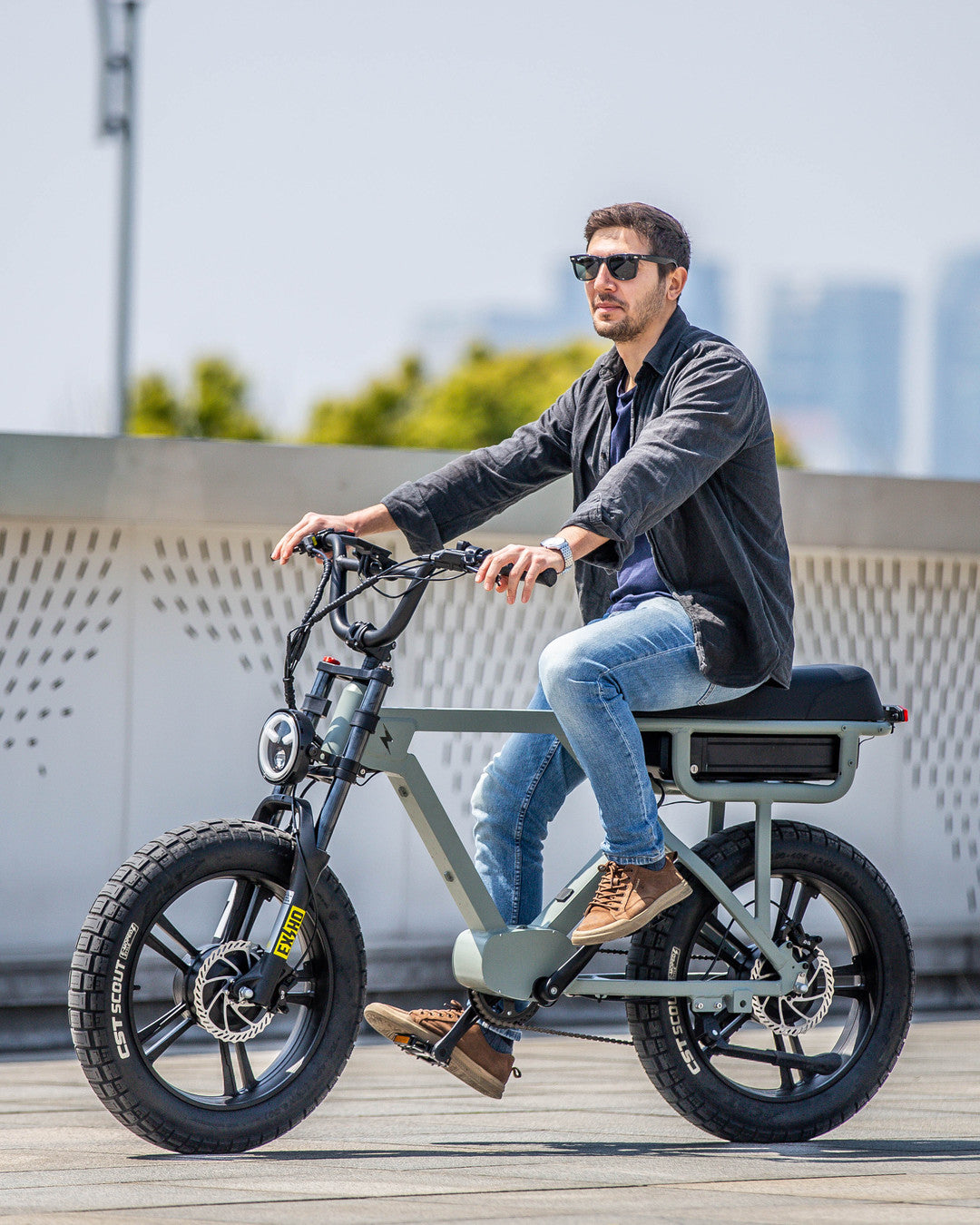


Less than 750 W · 25 mph Class 3, five boroughs only · 30 mph roads or less · 16 and up · 78 local e-bike rules found in 1,527 municipalities · 209 bikes screened · verified September 10, 2026
New York rewrote how an e-bike gets policed this year without touching the statute. Nassau County's police began impounding Class 2 e-bikes in March 2026 under a county title that never mentions them, New York City moved riders' low-level traffic offenses to civil summonses on March 27, Suffolk County carved Fire Island out of its county law, and seven villages and towns filed e-bike laws in the last two weeks of August.
Buy the wrong bike and you own a machine the state treats as a limited use motorcycle, or a Class 3 that is lawful in five boroughs and nowhere else in the state. This guide walks the decision the law forces: which class, which county, and which of the 1,527 municipalities has a rule of its own.
Author: Milad Ghobadibeygvand, BScN (Western University, 2014), Redtail eBikes. Corrections: mehran@redtailebikes.com. Last verified: September 10, 2026.
Quick Answer
Quick Answer: New York electric bike laws recognize three classes of bicycle with electric assist under § 102-c: Class 1 and 2 to 20 mph, Class 3 to 25 mph in New York City only, each under 750 watts with working pedals. You must be 16. No license, registration or insurance. Roads posted 30 mph or less.
The rules that write your tickets are local. As of September 10, 2026, 78 of New York's 1,527 cities, towns and villages carry an e-bike rule of their own, Nassau County's police enforce a ban the Legislature's minority caucus has moved to replace, Suffolk County requires a helmet at every age, and New York City caps every e-bike at 15 mph. Every one is quoted below with its section and date, starting from § 1242.
The number that sorts New York's shelf is 750, and the word in front of it is "less than". A 750 W label sits outside the definition; a Class 1 or 2 below it, at 20 mph, with pedals, is a bicycle statewide. Twelve of our 190 e-bikes clear every limb on the figures their listings publish; the shelf section shows how. Free shipping to New York (one five-borough exception), US support at (213) 444-4020, Shop Pay at checkout.
Shop commuter and city e-bikesIn this guide
- What New York electric bike laws changed in 2025 and 2026, and what is pending
- What makes an e-bike legal in New York: the definition, quoted
- Why is Class 3 different in New York?
- Do you need a license, registration or insurance for an e-bike in New York?
- How old must a New York e-bike rider be, and who needs a helmet?
- Where can you ride an e-bike in New York?
- State parks, DEC land, the Adirondacks and the Empire State Trail
- New York City: the 15 mph rule, and what changed in 2026
- Who gets to restrict your ride?
- Long Island: Nassau County's police ban and Suffolk County's law
- Westchester, Rockland and the Hudson Valley
- Every local e-bike rule in New York: 1,527 municipalities counted, 78 rules read
- New York e-bike rebates and incentives: every program with status
- What invalidates your legal status
- What each rule costs, and what to do if you are stopped
- What is next: the bills, the counties and the dates
- Where riders get caught out
- The honest ledger
- The 7-point New York compliance checklist
- Which bikes on our shelf are New York legal
- Which e-bike for which New York ride
- Why buy a New York-legal e-bike from us
- Frequently asked questions · The bottom line · Source register · Limitations
How we verified this guide
Every rule on this page was read at the office that published it, on the date beside it, and every statute links to the section that carries it. Every county was read.
The statute layer. Vehicle and Traffic Law §§ 102, 102-c, 125, 1231, 1234, 1236, 1238 and 1242, and General Business Law §§ 495 to 495-b, were re-opened at the State Senate's law browser on September 9, 2026, and the class definitions were confirmed a second time at the DMV's own page and in Suffolk County's enacted text.
The eleven pending e-bike bills of the 2025–2026 session listed below, sixteen bill numbers counting their Assembly companions, were read at their Senate pages the same day; none has passed both houses.
The local layer. All 1,527 general-purpose municipalities, 62 cities and 532 villages from the 2025 Census Gazetteer's place file and 933 towns from its county-subdivision file, each carried at one of three verdicts: a rule found and read, no rule found on a stated method, or not resolved.
The Department of State's Local Laws Database was searched in full text on September 9, 2026 on 17 terms; 105 filed local laws matched at least one of thirteen e-bike terms; the filing behind every row in the local table that cites the Department of State, and every e-bike-term filing from a municipality that carries no rule, was downloaded from the Department of State and read.
Six filings already known from other sources were used as controls, and the search returned all six. 83 percent of New Yorkers live in a city or town whose status is resolved.
The agency layer. State Parks' e-bike directive, DEC's biking page, the Adirondack Park State Land Master Plan, the Empire State Trail's safety page, NYC DOT's e-bike chart, NYC Parks' pilot page and the Hudson River Park Trust's rules, each re-read on September 9, 2026.
The shelf and the questions
The shelf. 209 active bicycle and tricycle listings on our store screened against every limb of § 102-c on the figures the listings publish: nominal motor rating, top assisted speed, class and pedals. The screen, with the fields it could and could not read, is in the shelf section.
The questions. 843 search phrasings harvested from three sources (Google autocomplete, the headings of the pages that rank, and Google Search Console for this site), plus a seven-prompt AI-search panel run on September 9, 2026; every question heading on this page maps to one of them.
This is general information rather than legal advice. Codes change monthly, and the newest local law on this page was filed days before it was verified. Where money or safety rides on a rule, open the linked section and read the current text; every claim here links to one. Corrections to mehran@redtailebikes.com are published and credited.
What New York electric bike laws changed in 2025 and 2026, and what is pending
The statute did not move. Everything around it did. New York City capped e-bikes at 15 mph and then dropped criminal summonses, Suffolk County wrote a helmet-at-every-age law and a Fire Island exception, Nassau County's police began impounding Class 2 bikes under an all-terrain-vehicle law, and villages from Long Island to the Southern Tier filed their own rules.
Each row below is the enacted or published text, with the date it began to bind you.
| Effective | Jurisdiction | What changed | Source |
|---|---|---|---|
| October 9, 2024 | State | Selling a lithium-ion battery for a bicycle with electric assist or a limited use motorcycle requires certification to a listed UL standard; chapter 195 of 2024, signed July 11, 2024, in force 90 days later | GBL § 495-a; S.154-F |
| In the current code | State | A limited use motorcycle sold by a dealer is registered at the time of sale (chapter 198 of 2024, signed July 11, 2024), which is where an over-limit "e-bike" now lands | VTL § 2261(6); S.7703-B |
| October 24, 2025 | New York City | 15 mph citywide limit for e-bikes, e-scooters and pedal-assist commercial bicycles | 34 RCNY §§ 4-01, 4-06 |
| January 23, 2026 | Suffolk County | Local Law 6-2026 in force on filing: helmet at every age, no sidewalks, no roads posted above 30 mph, no operator 15 or younger, impound and parent liability | Suffolk County LL 6-2026 |
| January 27, 2026 | New York City | A powered bicycle used by an app-based delivery worker must meet the city's sale standards, which means an accredited-lab certification; Local Law 95 of 2025 became law without the Mayor's signature on July 31, 2025 and took effect 180 days later | Council release, Aug. 14, 2025; DOS filing |
| March 2026 | Nassau County | County police announce that Class 2 and Class 3 e-bikes and e-scooters may not be ridden on county roads or property, citing Miscellaneous Law Title 61, with impoundment; the month comes from Streetsblog's report, Patch carries the department's own post naming Title 61 and impoundment, and the county Legislature's release datelined March 27 describes the enforcement | Streetsblog, press report, for the month; Patch, May 6, 2026 for the department's post; Nassau Legislature release, datelined Mar. 27, 2026 |
| March 27, 2026 | New York City | NYPD ends criminal summonses for low-level traffic offenses by cyclists and e-bike riders; the civil summons process used for drivers applies instead | Mayor's office, Mar. 18, 2026 |
| April 9, 2026 | Suffolk County | Local Law 14-2026 in force on filing: Fire Island's pedestrian walks open to motor power from the Tuesday after Columbus Day to May 14, pedal-only after sunset, 8 mph, one rider, no e-scooters at all | DOS filing, read September 9, 2026 |
| 2026 (the release carries no date) | New York City | NYC DOT's mandatory "Do You Deliver?" safety training for bicycle and e-bike delivery workers goes live | NYC DOT release; training portal |
| March 27, 2026 (release posted April 27) | Nassau County | The Legislature's Democratic minority announces a bill to legalize the e-bikes and e-scooters state law already permits, keeping the sidewalk and highway bans; no vote and no filed local law as of September 9, 2026 | Nassau Legislature release |
| June 4, 2026 | State Parks | Directive OPR-POL-032 updated to add violation information; its rules date from the June 11, 2020 pilot: Class 1 and 2 on boardwalks and improved trails at 15 mph, Class 1 only on natural-surface trails, also at 15 mph, Class 3 barred at every facility | OPRHP directive |
| July 31, 2026 | State | Attorney General's consumer alert: marketing or selling a machine that exceeds the state's speed or power limits as an "e-bike" is a violation, and every e-bike sold must carry the permanent class label | AG consumer alert |
| August 17–31, 2026 | Seven municipalities | E-bike local laws filed with the Department of State by the Villages of Pittsford, Baldwinsville, Oxford and Horseheads and the Towns of Farmington, Elmira and Grand Island, each in force on filing | DOS Local Laws Database |
Pending in Albany, statuses read at the Senate's site on September 9, 2026. None of these is law, and none had passed both houses.
- S.2599-A / A.339-A, "Priscilla's Law": registration and a license plate for every e-bike and e-scooter in a city of one million or more. Senate Transportation; the Assembly version was re-referred to Transportation on January 7, 2026.
- S.10015 / A.10230: the same registration and plate duty statewide, introduced April 22, 2026. Senate Transportation.
- S.8573 / A.157, the RIDERS Act: DMV registration of every electric personal mobility device, e-bikes included, and a passenger seat rule for riders under 16. Referred to Transportation on January 7, 2026.
- S.9360-A: no sale of an e-bike, e-scooter or limited use motorcycle to anyone under 16, and a driver's license shown at the point of sale for any bike that can exceed 28 mph. Amended and recommitted to Transportation on June 2, 2026.
- S.1542 / A.590: a helmet for 16- and 17-year-olds on a Class 1 or Class 2. Senate Rules. A.9213: a helmet for every operator of an e-bike, e-scooter or motor-driven cycle. Assembly Transportation, January 7, 2026.
- A.6403: license plates for certain e-bikes and e-scooters, and 18 to operate one. Assembly Transportation. S.5532 / A.7000: move Class 3 into the limited use motorcycle definition. Senate Transportation.
- S.226 and S.10063: registration of e-bikes used for commercial purposes; S.10063 was referred to Transportation on April 27, 2026.
- S.1047, the Ride Clean Rebate: passed the Senate 45–14 on June 13, 2025, died in the Assembly, and was returned to Senate committee on January 7, 2026.
Two things move outside Albany. Nassau County's bill, announced by the Legislature's Democratic minority, had no vote by September 9, 2026. NYC Parks' pilot that opens park drives and greenways to e-bikes ends December 31, 2026; the agency said on July 3, 2025 that it intends to propose a permanent rule, and no proposed rule had been published as of September 9, 2026.
What makes an e-bike legal in New York: the definition, quoted
An e-bike in New York is a bicycle no more than 36 inches wide with a motor of less than 750 watts and operable pedals, in one of three classes, and everything you read on this page follows from that sentence. Four limbs separate an e-bike from a limited use motorcycle here, and all four sit in one sentence of VTL § 102-c, quoted below and then read limb by limb.
The section reads: "A bicycle which is no more than thirty-six inches wide and has an electric motor of less than seven hundred fifty watts, equipped with operable pedals, meeting the equipment and manufacturing requirements for bicycles adopted by the Consumer Product Safety Commission under 16 C.F.R. Part 1512.1 et seq. and meeting the requirements of one of the following three classes" (§ 102-c, read September 9, 2026).
| Requirement | The rule | What it actually means |
|---|---|---|
| Motor power | "less than seven hundred fifty watts" (§ 102-c) | The line is exclusive. A bike rated at 750 W is outside the definition; 749 W is inside. New York shares this wording with the federal definition (15 U.S.C. § 2085) and with Florida, and it is the opposite of California's "does not exceed" |
| Width | "no more than thirty-six inches wide" (§ 102-c) | A limb no other state in this series writes. Wide cargo builds and trikes are the machines it reaches |
| Pedals | "equipped with operable pedals" (§ 102-c) | No pedals, no e-bike. A pedal-less moto-styled machine is a limited use motorcycle candidate whatever its wattage |
| Wheels | "Every two or three wheeled device" (§ 102) | A trike inside the other limbs is a bicycle here, unlike Alabama, whose definition requires two tandem wheels |
| Class 1 | assist "only when the person operating such bicycle is pedaling", ceasing at 20 mph (§ 102-c(a)) | Pedal-assist to 20 mph, statewide |
| Class 2 | a motor "that may be used exclusively to propel such bicycle", not capable of assist at 20 mph (§ 102-c(b)) | Throttle to 20 mph, statewide. Throttles are legal in New York |
| Class 3 | "Solely within a city having a population of one million or more", a motor "that may be used exclusively to propel such bicycle", not capable of assist at 25 mph (§ 102-c(c)) | A throttle class to 25 mph, and the definition itself confines it to New York City |
| Label | class, maximum motor-assisted speed and motor wattage "permanently affixed thereto, in a prominent location" (§ 1242(11)) | Required to sell since June 1, 2022, and required to ride on any public highway or street since the same date |

Wattage, width, pedals and the class speed are § 102-c's four limbs; the label is the separate duty § 1242(11) adds.
Two mistakes travel with this definition, and either one costs you the bike. The first is the phrase "750 watts or less." It appears on retailer pages and in two of the seven AI-search answers measured for this guide, and it is not the statute; the words are "less than seven hundred fifty watts", and on a label that reads 750 W that one word decides everything.
The second is a Class 3 at 28 mph. That figure comes from the industry's three-class model that most states wrote into law; federal law (15 U.S.C. § 2085) has no classes at all. New York stops Class 3 at 25 mph, so a bike labelled "Class 3, 28 mph" fits no New York class at all.
The label rule cuts both ways. Under § 1242(11)(b), "No person shall operate a bicycle with electric assist on any public highway or street in this state after June first, two thousand twenty-two unless such bicycle with electric assist has permanently affixed thereto, in a prominent location, a manufacturer's label", and a violation carries a civil fine of up to $50 that the court waives on proof a label was fitted before the court date.
Bottom line Less than 750 watts, no wider than 36 inches, working pedals, a class label that matches how the motor behaves, and a top assisted speed of 20 mph outside New York City. Inside those limbs the machine is a bicycle under every section of the Vehicle and Traffic Law that mentions one.
Why is Class 3 different in New York?
New York's Class 3 is a 25 mph throttle class that the statute itself confines to a city of one million or more, and § 1242(10) then makes operating one anywhere else a violation: "The operation of a class three bicycle with electric assist outside of a city having a population of one million or more is prohibited." In New York, Class 3 means five boroughs and nowhere else.
New York City is the only city in the state with a million people. The next largest, Buffalo, had 278,349 at the 2020 Census (P.L. 94-171 file), so a Class 3 ridden in Buffalo, Rochester, Yonkers or any village on Long Island is a Class 3 ridden outside the law.
The village codes agree: Baldwinsville bars a Class 3 by name, citing § 1242(10), and Oxford makes one "subject to immediate police seizure", though Oxford's own definition runs a Class 3 to 28 mph where § 102-c(c) stops at 25, and the state definition governs.
Inside the five boroughs the class buys you less than its number suggests. New York City's 15 mph rule applies on every city street whatever the bike can do, and NYC DOT's chart requires a helmet on a Class 3 at every age. A Class 1 or 2 rides the same lanes at the same 15 mph with a helmet optional for an adult who is not working.

A Class 3 on a suburban arterial is lawful in New York only inside the five boroughs, where the street caps it at 15 mph; the same bike a mile past the city line is a Class 3 ridden outside the law.
What happens to a 28 mph e-bike under New York law?
It is not an e-bike, wherever you ride it. A machine whose assist runs to 28 mph fits none of the three classes in § 102-c, so it is not a bicycle with electric assist anywhere in the state, New York City included. The shelf section sorts every listing on that number first, so you can too.
What such a machine becomes depends on its performance speed. A "limited use motorcycle" under § 121-b is "a limited use vehicle having only two or three wheels, with a seat or saddle for the operator": Class C at not more than 20 mph, Class B at more than 20 and not more than 30 mph, Class A at more than 30 and not more than 40 mph.
Every one of those is registered, and since chapter 198 of 2024 a dealer registers it at the time of sale (§ 2261(6)). The DMV's page draws the same line from the other side: a bicycle with electric assist "does not qualify for registration" as a motorcycle, limited use motorcycle, moped or ATV.
A Class 1 or Class 2 at 20 mph is the bike New York's statute was written for, and in the city it loses nothing to a Class 3. Folding e-bikes solve your walk-up and the subway car; read the rating and top assisted speed against the two numbers above, and email us the model if one is missing. Free shipping to New York (Addmotor excepted in the five boroughs), US warranty and support, Shop Pay on every order.
Shop folding e-bikesDo you need a license, registration or insurance for an e-bike in New York?
No. A bicycle with electric assist that meets the § 102-c definition is expressly excluded from the definition of "motor vehicle": VTL § 125 defines a motor vehicle as every vehicle propelled by other than muscular power "except … (e) bicycles with electric assist as defined in section one hundred two-c of this article, and (f) electric scooters as defined in section one hundred fourteen-e of this article."
You need no driver's license, no registration, no plate and no VIN.
NYC DOT's chart confirms it for all three classes on its own page, read September 9, 2026: no driver's license (but the rider must be 16), no license plate, no VIN, no DMV registration. The DMV says the same and adds that an e-bike cannot be registered even if you want it to be.
Neither page addresses insurance; a vehicle outside the "motor vehicle" definition sits outside the mandatory auto-insurance regime by the same clause, and whether a homeowner's or renter's policy covers a stolen or crashed e-bike is a question for the insurer.
Your exemption lasts exactly as long as your bike stays inside the definition. Over 750 watts, wider than 36 inches, without operable pedals, or with assist past 20 mph outside the city and 25 mph inside it, the machine is not an e-bike; if it is a limited use motorcycle it needs registration, and a dealer who sells one registers it at the time of sale under § 2261(6).
Class 1 and Class 2 commuter e-bikes stay inside New York's no-license, no-registration lane statewide, and outside New York City they are the only classes you can lawfully ride.
Which bills would change New York's e-bike laws?
None has passed, and every proposal is listed above with its status. Six bills would add registration, a plate or both for some or all riders: Priscilla's Law for New York City, S.10015 statewide, the RIDERS Act for every electric personal mobility device, A.6403 for certain e-bikes and e-scooters, and S.226 and S.10063 for commercial riders.
All six sat in committee on September 9, 2026; the Assembly's recorded actions on them in 2026 are the January 7 re-referrals and the April 22 introduction of A.10230, the companion to S.10015.
Bottom line New York draws four bright lines: less than 750 watts, no more than 36 inches wide, working pedals, and the class speed. Cross any one and the machine is no longer a bicycle; if it is a limited use motorcycle, registration, a plate and a license come with it. Inside the lines there is no paperwork at all.
How old must a New York e-bike rider be, and who needs a helmet?
Sixteen, for every class, everywhere in the state: § 1242(2) reads "No person less than sixteen years of age shall operate a bicycle with electric assist." Helmets stack in four layers: under 14 on any bicycle statewide, every age on a Class 3, working riders in New York City, and every age in Suffolk County and a growing list of villages and towns.

Under 14 or on a Class 3 the helmet is the law; for an adult on a Class 1 or 2 in Brooklyn it is a choice, unless the ride is for work.
Age. The floor is 16 with no exception for Class 1 or for supervised riding; your 15-year-old on a pedal-assist bike is riding in violation of § 1242(2).
The statute also decides who gets the ticket: under § 1242(13), an officer issues a summons for a violation by a rider under 16 to the parent or guardian, if that adult is 18 or older and the violation happens in their presence, and never to the child. Suffolk County, Riverhead, the Haverstraws, Lowville, Oxford, Hornell and Canisteo restate the 16 floor in their own laws, and Baldwinsville extends it to passengers.
Helmets. Two state rules stack. Under § 1238(5)(b), "No person, one or more years of age and less than fourteen years of age, shall operate a bicycle unless such person is wearing a helmet meeting standards established by the commissioner."
Under § 1238(5-c), "No person shall ride upon, propel or otherwise operate a class three bicycle with electric assist unless such person is wearing a helmet meeting standards established by the commissioner." Subdivision 5-c is the only helmet rule in § 1238 with no age exemption at all.
The fine for either is a civil fine of not more than $50 (§ 1238(6)(a)), and the court waives it on proof that you bought or rented a helmet between the violation and the court date (§ 1238(6)(b)).
The rule people confuse with an e-bike rule. New York requires a helmet on 16- and 17-year-olds riding an electric scooter, and NYC DOT's page says so on its e-scooter line. Nothing in § 1238 or § 1242 puts a helmet on a 17-year-old riding a Class 1 or Class 2 e-bike; the bill that would, S.1542, sits in Senate Rules.
One of the seven AI-search answers measured for this guide states the scooter rule as an e-bike rule, and two more leave the under-14 rule out.
| Where you ride | Minimum age to operate | Helmet | Source |
|---|---|---|---|
| Anywhere in New York State | 16, every class | Under 14 on any bicycle; every age on a Class 3 | VTL § 1242(2); § 1238(5), (5-c) |
| New York City | 16 | Class 3 at every age; Class 1 and 2 "Recommended (Yes, if working)" | NYC DOT e-bike chart |
| Suffolk County | 16 (no operation by anyone 15 or younger) | Every operator and passenger, any age, any class | Suffolk County Code § 319-52, LL 6-2026 |
| Nassau County, as enforced | 16 | Every rider, per the county police's 2024 information sheet | Nassau County PD information sheet, 2024 |
| Albany County | 16 (state rule) | Every operator and passenger on an e-bike or e-scooter, by county local law | Albany County LL 9-2021, DOS filing |
| Town of Riverhead, Towns and Villages of Haverstraw, Village of West Haverstraw, City of Watertown, City of Hornell, Village of Lowville, Village of Alden, Town of Grand Island, Village of Endicott, Village of Orchard Park, Town of Eastchester, Town of Woodbury | 16 (Riverhead and the Haverstraws: no operator 15 or younger) | Every operator; the Haverstraws and Lowville add every passenger; Grand Island adds a 15 mph cap on Town property | Each municipality's row in the local table |
| Town of Elmira, Village of Oxford, Village of East Aurora, Town of Orangetown | 16 | Every rider under 18 | DOS filings and Orangetown's law, read September 9, 2026 |
| Village of Baldwinsville, Village of Canisteo | 16 (Baldwinsville: no operator or passenger under 16) | Operators aged 16 and 17, and in Baldwinsville their passengers, by village law | DOS filings, read September 10, 2026 |
| Yonkers | 16 (state rule) | State rule; the city adds a 20 mph cap and an equipment code | Yonkers Code Ch. 109 Art. VIII, Ord. 3-2025 |

Class 3 means a helmet at every age in New York, and in Suffolk County so does every other class.
Delivery riders face a second layer of New York City rules on top of the state classes, including a certification duty the law places on the platform rather than the worker. Our delivery e-bike guide sets that out with the statute quoted.
Bottom line Sixteen to ride anything, a helmet under 14 on anything and at every age on a Class 3, and then whatever your county or village adds. In Suffolk County, Albany County, Riverhead, the Haverstraws, Watertown, Hornell, Lowville, Alden, Grand Island, Endicott, Orchard Park, Eastchester and Woodbury, your helmet goes on at every age.
Where can you ride an e-bike in New York?
You may ride on any highway posted at 30 mph or less, in a usable bike lane where one exists, and on public land only where the agency that owns it has designated and posted it for e-bikes. Sidewalks are closed unless a local law opens them, and after dark your bike needs a white front lamp and a red or amber rear light. Each of those rules has a section, quoted here.

A road posted 30 mph is the fastest road § 1242(8) opens to an e-bike, unless a local law opens more.
Roads. A bicycle with electric assist "may only be operated on highways with a posted speed limit of thirty miles per hour or less, including non-interstate public highways, private roads open to motor vehicle traffic, and designated bicycle or in-line skate lanes" (§ 1242(8)).
A 45 mph state route is closed to your e-bike in New York, even with a shoulder, unless a local law says otherwise; the Towns of Queensbury, Lake George and Tupper Lake have each used that power to open their faster roads.
Bike lanes. § 1234(a) applies to every bicycle: on a roadway you ride "on a usable bicycle or in-line skate lane or, if a usable bicycle or in-line skate lane has not been provided, near the right-hand curb or edge of the roadway or upon a usable right-hand shoulder".
Two more duties sit in the e-bike article itself: "Every person operating a bicycle with electric assist shall yield the right of way to pedestrians" (§ 1242(6)), and e-bike riders on a roadway "shall ride single file" (§ 1242(7)).
An e-bike inherits the rest of a bicycle's duties and the rights that go with them, because § 1231 grants every person riding a bicycle on a roadway "all of the rights" and "all of the duties applicable to the driver of a vehicle", except as to "those provisions of this title which by their nature can have no application."
Sidewalks, public land, the motor cut-off and lights
Sidewalks. Closed by default: "No bicycle with electric assist shall be operated on a sidewalk, except as may be authorized by a local law or ordinance adopted by a city, town or village having jurisdiction over such sidewalk" (§ 1242(5)(a)).
The exception runs the permissive direction. A municipality has to open its sidewalks affirmatively, and the ones on this page that mention sidewalks close them harder rather than open them, so unless your village has opened them, stay off.
Public lands. "No person shall operate a bicycle with electric assist on any public lands or property, other than a highway exclusive of any greenway running adjacent to or connected with a highway", unless the land has been "designated and posted for travel by bicycles with electric assist" (§ 1242(4)).
Designated and posted: a state agency does it by regulation or order, a city, town or village by local law or ordinance, and the next section shows how differently each one has answered.
The motor cut-off. An e-bike must "operate in a manner so that the electric motor is disengaged or ceases to function when the brakes are applied or the rider stops pedaling, or operate in a manner such that the electric motor is engaged through a switch or mechanism that, when released, will cause the electric motor to disengage or cease to function" (§ 1242(1)). That second branch is what makes your throttle legal.
Lights, bell, brake. From one-half hour after sunset to one-half hour before sunrise your bicycle needs a front lamp showing white light visible 500 feet ahead and a red or amber light visible 300 feet behind (§ 1236(a)).
It also needs "a bell or other device capable of giving a signal audible for a distance of at least one hundred feet" and never a siren or whistle (§ 1236(b)), and a brake that can skid the braked wheel on dry, level, clean pavement (§ 1236(c)). Endicott adds reflective clothing after sunset by village law.

Roads posted 30 mph or less, greenways beside highways, and land "designated and posted" for e-bikes: where § 1242 lets the motor run.
Can you ride an e-bike on bike lanes, bridges and greenways in NYC?
Yes to the lanes, yes to the bridges in their bike lanes, and yes to city greenways under a pilot that ends December 31, 2026. NYC DOT's chart allows all three classes in bike lanes, in vehicle lanes posted no greater than 30 mph, on bridges "only in bike lanes", and on park drives and greenways under the NYC Parks pilot.
The chart's footnote bars mopeds, never e-bikes, from the Manhattan, Ed Koch Queensboro upper level and Williamsburg bridges.
The Hudson River Greenway is the case the chart does not settle. The Hudson River Park Trust's 2020 rules, effective October 1, 2020, bar bicycles inside the park except on service roads and say "Bicycles are permitted on the Hudson River Greenway, which runs adjacent to the Park as part of NYS Route 9A"; they define a motor vehicle as any "land based vehicle propelled by a motor" and say nothing about e-bikes by name.
Treat the greenway as closed to motor power. The bikeway itself belongs to the State Department of Transportation, whose posted signs, as reported by The Village Sun in July 2024, bar e-bikes and other motorized devices from it; the State DOT has published no rule of its own that can be linked, so both readings stand, the signs say no, the Trust's written rules are silent, and the cautious reading keeps you right whichever governs.
State parks, DEC land, the Adirondacks and the Empire State Trail
Off the road, New York's public land splits into layers that each set their own e-bike rule, and none of them lets you ride everywhere.
State Parks opens improved trails to Class 1 and 2 at 15 mph and natural-surface trails to Class 1 only, DEC closes the Forest Preserve to every class except on one rail trail, the Adirondack plan says the same thing in its own words, and New York City's parks run a pilot with an end date.
State Parks (OPRHP). The Office of Parks, Recreation and Historic Preservation's directive OPR-POL-032, effective June 4, 2026 and re-read September 9, 2026, authorizes Class 1 and Class 2 on boardwalks and paved or improved multi-use trails and paths, carriage roads included.
There, "The maximum speed limit for electric and non-electric bicycles is 15 mph on boardwalks and paved and improved trails and paths." Unimproved, natural-surface trails are Class 1 only, at the same 15 mph. Class 3 is barred at every OPRHP facility, parkways included.
Minnewaska State Park Preserve is the case the directive leaves open.
The park's own e-bike policy, written in 2019 before the state statute existed, admits Class 1 only on its carriage roads. The 2026 directive opens carriage roads to Class 1 and 2 "unless operation of such devices is specifically prohibited by sign or other directive issued by OPRHP."
Whether the older park policy counts as such a directive is stated nowhere, so ride Minnewaska's carriage roads on a Class 1, which keeps you right under both readings.
DEC land, the Adirondack Park and the Empire State Trail
DEC Forest Preserve, State Forests and Wildlife Management Areas. DEC's biking page, read September 9, 2026, states that off-road use of e-bikes on these lands "is prohibited. The exception is the Remsen-Lake Placid Travel Corridor where only class 1 E-bikes are allowed." That corridor is the Adirondack Rail Trail.
On a Wildlife Management Area the ban carries one written exception, "unless specifically allowed by posted notice or with written permission from the Regional Manager." E-bikes may use DEC-managed public roads and parking areas unless posted otherwise.
The Adirondack Park Agency runs no separate rule; it shares DEC's. Both agencies administer one document, the Adirondack Park State Land Master Plan, whose current edition separates "Bicycle" from "Electric-assisted Bicycle" and "Motor Vehicle" in its definitions and permits only plain bicycles on Wild Forest trails, where most Adirondack mountain-bike riding happens.
The Remsen–Lake Placid railbed that DEC opens to Class 1 is the plan's travel corridor, and it is the only state land inside the Park where DEC's page allows an e-bike off a public road. The Adirondack Rail Trail is a separate 34-mile trail and is not part of the Empire State Trail.
Empire State Trail. New York's 750-mile flagship trail has no single e-bike policy of its own. Its safety page, read September 9, 2026, says Class 1 and 2 may use roads posted 30 mph or less and that on off-road trails e-bikes are allowed "only when approved by the state or local government entity that owns the trail."
In practice that is the OPRHP rule on state-park segments, the DEC rule inside the Adirondack Park, and whatever the local owner decides elsewhere, which is why the Village of Pittsford can close its stretch of the Erie Canal towpath between two bridges to every e-bike.
NYC Parks. A city agency separate from OPRHP, with a rule separate from NYC DOT's street rule. Under its Electric Micromobility Pilot, "in effect from June 20, 2023 through December 31, 2026", e-bikes and e-scooters may use park drives and greenways, and the pilot page allows them nowhere else in a park.
On July 3, 2025 the agency said it "intends to propose rule amendments to permanently allow the same e-bikes and stand-up e-scooters that are allowed in bike lanes to also be operated on park drives and greenways", while continuing to ban mopeds and other heavy vehicles.
| Land manager | Class 1 | Class 2 | Class 3 | Governing text |
|---|---|---|---|---|
| State Parks (OPRHP) | Boardwalks and paved or improved trails, carriage roads included; natural-surface trails; 15 mph on both | Boardwalks and paved or improved trails at 15 mph; barred from natural-surface trails | Barred at every facility, parkways included | Directive OPR-POL-032, eff. June 4, 2026 |
| DEC Forest Preserve, State Forests, WMAs | Prohibited off-road except the Remsen–Lake Placid corridor, and on a WMA only where a posted notice or the Regional Manager's written permission allows | Prohibited off-road, with the same WMA exception | Prohibited off-road, with the same WMA exception | DEC biking page |
| Adirondack Park Agency | Same as DEC, one shared plan | Same | Same | Adirondack Park State Land Master Plan |
| Empire State Trail | Roads posted 30 mph or less; off-road only where the owner approves | Same | No (state rule) | Trail safety page |
| NYC Parks | Park drives and greenways through December 31, 2026, and nowhere else in a park | Same | Same, at the citywide 15 mph | NYC Parks pilot page |

Every New York land agency posts its own rule, and on DEC land the Adirondack Rail Trail is the one place a Class 1 may leave the road.
Where in Central Park can an e-bike go?
You may ride the park drives under the NYC Parks pilot that runs through December 31, 2026, at the citywide 15 mph limit that 34 RCNY § 4-06 applies inside parks as well as on streets. The Central Park and Prospect Park loop drives and the greenways are open to all three classes, and the pilot page allows e-bikes nowhere else in a park.
Bottom line Roads and sidewalks are one rulebook. State parks, DEC land, the Adirondacks and city parks are separate rulebooks that do not say the same thing: check the agency that owns the ground before you ride off-road, and do not assume the rule you met in one park applies in the next.
New York City: the 15 mph rule, and what changed in 2026
Every e-bike in New York City is limited to 15 mph on every city street, whatever its class; since March 27, 2026, if you are stopped for a low-level traffic offense you get the civil summons a driver would get rather than a criminal one; and a delivery worker's bike must carry an accredited lab's certification.
Those three facts head the list of what the city adds to state law; the bridge rule, the helmet line for working riders, the sales law and the park pilot follow.
The citywide speed limit is 15 mph. NYC DOT's own page states it in one sentence: "The speed limit for e-bike, e-scooter, and pedal assist bicycle riders in New York City is 15MPH." The rule amended Sections 4-01 and 4-06 of the Traffic Rules (34 RCNY) and took effect October 24, 2025. Your Class 3 that can do 25 mph is capped at 15 mph on a city street and in a city park.
According to NYC DOT's chart, read September 9, 2026:
- All three classes may use bike lanes, park drives and greenways.
- Vehicle lanes are allowed only where the posted limit is no greater than 30 mph.
- Bridges are allowed only in bike lanes.
- No driver's license, license plate, VIN or DMV registration for any class, but the rider must be 16.
- Helmets: "Yes" on a Class 3; on Class 1 and Class 2 the chart reads "Recommended (Yes, if working)".
Sidewalk riding is prohibited in New York City, and the chart's own safety tips open with "Stay off the sidewalk."
Enforcement changed on March 27, 2026. The Mayor's office announced on March 18, 2026 that "Beginning Friday, March 27, the New York City Police Department (NYPD)'s policy under the prior administration of issuing criminal summonses to e-bike riders and cyclists for low-level traffic offenses will be rescinded".
Those violations "will instead be addressed through the same civil summons process as motorists." The 15 mph rule did not change; the paper you get for breaking it did.
Delivery work carries its own layer. Local Law 95 of 2025, passed by the Council on June 30, 2025 and law without the Mayor's signature on July 31, 2025, requires that any powered bicycle a contracted delivery worker rides for an app "meet local standards established for the sale of such device, which includes certification by an accredited testing laboratory".
It took effect 180 days later, on January 27, 2026 (Council release; the filed text is at the Department of State). NYC DOT's mandatory "Do You Deliver?" training followed in 2026 (the release carries no date), with a digital certificate the worker shows the app (NYC DOT; portal).
Local Law 133 of 2025 added "safe and lawful operation of a powered bicycle" and battery safety to the commercial cyclist course in Administrative Code § 10-157.
| New York City rule | What it says | Since |
|---|---|---|
| Citywide e-bike speed limit | 15 mph for e-bikes, e-scooters and pedal-assist commercial bicycles, whatever the bike can do | October 24, 2025 (34 RCNY §§ 4-01, 4-06) |
| Where each class may ride | Bike lanes, park drives, greenways for all three classes; vehicle lanes only where posted 30 mph or less; bridges in bike lanes only | NYC DOT e-bike chart |
| Sidewalks | Prohibited | NYC DOT |
| Helmets | Class 3 at every age; Class 1 and 2 recommended, required when working | NYC DOT e-bike chart |
| Summonses | Civil, through the process used for drivers, for low-level traffic offenses | March 27, 2026 (Mayor's office) |
| Delivery workers' bikes | Accredited-lab certification on the bike a contracted delivery worker rides for an app | January 27, 2026 (Local Law 95 of 2025) |
| Sales of uncertified bikes and batteries | UL 2849 on the bike, UL 2271 on the battery, UL 2272 on e-scooters; online listings must show the mark | Local Law 39 of 2023 (Sept. 16, 2023), amended LL 50 of 2024; Admin. Code § 20-610 |
| Parks | Park drives and greenways open under a pilot through December 31, 2026 | NYC Parks |
City living also means living with the bike: hallway, closet, walk-up. If storage is your real constraint, a folding e-bike solves your space problem without changing a single rule on this page, and the NYC shop directory lists the stores that sell under these rules every day.
Battery certification: what can legally be sold in New York City, and now statewide
New York City bans the sale of uncertified e-bikes and batteries, and since October 2024 the state bans the sale of uncertified batteries everywhere. Under Local Law 39 of 2023, in effect since September 16, 2023, a business may only "distribute, sell, rent, or lease powered bicycles that have been certified to Underwriters Laboratories (UL) standard 2849 by an accredited testing laboratory"; storage batteries must be certified to UL 2271 and e-scooters to UL 2272.
Those requirements sit in Administrative Code §§ 20-610(a), (d) and (e), as set out in the Department of Consumer and Worker Protection's inspection checklist, and the lab's logo, mark or name must appear on the package, on the device or in the sale documents, and on the product page for an online sale.
The state law reaches further and narrower at once.
General Business Law § 495-a, added by chapter 195 of 2024 and in force since October 9, 2024, bars anyone from manufacturing, distributing, selling, leasing or renting a lithium-ion battery "either as part of or intended for use in a bicycle with electric assist" or a limited use motorcycle unless an accredited lab has certified it "for compliance with a battery standard referenced in UL 2849, UL 2271 or EN 15194".
A first violation carries a civil penalty of up to $500 and a repeat within two years up to $1,000, each battery a separate violation.
§ 495-b requires a red tag on the charging cord reading "UNPLUG WHEN NOT IN USE". Westchester County's Local Law 16-2023 (Chapter 542, filed with the Department of State November 14, 2023) bars selling, leasing or renting an e-bike with any battery or charger other than the manufacturer's, bars reconditioned and second-use batteries, and requires every store that sells one to post a warning.
Suffolk County's Local Law 24-2024, filed July 30, 2024 and amended by Local Law 5-2025 to match the state's accredited-lab wording, requires the same UL 2849 and UL 2271 certification to sell, at up to $1,000 for a first violation and $2,000 for a repeat within two years (§ 319-49).
The Town of Riverhead's Local Law 24-2023 does the same at town level and bars modifying an e-bike's speed or power (§ 213-23).
All of this governs selling rather than riding. An e-bike you already own keeps its place on the road whatever mark its battery carries; a shop that sells an uncertified one is the party in violation. Before you pay, look for both marks, UL 2849 on the bike and UL 2271 on the battery, on the listing and on the machine.
A cargo bike is the New York machine the width limb was written for. A build inside 36 inches with a motor rated below 750 W and a 20 mph top assisted speed rides the same bike lanes as a commuter; read those two figures on the listing, and email us the model if either is missing. Free shipping to New York (Addmotor's trikes excepted in the five boroughs), a US warranty, US support and Shop Pay at checkout.
Shop cargo and family e-bikesWho gets to restrict your ride?
Your city, town or village, by local law or ordinance, and the state agency that owns the land you ride on. That is the whole list in § 1242, and it explains both why villages from Alden to Woodbury can write their own e-bike codes and why a county-wide police ban rests on shakier ground than the villages' rules do.
§ 1242(3)(a) lets "any city, town or village" further regulate "the time, place and manner of the operation of bicycles with electric assist including, but not limited to, maximum speed, requiring the use of protective headgear, and the wearing of readily visible reflective clothing", and prohibit e-bikes "in specified areas" or "entirely", provided signage is posted at the boundary.
Under § 1242(4)(b), a state agency by regulation or order and a municipality by local law may designate public lands as open to e-bikes; under § 1242(5)(a) a municipality may open its sidewalks; and under § 1242(8) the 30 mph road ceiling applies "Except as may be otherwise provided by local law, ordinance, order, rule or regulation enacted or promulgated pursuant to this article". Local power runs in both directions, for you and against you.
Long Island's and Westchester's county step
Long Island and Westchester carry an extra step. Under § 1242(3)(b), a city, town or village in Nassau or Suffolk may adopt speed, helmet and reflective-clothing rules "only after adoption of a local law or ordinance by the governing body of the county in which the city, town or village is located", and § 1242(3)(c) says the same of a town or village in Westchester.
The proviso in each paragraph exempts an outright prohibition in specified areas, which is why a Nassau village can close its parks to e-bikes without waiting for the county.
Suffolk County has adopted the county law that unlocks its towns and villages, and Riverhead, Smithtown, Brookhaven and Babylon have used it. Nassau County has filed no e-bike local law with the Department of State since the database began in 1998 (the index's one Nassau County hit on "class 3", Local Law 8 of 1998, is a property-assessment law, read September 10, 2026), and Westchester County's only e-bike law regulates battery sales.
Paragraphs (b) and (c) say only "a local law or ordinance by the governing body of the county"; whether a county law on another subject satisfies them is a question the statute leaves open, for Nassau and Westchester alike.
The advice that survives either reading is the same: obey the village rule as posted. Ride Eastchester at its 15 mph with a helmet and a rider of 16, and ride a Nassau village's speed cap as written; a court, not a rider, will settle whether the paragraph was met.
The e-bike article never names counties as regulators of riding, but Article 34 does give them one power.
Under § 1238(9), "The legislative body of a county, city, town or village may enact a local law or ordinance that prohibits a person who is fourteen or more years of age from skating or gliding on in-line skates, operating a skate board, or operating or riding as a passenger on a bicycle without wearing a bicycle helmet", which is the footing for Albany County's helmet law and Suffolk County's helmet clause.
Suffolk's sidewalk, road and age rules and Nassau County's Title 61 enforcement rest on county home-rule powers the e-bike article does not mention, and the Nassau County Legislature's minority release, datelined March 27, 2026, calls the county rules "outdated" for that reason. Each county's published rule is stated below, and where a county rule and the state code differ, the code governs.
Bottom line Your village can tighten every rule on this page and can loosen two of them, the sidewalk rule and the 30 mph road ceiling. Check your own municipality in both directions before you assume the state rule is the one you ride under.
Long Island: Nassau County's police ban and Suffolk County's law
If you ride in Nassau or Suffolk County, the county rule is what you will be stopped for. Suffolk's is a written local law with a helmet at every age and a $500 first fine; Nassau's is a police enforcement policy under an all-terrain-vehicle title that never mentions e-bikes (adopted in 2006, Streetsblog reports), which the county Legislature's minority is trying to replace.
Nassau County
Ride Nassau County as though the four posted rules bind you: helmet on, 16 or older, off the sidewalk, no more than 20 mph, and on a Class 1 rather than a Class 2 if you can choose. The legal gap described below does not protect your bike from being seized, and it will not until Nassau either enacts a real e-bike law or its police stop enforcing Title 61 against e-bikes.
The county's own enforcement guidance is clear enough. A Nassau County Police Department information sheet, dated 2024 in its filename and issued under County Executive Bruce Blakeman and Police Commissioner Patrick J. Ryder, states four rules: "YOU MUST WEAR A HELMET", "YOU CANNOT be younger than 16 years old to drive an e-bike or scooter", "YOU CANNOT drive on the sidewalk", and "YOU CANNOT drive over 20 mph."
It warns that "Any motorized scooter" operated on the highway, parking lot, sidewalk, street or other public area can be impounded, and cites Nassau County Miscellaneous Law Title 61 with fines "up to $700 for repeat offenders."
In March 2026 the department went further and announced that Class 2 and Class 3 e-bikes and e-scooters may not be ridden on any county roadway or property, with impoundment. The month comes from Streetsblog's report; Patch, on May 6, 2026, carried the department's own post naming Title 61, Class 2 and 3 and impoundment; and the department has published no announcement of its own that can be linked.
The county Legislature's release, datelined March 27, describes a West Hempstead resident whose Class 2 e-bike was confiscated near his home and released for the fee charged for a car tow.
Title 61, and the bill to replace it
Title 61 does not mention e-bikes. The 2022-edition text, read in full on August 14, 2026, covers all-terrain vehicles, off-road motorcycles, a narrowly defined "motorized scooter" that expressly excludes anything topping out at 15 mph or less, and pocket bikes. The phrase "bicycle with electric assist" appears nowhere in it, and § 1242(3) hands e-bike rulemaking to cities, towns and villages rather than to counties.
In a release datelined March 27, 2026 and posted on the county's site on April 27, Legislator Olena Nicks and the Legislature's Democratic minority announced a bill that, in the release's own words, "would legalize most e-bikes and electric scooters already permitted under New York State law, while continuing to prohibit riding on sidewalks and highways." Streetsblog reports that Republicans hold an 11–8 majority.
As of September 9, 2026 the bill had no recorded vote, and the Department of State's database showed no e-bike local law filed by Nassau County at all.
Several Nassau villages (Hempstead, Great Neck Plaza, Cedarhurst, East Hills) layer their own park and property rules on top; see the local table.
Suffolk County
Suffolk County adopted Local Law 6-2026 (Resolution 1061-2025) on December 16, 2025; the County Executive approved it on December 30, 2025, and by its own Section 7 it took effect on filing with the Secretary of State, on January 23, 2026. Under § 319-52:
- No e-bike on any sidewalk anywhere in Suffolk County.
- No e-bike on any county or local roadway posted above 30 mph.
- Helmets required for every operator and passenger, at any age.
- No person aged 15 years or younger may operate an e-bike on public property or roadways.
- No e-bike on any off-highway property owned by the County.
- No riding under the influence: § 319-52(G) bars operating "while the person's ability to operate such is impaired by the consumption of alcohol" or with 0.08 percent or more by weight of alcohol in the blood.
The penalties are unusually heavy for a bicycle rule. Your first violation carries a fine of up to $500. A second conviction within five years is an unclassified misdemeanor with a fine of not less than $1,500 plus impound. A third or later violation within five years can bring up to $5,000 and/or up to one year's imprisonment (§ 319-53).
The parent or guardian of an unemancipated person under 18 pays the fine, and § 319-53(D) states that diligent supervision is not a defense, so your supervision does not shield you. An e-bike operated by anyone under 16 may be seized and impounded on the spot, with a $50 processing fee and $5 per day storage (§ 319-54).
Several news reports gave Suffolk's roadway threshold as 35 mph; the enacted text says thirty, and thirty governs.
Fire Island, the scooter law and the off-road law
Fire Island got its own rules on April 9, 2026. Local Law 14-2026, passed March 10, 2026, approved March 18 and in force on filing April 9, adds § 319-52(H) for "the communities comprising Fire Island". Motor-powered riding on pedestrian walks is prohibited from May 15 through the Monday of Columbus Day weekend and permitted from the Tuesday after Columbus Day through May 14.
In the open season your motor is off from one-half hour after sunset to one-half hour before sunrise, when the bike must carry a working headlight and taillight; one rider only, no passengers; a working bell or horn; no phone in hand; nothing above 8 miles per hour; and electric scooters are prohibited on Fire Island at all times.
The Village of Saltaire's own summer ban on motor power, in its code, starts two weeks earlier, on May 1.
The county's scooter law moved on the same day as the e-bike law. Local Law 7-2026 puts a motorized scooter under a near-identical frame: no sidewalks, no roads above 30 mph, no operator 15 or younger, a $150 first fine, a misdemeanor at up to $5,000 or a year for a third violation in five years, and the same parent liability.
A second county law reaches e-bikes ridden off the road. Local Law 8-2026, filed the same day as the e-bike law, rewrote Chapter 822's off-road article so that a "prohibited vehicle" includes "Any electric bicycle or motorized bicycle, electric scooter or motorized scooter".
Under § 822-11 no one may operate one off a public highway on county public property, or on private property without the owner's written consent; a violation is a criminal violation at $250 to $500, a second within five years $750 to $1,500 (§ 822-12), with impoundment and a $500 redemption fee (§ 822-13).
Suffolk's towns build on the county law. Riverhead caps e-bikes at 20 mph and e-scooters at 15, bars both from roads above 30 mph, requires a helmet on every operator, bars anyone 15 or younger, and adds impound plus a fine of up to $1,500 for fleeing an officer, by Local Law 14-2026 filed June 24, 2026.
Smithtown bars e-bikes from every Town park, beach and trail and from all Town-owned property; Brookhaven bars them from all Town-owned public property with impound; Babylon closes its ocean beaches; the Town of East Hampton keeps bicycles off the sidewalks of downtown Amagansett and Montauk.

Which class, and which county: the two questions that decide a Long Island ride.
Bottom line In Suffolk County your helmet is on at every age, you stay off every sidewalk and off any road posted above 30 mph, and on Fire Island your motor stays off from May 15 to Columbus Day. In Nassau County, ride to the posted sheet and keep your bike a Class 1 until the Legislature settles what the police are enforcing.
Westchester, Rockland and the Hudson Valley
North of the city the county layer thins and the village layer thickens, and your village is the one to read. Westchester County regulates how an e-bike and its battery may be sold and nothing about riding; Rockland County's three Haverstraws wrote matching operating laws in the spring of 2026; and the Hudson Valley's villages decide their own parks, trails and streets one at a time.
Westchester. The county's one e-bike law, Local Law 16-2023 (Chapter 542), bars the sale, lease or rental of an e-bike with any battery or charger other than the manufacturer's, bars reconditioned and second-use batteries, and requires every store that sells one to post a warning; there is no county-set speed limit, age floor or sidewalk rule. The municipalities fill the gap.
Yonkers, the state's third-largest city, caps e-bikes at 20 mph and e-scooters at 15, bans sidewalk riding and sets an equipment code (Chapter 109, Article VIII, Ordinance 3-2025). The Town of Eastchester's Local Law 1-2024 allows Class 1 and 2 only, caps them at 15 mph, requires a helmet at any age and a rider of 16, and keeps them off roads posted above 30 mph.
New Rochelle, White Plains, the Town and Village of Ossining and Croton-on-Hudson, whose 2025 law closes a signed schedule of streets to Class 1 and 2 and bars any modification that changes the motor-powered speed capability or motor engagement, each carry a rule of their own.
Rockland, Orange, Ulster and Dutchess
Rockland. The Town of Haverstraw (Local Law 2-2026, filed May 19), the Village of Haverstraw (Local Law 1-2026, May 29) and the Village of West Haverstraw (Local Law 3-2026, June 10) adopted the same frame within a month of each other: no e-bike on off-highway municipal property, any sidewalk, or a road posted above 30 mph; a helmet on every operator and passenger; no operator 15 or younger.
The fines are $500, then $1,500 with impound and up to $5,000 or a year for a third in the Town and Village of Haverstraw, and $500 then up to $2,500 in West Haverstraw, with a $50 impound fee plus $5 a day and a $1,000 penalty on a seller who fails to hand the rules to a buyer.
Orangetown added its own law on July 28, 2026: 20 mph, Class 3 banned townwide, 16 to ride, helmet to 17, fines of $100, $250 and $500. Grand View-on-Hudson closes its village park to "any motorized vehicle including e-bikes."
Orange, Ulster and Dutchess. Woodbury requires helmets on all operators; Middletown adopted a sidewalk ban and a 30 mph ceiling on August 3, 2026, a row that rests on a news report; New Paltz keeps a chapter on electric-assist bicycles; Ellenville opens its Rail Trail to Class 1 and closes it to Class 2 alongside motor vehicles.
The Cities of Poughkeepsie and Newburgh wrote off-road-vehicle laws in 2021 that expressly leave compliant e-bikes alone, which is why neither appears in the table below.
Bottom line North of the city the county says nothing about riding and the village says everything: Westchester regulates the battery sale, Rockland's three Haverstraws wrote matching operating laws, and from Yonkers to Ellenville the rule that stops you is the one your own village adopted.
Every local e-bike rule in New York: 1,527 municipalities counted, 78 rules read
New York does not have one local layer. It has three, because cities, towns and villages are all separate general-purpose governments and § 1242(3)(a) empowers all of them. As of September 10, 2026, 78 of the state's 1,527 municipalities carry an e-bike rule read at its source, 129 have none found on a stated method, and 1,320 are not resolved.
Villages sit inside towns, so the cleanest population measure counts cities and towns alone: 83 percent of the 20.2 million people who live in a New York city or town live in one whose status is resolved, because the biggest jurisdictions, New York City, the Long Island towns, Yonkers, Buffalo and Rochester, were checked first. The unresolved list is long and mostly small.
What your municipality's verdict means
A rule found means the law was read at its source and its row is in the table below.
No rule found is two claims: 121 municipalities had their vehicle, parks, streets and off-road chapters opened and read in August 2026, most of them pre-2020 bicycle chapters that define a bicycle as human-powered.
Eight more were settled from the Department of State's Local Laws Database alone: the only filed law naming e-bikes in each is a zoning, junk-vehicle or off-road-vehicle law, or an expired 2020 moratorium, and the codified chapters were not read.
Not resolved means neither: no e-bike local law naming the municipality appears in the Department's index since 1998 and no chapter of its code has been read, so an ordinance, a pre-1998 chapter or a filing whose scanned text lost the word would not show, and neither would an absence.
Every one of the 1,527 is named with its verdict in the dataset that ships with this article. To settle your own, search the Local Laws Database for your village or town, then ask your clerk; the database's limits are set out in Limitations.
The newest local rules, and the two towns that went the other way
Between August 17 and August 31, 2026, seven municipalities filed e-bike laws with the Department of State, and nothing in the statute slows that pace.
The Town of Farmington (Ontario County) put every class of e-bike inside its definition of a motor-driven recreational vehicle on August 11 (filed August 17), keeps them off Town pedestrian bridges and sidewalks, and opens the Auburn Trail Extension and its park driveways to Class 1 at under 15 mph, with impound and a $250 fine or 15 days.
The Village of Pittsford closed every sidewalk and the Erie Canal towpath between the Main Street and State Street bridges. The Village of Baldwinsville bars Class 3 by name, closes sidewalks except at driveway crossings at walking speed, bars riders and passengers under 16, and bans tampering past the class speed.
The Village of Oxford (Chenango County) makes any Class 3 "subject to immediate police seizure", limits Class 1 and 2 to streets posted 30 mph or less, requires riders to dismount on business-district sidewalks, closes unpaved trails, sets 16 to ride and a helmet under 18, and sends a minor's citation to the parent.
The Village of Horseheads bars every motorized mobility device, Class 1 to 3 included, from every village park, with civil fines of $50 to $100, then $100 to $250 and $250 to $500 for repeats within 18 months, and no impoundment authority.
The Town of Elmira requires a helmet on anyone under 18 riding or carried on an e-bike. The Town of Grand Island filed its first e-bike law on August 31: no e-bike on a parking lot or sidewalk without the owner's written permission, a helmet and a bell, one rider per seat, and fines of $50, $250 and $500 or 15 days.
Earlier in 2026 the pattern repeated upstate. Hornell and Canisteo adopted a shared micromobility template, 16 to ride, sidewalks closed except at driveways or where signed, and a speed cap in parks; they part on the helmet, which Hornell puts on every operator and Canisteo on operators aged 16 and 17. Lowville closed its sidewalks and its roads above 30 mph and set 16 to ride.
Watertown put e-bikes inside its sidewalk ban and a helmet on every rider, with fines of $150 and $300, by a law adopted July 6 and filed July 10.
Mechanicville amended its 2024 law on June 10, naming an every-age helmet as its purpose and, in its operative text, applying the state rules to e-bikes with impound and fines to $650. And two towns went the other way: Lake George in 2022 and Tupper Lake the same year opened their roads above 30 mph to Class 1 and 2, the permissive power § 1242(8) hands them.
Every municipality with its own e-bike rule
Rows link the enacted or codified text where a stable link exists. Rows citing the Department of State's Local Laws Database were read from the certified filed PDF, which the database returns for the municipality and law number given; those PDFs are deposited with this article's research. Four rows marked with an asterisk rest on news reports of a council vote whose codified text has not been opened, and are graded unverified.
| Municipality | What its rule does |
|---|---|
| New York City | 15 mph citywide cap; no sidewalks; civil summonses since March 27, 2026; delivery workers' bikes certified (LL 95 of 2025); the only New York city where Class 3 is legal |
| City of Albany | Bicycles with electric assist are expressly not "bicycles" for purposes of that code chapter |
| Village of Akron | LL No. 2-2026, filed with DOS April 28, 2026: adds e-bike legislation to the Village code on the Police/Fire/EMS Committee's recommendation citing sidewalk riding and speed |
| Village of Alden | Ch. 93, LL No. 3-2022: 15 mph village cap, age 16+, mandatory helmet, no sidewalks or shopping-center lots ever, fines $50/$100/$250 |
| Town of Babylon | Ch. 81 §81-27, LL No. 7-2025: bars e-bikes from Town ocean-beach areas at all times (beach-only; distinct from the Village of Babylon rule below) |
| Village of Babylon | E-bikes allowed on Village property, parks, and playgrounds, but not above 15 mph (Ch. 295, LL No. 5-2025) |
| Village of Baldwinsville | Ch. 120, LL No. 3-2026, filed August 17, 2026: Class 3 prohibited under § 1242(10); no sidewalks except driveway crossings at walking speed; no operator or passenger under 16; a helmet on operators and passengers aged 16 and 17 (the law says "as required by state law", a duty § 1238 does not carry for e-bikes, so the village rule stands on its own); no tampering past the class speed; fines to $100/$250/$500 |
| City of Batavia | Ch. 44 Bicycles: adopts state Class 1-3, bars e-bikes from sidewalks, helmet mandatory under 16 |
| Town of Brookhaven | Ch. 37 §37-2, LL No. 9-2026, filed May 21, 2026: bars e-bikes and electric scooters from all Town-owned public property; impoundment (Ch. 37 is the Town's all-terrain-vehicle chapter, amended in 2026 to reach e-bikes) |
| Village of Caledonia | Ch. 171, LL No. 5-2026: bans all sidewalks and Village property except designated trails; fines $250/$400/$600 or up to 15 days jail |
| Village of Canisteo | LL No. 1-2026, filed June 16, 2026: micromobility chapter; no operator under 16; helmet on operators aged 16 and 17; sidewalks barred except driveway crossings or where signed; speed cap in Village parks and on designated paths |
| Village of Cedarhurst | The Village's own notice of May 5, 2026 (cedarhurst.gov) republishes the Nassau County Title 61 prohibition rather than enacting a village rule, and Title 61 itself does not mention e-bikes (see Nassau County, above) |
| Town of Clarence* | Town Board local law (amended 2025-2026, 7 independent outlets agree): regulates e-bikes on trails/sidewalks/parks, distinguishes pedal e-bikes from throttle-only "e-dirt bikes," fine $250 and/or 15 days jail |
| Town of Colonie | Ch. 137 §137-19C, LL No. 6-2022: Class 2 and 3 e-bikes barred from Town bicycle paths; Class 1 not named, permitted by omission |
| Village of Croton-on-Hudson | Ch. 80, LL No. 9-2025, filed June 25, 2025: Class 1 and 2 barred from a signed Schedule I of streets; the Board may open Village lands on request; any modification that changes the motor-powered speed capability or motor engagement prohibited (§ 80-4); e-scooter helmet at 16 and 17 |
| Village of Depew | No e-bikes on any public sidewalk; 15 mph village limit; bikes modified above 25 mph barred from public highways |
| Village of East Aurora | LL No. 7-2025, filed December 9, 2025: e-bikes and e-scooters barred from sidewalks except registered commercial operations, allowed on Village streets under the rules of the road; Class 3 and higher prohibited; helmets on operators under 18 at all times; the law's own definitions run a "Class three" to 28 mph and add a "Class four" the state does not have, and the state definition governs |
| Town of East Hampton | LL No. 3-2024, filed January 25, 2024: defines the three classes; no bicycle or skateboard on any sidewalk in downtown Amagansett and Montauk or the east side of North Main Street |
| Village of East Hampton | Ch. 267 §§267-25/26, LL No. 17-2024: bars bicycles/e-scooters/e-assist bicycles from sidewalks and parking lots |
| Village of East Hills | Ch. 137, LL No. 1-2026, filed June 4, 2026: e-bikes named among the activities prohibited in the Village park |
| Town of Eastchester | LL No. 1-2024 (DOS-certified filing): Class 1/2 only, 15 mph cap, helmet at any age, age 16+, roads posted ≤30 mph only, fines to $250/15 days jail |
| Village of Ellenville | Ch. 161, LL No. 3-2025, adopted June 23, 2025: Rail Trail closed to Class 2 e-bikes alongside motor vehicles; Class 1 e-bikes and bicycles allowed; Rail Trail fines $100, $200, then $500 or 15 days for a third offense within five years (§ 161-12) |
| Town of Elmira | LL No. 1-2026, filed August 31, 2026: helmet under 18 as operator or passenger on any e-bike or e-scooter; Class 3 operators helmeted |
| Village of Endicott | § 235-15.1, LL No. 4-2025, filed September 23, 2025: helmet for any e-bike or e-scooter operator; reflective clothing after sunset |
| Town of Farmington | Ch. 155, LL No. 3-2026, adopted August 11 and filed August 17, 2026: every e-bike class is a motor-driven recreational vehicle; barred from Town pedestrian bridges and sidewalks; Class 1 allowed on the Auburn Trail Extension and Town parkland driveways under 15 mph; impound; $250 or 15 days |
| Town of Grand Island | Ch. 386, LL No. 4-2026, filed August 31, 2026: no e-bike or e-scooter on parking lots or sidewalks without written permission; helmet, bell and one-rider rules; fines $50/$250/$500 or 15 days; impound |
| Village of Grand View-on-Hudson | LL No. 3-2025, filed December 12, 2025: no motorized vehicle, "including e-bikes, scooters or other electronic vehicles", in the Village park |
| Village of Great Neck Plaza | Ch. 83, LL No. 6-2022: BICYCLE definition expressly includes "vehicles such as ebikes" |
| Town of Haverstraw | LL No. 2-2026, filed May 19, 2026: no e-bike on Town off-highway property, any sidewalk, or roads posted above 30 mph; helmet for all; no operator 15 or younger; DUI clause; fines $500 / $1,500 with impound / $5,000 or one year |
| Village of Haverstraw | LL No. 1-2026, filed May 29, 2026: the Town's frame, verbatim: no off-highway Village property, no sidewalks, no roads above 30 mph, helmet for all, no operator 15 or younger, the same fine ladder |
| Village of West Haverstraw | Ch. 105, LL No. 3-2026, filed June 10, 2026: the same frame with two fine tiers only, $500 then up to $2,500 for a second within five years, and no misdemeanor tier; impound $50 plus $5 a day; a $1,000 penalty on a seller who fails to give a buyer the rules |
| Village of Hempstead | Ch. 95 §95-16, LL No. 2-2022: bars e-bikes/scooters in Village parks, the bus terminal, and the LIRR platform |
| City of Hornell | LL No. 2-2026, filed April 24, 2026: motorized micromobility devices; no operator under 16; helmet on every operator; sidewalks barred except driveway crossings or where signed; speed cap in City parks and on designated paths |
| Village of Horseheads | LL No. 9-2026, filed August 28, 2026: no motorized mobility device, Class 1, 2 and 3 e-bikes named, in any Village park or park property; civil fines $50 to $100, $100 to $250, then $250 to $500 within 18 months; the law creates no impoundment authority |
| Village of Irvington | LL No. 5-2021, filed September 28, 2021: "No motorized vehicles of any type, including electric bicycles, are permitted within park areas" except Scenic Hudson Park under § 153-11B(3) |
| Town of Ithaca | Ch. 200 §200-4(A), LL No. 4-2002: Town-trail use limited to pedal-only "bicycle traffic," definition specifically excludes motorized devices; bars e-bikes from Town trails by definition rather than by name |
| Village of Johnson City | Ch. 108, LL No. 8-2021: e-bikes on streets treated as motor vehicles under Ch. 264; police may impound |
| Town of Lake George | LL No. 6-2022: permissive; Class 1 and 2 allowed everywhere a bicycle is allowed in the Town, including roads posted above 30 mph |
| City of Long Beach* | Council vote, June 2, 2026 (LB Post): adds e-bikes/scooters to sidewalk/boardwalk/beach ban, fine raised to $500/15 days jail |
| Village of Lowville | LL No. 3-2026, filed April 28, 2026: no e-bike or e-scooter on any sidewalk; no roads posted above 30 mph unless the Board authorizes; no operator under 16 on a roadway; helmet; no earphones or phone; two abreast at most |
| City of Mechanicville | LL No. 3-2026, adopted June 10, 2026, amending LL No. 3-2024: its stated purpose is a helmet on every e-scooter and e-bike rider regardless of age, while its operative restrictions require e-bikes to be operated in conformance with state law and add impound and fines to $650 |
| City of Middletown* | Common Council ordinance, August 3, 2026 (Epoch Times): sidewalk ban, 30 mph citywide ceiling, fines $50-$500, up to 15 days jail |
| Village of Monticello | Ch. 98, LL No. 22-2025: sidewalk ban applies to bicycle/e-bike/scooter/skateboard alike (not e-bike-specific), under-10 exception with adult supervision, penalties warning→$50→$100 |
| Town of New Castle | LL No. 6-2023, a zoning special permit rather than a riding rule, mandating e-bike charging/storage infrastructure at one Chappaqua redevelopment site |
| Town of New Hartford | Ch. 88 §88-10.1, LL No. 9-1997: "motorized bicycles" barred from town parks; functionally bars e-bikes from park trails |
| Town of New Paltz | Chapter 68, Electric Assist Bicycles |
| City of New Rochelle | Electric Bicycles; Electric Scooters chapter, Ordinance No. 2020-123: local Class 1/2 definitions, shared e-scooter systems need City authorization |
| City of North Tonawanda | Prohibited within a City-sponsored event area during event hours |
| Town of Ogden | Ch. 289, LL No. 2-2025: bars motor-driven vehicles from all town property including sidewalks and parks; police publicly cite it against reckless e-bike riders, though its definitions list minibikes/ATVs and don't name "e-bike" by name |
| Town of Onondaga | Chapter 74 (§§ 74-1 to 74-5): parking, penalty, and impoundment rules for e-bikes and e-scooters; not a riding restriction |
| Town of Orangetown | Ch. 11C, LL No. 4-2026: e-bikes capped 20 mph, Class 3 banned townwide, age 16+, helmet ≤17, fines $100/$250/$500 |
| Village of Orchard Park | Ch. 179 §§179-4.1/179-6, LL No. 4-2025 + LL No. 12-2026: helmet at all times, no sidewalks ever, 15 mph cap, police seizure authority |
| Town of Ossining | Ch. 56 §§56-6/56-10: Class 1/2 e-bikes and e-scooters restricted to paved streets/roads posted ≤30 mph; Town Board may designate trails for e-bike use |
| Village of Ossining | Village Code ch. 83, art. II (§§ 83-3 to 83-8): Class 1 and Class 2 e-bikes barred from streets listed in Schedule I; tampering to exceed 20 mph prohibited |
| Village of Oxford | LL No. 2-2026, filed August 27, 2026: Class 1 and 2 on streets posted 30 mph or less; Class 3 subject to seizure (the village's own definition runs Class 3 to 28 mph; the state's 25 governs); dismount on business-district sidewalks; no e-bikes on unpaved trails; no operator under 16; helmet under 18; fines $50/$250; a minor's citation goes to the parent |
| Village of Pittsford | § 176-25, LL No. 3-2026, filed August 17, 2026: no e-bike or e-scooter on any sidewalk; riding barred on the Erie Canal towpath between the Main Street and State Street bridges (dismount) |
| Village of Port Jefferson | Ch. 181, LL No. 10-2025, filed November 10, 2025: adds electric bicycles to the disorderly-conduct chapter, with impoundment as a penalty |
| Town of Queensbury | LL No. 4-2022: permissive; e-bikes affirmatively authorized townwide wherever regular bicycles are allowed, including roads posted above 30 mph |
| Town of Riverhead | Ch. 213 Art. II, LL No. 14-2026, filed June 24, 2026: e-bikes capped at 20 mph and e-scooters at 15; no roads posted above 30 mph; helmet on every operator; no operator 15 or younger; DUI and fleeing clauses; impound plus up to $1,500; parent liability. Battery and e-bike certification to sell, and a ban on modifying speed or power, under LL No. 24-2023 (§§ 213-18 to 213-24) |
| City of Rochester | Chapter 34 covers bicycles, electric bicycles, and electric scooters |
| City of Rome* | Common Council ordinance, approved April 22, 2026 (Rome Sentinel): targets Class 3 and modified e-bikes, fines to $500/15 days jail |
| Village of Saltaire | Ch. 10 §10-12 / Ch. 50 §50-21: e-bike = motor vehicle; power banned village-wide May 1–Columbus Day; 8 mph cap; permit required; day-trip visitors may never operate one under power |
| City of Saratoga Springs | Chapter 75, Bicycles |
| Town of Smithtown | §101-7C, LL No. 7-2026: no e-bike in any Town park, beach, trail, or recreational facility. Plus a second, separate rule: Ch. TC7 §TC7-2D, LL No. 6-2026 bars e-bikes from all Town-owned property (broader than parks) and roads posted >30 mph |
| Village of Solvay | §165-46, LL No. 12-2025: 9 PM–6 AM curfew on e-bikes/scooters on streets and sidewalks, plus an absolute under-16 ban at all times |
| Village of Southampton | Ch. 82 §82-7: bars bicycles with electric assist from three business-district streets: Main Street, Jobs Lane, and Hampton Road |
| Village of Spencerport | Ch. 280, LL No. 2-2025 and LL No. 3-2025: sidewalk-only ban on e-scooters/e-assist bicycles, violation penalties, redemption fee $500 first/$2,000 repeat |
| Village of Springville | Ch. 85, LL No. 2-2026: Class 1/2 on streets ≤30 mph/bike lanes/multi-use paths; Class 3 barred from sidewalks and multi-use paths |
| Village of Stillwater | LL No. 2-2026: bars e-bikes/scooters from non-public Village property and every public sidewalk at any time |
| Town of Tupper Lake | LL No. 4-2022: permissive; bicycles with electric assist allowed on Town highways posted above 30 mph |
| Town of Victor | §149-3, LL No. 4-2021: narrow exemption; Class 1 e-bikes (≤20 mph) excluded from the "Off-Road Motor Vehicle" definition, so they escape the town's ORV permit rule |
| Village of Waterloo | LL No. 2-2026, filed June 18, 2026: the bicycle chapter applied to electric bicycles and e-scooters on roadways and bicycle paths; $25 fine |
| City of Watertown | Ch. 91 §§91-17, 91-25, 91-25.1, 91-26, LL No. 5-2026, adopted July 6, 2026 and filed with DOS July 10, 2026: e-bikes and e-scooters inside the sidewalk ban; helmet for every e-bike or e-scooter rider; fines $150, then $300 within 18 months |
| Village of Wellsville | LL No. 5-2025: bans e-bikes/scooters/skateboards on business-block sidewalks |
| City of White Plains | Ch. 4-28 Shared Alternative Transportation Devices: licenses dockless bike-/scooter-share companies rather than private e-bike owners |
| Village of Williamsville | Ch. 89, 2020-10-26 resolution: authorizes "bicycles" (not "electric bicycles" verbatim) on Village sidewalks; whether the codified definition reaches e-bikes is unconfirmed |
| Town of Woodbury | Ch. 130, LL No. 2-2025: helmets required for all operators rather than just minors; $50 fines with first-offense forgiveness |
| City of Yonkers | Ch. 109 Art. VIII, Ordinance No. 3-2025: NY's 3rd-largest city; 20 mph e-bike/15 mph e-scooter caps, sidewalk ban, full equipment code |
County rules sit outside the 1,527 and above them. Suffolk County's Chapter 319 (helmet at every age, no sidewalks, no roads above 30 mph, no operator 15 or younger, Fire Island's calendar); Nassau County's Title 61 as enforced by its police; Westchester County's battery-sale law; and Albany County's Local Law 9-2021, which requires a helmet on every operator of an e-bike or e-scooter in the county.
A county law reaches you whichever village you are in.
If your town or village is not in the table
1,320 municipalities, 23 cities, 826 towns and 471 villages, carry no e-bike local law in the Department of State's index and have had no code chapter read; they are not resolved in either direction.
If yours is among them, search the Local Laws Database for its name and ask your clerk, and confirm the current text with the clerk before relying on any row above: municipal codes are amended constantly, and seven of the rows in this table are less than a month old.
Your village's row decides where your bike may go; the class label decides whether it is a bicycle at all. A Class 1 or 2 rated below 750 watts rides inside every rule in this table but a park or property ban. Check the rating and top assisted speed on the listing; email us the model if one is missing. Free shipping to New York (Addmotor excepted in the five boroughs), US warranty and support, Shop Pay at checkout.
Browse every e-bike we sellNew York e-bike rebates and incentives: every program with status
There is no statewide New York e-bike rebate as of September 9, 2026, and the bill that would create one has passed the Senate in four consecutive years without ever clearing the Assembly. NYSERDA's consumer incentive still covers cars only, and the local programs that exist are small, regional and, in one case, unfunded by the state agency that was asked to back it.
NYSERDA's Drive Clean Rebate for Electric Cars offers up to $2,000 off the purchase or lease of "60+ new EV models". The program page, read September 10, 2026, covers plug-in hybrid and battery cars and makes no provision for e-bikes or any other micromobility.
The Ride Clean Rebate, S.1047, sponsored by Senator Julia Salazar, would direct NYSERDA to pay a 50 percent rebate up to $1,100 on a Class 1, 2 or 3 e-bike or an e-scooter. It passed the Senate 45–14 on June 13, 2025, was delivered to the Assembly, and on January 7, 2026 was recorded as "referred to energy and telecommunications returned to senate died in assembly." It is not law.
The 2023–2024 version, S.314-A, passed the Senate in 2023 and 2024 and died in the Assembly both times, as its 2022 predecessor S.3080-A had.
Local programs. Shared Mobility Inc., a Buffalo nonprofit that designs point-of-sale voucher programs with local partners, publishes a New York page, read September 9, 2026, that lists two regional programs: its own WNY E-Bike Rebate Pilot in Buffalo and Niagara Falls, a $650 point-of-sale rebate funded by Ford Philanthropy, and Project MOVER in the Westchester Rivertowns, which "is piloting an e-bike voucher program in 2025" that "aims to provide $1,000 vouchers."
Both open with an interest form, and whether either is taking applications today is stated on that form rather than on either program's page. Streetsblog NYC reported on February 4, 2026 that NYSERDA declined to fund Bike New York's planned point-of-sale subsidy for about 4,000 Class 1 e-bikes in the five boroughs; NYSERDA has published no decision of its own on that proposal, so the row rests on a news report.
Bottom line Budget for the full price of your bike in New York. There is no state rebate to wait for, the bill that would create one has never cleared the Assembly, and the one city pilot that reached a state agency's desk was turned down.
What invalidates your legal status
Every protection on this page belongs to a machine that fits the four limbs of § 102-c; your conduct is a separate question. Fall outside any limb and New York no longer calls your machine a bicycle:
- A motor rated at 750 watts or more. The words are "less than seven hundred fifty watts".
- A bike wider than 36 inches.
- No operable pedals.
- Assist that runs past 20 mph on a Class 1 or 2, or past 25 mph on a Class 3.
The label is a separate duty, not a limb. Riding without the manufacturer's label on a public highway or street, required by § 1242(11)(b) since June 1, 2022, is a $50 civil violation the court waives on proof a label was fitted, and your bike stays a bicycle. Modification is the fifth way out.
The statute does not carry a tamper section of its own, so the villages wrote them. Baldwinsville bars modifying an e-bike "so that it can be propelled at a speed higher than the applicable maximum motor-assisted speed permitted by state law for that device class".
Croton-on-Hudson and the Village of Ossining say a modified device "shall no longer be considered a bicycle with electric assist", Riverhead bars anyone from acting to "alter, change, enhance, or modify an electric bicycle" (§ 213-23), and Depew bars a bike modified above 25 mph from its highways.
The seller's side is now policed too. The Attorney General's July 31, 2026 consumer alert, issued "after recent tragic deaths in New York City", puts it in two sentences:
"Two-wheeled electric-powered vehicles that travel beyond those speed limits are not e-bikes or e-scooters under New York law. They may be e-motos, mopeds, or motorcycles that are subject to additional registration, licensing, and insurance requirements."
The same alert reminds businesses that "marketing and selling vehicles to New Yorkers as 'e-bikes' or 'e-scooters' that exceed state speed or power limits for those vehicles is a violation of New York law", and that every e-bike sold must carry the permanent class label. A listing that leads with a peak wattage or a 28 mph top speed is the ambiguity the label exists to remove.

No pedals, no e-bike: the machine on the right is a limited use motorcycle candidate whatever its wattage.
Bottom line Less than 750 watts, no more than 36 inches, pedals that work, and a motor that stops where the class says: keep those four and your no-paperwork rule holds. The label is a $50 duty on top, and a modification that breaks the class speed takes the machine out of the definition as surely as a 750 W rating does.
What each rule costs, and what to do if you are stopped
The state's own e-bike penalties are civil fines of not more than $50, most of them waivable, and the summons for a rider under 16 goes to the parent. The expensive outcomes, the ones that can cost you $500 and the bike, live in the counties and villages: a $500 first fine in Suffolk County and the Haverstraws, a $1,500 misdemeanor and impound on a second offense, and up to a year for a third.
| The rule you broke | Where it lives | What it carries |
|---|---|---|
| Under 16 riding any e-bike | § 1242(2), (12), (13) | A civil fine of not more than $50; the summons is issued to the parent or guardian present, if that adult is 18 or older, never to the child |
| Failing to yield to a pedestrian, or riding two abreast | § 1242(6), (7), (12) | A civil fine of not more than $50 for the yield rule; the single-file rule carries no fine of its own in § 1242(12) |
| Riding on a sidewalk | § 1242(5), (12) | A civil fine of not more than $50, plus whatever the village adds |
| Over 20 mph on a Class 1 or 2, over 25 on a Class 3 | § 1242(9), (12) | A civil fine of not more than $50 |
| A Class 3 outside a city of one million or more | § 1242(10), (12) | A civil fine of not more than $50; Oxford adds police seizure |
| No manufacturer's label on a public highway or street | § 1242(11)(b) | A civil fine of up to $50, waived on proof that a label was affixed before the court date; no waiver on a second conviction |
| No helmet under 14, or on a Class 3 at any age | § 1238(6) | A civil fine not to exceed $50, waived on proof that a helmet was bought or rented before the court date |
| A low-level traffic offense in New York City | Mayor's office, March 18, 2026 | A civil summons through the process used for drivers since March 27, 2026 |
| Any Chapter 319 violation in Suffolk County | §§ 319-53, 319-54 | Up to $500; a second conviction within five years is an unclassified misdemeanor at not less than $1,500 plus impound; a third up to $5,000 and/or a year; the parent pays a minor's fine; $50 impound fee plus $5 a day |
| Riding an e-bike off a public highway on Suffolk County property, or on private property without written consent | §§ 822-11 to 822-13, Local Law 8-2026 | A criminal violation at $250 to $500; a second within five years $750 to $1,500; impoundment with a $500 redemption fee |
| Riding a Class 2 or 3 or an e-scooter in Nassau County, as enforced | Nassau County PD sheet | Impoundment, and fines "up to $700 for repeat offenders" under Title 61 |
| The Haverstraws, Rockland County | Town LL 2-2026, Village LL 1-2026, West Haverstraw LL 3-2026 | $500; a second violation within five years $1,500 with impound and a third up to $5,000 or one year in the Town and Village of Haverstraw; $500 then up to $2,500 in West Haverstraw; $50 impound plus $5 a day |
| Riverhead | LL 14-2026 | Impound and an additional fine of up to $1,500 for fleeing an officer; the parent pays a minor's fine |
| Grand Island, Caledonia, Alden, Watertown, Oxford, Orangetown, Farmington, Horseheads | each municipality's row in the local table | $50/$250/$500 or 15 days; $250/$400/$600 or 15 days; $50/$100/$250; $150 then $300; $50 then $250; $100/$250/$500; $250 or 15 days; $50 to $500, no impoundment |
If an officer stops you. Have the manufacturer's label ready to point at; it must state the class, the maximum motor-assisted speed and the wattage (§ 1242(11)). Everyone under 14, and everyone aboard a Class 3, wears a helmet; after dark the front lamp and rear light are on (§ 1236).
You do not need a license, a registration card or an insurance card, because § 125(e) keeps a legal e-bike outside the motor-vehicle definition and there is nothing of that kind to produce. In New York City the number that governs you is 15 mph, whatever the label says. If you are under 16, the statute says the summons goes to your parent.
A machine with no pedals, assist past 25 mph or a rating of 750 watts or more gets none of this, because § 121-b, not § 1242, is the section the officer reaches for.
Bottom line New York's state fines are $50 and mostly waivable. The money is in the counties and villages, where a first offense on Long Island or in the Haverstraws is $500, a second is a misdemeanor with impound, and you pay for your child.
What is next: the bills, the counties and the dates
None of the items below is law on September 10, 2026; each carries the date it moves, so you can tell a rule that is coming from a rule that is here.
- The Nassau County bill. Announced by Legislator Olena Nicks and the Legislature's Democratic minority in a release datelined March 27, 2026 and posted April 27. No vote recorded and no local law filed with the Department of State as of September 9, 2026. Until it passes, the police sheet is the rule you get stopped under.
- December 31, 2026. The last day of NYC Parks' pilot that opens park drives and greenways to e-bikes. The agency said on July 3, 2025 that it intends to propose a permanent rule; no proposed rule had been published as of September 9, 2026.
- The Albany bills. Priscilla's Law, S.10015, the RIDERS Act, S.9360-A, S.1542, A.9213, A.6403 and S.5532, among the eleven, all sat in committee on September 9, 2026; none has had floor action in 2026, and the last recorded movement was S.9360-A's committee amendment on June 2. Any of them that moves changes the license, registration, helmet or age rules on this page, which is why every one is dated.
- May 15, 2027. Fire Island's pedestrian walks close to motor power again under Suffolk County Local Law 14-2026, through the Monday of Columbus Day weekend.
- The next Department of State filing. Seven municipalities filed e-bike laws between August 17 and August 31, 2026, and nothing in the statute slows the pace. The database is the place to see whether your village has joined them since this page was verified.
All bill statuses were read at the Senate's site on September 9, 2026. Any one of them moving rewrites the license, helmet or age rules above; the dates beside each bill are how you will know.
Where riders get caught out
Six errors put New York riders in front of a judge or a returns desk, and you can avoid every one before you ride: reading the wattage line inclusively, buying a 28 mph Class 3, crossing a county line without knowing it, mistaking the e-scooter helmet rule for an e-bike rule, treating the state rules as the whole rulebook, and assuming a park or greenway is open because a bike lane was.
The six, each beside the rule that catches it:
Reading "750 watts or less." The statute says "less than seven hundred fifty watts". A bike rated at exactly 750 W is outside the definition, and 77 of the 209 bikes on our own shelf carry that rating. Read the rating your label states, never a peak figure beside it.
Buying a Class 3 rated to 28 mph. New York's Class 3 stops at 25 mph and lives in one city. A bike labelled 28 mph fits no New York class anywhere, including the five boroughs, whatever the listing told you.
Crossing the county line. The same Class 2 is lawful on a Suffolk County road posted 30 mph with a helmet on, and subject to impound a mile west in Nassau County under a police policy the statute does not mention. Know which county your ride is in.
Borrowing the e-scooter helmet rule. New York requires a helmet on a 16- or 17-year-old riding an electric scooter. On a Class 1 or 2 e-bike the state duty ends at 14, and the bill that would raise it sits in committee. Your village may say otherwise, and Suffolk County does.
Treating the state rules as the whole rulebook. They are your floor. 78 municipalities have written their own, and the rules that bite, park bans, sidewalk bans, helmets at every age, 15 mph caps, are all local.
Assuming a greenway or a park is open. New York City's park drives are open under a pilot with an end date, the Hudson River Greenway's posted signs say no, DEC's Forest Preserve is closed to every class except on one rail trail, and State Parks open natural-surface trails to Class 1 only. Read the agency that owns the ground you want to ride.
The honest ledger
New York asks you for no paperwork at all if your bike complies, then lets 1,527 municipalities and two Long Island counties narrow where you may ride. Both columns are true on the same day.
Green flags: where New York treats riders well
- No license, registration, plate, VIN or insurance for any legal class, written into § 125(e) rather than left to inference.
- Throttles are fully legal, on Class 2 statewide and on Class 3 in the city.
- The age floor is one number, 16, for every class, and the summons for a child goes to the parent.
- The state's own fines top out at $50 and most are waived on proof of a helmet or a label.
- State Parks open boardwalks and improved trails to Class 1 and 2 and natural-surface trails to Class 1, and towns like Queensbury, Lake George and Tupper Lake have opened their faster roads.
- New York City has stopped criminalizing a disobeyed stop sign on a bike, the example its own release gives of a low-level offense that now draws a civil summons.
Where the rules bite
- Class 3 exists in five boroughs and nowhere else, at 25 mph rather than 28, so a 28 mph Class 3 label fits no New York class.
- The 36-inch width limb reaches cargo builds and trikes that every other state in this series lets through.
- Nassau County impounds Class 2 e-bikes under a law that never mentions them, and the fix is a bill with no vote.
- Suffolk County and the Haverstraws start at $500 and reach a misdemeanor on the second offense.
- 78 municipalities carry their own rules and they are nothing alike: parks closed in Horseheads, sidewalks closed in Pittsford, roads above 30 mph opened in Lake George.
- 1,320 municipalities are not resolved; riding there means you check the village code before you go.
- DEC's Forest Preserve is closed to every class off-road, with one 34-mile exception.
The 7-point New York compliance checklist
Before you ride in a new town, seven checks, each tied to the section that would otherwise write the ticket; the seventh is the table that decides most of them.
- Class label on the frame: class, maximum motor-assisted speed, wattage. No label, no benefit of the doubt (§ 1242(11)).
- Less than 750 watts, no more than 36 inches wide, pedals that work, and assist that stops at the class speed: the four limbs that make it an e-bike at all (§ 102-c).
- The right class for the county line: Class 1 or 2 anywhere; Class 3 in the five boroughs only (§ 1242(10)).
- Sixteen or older, and the right helmet: under 14 on anything, every age on a Class 3, every age in Suffolk County, Albany County and the villages and towns in the helmet table (§ 1242(2), § 1238).
- Lamp, rear light, bell, brake: required from a half hour after sunset, the bell at all times (§ 1236).
- Certification mark if buying new: UL 2849 on the bike and UL 2271 on the battery in New York City, a certified battery statewide (GBL § 495-a).
- Your municipality's row in the local table: the step most likely to save you a ticket, and the one that changes fastest.
Bottom line State law reads the same in Buffalo and Brooklyn; the village rule does not, and Long Island adds a county rule on top. Seven checks in a new town, and your ticket never gets written.
Which bikes on our shelf are New York legal
Every active bicycle and tricycle listing on our store went through every numeric limb of § 102-c, motor rating, top assisted speed, class and pedals, on the figures the listings publish: 190 bikes screened on September 10, 2026, after two e-scooters and an accessory kit in the same catalog table were set aside.
The statute says only "less than seven hundred fifty watts". The figure read against it here is the nominal rating a listing states, never a peak figure, and the speed figure is read against 20 mph outside the city and 25 mph inside it.
| Verdict | Bikes | What it means in New York |
|---|---|---|
| Clears every published limb, statewide | 12 | A Class 1 or 2 bicycle with electric assist under § 102-c: less than 750 W, 20 mph, pedals. No license, registration, plate or insurance (§ 125(e)); roads posted 30 mph or less, and every bike lane in the state |
| Fits only Class 3, five boroughs | 0 | Two listings publish 25 mph at 500 W, but on a Class 2 label, and § 102-c(b) stops a Class 2 at 20 mph; a listing that carried the Class 3 label at 25 mph would be lawful only inside the five boroughs |
| Outside on at least one limb | 159 | 67 sit at exactly 750 W, which the statute's "less than" excludes; 84 publish a rating above 750 W; 94 publish a top assisted speed of 28 mph or more, which fits no New York class; two publish 25 mph on a Class 2 label; four trikes publish a width over 36 inches; the buckets overlap. Where such a machine is a limited use motorcycle under § 121-b it is registered, and a dealer registers it at sale (§ 2261(6)). That is the regime our electric moped guide and electric dirt bike guide are written for |
| Not determinable from our listing | 19 | Our listing does not yet publish a figure a limb needs: a top assisted speed on 17 of them, a motor rating on 9. Email us the model and we will confirm it against the maker's own specification before you order |
The width limb is read where a width is published. Two-wheel listings publish no overall width, so on those the 36-inch test is your own check on the maker's specification; for the trikes, the electric trike guide settled it against the maker's figure or ours: 20 of 23 publish a width, 16 sit inside 36 inches and four sit outside, and those four are counted outside here.
Three of the four carry a second seat or run a tadpole front axle, and width is what that costs.
Twenty-three listings are trikes; two, at 500 W and 20 mph, clear the published limbs, nineteen built at 750 W sit on the wrong side of the wattage word, one is rated above it, and one sits outside on a published width of 36.2 inches.
One of the two that clear is an Addmotor, which cannot be delivered to a five-borough address under the maker's current shipping policy; the trike guide names the three trikes that can.
Every one of the twelve that clear publishes a 500 W nominal rating and a 20 mph top assisted speed; seven carry a Class 2 label and five publish no class, and none is labelled Class 1. Screened against California's inclusive "does not exceed 750 watts" on September 8, 2026, the same catalog put 60 bikes inside (the California guide carries that screen), which is what one word in a statute does to a shelf.
What to buy for New York. A bike with pedals, a rating below 750 watts, a published top assisted speed of 20 mph, and a class label that says Class 1 or Class 2. A Class 2 rides everywhere the state opens to an e-bike, and its throttle earns its keep for a rider who would rather not pedal every hill or every cargo load.
Four rides admit Class 1 only, a Nassau County road as the police enforce it, a State Park natural-surface trail, the Ellenville Rail Trail and the Adirondack Rail Trail; for those, read "Class 1" on the label and a rating below 750 W on the same listing, and email us the model before you order, because the twelve that clear our screen today carry a Class 2 label or none.
The class you want for New York is on the label, and the label is on the listing. Commuter and city e-bikes for city bike lanes, folding e-bikes for your walk-up or the Long Island Rail Road, cargo builds inside the 36-inch line, fat tire e-bikes for the roads that allow them, electric trikes where the width fits. Free shipping to New York (Addmotor excepted in the five boroughs), US warranty and support, Shop Pay at checkout.
Shop commuter and city e-bikesWhich e-bike for which New York ride
In New York the county you ride in decides the class before the spec sheet does, so the picks below, matched to the situation, start from the ride. Because the state's Class 3 stops at 25 mph and lives in one city, the top assisted speed on the listing is the number you read first, then the rating, then the label. Each row links the collection where those figures sit on every listing that publishes them.
| Your situation | The class New York law points to | Why | Where to look |
|---|---|---|---|
| Anywhere outside New York City | Class 1 or Class 2 | Class 3 is prohibited outside a city of one million or more (§ 1242(10)) | Commuter & city |
| Manhattan, Brooklyn, Queens commuter | Class 1 or 2 (a Class 3 is lawful but capped at 15 mph anyway) | 15 mph citywide since October 24, 2025; bridges in bike lanes only | Folding · Commuter |
| Walk-up apartment, no storage | Folding Class 2 | Storage is the constraint; the law does not change | Folding |
| Suffolk County | Class 1 or 2, helmet in hand | Helmet at every age, no sidewalks, roads posted 30 mph or less; a bike under a rider under 16 is impounded | Commuter & city |
| Fire Island, in season | Class 1 or 2, and plan to pedal | Motor power is off on pedestrian walks from May 15 to Columbus Day and after sunset in the open season; 8 mph | Folding |
| Nassau County | Class 1, ridden to the posted 20 mph | Class 2 bikes are being impounded under a police policy the Legislature's minority has moved to replace | Commuter & city |
| Westchester and Rockland | Class 1 or 2 | Yonkers caps e-bikes at 20 mph; the Haverstraws require a helmet at every age; Eastchester caps at 15 mph | Commuter & city |
| Adirondacks and Catskills trails | Class 1 | DEC land is closed off-road except the Adirondack Rail Trail, Class 1 only; State Parks open natural-surface trails to Class 1 | Mountain · Trails guide |
| Family cargo, Long Island or upstate | Class 1 or 2 cargo | Same state rules; width must stay within 36 inches to remain an e-bike (§ 102-c) | Cargo |
| Retiree on three wheels | Class 1 or 2 trike | § 102 covers "two or three wheeled" devices; the width cap applies, and the trike guide names the three trikes that can reach a five-borough address | Trikes |
| Beach and sand, Long Island and the Rockaways | Class 2 fat-tire, road only | Town and county beach rules govern sand; Babylon's ocean beaches and Suffolk's off-highway county land are closed | Fat-tire |
| Delivery work in the city | Class 1 or 2 with the lab's mark on the bike and the battery | Local Law 95 of 2025 puts the certification duty on the platform; the delivery guide quotes it | Commuter & city |
A product name describes a category, never a class. Whatever a listing is called, the label's three facts, class, top assisted speed and rated wattage, read against § 102-c and § 121-b, tell you which regime the machine rides under in New York, and the rating, never a peak figure, is the number the statute's line is measured against.
For a pedal-less or 28 mph machine, the electric dirt bike guide and the electric moped guide are written for the registration regime New York puts it in.
If you are still narrowing down, the buying guide covers motors, batteries and fit, the 750-watt guide explains why the number New York excludes is the number the industry builds to, how buying works sets out the order path, and where to buy an e-bike covers warranty and returns.
For the rows above: best folding e-bikes for the apartment and the train, electric trikes and electric bikes for seniors for stability, best electric mountain bikes for the Class 1 trail question, step-through e-bikes for a low standover, best electric bikes for school and electric bikes for kids and teens for the 16 line, hub-drive e-bikes for the commuter budget, and your first electric bike if this is the first one.
The Velotric, Himiway, Lectric, Aventon, Super73 and Ridstar brand profiles, and the best e-bike brands ranking, name each model's class and rated wattage, the two figures you read against New York's ceiling before you buy.

A cargo build stays a bicycle in New York only inside 36 inches, the width limb no other state in this series writes; the electric trike guide measures that line against the 20 of 23 trikes that publish a width.
Why buy a New York-legal e-bike from us
Every figure the state's label must carry is read from the listing and checked against the statute. New York's label states the class, the top assisted speed and the motor wattage (§ 1242(11)); those are the figures this page screened 190 of our listings on, and the 20 the listings cannot yet settle are counted above, never sold as settled.
A New York question gets a New York answer. The rule changes at the village line and, on Long Island, at the county line, so your question about a row in the local table is answered by the person who read the filed law, in writing, before you order: mehran@redtailebikes.com, or (213) 444-4020.
The right New York bike is rarely the fastest one. The machine that rides a Suffolk County road with a helmet on, a Brooklyn bike lane at 15 mph and a State Park trail is a Class 1 or Class 2 rated below 750 watts, and if the row for your ride says the bike you were considering cannot go there, the answer will say so.
No freight line, and the help is in the US. Free shipping to New York like every address in the lower 48, with one exception stated where it applies: Addmotor has suspended deliveries to the five boroughs under its current shipping policy, so a five-borough reader chooses from the rest of the shelf or emails us first. A warranty administered here, a support desk answered here, and Shop Pay instalments at checkout.
Source register
This page rests on 117 distinct cited locations across 46 publishers, and the full machine-readable ledger ships with the article as citations.csv, every row carrying the date it was last read at its publisher.
The most-cited are listed here; a T1 row is a legislature, agency, county or municipality publishing its own text, a T2 row is a code publisher or an institution carrying a public body's record, and a T4 row is a news report that never carries a rule on its own.
| Source | Tier | What it supports | Retrieved |
|---|---|---|---|
| www.nysenate.gov | T1 | 29 cited provisions | 2026-09-10 |
| ecode360.com | T2 | 28 cited provisions | 2026-08-14 |
| dos.ny.gov | T1 | 7 cited provisions | 2026-09-10 |
| www.nyc.gov | T1 | 4 cited provisions | 2026-09-09 |
| www2.census.gov | T1 | 3 cited provisions | 2026-09-10 |
| dec.ny.gov | T1 | 2 cited provisions | 2026-09-10 |
| empiretrail.ny.gov | T1 | 2 cited provisions | 2026-09-10 |
| saltaire.org | T1 | 2 cited provisions | 2026-08-14 |
| www.nycgovparks.org | T1 | 2 cited provisions | 2026-09-09 |
| www4.erie.gov | T1 | 2 cited provisions | 2026-08-14 |
| ag.ny.gov | T1 | 1 cited provision | 2026-09-09 |
| apa.ny.gov | T1 | 1 cited provision | 2026-09-09 |
| council.nyc.gov | T1 | 1 cited provision | 2026-09-09 |
| deliver-safely.nyc.gov | T1 | 1 cited provision | 2026-09-09 |
| dmv.ny.gov | T1 | 1 cited provision | 2026-09-09 |
| empire.streetsblog.org | T4 | 1 cited provision | 2026-09-09 |
| files-backend.assets.thrillshare.com | T2 | 1 cited provision | 2026-09-10 |
| hudsonriverpark.org | T1 | 1 cited provision | 2026-09-09 |
| lbpost.com | T4 | 1 cited provision | 2026-08-14 |
| library.municode.com | T2 | 1 cited provision | 2026-08-14 |
No tier-five source is cited anywhere on this page.
Limitations
Seventeen things about this page are narrower than they may read, and each is named here so you can weigh it yourself: when the statutes were read, the bills that are not law, what "none found" means for a municipality, the 1,320 municipalities nobody has read, four rows that rest on news reports, the verdicts the filed laws overturned, three corrections, the Nassau dates, and the shelf screen's gaps.
- This page states New York law as read at the Senate's law browser on September 9, 2026. A statute amended after that date is not reflected until the page is re-verified.
- Eleven bills are pending, none law. Their statuses were read on September 9, 2026 and any of them can move; the license, registration, helmet and age rules above are the current code.
- "None found" is two claims. 121 municipalities had their code chapters opened and read in August 2026; eight were resolved on September 9 and 10, 2026 from the Department of State's filed local laws alone, without their codified chapters. Both are statements about a record on a date.
- 1,320 municipalities are unresolved in both directions. No e-bike local law naming them appears in the Department of State's index since 1998, and no chapter of theirs was read; an ordinance, a pre-1998 chapter or a garbled scan would not appear either.
- The Department of State instrument has limits. It holds local laws filed since January 1, 1998, and neither ordinances nor current codified text; its search runs over OCR of scanned filings; and the Department states its searches are "not official searches."
- Four rows rest on news reports. Clarence, Long Beach, Middletown and Rome are marked with an asterisk in the table; their council actions are reported by named outlets and their codified text has not been opened.
- Two August verdicts were overturned by the filed laws. The Town of Haverstraw and the Village of Grand View-on-Hudson were recorded on August 14, 2026 as having no e-bike rule; their local laws, filed May 19, 2026 and December 12, 2025, were located on September 9, 2026 and both now appear in the table. The Town of Grand Island's law was adopted after the August read.
- Three verdicts moved on September 10, 2026. Holland, LaGrange and Westbury were unresolved until their only e-bike-term filings, a junk-vehicle law, a zoning law and an expired 2020 moratorium, were read; each is now "none found" on the filed-law method.
- Watertown's law is filed. The August version of this page reported the City's Local Law 5-2026 as absent from the Department of State's index; the index shows it filed July 10, 2026.
- A helmet claim was corrected on September 10, 2026. An earlier statement on this page that New York City requires a helmet on Class 1 and 2 riders under 18 has no basis in § 1238 or on NYC DOT's chart, which reads "Recommended (Yes, if working)"; the 16-to-17 helmet duty is the electric scooter rule.
- Nassau County's police announcement is dated by month only. Streetsblog reports it as a March 2026 announcement and Patch (May 6, 2026) carries the department's own post without a date; the county Legislature's release confirming the enforcement is datelined March 27, 2026 and was posted April 27, and the police department's own announcement could not be retrieved, so no day is stated. Title 61's 2006 adoption year and the Legislature's 11–8 party split are reported by Streetsblog and were not verified at a county source.
- The Hudson River Greenway rule is stated two ways. The Trust's rules were read; the State DOT's posted signs are reported by The Village Sun and were not retrieved from a DOT publication.
- The shelf screen reads our own listings, pulled September 9, 2026 and re-run on September 10 with two e-scooters and an accessory kit set aside from the 193-row catalog table; 19 bikes are undetermined because a listing does not publish a needed figure, the pedal limb comes from the product type, and the 36-inch width limb is read only for the 20 trikes with a published width (four outside), never for a two-wheeler.
- Minnewaska's policy uses its own words and its own year. The park's e-bike policy, dated 2019 and written before the state statute, describes a qualifying motor as "rated at not more than 750 watts" and a Class 3 that runs to 28 mph, where the statute says less than 750 and 25; this page follows the statute and states the carriage-road question both ways.
-
Corroboration is mostly
SOLE-PUBLISHER. For the words of a statute or a filed local law the publisher is the only publisher, so most ledger rows carry that value rather than a second link. - Sixteen roster populations were wrong or blank until September 10, 2026. Six city and town rows had no 2020 population and ten same-name towns carried another county's figure; every population was re-derived from the 2020 Census P.L. 94-171 file by GEOID, which moved the resolved share from 84 to 83 percent. One village, Tuxedo, has no 2020 count in that file and is carried at zero.
- The NYC DOT delivery-training release carries no date. The training is stated as a 2026 launch and no month is claimed.
This page expires on any floor vote on the Albany bills; a vote on the Nassau County bill; December 31, 2026, when NYC Parks' pilot ends; May 15, 2027, when Fire Island's motor-power closure returns; and each new e-bike local law filed with the Department of State, seven of which arrived in the last two weeks of August 2026.
Frequently asked questions
Are electric bikes legal in New York?
Yes. A bicycle no more than 36 inches wide with a motor of less than 750 watts and operable pedals is a bicycle with electric assist under VTL § 102-c, ridden with the rights and duties of a bicycle on roads posted 30 mph or less (§ 1242). Class 1 and 2 are legal statewide; Class 3 only in New York City. No license, registration or insurance applies to you.
Are e-bikes legal in NYC?
Yes, all three classes, at a citywide limit of 15 mph on every street since October 24, 2025 (34 RCNY §§ 4-01, 4-06). NYC DOT's chart allows them in bike lanes, in vehicle lanes posted 30 mph or less, on bridges in their bike lanes, and on park drives and greenways under a pilot through December 31, 2026.
Sidewalks are closed, you must be 16, and since March 27, 2026 a low-level traffic offense brings you a civil summons.
Are Class 3 e-bikes legal in New York?
Only in New York City. § 1242(10) prohibits operating a Class 3 "outside of a city having a population of one million or more", and New York City is the state's only city that size. New York's Class 3 is a throttle class that stops at 25 mph, and in the city it is capped at 15 mph on the street and requires your helmet at every age.
Is a 28 mph e-bike legal in New York?
No. A bike whose assist runs to 28 mph fits none of the three classes in § 102-c, whose Class 3 stops at 25 mph, so it is not a bicycle with electric assist anywhere in the state, however it was sold to you. If it is a limited use motorcycle under § 121-b it must be registered, and a dealer registers it at the time of sale (§ 2261(6)).
What is the legal motor watt limit for an e-bike in New York?
Less than 750 watts. § 102-c reads "an electric motor of less than seven hundred fifty watts", so a bike rated at exactly 750 W is outside the definition and a 749 W bike is inside it. The label must state the "motor wattage" (§ 1242(11)); this page reads that as the nominal rating, never a peak figure, and you should read your label the same way.
Do you need a license for an electric bike in New York?
No. § 125(e) excludes "bicycles with electric assist as defined in section one hundred two-c" from the definition of a motor vehicle, so no driver's license, plate or VIN applies to you on any legal class. NYC DOT's chart confirms it for all three classes, with one condition: the rider must be 16.
Do e-bikes need to be registered in New York?
No, and the DMV's page says a bicycle with electric assist "does not qualify for registration" even if you ask. Six bills would change that for some or all riders, Priscilla's Law for New York City among them; all sat in committee on September 9, 2026. A machine over the § 102-c limits that is a limited use motorcycle is registered, by the dealer, at sale.
Do you need insurance for an e-bike in New York?
No statute requires it. A legal e-bike sits outside the "motor vehicle" definition in § 125 and therefore outside the mandatory auto-insurance regime; neither the DMV nor NYC DOT lists insurance as a requirement. Whether your homeowner's or renter's policy covers your bike is a question for your insurer.
How old do you have to be to ride an e-bike in New York?
Sixteen. § 1242(2) states that "No person less than sixteen years of age shall operate a bicycle with electric assist", for every class statewide, with no exception for pedal-assist or supervised riding. A summons for a rider under 16 is issued to you, the parent or guardian present, if you are 18 or older (§ 1242(13)), and Suffolk County impounds a bike ridden by anyone under 16 (§ 319-54).
Do you have to wear a helmet on an e-bike in New York?
Under 14 on any bicycle (§ 1238(5)(b)) and at every age on a Class 3 (§ 1238(5-c)); the fine is up to $50 and is waived on proof that you bought a helmet. Suffolk County, Albany County, Riverhead, Watertown, the Haverstraws and eight more municipalities in the helmet table require one at every age, Baldwinsville and Canisteo require one at 16 and 17, and New York City requires one on anyone riding for work.
The under-18 rule some pages cite is the electric scooter rule.
What is the e-bike speed limit in New York City?
15 mph, on every city street and in the parks, for every class of e-bike, e-scooter and pedal-assist commercial bicycle. NYC DOT's rule amending 34 RCNY §§ 4-01 and 4-06 took effect October 24, 2025, and since March 27, 2026 exceeding it draws you a civil summons rather than a criminal one.
Can you ride an e-bike on the sidewalk in New York?
Not by default. § 1242(5)(a) bans sidewalk operation "except as may be authorized by a local law or ordinance", so your city, town or village has to open its sidewalks affirmatively before you may use them. New York City, Suffolk County, the Haverstraws, Pittsford, Baldwinsville, Lowville, Watertown and Alden close them expressly, and the state fine is up to $50 before the local one.
Are e-bikes allowed on trails and bike paths in New York?
Only where the owner has designated and posted the path for e-bikes, so check before you ride (§ 1242(4)).
State Parks open boardwalks and improved trails to Class 1 and 2 at 15 mph and natural-surface trails to Class 1, also at 15 mph, under directive OPR-POL-032; DEC closes Forest Preserve, State Forest and Wildlife Management Area trails to every class except the Adirondack Rail Trail, Class 1 only; a village can close its own towpath, as Pittsford has.
Can you ride an e-bike in Central Park?
On the park drives and greenways, yes, under the NYC Parks pilot that runs through December 31, 2026, at the citywide 15 mph limit. The pilot page allows e-bikes nowhere else in a park. The agency said on July 3, 2025 that it intends to make the rule permanent, and had published no proposed rule as of September 9, 2026.
Are e-bikes banned in Nassau County?
Ride a Class 1 to the posted rules: your helmet on, 16 or older, off the sidewalk, no more than 20 mph. Class 2 and Class 3 e-bikes and e-scooters are being impounded on county roads and property under a police policy announced in March 2026 that cites Miscellaneous Law Title 61, an all-terrain-vehicle law that does not mention e-bikes.
The county Legislature's Democratic minority, in a release datelined March 27, 2026, calls the rules "outdated" and announces a bill to legalize the e-bikes state law permits; it had no vote as of September 9, 2026.
What are the e-bike laws in Suffolk County?
Local Law 6-2026, in force January 23, 2026: no e-bike on any sidewalk or on a road posted above 30 mph, a helmet on every operator and passenger at any age, no operator 15 or younger, no riding impaired, fines from $500 to a misdemeanor at $1,500 with impound, and you pay your minor's fine.
Local Law 14-2026, in force April 9, 2026, closes Fire Island's walks to motor power from May 15 to Columbus Day, and Local Law 8-2026 makes riding an e-bike off a public highway on county property, or on private property without written consent, a criminal violation at $250 to $500 with impoundment.
Is there a New York e-bike rebate?
No statewide one as of September 9, 2026. NYSERDA's Drive Clean Rebate for Electric Cars covers cars only. The Ride Clean Rebate bill, S.1047, passed the Senate 45–14 in June 2025 and died in the Assembly, returning to Senate committee on January 7, 2026; it is not law.
Are electric dirt bikes legal in New York City?
Not as e-bikes. A machine without operable pedals, or with assist past 25 mph, or rated at 750 watts or more, fails § 102-c and is not a bicycle with electric assist anywhere in the state; if it is a limited use motorcycle under § 121-b you need registration and a plate, and the Attorney General's July 31, 2026 alert warns sellers that marketing such a machine as an e-bike is a violation.
Our electric dirt bike guide covers where those machines belong.
What are the fines for e-bike violations in New York?
The state's own fines are civil fines of not more than $50 if you ride under 16, on a sidewalk, over the class speed, or a Class 3 outside the city (§ 1242(12)), and for a missing label or helmet, both waivable.
The money is local: $500 for a first offense in Suffolk County and the Haverstraws, a misdemeanor at $1,500 with impound on the second, and up to $5,000 or a year on the third in Suffolk and the Town and Village of Haverstraw.
Is New York changing its e-bike laws in 2026?
Not yet. Eleven bills sat in committee on September 9, 2026, among them registration and plates (Priscilla's Law, S.10015, the RIDERS Act), helmets at 16 and 17 (S.1542), plates and 18 to ride (A.6403), a sales ban to under-16s (S.9360-A) and the rebate (S.1047). What changed in 2026 happened in the city, the counties and the villages, and it is all dated above so you can check it.
The bottom line
Buy a Class 1 or Class 2 rated below 750 watts unless you live in New York City, and buy one anyway if you do. That is the single decision New York's law forces on you, and it is not close. A Class 3 is prohibited everywhere in the state outside the five boroughs, and inside them the 15 mph rule takes back the speed the class was bought for.
If you are on Long Island, read your county before you buy. Suffolk requires a helmet at every age, bans sidewalks entirely, closes Fire Island's walks to motor power in season and impounds bikes ridden by under-16s. Nassau's position is contested and enforced anyway, and a Class 1 is the bike that argument leaves alone.
And everywhere in New York: you must be 16, your roads are capped at 30 mph posted, and 78 municipalities have written a rule of their own. Find your row in the local table, check the Department of State's database for anything newer, then ride.
If you are choosing the bike first, 13 of the 209 e-bikes we sell clear New York's definition on the figures their listings publish, every one a Class 1 or 2 at 20 mph and rated 350 or 500 wath.
Commuter and city e-bikes, folding e-bikes, cargo e-bikes and the full range each show the rating and the top assisted speed on the listing; New York orders ship free with a US warranty and US support (Addmotor's bikes excepted in the five boroughs), and the electric bike buying guide covers the motor, battery and fit questions this page does not.
Take the village row with you before you take the bike home. How buying works is the order, delivery and support path in plain words, the refund policy is the return window in writing, Shop Pay instalments are at checkout, and (213) 444-4020 answers the question the row leaves open.
Thirteen of the 209 bikes on our shelf clear New York's definition on the numbers their listings publish, every one a Class 1 or 2 at 20 mph, twelve rated 500 watts and one 350, and each listing shows the rating and top assisted speed the state's label must carry. Free shipping to New York (the Addmotor trike excepted in the five boroughs), a US warranty, US support, Shop Pay instalments, and the return window in the refund policy above.
Shop commuter and city e-bikesCrossing state lines? The same three-class model runs differently in every neighbour.
New Jersey, Connecticut, Massachusetts, Pennsylvania, California, Texas, Florida, Washington, Colorado, Minnesota, Illinois, Ohio, Michigan, Virginia, North Carolina, Georgia, Arizona, Oregon, Utah, Wisconsin, Tennessee, Indiana, Maryland, Missouri, Iowa, Kansas, Nevada, South Carolina, Alabama, Maine, New Hampshire and Hawaii, and the 50-state table covers the rest.
Two neighbours matter most: Connecticut requires a helmet on every e-bike rider at every age, and Massachusetts recognizes Class 1 and 2 only, so the 25 mph Class 3 that New York confines to its largest city has no Massachusetts equivalent of any kind.
For dealers who sell under these rules every day, see the New York City shop directory, the national e-bike stores near me guide and, if you travel, Los Angeles, San Diego, Portland and Denver. The trails guide and the California and Texas trail atlases carry the same class logic to the trailhead.
Written by Milad Ghobadibeygvand, BScN (Western University, 2014), Redtail eBikes. Verified September 10, 2026.
Primary sources
Every legal claim on this page was read at its source: the state statutes, bills and agency pages on September 9, 2026, the Department of State's filed local laws on September 9, 2026, and the municipal code pages carried over from the August 2026 sweep on the dates in the ledger. Check our work:
- New York Vehicle and Traffic Law § 102-c, the e-bike definition and the three classes
- New York Vehicle and Traffic Law § 102, the bicycle definition: two or three wheels
- New York Vehicle and Traffic Law § 1242, age 16, the 30 mph road limit, the Class 3 city restriction, sidewalks, public lands, local power, the label, the fines and the parent summons
- New York Vehicle and Traffic Law § 1238, helmet rules, subdivisions 5, 5-c and 6
- New York Vehicle and Traffic Law § 125, the motor vehicle definition and the clause excluding e-bikes
- New York Vehicle and Traffic Law § 121-b, the limited use motorcycle classes, and § 2261, registration at the time of sale
- New York Vehicle and Traffic Law §§ 1231, 1234 and 1236, rights and duties, bike lanes, lamps, bell and brake
- General Business Law §§ 495, 495-a and 495-b, lithium-ion battery certification and the charging-cord tag
- NY DMV, electric scooters and bicycles with electric assist, the second, independent confirmation of the class speeds and the 30 mph rule
- NY Governor's Traffic Safety Committee, micromobility, a third statement of the road, sidewalk and helmet rules
- NYC DOT, electric bicycles and more, the New York City class chart and the 15 mph limit
- NYC Rules, speed limits for e-bikes, e-scooters and pedal-assist commercial bicycles, 34 RCNY §§ 4-01, 4-06
- NYC Mayor's office, March 18, 2026, the end of criminal summonses from March 27, 2026
- NYC Council, August 14, 2025, Local Law 95 of 2025, and NYC DOT's delivery training release
- NYC DCWP inspection checklist, micromobility devices and batteries (PDF), the UL certification rules and their code sections
- NYC Parks, Electric Micromobility Pilot and the July 3, 2025 release
- Hudson River Park Trust, 2020 Final Rules (PDF)
- Suffolk County Local Law 6-2026, enacted text (PDF); Local Laws 7-2026 and 14-2026 read from the Department of State's filed copies
- Nassau County Legislature, April 27, 2026, the bill to legalize e-bikes the state permits; Nassau County PD information sheet (PDF), the posted enforcement rules
- Westchester County, Local Law 16-2023, the lithium-battery sale law
- Attorney General's consumer alert, July 31, 2026
- NYSERDA Drive Clean Rebate for Electric Cars, the program page confirming it covers cars only; Shared Mobility Inc., New York
- OPRHP Directive OPR-POL-032 (PDF), effective June 4, 2026; Minnewaska e-bike policy (PDF)
- NYS DEC, biking; Adirondack Park State Land Master Plan, November 2025 (PDF); Empire State Trail, trail safety
- NY Department of State, Local Laws Database, the source for every local law marked as a Department of State filing in the table above; the filed PDFs are deposited with this article's research
- 2025 U.S. Census Gazetteer, New York places and county subdivisions, the municipality count; 2020 Census P.L. 94-171 Redistricting Data, New York, the populations
Our own data: the 1,527-row municipality roster with a status, citation and note per row (ny-municipalities_20260910.csv), the Department of State sweep record (dos-local-laws-ebike-hits_20260909.csv), and the shelf screen (ny-legal-product-screen_20260910.csv), each dated and first-party.
Found something we got wrong? Email mehran@redtailebikes.com; verified corrections are published, and we date every one.
Numbered bibliography
Full records for all 117 cited locations ship with this article in citations.csv. Every publisher is listed here, each pointing at a provision on that host rather than a bare root.
- ag.ny.gov — 1 cited provision. Accessed 2026-09-09. https://ag.ny.gov/press-release/2026/attorney-general-james-reminds-new-york-consumers-and-businesses-e-bike-and-e
- apa.ny.gov — 1 cited provision. Accessed 2026-09-09. https://apa.ny.gov/files/laws/APSLMP.pdf
- council.nyc.gov — 1 cited provision. Accessed 2026-09-09. https://council.nyc.gov/press/2025/08/14/2939/
- dec.ny.gov — 2 cited provisions. Accessed 2026-09-10. https://dec.ny.gov/places/adirondack-rail-trail
- deliver-safely.nyc.gov — 1 cited provision. Accessed 2026-09-09. https://deliver-safely.nyc.gov/safetytraining
- dmv.ny.gov — 1 cited provision. Accessed 2026-09-09. https://dmv.ny.gov/registration/electric-scooters-and-bicycles-and-other-unregistered-vehicles
- dos.ny.gov — 7 cited provisions. Accessed 2026-09-10. https://dos.ny.gov/local-law-search
- ecode360.com — 28 cited provisions. Accessed 2026-08-14. https://ecode360.com/OG0089/laws/LF2476520.pdf
- empire.streetsblog.org — 1 cited provision. Accessed 2026-09-09. https://empire.streetsblog.org/nassau-e-bike-ban-e-moto-bruce-blakeman-mayor-mamdani-leaves-legal-questions-and-discrimination-fear
- empiretrail.ny.gov — 2 cited provisions. Accessed 2026-09-10. https://empiretrail.ny.gov/
- files-backend.assets.thrillshare.com — 1 cited provision. Accessed 2026-09-10. https://files-backend.assets.thrillshare.com/documents/asset/uploaded_file/828/Lawrence_School_District/d9e69b18-530d-483e-a58f-be9e934bb6cf/2024_NCPD__E-Bike_Info.pdf
- hudsonriverpark.org — 1 cited provision. Accessed 2026-09-09. https://hudsonriverpark.org/app/uploads/2021/01/2020-Hudson-River-Park-Rules-FINAL.pdf
- lbpost.com — 1 cited provision. Accessed 2026-08-14. https://lbpost.com/news/city/e-bike-ban-sidewalks-long-beach-river-paths/
- library.municode.com — 1 cited provision. Accessed 2026-08-14. https://library.municode.com/ny/white_plains
- mynewcastleny.gov — 1 cited provision. Accessed 2026-08-14. https://mynewcastleny.gov/DocumentCenter/View/4374/
- nyc.streetsblog.org — 1 cited provision. Accessed 2026-09-09. https://nyc.streetsblog.org/2026/02/04/promising-e-bike-subsidy-pilot-is-denied-funding-by-state-agency
- orangetown.com — 1 cited provision. Accessed 2026-08-14. https://orangetown.com/local-law-4-2026-regulating-the-use-of-electric-bicycles-and-electric-scooters-adopted-7-28-2026
- orchardparkvillageny.gov — 1 cited provision. Accessed 2026-08-14. https://orchardparkvillageny.gov/wp-content/uploads/2026/07/OP-Police-Presentation-E-Bikes-E-Scooters-in-Our-Community.pdf
- parks.ny.gov — 1 cited provision. Accessed 2026-09-09. https://parks.ny.gov/documents/inside-our-agency/PublicDocuments/GuidancePolicies/OPRHPPolicyBicyclesElectricAssist.pdf
- patch.com — 1 cited provision. Accessed 2026-09-10. https://patch.com/new-york/longisland/wish-i-had-never-bought-my-son-e-bike-nassau-e-bike-ban-sparks-confusion-debate
- romesentinel.com — 1 cited provision. Accessed 2026-08-14. https://romesentinel.com/news/rome-council-ebike-enforcement/article_8bd44ee5-c189-43f7-9864-a9b05ee72e3f.html
- rules.cityofnewyork.us — 1 cited provision. Accessed 2026-09-09. https://rules.cityofnewyork.us/rule/speed-limits-for-e-bikes-e-scooters-and-pedal-assist-commercial-bicycles/
- saltaire.org — 2 cited provisions. Accessed 2026-08-14. https://saltaire.org/chap10.pdf
- thevillagesun.com — 1 cited provision. Accessed 2026-09-09. https://thevillagesun.com/hudson-river-greenway-goes-electric-but-enforcement-seems-short-circuited
- townofbabylonny.gov — 1 cited provision. Accessed 2026-08-14. https://townofbabylonny.gov/AgendaCenter/ViewFile/Agenda/_07092025-739
- trafficsafety.ny.gov — 1 cited provision. Accessed 2026-09-09. https://trafficsafety.ny.gov/micromobility
- villageofcaledoniany.gov — 1 cited provision. Accessed 2026-08-14. https://villageofcaledoniany.gov/wp-content/uploads/2026/07/Resolution-LL5-2026-Ch-171-EBikes-Scooters.pdf
- williamsvilleny.gov — 1 cited provision. Accessed 2026-08-14. https://williamsvilleny.gov/wp-content/uploads/2025/11/village-board-2020-10-26.pdf
- www.addmotor.com — 1 cited provision. Accessed 2026-09-10. https://www.addmotor.com/products/grandtan-x
- www.cedarhurst.gov — 1 cited provision. Accessed 2026-09-10. https://www.cedarhurst.gov/e-scooters-certain-e-bikes-prohibited-in-nassau-county/
- www.govinfo.gov — 1 cited provision. Accessed 2026-09-10. https://www.govinfo.gov/content/pkg/USCODE-2023-title15/html/USCODE-2023-title15-chap47-sec2085.htm
- www.nassaucountyny.gov — 1 cited provision. Accessed 2026-09-09. https://www.nassaucountyny.gov/CivicAlerts.aspx?AID=13486
- www.nyc.gov — 4 cited provisions. Accessed 2026-09-09. https://www.nyc.gov/assets/dca/downloads/pdf/businesses/DCWP-Inspection-Checklist-Micromobility-Devices-And-Batteries.pdf
- www.nycgovparks.org — 2 cited provisions. Accessed 2026-09-09. https://www.nycgovparks.org/parks/central-park/pressrelease/22244
- www.nysenate.gov — 29 cited provisions. Accessed 2026-09-10. https://www.nysenate.gov/legislation/bills/2021/S3080/amendment/A
- www.nyserda.ny.gov — 1 cited provision. Accessed 2026-09-10. https://www.nyserda.ny.gov/All-Programs/Drive-Clean-Rebate-For-Electric-Cars-Program
- www.parks.ny.gov — 1 cited provision. Accessed 2026-09-09. https://www.parks.ny.gov/documents/parks/MinnewaskaMinnewaskaE-BikePolicy.pdf
- www.scnylegislature.us — 1 cited provision. Accessed 2026-09-09. https://www.scnylegislature.us/DocumentCenter/View/125244/Introductory-Resolution-1835-25-PDF
- www.sharedmobility.org — 1 cited provision. Accessed 2026-09-09. https://www.sharedmobility.org/e-bike-rebates/new-york
- www.theepochtimes.com — 1 cited provision. Accessed 2026-08-14. https://www.theepochtimes.com/us/middletown-takes-harder-stance-against-e-bikes-and-e-scooters-6073263
- www.townofwoodburyny.gov — 1 cited provision. Accessed 2026-08-14. https://www.townofwoodburyny.gov/town-board-agenda/2025-town-board-meetings-and-documents/h-may-1st-2025-town-board-meeting-documents-agenda/3446-02-ill-2-of-2025-e-bike-safety-equipment/file.html
- www.wellsvillepolice.com — 1 cited provision. Accessed 2026-08-14. https://www.wellsvillepolice.com/wp-content/uploads/2025/08/Bicycle-use.pdf
- www.westchestercountyny.gov — 1 cited provision. Accessed 2026-09-09. https://www.westchestercountyny.gov/home/all-press-releases/9994-county-executive-george-latimer-signs-legislation-to-combat-lithium-ion-battery-fires-in-westchester-county
- www.wivb.com — 1 cited provision. Accessed 2026-08-14. https://www.wivb.com/news/local-news/erie-county/clarence/town-of-clarence-cracks-down-on-reckless-e-bicyclists-on-trails-sidewalks/
- www2.census.gov — 3 cited provisions. Accessed 2026-09-10. https://www2.census.gov/geo/docs/maps-data/data/gazetteer/2025_Gazetteer/2025_gaz_cousubs_36.txt
- www4.erie.gov — 2 cited provisions. Accessed 2026-08-14. https://www4.erie.gov/akron/sites/www4.erie.gov.akron/files/2026-05/04-april-20-2026.pdf
First-party datasets (ours; not external sources, disclosed here under rules/18):
- The municipality roster:
research/state-laws/new-york/ny-municipalities_20260910.csv— all 1,527 cities, towns and villages, each with a status (ORDINANCE, NONE FOUND or UNRESOLVED), the record read, the date and the 2020 Census population; 78 / 129 / 1,320 on September 10, 2026, withroster-summary_20260910.jsonand the population verification atraw/census_20260910/roster-pop-verification_20260910.json. - The Department of State full-text sweep:
research/state-laws/new-york/dos-local-laws-ebike-hits_20260909.csv— 702 filed local laws matched across 17 terms on September 9, 2026, with the six controls and their results; the filed PDFs read for this page are deposited underraw/dos_20260909/. - The shelf screen:
research/state-laws/new-york/ny-legal-product-screen_20260920.csv— 209 active bicycle and tricycle listings screened against VTL § 102-c on the figures our own listings publish (pull of September 9, 2026); 12 within, 0 New York City only, 159 outside, 19 undetermined. - The demand harvest:
keywords/harvest/new-york-ebike-laws_20260909.csv— 843 observed search phrasings from three sources, with the AI-search panel atresearch/state-laws/new-york/ai-panel_20260909.mdand the page's demand ledger atdemand.csv.

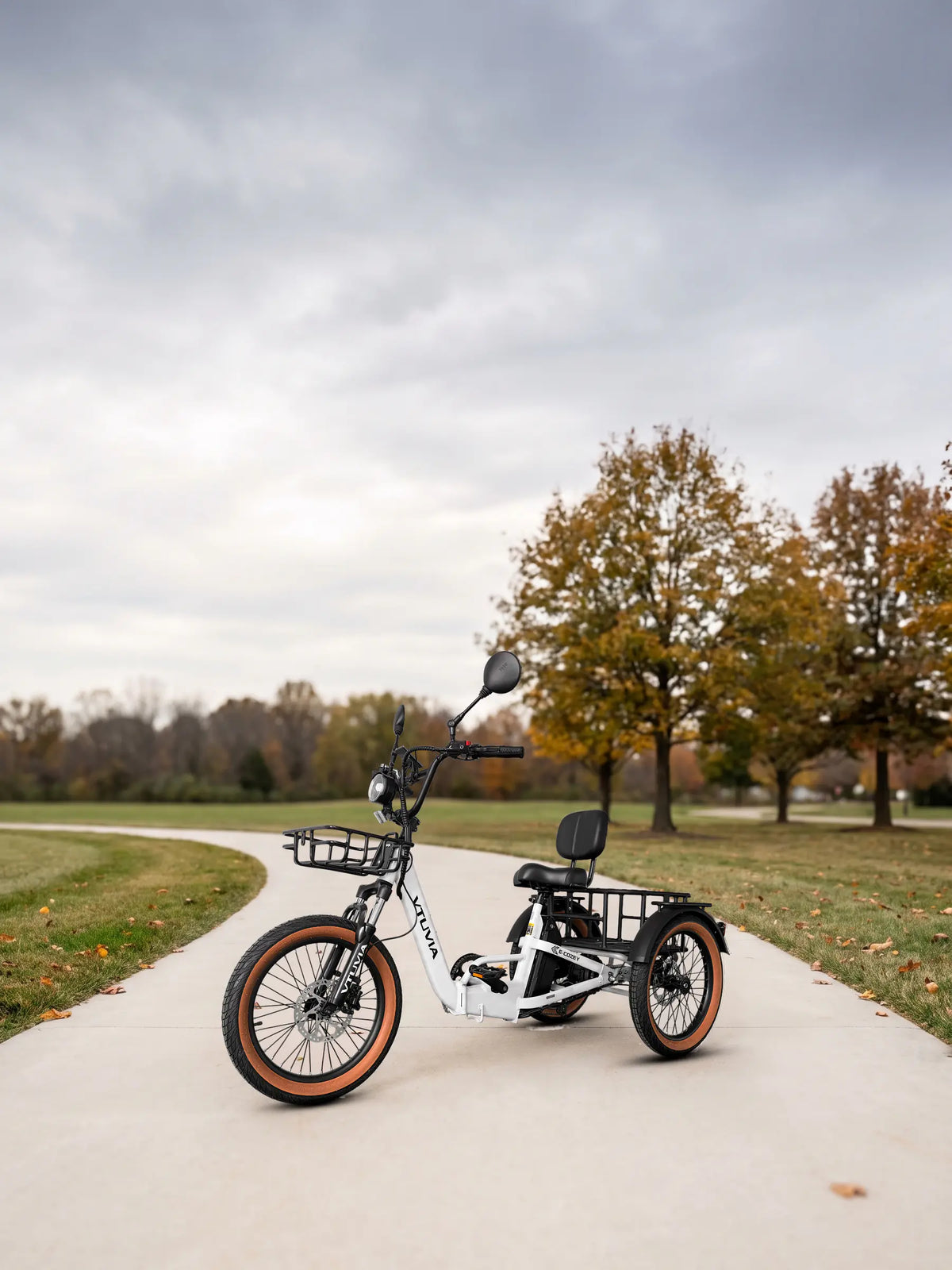

Share:
Best Cargo Electric Bikes 2026: 10 Picks by Need
eBike Shops in Santa Clarita (2026): 3 Verified Stores