


750 W · 100 lb · 20 mph on the motor · 67 counties · 2,558 municipalities · age 16 · verified August 21, 2026
Quick Answer: Pennsylvania has no Class 1, Class 2 or Class 3. It has one definition, and a bike either fits inside it or stops being a bicycle.
A "pedalcycle with electric assist" must weigh 100 pounds or less, carry a motor system rated 750 watts or less, have operable pedals, run on two or three wheels over 11 inches, and be incapable of more than 20 mph on motor power alone (75 Pa.C.S. § 102).
Clear all five and you need no license, no registration, no plate and no insurance — PennDOT says so in writing. Miss one and you are riding something Pennsylvania law does not have a place for. The hard floor: nobody under 16 may operate any e-bike (§ 3514), whatever the bike's power.
Statutes re-read at the General Assembly's own publisher on August 21, 2026. Shopping first? Start with commuter e-bikes or the full range, then come back for the four numbers that decide whether it is street legal here.

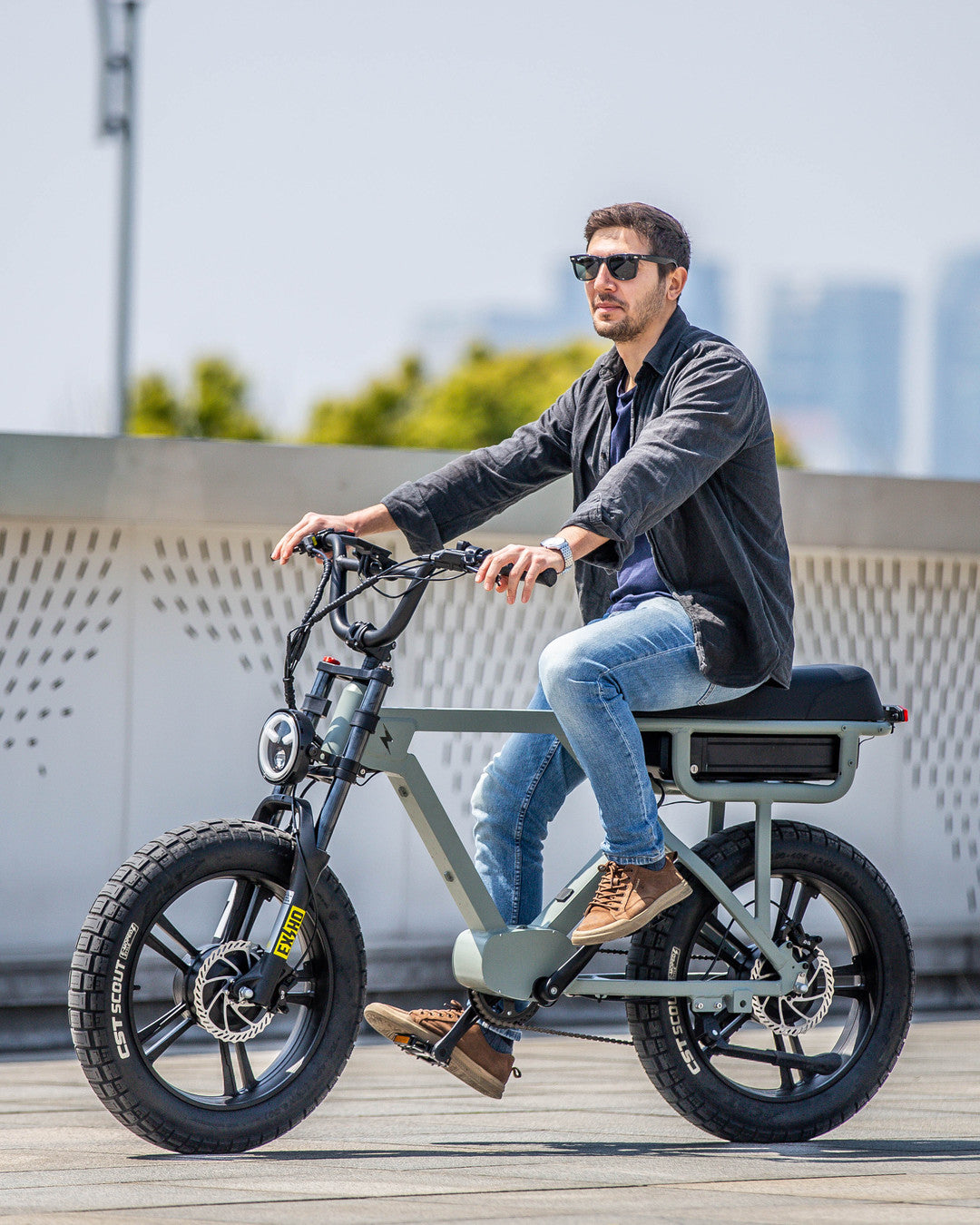
The riders pictured on this page are the Mercers, our fictional cast — meet the family and see how they are made.
In this guide
- How we verified this guide
- What's on this page
- Pennsylvania eBike Laws: the four numbers that decide everything
- What Pennsylvania does not require
- Why 16 is the number families miss
- No classes: what that changes when you buy
- The 100-pound clause, and how rare it is
- Helmets: under 12 by statute, under 21 by township
- Where can you legally ride in Pennsylvania?
- State parks say yes. State game lands say no.
- Rail trails and the throttle question
- Why your borough's bike ordinance may not reach your e-bike
- Which Pennsylvania towns passed e-bike ordinances in 2026?
- Philadelphia: the code, and the delivery-license bills
- Pittsburgh: no e-bike ordinance at all
- Every Pennsylvania municipality we checked
- The local rules we found, and what each one actually says
- What does an e-bike ticket actually cost in Pennsylvania?
- You can get a DUI on an e-bike here
- The insurance cliff nobody mentions
- What is not an e-bike in Pennsylvania
- What changed, and what is coming
- Is there a Pennsylvania e-bike rebate?
- Pennsylvania against its six neighbors
- Where riders get caught out
- The honest ledger
- The 7-point Pennsylvania compliance checklist
- If an officer stops you
- Our picks: which e-bike suits which Pennsylvania rider
- Source register
- Limitations
- The bottom line
- Frequently asked questions
- Primary sources
How we verified this guide
Every legal claim on this page was opened at the body that issued it, in this session, and quoted from the text that governs. Nothing here was recalled, and nothing was taken from another guide.
- The statute. Title 75 was read at the Pennsylvania General Assembly's own statute publisher, section by section: § 102 definitions, Chapter 35 (pedalcycles), Chapter 13 (registration), Chapter 15 (licensing), Chapter 17 (financial responsibility), Chapter 38 (DUI), Chapter 61 (local powers).
- The agency layer. PennDOT's PA Micromobility Information Sheet, PUB 944 (6-26) — a June 2026 document — and PennDOT's Mopeds, Motor-Driven Cycles and Motorcycles fact sheet, February 2025.
- Public land. DCNR's signed Pedalcycle (Bike and E-Bike) Policy 380100-2025-01, revised January 2026, and the Game Commission's own FAQ read against 58 Pa. Code § 135.2.
- Pending legislation. Every bill record was opened at the General Assembly, including the full text of HB 2703, the July 2026 bill that would give Pennsylvania a class system.
- The municipal denominator. Built from the U.S. Census Bureau 2025 Gazetteer Files — the place file and the county-subdivision file together, because Pennsylvania's cities and boroughs sit in one and its townships in the other. The roster is a real file in our repository — 2,558 municipalities across 67 counties, one row each.
- Local ordinances. Full-text searched across every code platform that hosts a Pennsylvania municipal code — eCode360/General Code (765 codes), American Legal (61), Municode (16) — with each publisher's own client list used as the enumeration. Where a search was blocked, the block is recorded as unretrieved, never as "no rule found."
- The enacted text over the coverage. Every ordinance named below was read from the signed ordinance or the codified section. One published news account gave a section number that the signed ordinance contradicts; the ordinance won, and the correction is noted where it belongs.
- Reviewer: Milad Ghobadibeygvand, BScN (Western University, 2014), Redtail eBikes. Corrections: hello@redtailebikes.com.
Where a question could not be closed, this page names the gap instead of smoothing it over.
What's on this page
- How we verified this guide
- The four numbers that decide everything
- What Pennsylvania does not require
- Why 16 is the number families miss
- No classes: what that changes when you buy
- The 100-pound clause, and how rare it is
- Helmets: under 12 by statute, under 21 by township
- Where can you legally ride in Pennsylvania?
- State parks say yes. State game lands say no.
- Rail trails and the throttle question
- Why your borough's bike ordinance may not reach your e-bike
- Which towns passed e-bike ordinances in 2026?
- Philadelphia: the code, and the delivery-license bills
- Pittsburgh: no e-bike ordinance at all
- Every Pennsylvania municipality we checked
- The local rules we found, and what each says
- What does an e-bike ticket actually cost?
- You can get a DUI on an e-bike here
- The insurance cliff nobody mentions
- What is not an e-bike in Pennsylvania
- What changed, and what is coming
- Is there a Pennsylvania e-bike rebate?
- Pennsylvania against its six neighbors
- Where riders get caught out
- The honest ledger
- The 7-point Pennsylvania compliance checklist
- If an officer stops you
- Our picks: which e-bike suits which Pennsylvania rider
- The bottom line
- Frequently asked questions
- Primary sources
Pennsylvania eBike Laws: the four numbers that decide everything
Pennsylvania did something unusual in 2014. Instead of building a separate legal category for electric bikes, it reached into the definition of "pedalcycle" and widened it. 75 Pa.C.S. § 102 now reads: "Pedalcycle. A vehicle propelled solely by human-powered pedals or a pedalcycle with electric assist."
That single "or" is the whole architecture. Your e-bike is not a bicycle-adjacent device with its own rulebook. It is a pedalcycle, and it inherits Chapter 35 wholesale: the same road rights, the same lighting rules, the same $10 summary fine, the same sidewalk restrictions.
Act 154 of 2014 (Oct. 22, 2014, P.L.2543, No.154) did that in one stroke, and DCNR's own policy explains what it replaced: "E-bikes were once treated as mopeds under the PA Vehicle Code, but Act 154 of 2014 amended the definition for pedalcycles so that pedalcycles with electric assist are no longer considered a moped."
The price of admission is a five-part test. Every clause is a hard edge, and there is no partial credit.
| The clause | The words in § 102 | What it rules out |
|---|---|---|
| Weight | "weighing not more than 100 pounds" | Heavy cargo and long-tail builds, and most dual-battery fat bikes |
| Wheels | "with two or three wheels more than 11 inches in diameter" | Small-wheel scooters; three wheels are expressly fine, so trikes are in |
| Motor | "an electric motor system rated at not more than 750 watts" | 1,000W and up, including most AWD dual-motor machines |
| Pedals | "equipped with operable pedals" | Anything with pegs instead of cranks |
| Speed | "capable of a speed not more than 20 miles per hour on a level surface when powered by the motor source only" | A 28 mph machine, even one that only assists while you pedal |
One more line sits at the end of the definition, and it matters to riders with a disability: "The term does not include a device specifically designed for use by persons with disabilities." Those devices are handled separately, and DCNR runs its own permitting policy for powered mobility devices on park and forest land.
Do this first Find your bike's published weight and its nominal motor rating, not its peak output. Pennsylvania tests the rated figure and the whole-vehicle weight. If the listing does not state a weight, ask the seller in writing before you buy.
What Pennsylvania does not require
Nothing. The short version, and it comes from PennDOT rather than from inference. The department's own fact sheet on mopeds and motor-driven cycles carries a note in plain language: "Pedalcycles with electric assist are considered a bicycle and do not require titling, registration or insurance. The operator does not require a driver's license but must be at least 16 years of age."
| What people expect | What Pennsylvania actually requires | Source |
|---|---|---|
| Driver's license | None. § 1501 requires a license to drive a motor vehicle; a pedalcycle is not one | PennDOT fact sheet, Feb 2025 |
| Registration or plate | None. § 1301 is the registration section; PennDOT confirms e-bikes are outside it | PennDOT fact sheet, Feb 2025 |
| Certificate of title | None | PennDOT fact sheet, Feb 2025 |
| Insurance | None required to ride. Read the insurance section below anyway — the money question is what happens after a crash | PennDOT fact sheet, Feb 2025 |
| Safety inspection | None for a pedalcycle | 75 Pa.C.S. Ch. 47 applies to vehicles required to be registered |
| Minimum age | 16, every e-bike, every rider | § 3514 |
| Helmet | Under 12 on any pedalcycle | § 3510 |
PennDOT's June 2026 micromobility sheet puts the e-bike row even more briefly: "All laws for pedalcycles … apply to pedalcycles with electric assist."
Why 16 is the number families miss
§ 3514 is nineteen words long: "No person under 16 years of age shall operate a pedalcycle with electric assist." There is no class carve-out, because there are no classes. A 250-watt kids' e-bike with a 20-inch wheel is covered by the same sentence as a 750-watt commuter.
Set that against the region and the outlier becomes obvious. Ohio, Maryland and Delaware each restrict a rider's age for one category alone, and it is always Class 3. West Virginia's e-bike statute sets no operating-age floor at all; our West Virginia e-bike law guide traces the town codes that still print the age rule the state deleted in 2023.
New York and Pennsylvania are the two states in the neighborhood where the age floor applies to every e-bike a shop can sell you. Delaware, one of the six states Pennsylvania borders, keeps its operating age floor to Class 3, and our Delaware guide reads the rest of its rules, from the 20 mph throttle line that turns a bike into a moped to the local rules of its 57 municipalities.
Two details worth holding onto. First, the age rule attaches to operating, so a child riding as a passenger on a properly equipped e-bike is not what § 3514 addresses. Second, Chapter 35 applies "whenever a pedalcycle is operated upon any highway or upon any path set aside for the exclusive use of pedalcycles" (§ 3501(b)) — a private driveway or a private field is a different question, and one this page does not pretend to answer for your property.
We sell three kids' e-bikes that no Pennsylvanian under 16 may legally ride on a road or bike path. The EKIDS16, EKIDS20 and EKIDS24 all clear § 102's technical test — 180W to 250W, 28.6 to 44.1 pounds — and every one of them is off-limits to the child it was built for, on any Pennsylvania street.
Not a knock on the bikes. It is a fact about a statute written before kids' e-bikes existed as a category, and you should know it before the box arrives.
Before you buy for a teenager Check the birthday before you check the bike. Under 16 in Pennsylvania means the road and the bike path are closed to them on any e-bike, regardless of wattage. A pedal bike is the legal answer until then.
No classes: what that changes when you buy
Forty states run some version of the three-class model. Pennsylvania is not one of them, and the difference shows up at the checkout page rather than in a courtroom.

A bike built to assist to 28 mph is an ordinary product one state line away. Here it is not a pedalcycle at all.
A Class 3 bike is built to assist to 28 mph while you pedal. Sold in Ohio or Maryland that is an ordinary, fully legal machine with its own rules about paths and helmets.
Ride it across the state line and § 102 no longer describes it: the definition requires a vehicle "capable of a speed not more than 20 miles per hour." A 28 mph pedal-assist bike is not a slightly-restricted pedalcycle here. It is outside the definition, which means it is not a pedalcycle at all.
What is it instead? PennDOT answers that question in the same June 2026 sheet, and the answer is uncomfortable.
Devices and vehicles not defined in Pennsylvania law may not be legally operated on highways as defined in the Pennsylvania Vehicle Code — including sidewalks, bike lanes, and roads.
That sentence is the whole risk of buying the wrong machine here, in PennDOT's own words.
Throttles, by contrast, are fine here. Pennsylvania's clause is about capability, not about how the power is summoned. A throttle-only bike that tops out at 20 mph on the motor sits comfortably inside § 102, which makes Pennsylvania friendlier to what other states label Class 2 than it is to what they label Class 3.
| If the listing says… | In a three-class state | In Pennsylvania |
|---|---|---|
| Pedal-assist to 20 mph, 500W | Class 1 | Inside § 102, assuming weight and pedals check out |
| Throttle to 20 mph, 750W | Class 2, restricted on some paths | Inside § 102, no separate path rule |
| Pedal-assist to 28 mph, 750W | Class 3, adult helmet in several states | Outside § 102 — not a pedalcycle |
| 1,000W, 28 mph, throttle | Not an e-bike in most states either | Outside § 102, likely a motor-driven cycle |
| 750W but 112 lb with two batteries | Legal in every neighboring state | Outside § 102 on weight alone |
The one spec to check Motor-only top speed. If a listing advertises 24, 25 or 28 mph without saying that figure is pedal-assisted, treat the bike as outside Pennsylvania's definition until the manufacturer confirms otherwise in writing.
The 100-pound clause, and how rare it is
Pennsylvania is the only one of the six states it borders that puts a number on the scale. New York, New Jersey, Ohio, Maryland, Delaware and West Virginia all define an e-bike by motor and speed; none of the six caps the weight of the vehicle.
Weight is not the only place one word decides the question. Until September 30, 2026, Connecticut wrote its ceiling as fewer than 750 watts where Pennsylvania writes not more than 750, and on October 1 it adopted Pennsylvania's words. Until then a bike rated at 750 W was inside the definition here and outside it there. Pennsylvania caps it at 100 pounds, and the clause is first in the sentence.
This is not a theoretical limit. A steel-framed cargo bike with a long tail, a dual-battery fat-tire build, an electric trike with a rear box — these are the bikes that cross 100 pounds, and they are exactly the bikes that appeal to riders who use an e-bike as a car replacement.
Our own measurement, and it is not flattering. We screened all 186 live e-bike listings in the Redtail catalog against § 102 on August 21, 2026, using a script that parses the published nominal wattage, advertised top speed and published vehicle weight from each live product page (our screen and its provenance header are kept as a dated file in our research repository). The results:
| Result against 75 Pa.C.S. § 102 | Count | Why |
|---|---|---|
| Meets the definition on published specs | 8 | Wattage, weight and advertised speed all inside the clause |
| Falls outside the definition | 77 | 67 fail on motor rating, 59 on an advertised speed above 20 mph, 4 on weight, 3 on missing pedals — most fail more than one clause, so the reasons overlap and do not sum to 77 |
| Cannot be determined | 101 | Missing published weight, missing nominal rating, or both |
| Only 17 of 186 listings publish a vehicle weight at all | 17 | The single most common reason a bike lands in "cannot be determined" |
That last row is the finding worth carrying away, and it applies to every e-bike retailer, us included. The industry publishes payload capacity constantly and vehicle weight rarely, because payload sells and weight does not. In Pennsylvania the number nobody prints is a legal test.

The clause other states do not have. Payload capacity is on every listing; vehicle weight was on 17 of our 186.
Ask for one number Email the retailer before you order and ask for the vehicle weight with battery installed. Keep the reply. If a bike is close to 100 pounds, that email is the difference between a document and an argument.
Helmets: under 12 by statute, under 21 by township
The state rule is narrow and old. § 3510(a) requires a helmet for "a person under 12 years of age" on any pedalcycle, including as a passenger in a child seat or a towed trailer. The penalty is capped at $25 including all costs, a magistrate must dismiss the charge if the rider shows proof of buying a compliant helmet, and there is a written religious exemption.
One subsection deserves a wider audience than it gets. § 3510(c) states that failure to wear a helmet "shall not be considered as contributory negligence nor shall failure to use a pedalcycle helmet be admissible as evidence in the trial of any civil action." If a driver hits you, your bare head cannot be used to reduce what you recover.

State law stops at 12. Two Allegheny County municipalities moved the line to 21 in June 2026 — on their own property.
Then there is the layer the statute does not mention. In June 2026, two Allegheny County municipalities adopted e-bike ordinances that require a helmet for every rider under 21 on municipal property. Both are detailed further down this page.
Neither changes the state rule, and neither reaches the road outside the park gate. Inside it, they are enforceable local law.
Where can you legally ride in Pennsylvania?
Because your e-bike is a pedalcycle, the answer is: wherever a bicycle may go, with the same four restrictions bicycles carry. Chapter 35 does the work.
| Surface | Rule | Cite |
|---|---|---|
| Roadway | Full rights and duties of a driver of a vehicle | § 3501(a) |
| Shoulder | Permitted, in the same direction as traffic | § 3505(b) |
| Riding two abreast | Permitted; more than two only on a pedalcycle path or lane | § 3505(e) |
| Sidewalk, outside a business district | Permitted, but yield to pedestrians and signal before passing | § 3508(a) |
| Sidewalk, in a business district | Prohibited unless traffic-control devices permit it | § 3508(b) |
| Sidewalk beside a usable bike-only lane | Prohibited | § 3508(b) |
| Freeway | Prohibited, with a narrow permit route for events and for routes the department publishes in the Pennsylvania Bulletin | § 3511 |
| Parking on a sidewalk | Permitted unless a traffic-control device says otherwise, and never blocking pedestrian movement | § 3509(a) |

Same path rights as a bicycle. The business-district sidewalk rule is where most Pennsylvania riders actually break the law.
The equipment rules travel with the surface. Between sunset and sunrise, § 3507 requires a front white lamp visible at 500 feet, a rear red reflector visible at 500 feet, and an amber reflector on each side. The side reflectors are the ones riders forget.
Brakes must stop the bike within 15 feet from 15 mph on dry, level, clean pavement. A bell is allowed; a siren is not.
State parks say yes. State game lands say no.
Two Pennsylvania agencies control most of the state's public riding, and they reached opposite conclusions about the same machine.
DCNR — state parks and state forests — permits e-bikes. Policy 380100-2025-01 took effect on 28 November 2022, was revised on 7 January 2026 and signed by Secretary Cindy Adams Dunn on 20 January 2026, with the next review scheduled for 27 November 2028. Its core sentence: "The Department generally permits e-bikes on DCNR managed trails already open to human-powered bike usage." The conditions repeat § 102's numbers, and add one rule of behavior that does not appear in the statute at all.
| DCNR rule | The policy's words |
|---|---|
| Where | "E-bikes are permitted on DCNR-managed trails where bikes are allowed. E-bikes are prohibited where bikes are prohibited." |
| Throttle | "Using the electric motor exclusively to move an e-bike without pedaling is prohibited on non-motorized trails." |
| Speed | "e-bike operators shall never use the electric assistance to exceed 20 miles per hour" |
| Oversized machines | "Pedalcycles or vehicles that exceed the weight, wattage, or other specifications identified in this policy are prohibited on DCNR trails." |
| Park and forest roads | "All pedalcycles are generally permitted on public-use roads within state park and forests, unless otherwise marked as prohibited." |
That throttle rule is the one to write on your hand. On a non-motorized DCNR trail you must be pedaling. A perfectly legal throttle-only bike, ridden on the throttle, is a violation of the policy even though it is inside § 102.
DCNR is also careful about its own status, and so are we: the document states that "The policies and procedures herein are neither an adjudication nor a regulation," and that the department may deviate from it. A ranger's decision on a specific trail is the operative fact on the ground.

DCNR land: pedal the throttle bike. Game Commission land: leave it in the truck.
The Game Commission bans them. Its published FAQ answers the question directly — "Is it lawful to use E-bikes on state game lands in Pennsylvania?" "No. Electronic bikes are not allowed to be used on state game lands at this time."
The regulation underneath is 58 Pa. Code § 135.2(3), which makes it unlawful to "Travel on lands by means of vehicle or conveyance propelled by motorized power." We read §§ 135.2 and 135.41 in full on August 21, 2026: neither contains any e-bike or electric-bicycle provision, and the Pennsylvania Code site states that its text is current through 56 Pa.B. 3438 (June 6, 2026).
Worth knowing if you ride an ordinary bicycle on game lands too: § 135.41(c) restricts even non-motorized vehicles to "roads normally open to public travel, or designated routes as posted," and closes them entirely from October 1 through January 31 and from April 20 through May 31, except while lawfully hunting, trapping or fishing.
The Game Commission "owns and manages more than 1.5 million acres of state game lands throughout the Commonwealth" (PGC). DCNR's state forest system "comprises 2.2 million acres of forestland in 50 of Pennsylvania's 67 counties" (DCNR). Your legal e-bike is welcome on one and barred from the other, and the boundary between them is a property line that is rarely signed as one.
Rail trails and the throttle question
Pennsylvania's long-distance trails are mostly not state property. Pennsylvania carries 162.7 miles of the Great American Rail-Trail, the highest completion rate of any state on that route, and the same landowner-by-landowner pattern governs all of it.
The Great Allegheny Passage, the D&L, the Schuylkill River Trail and dozens of shorter rail trails are run by conservancies, authorities and county park systems, each writing its own rules on land it owns. State law does not settle what happens there; the landowner does.
The Great Allegheny Passage's published rules are the model to check yours against. The trail sets a 15 mph speed limit for everyone, and admits e-bikes on four conditions: "Motors on electric vehicles are 750 watts or less; Devices weigh less than 100 lbs.; Device are no more than 36″ wide; Devices have fully operating pedals." Three of those four track the statute.
The fourth, a 36-inch width limit, appears nowhere in Pennsylvania law and rules out some wide trikes and cargo builds that § 102 would allow.

Four conditions at the GAP trailhead. Only three of them come from the statute.
The pattern repeats across the state's trail network: the trail's rules are stricter than the state's, they are posted at the trailhead rather than published in a code, and they change without a legislative session. Read the sign. If you are planning a multi-day GAP or C&O trip, note that Maryland requires a helmet under 15 while Pennsylvania stops at 12, so the rule for your kid changes at the Mason–Dixon line.
Why your borough's bike ordinance may not reach your e-bike
Pennsylvania is not a home-rule free-for-all on traffic law. 75 Pa.C.S. § 6101(a) says the Vehicle Code "shall be applicable and uniform throughout this Commonwealth and in all political subdivisions in this Commonwealth, and no local authority shall enact or enforce any ordinance on a matter covered by the provisions of this title unless expressly authorized."
Most preemption clauses stop there. Pennsylvania's has a collection mechanism. Under § 6101(b), added by Act 187 of 2012, once a court holds that a local ordinance violates subsection (a), the municipality loses its unobligated capital spending on bridges and highways and its Liquid Fuels Tax allocation until it repeals or substantially amends the offending language.
Municipalities in Pennsylvania fund a large share of their paving from Liquid Fuels. A finding of preemption is a budget event.
So where does a borough's authority over your e-bike come from? One paragraph. § 6109(a)(8) lists, among the local police powers presumed reasonable, "Regulating the operation of pedalcycles and requiring their registration and inspection, and the payment of a reasonable registration fee."
That power runs to "streets or highways within their physical boundaries," it must be exercised "by ordinance of the local governing body" (§ 6109(b)), and — unlike the speed, parking and turning paragraphs listed in § 6109(c) — it does not require posted traffic-control devices to become effective.
Two consequences follow, and they explain almost everything happening in Pennsylvania's suburbs right now.
- On municipal property, a municipality has a free hand. Parks, trails, playgrounds and sportsfields are not "streets or highways," and a township regulating its own park is exercising ordinary property and police powers under its municipal code rather than squeezing through § 6109. Why nearly every 2026 Pennsylvania e-bike ordinance is written about parks.
- On the street, the ground is much softer. A borough that bans e-bikes from public roadways is regulating a matter Title 75 covers, and § 6101 is waiting.
A borough solicitor wrote that conclusion into an enacted ordinance this June. Brentwood's Ordinance No. 2026-1333 recites that a 2022 rule aimed at dirt bikes was drafted so broadly that "such restrictions could be interpreted to apply to electric bicycles, which are regulated solely at a statewide level."
And then there is the definition problem. Because Pennsylvania folded e-bikes into the word "pedalcycle" in 2014, a municipal ordinance that says "pedalcycle" and takes its meaning from the Vehicle Code now reaches your e-bike automatically, even if it was written in 1994 and nobody has thought about it since.
An ordinance that wrote its own definition may not. Waynesburg's code, in Greene County, defines the term for itself: "Bicycle means a pedalcycle vehicle propelled solely by human-powered pedals" (§ 28-145). Read literally, Waynesburg's bicycle article does not cover an e-bike at all.
How to read your own borough's code Search it for the word pedalcycle, then find the definitions section. If the ordinance borrows Title 75's meaning, it applies to your e-bike. If it defines a bicycle as human-powered, it probably does not — and that gap is the municipality's problem to fix rather than yours to guess at.
Which Pennsylvania towns passed e-bike ordinances in 2026?
Something changed in Pennsylvania this summer. Across Allegheny County and into the Philadelphia suburbs, municipalities that had never mentioned e-bikes started writing them into their codes, almost always about parks, and almost always in June and July of 2026. We read the enacted text of each ordinance below at the municipality's own source.
| Municipality | County | Instrument | Date | What it actually does |
|---|---|---|---|---|
| Upper St. Clair Township | Allegheny | Bill No. 3-26, amending Ch. 93 (Parks and Playgrounds) | Enacted June 1, 2026 | E-bikes on township park pathways only if paved; 15 mph cap; age 16 minimum; helmet under 21; dawn-to-dusk only; yield and audible signal before passing; permanent seat, no extra passengers |
| Municipality of Bethel Park | Allegheny | Ordinance No. 6-8-26B, adding § 67.1.2 | June 2026 | Own e-bike definition tracking § 102; age 16; helmet under 21; municipal parks paved areas only, 15 mph; audible signal, pass on the left; parents liable for a minor's fine |
| Borough of Brentwood | Allegheny | Ordinance No. 2026-1333, restating Ch. 165 | Enacted June 15, 2026 | Keeps electric bicycles inside "recreational motorized vehicle"; street and sidewalk use deferred to Title 75; still banned on any borough-owned property and on private property without written consent |
| Penn Township | Westmoreland | Ordinance No. 979-2026, amending Ch. 115 § 115-3 | 2026 | Amends the park code's prohibited-activities list "to prohibit the operation of e-scooters and e-bicycles in Penn Township recreation areas"; police authorized to enforce |
| Abington Township | Montgomery | Ordinance No. 2244, amending Ch. 158 (Vehicles, Recreational) | Advanced July 2026, enactment date blank on the posted copy | Would make it unlawful "to willfully operate an E-Bike or E-Scooter … within the boundaries of any park or trail network"; disability devices exempt |
| Mt. Lebanon | Allegheny | Proposed ordinance, 15 mph cap, up to $600 fine | Tabled July 28, 2026 | Shelved after a public hearing; no e-bike ordinance in force [SEARCH]
|
| Town of McCandless | Allegheny | Proposed pathway speed ordinance | Abandoned October 2025 | Dropped on the view that only the state may regulate motorized vehicles on roadways [SEARCH]
|
Three of these are worth reading closely, because they show three different theories of what a municipality is allowed to do.
Upper St. Clair drew the tightest map. Its June 1 amendment to Chapter 93 does not touch the street. It regulates the township's own parks, and it does so in detail: e-bikes must stay on asphalted or concreted pathways and are, in the township's own words, "strictly prohibited on grass, sports fields, open spaces, shelters, courts, playgrounds and picnic areas."
The 15 mph park limit is five under the state's 20. The helmet rule reaches to 21. Motor-driven cycles, motor scooters and onewheels stay banned outright. The township's announcement is dated June 2, 2026, and the planning director told a reporter the first-offence fine is $100.
Bethel Park went further into the code. Ordinance 6-8-26B retitled an entire chapter — Chapter 67 became "Unlicensed Motor-Driven Vehicles and E-Bikes" — and wrote its own e-bike definition, copying § 102's five clauses almost word for word.
The park rules mirror Upper St. Clair's, but the penalty section is heavier: up to $300 or 30 days for a first violation, up to $600 for a subsequent one, parents on the hook for a minor's fine and for property damage, and impoundment on a second violation within six months. (A published news account cited this as "Section 6.1.2"; the signed ordinance adds § 67.1.2. We read the ordinance.)
Brentwood went backwards, deliberately. Its 2022 ordinance had swept e-bikes into a definition written for dirt bikes and ATVs. The June 2026 restatement keeps electric bicycles inside the defined term but rewrites the prohibition: operation on any public street or sidewalk "shall be consistent with Title 75 of the Pennsylvania Motor Vehicle Code." Borough property remains closed. It is the clearest example in the state of a municipality reading § 6101 and pulling back.

Seven municipalities, one summer, and almost every rule stops at the park gate. On the street, § 6101 is waiting.
Two of the rows above carry a [SEARCH] label, and the label is the point. Mt. Lebanon's tabling and McCandless's abandoned ordinance are reported by named local news outlets whose accounts agree, but we have not retrieved the meeting minutes from either municipality. They are listed here as reported rather than as verified law. Penn Township started in that category too; its Ordinance No. 979-2026 was found in the sweep and read, so it moved.
Philadelphia: the code, and the delivery-license bills
Philadelphia has no e-bike-specific ordinance. What it has is a bicycle chapter that predates e-bikes and now catches them through the state's definition, plus two bills that would make Philadelphia the only Pennsylvania municipality in this sweep to license a category of e-bike rider. Which bikes clear § 102 once weight is counted, neighborhood by neighborhood, is in our Philadelphia buying guide: sixteen machines we sell pass every other test and fail on weight alone.
The rule most Philadelphians actually meet is § 12-808: "No person shall ride a bicycle upon a sidewalk, except as follows: (a) Children under the age of twelve may ride on the sidewalk, other than in a business district as defined in the Vehicle Code. (b) Riding a bicycle on the sidewalk is permitted where appropriate signs are posted for shared pedestrian and bicycling use by the Department of Streets…"
The penalty is "a fine of fifty dollars ($50), together with the costs of prosecution," with $20 payable in response to a notice of violation.
Note how much stricter that is than the state rule. Pennsylvania bans sidewalk riding only in a business district; Philadelphia bans it citywide, for adults, everywhere. And because § 12-808's exception for under-twelves excludes business districts, and because state law bars anyone under 16 from an e-bike in the first place, there is no age at which riding an e-bike on a Center City sidewalk is lawful.
The rest of Chapter 12-800 reads like Chapter 35 with local color: § 12-801 gives bicycle riders the rights and duties of an operator under the Vehicle Code; § 12-809 covers warning devices and brakes; § 12-812 restricts audio headphones; § 12-813 lets the city remove abandoned inoperable bicycles.
The live fight is about delivery. On May 14, 2026, Councilmember Young introduced two bills, both now in committee:
| Bill | What it would do | Status |
|---|---|---|
| Bill No. 260525 | Adds § 12-814 to the Traffic Code, authorizing Licenses and Inspections to issue an E-Bike Delivery License for anyone performing commercial delivery on a pedalcycle with electric assist, with identification, enforcement and penalties; effective 180 days after becoming law | Introduced May 14, 2026; referred to the Committee on Streets and Services |
| Bill No. 260526 | Amends Chapter 9-5100 to require third-party food delivery services to register delivery workers who use bicycles, e-bikes or autonomous delivery units, with identification, recordkeeping, reporting and fees | In committee |
Neither bill is law, and neither changes what a Philadelphia commuter may do today. Both are worth watching if you deliver for a living, because 260525 would create a license no Pennsylvania e-bike rider currently needs anywhere we looked.
Pittsburgh: no e-bike ordinance at all
Pittsburgh's traffic title is on eCode360 and we searched it directly. There is no e-bike section. § 503.14, adopted in 2000, states that "All bicycle operators shall be subject to Title 75 of the Pennsylvania Statutes … governing pedalcycle traffic on roads and sidewalks, and all other local and state ordinances," then adds mandatory hand signals and a registration scheme for bicycle messenger businesses at $10 per operator.
That is the whole of the bicycle regulation in Pittsburgh's traffic title, and by the state's definition it covers your e-bike.

Pittsburgh regulates scooters in detail and e-bikes not at all. On the street, Title 75 is the whole rulebook.
The city's one detailed micromobility rule is about something else entirely. § 503.16, added by Ordinance No. 32-2021 effective September 22, 2021, governs electric low-speed scooters. They may be ridden only in a bike lane, on a road posted at 25 mph or less, or on a designated shared-use path, and never on a sidewalk unless it is a designated shared-use path.
The rest of § 503.16 sets a floor of age 18, a 15 mph limit, one rider per device, and specific parking rules.
Those rules were written for the Move PGH shared-scooter pilot. They remain in the city code even though PennDOT's June 2026 sheet says electric scooters are still "not specifically classified or defined in the PA Vehicle Code."
Pittsburgh's parking chapter was amended as recently as August 3, 2026 (Ord. No. 28-2026, effective August 5), and the amended § 541.02 preserves the Vehicle Code's pedalcycle parking allowance under § 3509(b)(2).
Every Pennsylvania municipality we checked
Pennsylvania has 2,558 general-purpose municipalities in 67 counties: 55 cities, 952 boroughs, 6 home-rule municipalities, the single town of Bloomsburg, and 1,544 townships. That number is not from memory.
It is built from the U.S. Census Bureau's 2025 Gazetteer Files, and it takes two files to get it right — in Pennsylvania's Census coding, cities and boroughs live in the place file while townships live in the county-subdivision file, so anyone using one file alone loses a whole tier of government. The roster sits in our research repository as a row-per-municipality CSV.
Coverage statement, August 2026. Pennsylvania has 2,558 general-purpose municipalities. We searched the full-text code of 713 of them across the three platforms that host Pennsylvania municipal codes.
Of those, 39 carry codified language that names an electric bicycle, 348 carry a pedalcycle rule whose reach over e-bikes depends on the definition it uses, and 326 were searched with no relevant provision found. 1,845 municipalities could not be searched, because their code is not published on any of the three platforms. 39 + 348 + 326 + 1,845 = 2,558.
Separately, 27 municipalities discuss e-bikes in council minutes or agendas without having put anything in their code, and 2 of Pennsylvania's 67 counties carry an e-bike rule of their own (Delaware, York).
| Status | Municipalities | What it means for a rider |
|---|---|---|
| Codified e-bike language found | 39 | Named and quoted below, with the section and the adoption date |
| Pedalcycle rule, e-bike reach depends on the definition | 348 | Read the definitions section of your own code before assuming |
| Searched, nothing relevant found | 326 | The state rules are the whole answer there, as of August 2026 |
| Code not published on any platform | 1,845 | Call the borough or township office; no public dataset covers these |
| Total | 2,558 | 55 cities · 952 boroughs · 6 home-rule municipalities · 1 town · 1,544 townships |
How the sweep was done, and where it stops
Three publishers host essentially every Pennsylvania municipal code that is online. We took each publisher's own client list rather than guessing:
| Platform | Pennsylvania codes | How the list was built |
|---|---|---|
| eCode360 / General Code | 765 | General Code's own static text library, Pennsylvania block |
| American Legal Publishing | 61 | The publisher's Pennsylvania region index |
| Municode | 16 | The Municode client API, filtered to PA |
Every code was searched for the same term family — pedalcycle, ebike, electric bicycle, micromobility — and every result was read before it was counted. Three honesty rules governed the count:
- A block is not a finding. eCode360 refuses automated requests and serves through a reader proxy that rate-limits. When a search came back throttled, that municipality was logged as unretrieved and re-queued, never recorded as "no rule found."
- Minutes are not law. eCode360 indexes council agendas and meeting minutes alongside the code. A municipality whose minutes mention e-bikes but whose code does not is counted separately, because a discussion is not an ordinance.
- A pedalcycle rule is not automatically an e-bike rule. Pennsylvania's statutory word for a bicycle already includes e-bikes, so an old ordinance that borrows the Vehicle Code's definition reaches your e-bike. One that wrote its own human-powered definition may not. Those two are reported as separate tiers and never summed.
What this page cannot tell you is what is in the code of a small township that has never put its ordinances online. Pennsylvania has around seventeen hundred municipalities in that position, most of them townships of a few thousand people, and no public dataset covers them. If you ride in one, the borough or township office is the only reliable source, and this page says that rather than implying a completeness it does not have.
The local rules we found, and what each one actually says
Thirty-nine Pennsylvania municipalities and two counties in this sweep carry codified or enacted language that names an electric bicycle. We opened and read the operative section for each one listed below. They fall into six patterns, and knowing which pattern your municipality follows tells you more than the ordinance number does.
Pattern 1 — the park ban. Denver Borough in Lancaster County is the sharpest example. Its § 133-2(Y), as amended May 18, 2026 by Ordinance No. 704, reads: "No person shall operate an e-bike of any class, an electric unicycle or any other electric one-wheel device or a motorized scooter in any manner anywhere in the Borough parks, including trails," with an exception only for the parking lots, driveways and loop roadway of four named parks.
Note the phrase "of any class" — a borough using a classification Pennsylvania's statute does not contain.
Pattern 2 — the conditional welcome. York County permits e-bikes in exactly one place. Under § 75-16(C), "Specific to the Heritage Rail Trail County Park, any person over the age of 16 may operate a Class 1 e-bike" provided the motor is under 750 watts, the bike does no more than 20 mph on the motor, weighs no more than 100 pounds, and is "pedal assist only, with no throttle."
Subsection (E) closes the rest: "The use of e-bikes in all other York County parks is prohibited," with an ADA permit exception. Delaware County takes the same shape more generously — § 141-4(A) prohibits motorized vehicles in county parks, "Exceptions apply to pedal-assist e-bikes and motorized mobility scooters on trails, subject to a speed limit of 15 miles per hour." In both counties a throttle-equipped bike that is perfectly legal on the road is barred from the trail.
Pattern 3 — the full local chapter. Doylestown Township in Bucks County wrote Chapter 120, "Bicycles, E-Bikes, and E-Scooters," with its own definitions. Its e-bike must have "two of said wheels … not be less than 12 inches in diameter" and a motor that "disengages or ceases to function when the device's brakes are applied." Neither requirement appears in state law, and the state's own 11-inch wheel threshold is different.
West Pottsgrove Township in Montgomery County adopted Chapter 6 by Ordinance No. 2025-04 on December 17, 2025 — months before the Allegheny County wave — and it is the fullest small-township treatment we found: § 6-13 restates the age-16 rule, the helmet section reaches every rider under 21, § 6-14 confines pedalcycles in township parks to "asphalted or concreted pathways at all times," and § 6-16 makes parents responsible.
Pattern 4 — the borough-wide helmet rule. East Lansdowne in Delaware County went where no other municipality we found has gone. Ordinance No. 619 of 2026, adopted April 13, 2026, bans motor-driven vehicles that cannot lawfully be registered from every public right-of-way in the borough, with fines of $300 to $1,000 per offence — the heaviest local penalty in this sweep.
It then exempts e-bikes and mopeds operated lawfully, and adds Section 6: "Any person sixteen (16) years of age and under who operates or rides as a passenger upon a Motorized Pedalcycle or Pedalcycle with Electric Assist within the Borough of East Lansdowne shall wear a properly fitted and securely fastened protective helmet."
State law stops at 12; East Lansdowne runs to 16 and under, borough-wide, on the street as well as in the park, with a 60-day educational grace period written into the ordinance.
Pattern 5 — switching on a state rule. Bellefonte in Centre County did something quieter and more useful than a ban. Section 3508(b) of the Vehicle Code prohibits sidewalk riding "in a business district," but that phrase needs a boundary before an officer can enforce it. Bellefonte drew one.
§ 530-29.2, adopted August 17, 2023, adopts the borough's Central Business and Waterfront zoning districts as the § 3508(b) business district and directs officers to enforce it, and the article's own definitions make the reach explicit: "E-BIKE — A bicycle that can be run on electric power and pedaling" and "PEDAL CYCLES — A bicycle, e-bike, or tricycle." No new prohibition, no preemption risk, and the state rule now bites where the borough decided it should.
| Municipality or county | County | Where the rule lives | What it does |
|---|---|---|---|
| Denver Borough | Lancaster | § 133-2(Y), am. Ord. 704, 5-18-2026 | E-bikes of any class banned in all borough parks and trails, four named exceptions |
| York County | York | Ch. 75 §§ 75-15, 75-16 | Class 1, pedal-assist only, 16+, on the Heritage Rail Trail; prohibited in all other county parks |
| Delaware County | Delaware | Ch. 141 § 141-4(A) | Pedal-assist e-bikes allowed on park trails at 15 mph; throttle bikes excluded |
| Doylestown Township | Bucks | Ch. 120, Bicycles, E-Bikes and E-Scooters | Own definitions: 12-inch wheels, brake cut-off, equipment and riding rules |
| West Pottsgrove Township | Montgomery | Ch. 6, Ord. 2025-04, 12-17-2025 | Age 16, helmet under 21, township parks paved-only, parent liability |
| East Lansdowne Borough | Delaware | Ord. 619 of 2026, 4-13-2026 | Helmet for everyone 16 and under, borough-wide; $300–$1,000 for unregistrable machines |
| Upper St. Clair Township | Allegheny | Bill 3-26, Ch. 93, 6-1-2026 | Parks: paved paths only, 15 mph, 16+, helmet under 21, dawn to dusk |
| Bethel Park | Allegheny | Ord. 6-8-26B, § 67.1.2 | Age 16, helmet under 21, parks paved-only at 15 mph, fines to $600 |
| Brentwood Borough | Allegheny | Ord. 2026-1333, Ch. 165, 6-15-2026 | Banned on borough property; street use deferred to Title 75 |
| Bellefonte Borough | Centre County | Ch. 530 Art. VII §§ 530-29.1, 530-29.2, 8-17-2023 | Defines "e-bike," then adopts business-district boundaries so § 3508(b)'s sidewalk ban can be enforced |
| Allentown | Lehigh | Ch. 177 §§ 177-1, 177-2 | Restates the state definition and the age-16 rule; adds impound rules for lost bikes |
| Bloomsburg | Columbia | Ch. 3 Pt. 1, § 3-101 | Defines "pedalcycle with electric assist" in its bicycle chapter |
| East Bradford Township | Chester | Ch. 22 §§ 22-2 to 22-6 | E-bikes prohibited on named trails and passive open space; permitted on designated surfaces |
| East Lampeter Township | Lancaster | Ch. 236 § 236-4 | E-bikes handled under the other-power-driven-mobility-device rules, 36-inch width limit |
| East Manchester Township | York | Ch. 153 § 153-1 | Electric bicycles grouped with motorised vehicles in township parks |
| Forks Township | Northampton | Ch. 129 § 129-4, Ord. 407, 6-19-2025 | Manager and Recreation Director may restrict or prohibit bicycles, e-bikes and scooters in any park |
| Phoenixville Borough | Chester | § 16-109, Ord. 2025-2403, 3-11-2025 | Restates the 100 lb / 750 W / 20 mph test, age 16 and the under-12 helmet rule; exempts municipal bikes |
| Marietta Borough | Lancaster | Ord. 2026-04, Ch. 327 | 15 mph on borough trails and paths; age 16; both-ear headphones banned; phone-in-hand riding banned |
| Pleasant Hills Borough | Allegheny | Ch. 254 Art. on e-bikes and electrically motorized devices | Parent and guardian liability, required signage, fines up to $1,000 per violation |
| Peters Township | Washington | § 299-19, Electric and motorized bicycles | Dedicated e-bike section, parent liability, police enforcement |
| South Fayette Township | Allegheny | § 183-52 | Permitted devices in permitted areas during park hours; parent liability |
| Warwick Township | Bucks | §§ 131-3.4, 131-3.4.1 | Throttle-only riding banned on non-motorized trails; e-bikes over 750 W barred from park facilities; Director may restrict trails |
| South Whitehall Township | Lehigh | § 240-8F | DCNR's conditions copied into township law; over-spec bikes barred from trails; ADA carve-out |
| North Whitehall Township | Lehigh | Ord. 2026-5 | Park and trail use must comply with DCNR's e-bike policy, cited by URL in the ordinance |
| Newtown Township | Bucks | § 112-3(K) | Trails open to e-bikes designed for 20 mph, with a 10 mph trail speed limit |
| Manheim Township | Lancaster | § 346-41(C) | Fully electric bikes and scooters banned on township trails; partially human-powered permitted |
| Susquehanna Township | Dauphin | § 16-103.1(G) | Motorized vehicles banned on trails, "The exception will be e-bikes and electric wheelchairs" |
| Radnor Township | Delaware | §§ 270-70 to 270-75 | Definitions, CPSC/ASTM helmet standard, one rider per device, rider duties |
| Upper Southampton Township | Bucks | Ord. 490, Ch. 45 | Bicycles, e-bikes and e-scooters: equipment rules, bike-path and bike-route definitions incl. the Newtown Rail Trail |
| Upper Providence Township | Montgomery | Ord. 615, 10-28-2025, § 209-10.1 | E-bikes inside "recreational motorized device"; banned in the skate park |
| Tinicum Township | Bucks | Ord. 2025-934, adopted 12-15-2025, renumbered 2-17-2026 | Regulates electric bicycles, scooters and skateboards township-wide |
| Lancaster Township | Lancaster | Ord. 2026-04, Ch. 192 | New parks ordinance; "transportation device" reaches electric bikes; sunrise-to-sunset hours |
| Lock Haven | Clinton | Ord. 2025-09, 11-3-2025, Ch. 380 Art. X | Defines e-bike and e-scooter; both allowed on streets and bike lanes, both banned on sidewalks and the Clinger Walkway |
| Trainer Borough | Delaware | Ord. 793, § 250-63 | Writes a low-speed electric scooter definition and a title/registration exemption into borough law |
| Jersey Shore Borough | Lycoming | § 118-7 | Pedalcycle definition includes electric assist; e-bikes banned in the boat-launch area; fine up to $300 |
| Tyrone Borough | Blair | § 165-2 | Yield duty off the business district; ramps banned; device seizure for repeated violations |
| Waynesboro Borough | Franklin | Ord. 1217 | Full definitions set: pedalcycle with electric assist, motorized skateboard, one-wheeled electric device |
| Marlborough Township | Montgomery | Ch. 170, Park Ordinance | Defines "e-bike" for the township park rules |
| Sellersville Borough | Bucks | § 94-1 | Defines motorized dirt bike "but excluding an electric bicycle" — a carve-out protecting e-bikes |
| O'Hara Township | Allegheny | § 316-5(G)(4) | Anything with an outside power source, e-bikes named, banned on walkways, trails and grass |
| West Leechburg Borough | Armstrong | § 276-47 | Pedalcycle parking rules mirroring § 3509 |
| Penn Township | Westmoreland | Ord. 979-2026, § 115-3 | E-scooters and e-bicycles prohibited in township recreation areas |
| Abington Township | Montgomery | Ord. 2244 (posted copy undated) | Would bar e-bikes and e-scooters from every park and trail; disability devices exempt |
Pattern 6 — adopting the state agency's policy by reference. North Whitehall Township's Ordinance No. 2026-5 does not write its own e-bike rules at all. It makes it unlawful to operate a pedalcycle, electric bicycle or scooter in a municipal park or on a municipal trail "in a manner inconsistent with Pennsylvania Department of Conservation and Natural Resources (DCNR) Guidelines or posted municipal regulations," and prints the DCNR policy URL in the ordinance.
South Whitehall Township does the same thing longhand, copying DCNR's weight, wattage and pedal conditions into § 240-8F and barring over-spec machines from township trails, with an express Americans with Disabilities Act carve-out. It is the cheapest way for a township to get a defensible rule, and it means DCNR's throttle rule now binds riders on municipal land in two Lehigh County townships.
Four things in that table are worth pulling out.
Abington's posted ordinance copy is unsigned and carries a blank enactment date, so we record it as advanced rather than enacted. Allentown's chapter is the pattern most Pennsylvania cities follow: it copies the state definition into local law and adds nothing, which matters precisely because it means the state rules are the whole answer in Pennsylvania's third-largest city.
Two municipalities have written rules for a device the state does not define. Lock Haven's Ordinance No. 2025-09, adopted November 3, 2025, repealed its pedalcycle article and replaced it with one that defines both an e-bike and an e-scooter, permits both on streets and bike lanes, and bars both from sidewalks and the levee's Clinger Walkway.
Trainer Borough's Ordinance No. 793 goes further and writes a low-speed-electric-scooter title and registration exemption into borough law. PennDOT's position is that an electric scooter is not defined in the Vehicle Code at all, which makes these two ordinances interesting and, in our reading, legally exposed under § 6101.
And the sharpest local drafting in the state is a single sentence in Manheim Township. § 346-41(C) reads: "Fully electric bikes and fully electric scooters are prohibited on Township trails and pathways. Partially or fully human powered bikes and scooters are permitted on Township trails and pathways." That is the throttle-versus-pedal-assist line that Pennsylvania's statute refuses to draw, drawn by a township, in twenty-eight words.
What does an e-bike ticket actually cost in Pennsylvania?
Pennsylvania's e-bike penalties are, on paper, trivial. Itself the story: the fine that governs almost every rule on this page was set in 1976 and has never been raised.
| Violation | Penalty | Cite |
|---|---|---|
| Any Chapter 35 pedalcycle rule — sidewalk in a business district, no lights at night, riding three abreast, under 16 on an e-bike | Summary offence, $10 | § 3502 |
| No helmet, rider under 12 | Up to $25 including all penalties, assessments and court costs; charge dismissed on proof of buying a helmet | § 3510(d) |
| Sidewalk riding in Philadelphia | $50 plus costs; $20 if paid on the notice of violation | Phila. Code § 12-808 |
| Park violation, Upper St. Clair | $100 first offence (as stated by the township's planning director) | Bill No. 3-26 [SEARCH] on the amount |
| Park or operating violation, Bethel Park | Up to $300 or 30 days; up to $600 on a subsequent violation; impoundment on a second violation within six months; parents liable for a minor's fine | Ordinance No. 6-8-26B |
| Driving an unregistered vehicle, if your machine is actually a motor vehicle | $75, or double the registration fee, whichever is greater | § 1301(d) |
| Driving without a license, same scenario | $200 | § 1501(d) |
Read that table top to bottom and the enforcement logic is clear. A Pennsylvania municipality that wants a fine with teeth cannot get one out of Chapter 35, so it writes a park ordinance instead, where its own penalty schedule applies. Bethel Park's $600 is sixty times the state's $10 — for conduct on township grass.
The legislature has noticed. HB 2703, introduced on July 14, 2026, would raise the summary fine for an e-bike rider from $10 to $50, and add a new offence: operating "in careless disregard for the safety of another person" and unintentionally causing bodily injury, punishable by $100 to $250.
You can get a DUI on an e-bike here
This is not a technicality anybody is stretching. PennDOT states it in its own micromobility sheet, for bicycles, e-bikes, scooters and mopeds alike: "DUI possible."
The mechanism is two definitions deep. § 3802 applies to "An individual [who] may not drive, operate or be in actual physical control of the movement of a vehicle" while impaired.
And § 102 defines "vehicle" as "Every device in, upon or by which any person or property is or may be transported or drawn upon a highway." PennDOT spells out the consequence in the sheet's own FAQ: "the category of 'vehicle' in the Commonwealth includes horse drawn buggies, pedalcycles, and other micromobility devices in addition to traditional motor vehicles like cars."
The implied-consent statute, § 1547, is written the same way. Riding home from a brewery on an e-bike is not the safe workaround it is often assumed to be, and the penalties on conviction are the DUI penalties rather than the $10 pedalcycle fine.
The rule that surprises people most In Pennsylvania a bicycle is a vehicle for DUI purposes, and an e-bike is a bicycle. Plan the ride home the way you would plan it in a car.
The insurance cliff nobody mentions
Here is the consequence of the § 102 test that never appears in a product listing, and it is measured in tens of thousands of dollars.
If a car hits you while you are riding a legal e-bike, Pennsylvania's Motor Vehicle Financial Responsibility Law routes your first-party medical benefits to the car. § 1713(a)(4) sets the order of priority and provides that "For a person who is not the occupant of a motor vehicle, the policy on any motor vehicle involved in the accident" pays.
As a cyclist you are not an occupant, so the driver's policy is your source of benefits.
Now read the next section. § 1714 is titled "Ineligible claimants," and it says: "An owner of a currently registered motor vehicle who does not have financial responsibility or an operator or occupant of a recreational vehicle not intended for highway use, motorcycle, motor-driven cycle, motorized pedalcycle or like type vehicle required to be registered under this title cannot recover first party benefits."
A "motorized pedalcycle" is § 102's word for a moped, and § 102's definition of one includes "an electric motor-driven cycle equipped with operable pedals and an automatic transmission … with a maximum design speed of no more than 25 miles per hour." A machine that misses the e-bike definition on wattage or speed can land in that category.
Our reading of § 1714, stated as a reading rather than as settled law: the same specification sheet that decides whether you need a license may also decide whether the driver's insurer pays your hospital bill.
The closing words of § 1714 — "required to be registered under this title" — leave a genuine question about how far the exclusion reaches for a vehicle PennDOT treats as registration-exempt, and we have found no Pennsylvania appellate decision resolving it. Do not buy a 1,000-watt machine on the assumption that the answer goes your way.
Ordinary insurance still helps in ordinary ways. Homeowners and renters policies commonly cover theft and some liability; several carriers now write dedicated e-bike policies. None of that is required by Pennsylvania law, and none of it changes § 1714.
What is not an e-bike in Pennsylvania
Pennsylvania's definitional wall is unusually high, because the Vehicle Code takes the position that a device it does not define may not be operated on public ways at all. PennDOT's June 2026 sheet: "Devices and vehicles not defined in Pennsylvania law may not be legally operated on highways as defined in the Pennsylvania Vehicle Code … including sidewalks, bike lanes, and roads."

Two machines, two legal categories. Only the one with pedals is a pedalcycle in Pennsylvania.
| Machine | Pennsylvania category | What it means for you |
|---|---|---|
| ≤750W, ≤100 lb, ≤20 mph on motor, pedals | Pedalcycle with electric assist | Bicycle rules, no license, 16+ |
| Stand-up electric scooter | Not defined in the Vehicle Code | PennDOT: may not be legally operated on roads, sidewalks or bike lanes. Two bills would change this; neither has passed |
| Electric machine with pedals, automatic transmission, design speed ≤25 mph | Motorized pedalcycle (a moped) | Class C driver's license; exempt from registration; a motor-driven cycle for most other purposes |
| Motorcycle with ≤5 brake horsepower | Motor-driven cycle | Registration, insurance, plate, Class M or restricted license, helmet under 21 |
| "E-moto" or e-dirt-bike, no pedals, 30–60+ mph | Motorcycle if it can meet the equipment standards; otherwise nothing at all | Not registrable in practice, so not legal on any public way |
| Electric personal assistive mobility device (self-balancing, two non-tandem wheels) | EPAMD | Its own rules, §§ 3581–3583; sidewalks permitted unless the municipality prohibits |
The e-moto is the fastest-growing problem in this list and the one the law handles worst. These machines look like bicycles, sell online for as little as $1,000, and carry motors far past 750 watts with no pedals at all.
They cannot be registered, so under PennDOT's stated position they cannot lawfully be ridden on a road, a sidewalk or a bike lane anywhere in Pennsylvania. Buying one and discovering that in a traffic stop is an expensive way to learn the difference between a bicycle and a motorcycle.
What changed, and what is coming
Pennsylvania's e-bike statute has not been touched since 2014. Everything that moved in the last three years moved around it — in agencies, in municipalities and in bills that have not passed.
| When | What changed | Status |
|---|---|---|
| Oct 2014 | Act 154 adds "pedalcycle with electric assist" to § 102 and § 3514's age-16 rule | In force since December 2014 |
| Nov 2022 | DCNR adopts its first formal e-bike policy for parks and forests | Superseded by the 2026 revision |
| Sept 2021 | Pittsburgh codifies electric low-speed scooter rules for the Move PGH pilot (Ord. 32-2021) | Still in the city code |
| Oct 2025 | McCandless drops a proposed pathway-speed ordinance on preemption grounds | Abandoned [SEARCH]
|
| Oct 21, 2025 | HR 351 (Rep. Webster) directs the Joint State Government Commission to study an updated e-bike framework | Referred to Transportation |
| Jan 7 & 20, 2026 | DCNR revises and re-signs its pedalcycle policy (380100-2025-01), Secretary Dunn, next review Nov 2028 | Current policy |
| May 14, 2026 | Philadelphia Bills 260525 and 260526 introduced — an e-bike delivery license and a delivery-worker registry | In committee |
| May 20, 2026 | SR 322 (Sen. Malone), the Senate companion to HR 351 | Referred to Transportation |
| June 2026 | Upper St. Clair, Bethel Park, Brentwood and Penn Township all adopt e-bike ordinances within one month | In force |
| Jun 15, 2026 | Public hearing on HB 1633, the shared e-scooter bill | In committee |
| July 15, 2026 | HB 2703 referred to Transportation | The bill to watch |
| July 28, 2026 | Mt. Lebanon tables its proposed e-bike ordinance | Shelved [SEARCH]
|
| Aug 5, 2026 | Pittsburgh's amended parking chapter takes effect (Ord. 28-2026), preserving pedalcycle parking under § 3509(b)(2) | In force |
| Aug 10, 2026 | SB 1420 (Sens. Coleman and Saval) would let anyone riding a pedalcycle, an e-bike included, treat a stop sign as a yield and, after a full stop, go through a red light when the way is clear | Referred to Transportation |

Twelve years without a statutory change, and five bills in one session. HB 2703 is the one that would rewrite the definition.
HB 2703 is the most consequential thing on this list, and we read the bill text rather than the press release. Sponsored by Rep. Jill Cooper with six co-sponsors, it would:
- Replace the single definition with three, matching the national class model in substance: pedal-assist ceasing at 20 mph; a throttle version incapable of assist past 20 mph; and pedal-assist ceasing at 28 mph. The 100-pound, 750-watt, operable-pedals and wheel-diameter clauses survive intact, and a seat or saddle is added.
- Raise the e-bike fine from $10 to $50, with $100–$250 for careless operation causing bodily injury.
- Name e-bikes expressly in the local-powers section, which § 6109 does not do today. A new § 6109(a)(8.1) would authorize "Limiting or prohibiting their use on any highway, including the right-of-way, or sidewalks," and let municipalities set their own fines — while barring any local registration, insurance or license requirement.
- Take effect 60 days after enactment.
If it passes in anything like this form, the 28 mph bikes that are outside the law today become legal, and the park ordinances written this summer get a firmer footing than § 6109(a)(8) currently gives them. It sits in the House Transportation Committee with no votes recorded.
Is there a Pennsylvania e-bike rebate?
There is no Pennsylvania e-bike rebate, and there is no federal one either.
| Programme | Level | Covers e-bikes? | Status, checked Aug 21, 2026 |
|---|---|---|---|
| DEP Alternative Fuel Vehicle Rebate | State | No. The eligible list is battery-electric, plug-in hybrid, CNG, propane and "Electric motorcycle (Does not include electric scooters)" | "The Alternative Fuel Vehicle Rebate Program is closed." — DEP's own page |
| DOE Alternative Fuels Data Center, Pennsylvania | Federal index of every PA law and incentive | No. Zero entries on the page mention a bicycle of any kind | Read in full, Aug 21, 2026 |
| Federal purchase credit | Federal | None exists for e-bikes | — |
We checked the whole of DOE's Pennsylvania listing rather than sampling it, because "there is no rebate" is only a fair sentence if you have read the list. If a utility or municipal programme appears later, it will show up in that federal index and in DEP's programme page first; both are linked above so you can check them yourself on the day you buy.
Pennsylvania against its six neighbors
Every state Pennsylvania touches has a class system. Pennsylvania is the hole in the map, and the practical effect is that a bike bought two hours away in any direction may be illegal at home.
| State | Framework | Age floor | Adult helmet rule | The clause that catches Pennsylvanians |
|---|---|---|---|---|
| Pennsylvania | Single definition, no classes | 16, every e-bike | None (under 12 only) | 20 mph motor-only ceiling and a 100 lb weight cap |
| New York | 3-class, Class 3 capped at 25 mph and lawful only in NYC | 16, every class | Class 3 riders, every age | E-bikes limited to roads posted 30 mph or under |
| New Jersey | Three statutory categories since Jan 2026 | 15 | All ages on a motorized bicycle | License and registration for every e-bike |
| Ohio | 3-class | Under 16 barred from Class 3 only | Class 3, every age | Class 3 barred from most paths; trail violations are misdemeanours |
| Maryland | 3-class | Under 16 barred from Class 3 only | None for adults | No bicycles on roads posted over 50 mph |
| Delaware | 3-class | Under 16 barred from Class 3 only | Class 3, every age | No sidewalk riding under motor power, statewide |
| West Virginia | 3-class | No operating-age floor in the statute | None (under 15 helmet rule) | Explicit e-bike DUI clause |
Two rows deserve a second look if you ride across a border. New Jersey now licenses and registers every e-bike, so a Bucks County rider crossing at Trenton is entering the strictest regime in the country.
New York caps Class 3 at 25 mph and confines it to New York City, so a bike that is legal in Erie's neighboring Chautauqua County may not be legal in Buffalo's suburbs. Our 50-state comparison keeps the full matrix, and the New York and New Jersey pages carry the detail.
Where riders get caught out
Five mistakes account for most of the trouble Pennsylvania riders actually get into. None of them involves a police officer with a stopwatch.
Buying the Class 3. It is the single most common error, and the shop that sells it to you may not know. A 28 mph pedal-assist bike is a normal product in Ohio and Maryland and an undefined vehicle here. The listing will not say so, because the listing was written for the whole country.
Assuming the class sticker means something. Manufacturers apply the three-class label because most states use it. Pennsylvania reads the motor rating, the weight and the motor-only speed, and a "Class 2" sticker on a 1,000-watt bike settles nothing.
Riding the throttle on a DCNR trail. Your bike is legal, the trail is open to bikes, and you are still in breach of the policy the moment you stop pedaling on a non-motorized trail. Rangers enforce it the same way they enforce bicycle rules.
Crossing from state forest to state game lands. The boundary is a property line on a map rather than a gate. One agency permits your e-bike; the other prohibits it everywhere, including on roads open to public travel.
Reading a municipality's website instead of its ordinance. Township pages summarize, and summaries drift. When we compared coverage of the Bethel Park ordinance against the signed document, the section number in circulation was wrong. Pull the ordinance PDF from the municipality's own code portal.
The honest ledger
| Green flags for Pennsylvania e-bike riders | Red flags |
|---|---|
| No license, no registration, no title, no plate, no insurance, no inspection — confirmed in writing by PennDOT | The statute has not been amended since 2014, and it shows |
| Throttles are fine, so long as the bike cannot exceed 20 mph on motor power | No Class 3: every 28 mph bike sold in neighboring states is outside the definition here |
| An e-bike is a bicycle, so it inherits every bicycle right on roads, shoulders and bike lanes | A 100-pound cap that rules out much of the cargo and dual-battery market |
| Helmet law stops at 12, and non-use cannot be used against you in a civil case (§ 3510(c)) | A hard 16+ floor with no exception, including on kids' e-bikes built for 8-year-olds |
| Strong preemption keeps municipalities off the roadway, with a Liquid Fuels penalty behind it | That same preemption leaves park rules as the local tool, and they now vary township by township |
| 2.2 million acres of state forest and every DCNR park trail open to e-bikes | 1.5 million acres of state game lands closed to them outright |
| Fines are genuinely small — $10 for most Chapter 35 violations | Municipal fines are not: up to $600 in Bethel Park, and HB 2703 would take the state figure to $50 |
| No rebate to chase and no paperwork to file | No rebate to claim, at any level, state or federal |
The 7-point Pennsylvania compliance checklist
Run this before you buy rather than afterwards.
- Nominal motor rating 750 W or less. Peak output does not matter to § 102; the rated figure does. If the listing gives only a peak number, ask for the rating in writing.
- Vehicle weight 100 lb or less, with the battery in. If the weight is not published, get it by email before ordering.
- Motor-only top speed 20 mph or less. A listing advertising 24, 25 or 28 mph needs the manufacturer to confirm whether that figure is motor-only or pedal-assisted.
- Operable pedals, and a seat. Pegs are not pedals.
- Two or three wheels, each over 11 inches. Trikes qualify; the wheel size clause quietly excludes small-wheel devices.
- Every rider is 16 or older. Check the birthday before the spec sheet.
- Lights and reflectors for night riding. Front white lamp visible at 500 ft, rear red reflector, and amber reflectors on both sides — the side reflectors are the commonly missed item.
If you can tick all seven, you are riding a pedalcycle in Pennsylvania and the rest of this page is just detail. Browse what clears the test in commuter e-bikes, folding e-bikes or electric trikes.
Not sure whether a bike clears § 102? Send us the model and we will check the rated wattage, the published weight and the motor-only speed against Pennsylvania's definition before you order. The current deals are a reasonable place to start.
Browse commuter e-bikesIf an officer stops you
Pennsylvania traffic stops involving e-bikes usually come down to one question: is that thing a bicycle? Have the answer ready.
- Know your three numbers. Rated wattage, vehicle weight, motor-only top speed. Keep a photo of the spec page or the frame label on your phone.
- Use the statutory words. "It is a pedalcycle with electric assist under 75 Pa.C.S. § 102" lands better than "it's just an e-bike," because it names the category the officer's code book uses.
- Ask which rule is being enforced. Chapter 35 is state law; a park rule is municipal. They carry different penalties and different appeal routes.
- Do not argue preemption at the roadside. If you think a local ordinance oversteps § 6101, that is an argument for the magisterial district court rather than the curb.
- Bring the ordinance to the hearing. Most municipal e-bike ordinances are three pages long and posted publicly. Print the section you are charged under and the definition it relies on.
- Sober is not optional. § 3802 reaches pedalcycles, and there is no reduced bicycle version of a DUI charge in Pennsylvania.
Our picks: which e-bike suits which Pennsylvania rider
Pennsylvania's test is unusually easy to fail on paper and unusually easy to satisfy in practice: pick a bike rated at 750 watts or below, under 100 pounds, that tops out at 20 mph on the motor, and you are compliant everywhere in the Commonwealth.
Our own catalog makes the point about how narrow the market is. Of 186 live e-bike listings screened against § 102 on August 21, 2026, only 8 met the definition on their published specifications, 77 fell outside it, and 101 could not be judged because the vehicle weight was never published. A comment on how the industry writes listings rather than a claim that 101 bikes are illegal.
| Your situation | What Pennsylvania pushes you toward | Where to look |
|---|---|---|
| Commuting into Center City or Downtown | Pedal-assist or throttle, capped at 20 mph, light enough to carry up steps | Eunorau META24 · commuter e-bikes |
| Riding the GAP or the D&L on weekends | Under 100 lb, under 36 inches wide, pedals working — and a bike you are happy to pedal, because throttle-only is out on non-motorized trails | Eunorau META275 2.0 · fat-tire e-bikes |
| Replacing car trips with a cargo bike | The 100-pound clause is the constraint; check the weight before the payload | Eunorau MAX-CARGO 2.0 · cargo e-bikes |
| Apartment storage, and a battery your building will accept | Folding frame, published weight, 20 mph ceiling, UL-listed battery | Eunorau META20 · folding e-bikes |
| Steep streets, or an easier mount | A step-through frame and a torque sensor; three wheels are also expressly allowed by § 102 | Eunorau META26 · electric trikes |
| Township trails and gravel | Confirm the trail's own rules first; several are stricter than the state | Mountain e-bikes, all-terrain and fat tire |
| Riding with a rider under 16 | A pedal bike for them until their birthday, whatever the wattage | All e-bikes for the adults |
The five we stock that clear § 102, and how each one rides here
All five are Eunorau, all five are $1,699 with free US shipping, and all five clear Pennsylvania's five clauses on Eunorau's own published specifications, pulled from our live storefront on August 21, 2026. The riding notes are ours.
Read this before the individual notes. Four of the five listings describe the 20 mph limit as "unlockable." Pennsylvania's definition turns on what the bike is "capable of … when powered by the motor source only," so unlocking the limiter is the single modification that can take an otherwise-legal bike outside § 102 and, with it, outside your bicycle rights.
Leave it locked. Not a Eunorau problem; it is how nearly every e-bike sold in America ships, and it is why Pennsylvania's test is harder to satisfy than a class sticker suggests.
Eunorau META24
$1,699500 W · 55 N·m · 61.7 lb · 24 × 3.0 · 20 mph · UL certified · riders 5'3"–6'2"
The lightest of the five and the only one most adults will carry up a stoop, which matters more in Pennsylvania row-house cities than any spec on the sheet.
How it rides here. It runs a torque sensor rather than a cadence sensor, and that changes your technique on a hill. A cadence sensor rewards spinning; a torque sensor multiplies pressure, so on a Pittsburgh or Scranton grade you want to shift down before the ramp and push a firm, deliberate stroke rather than spinning up to it. Start one gear lower than instinct says.
The 24 × 3.0 tire is a genuinely good city choice — high air volume takes the sting out of a pothole and out of Belgian block — and it wants different pressure on different Pennsylvania surfaces: toward the low end of the sidewall range on crushed limestone, toward the high end on pavement, where soft tires just cost you range. Cross trolley tracks and bridge expansion joints as close to square as the lane allows.
Range, our arithmetic. The standard pack is 48 V × 15 Ah = 720 Wh. At a realistic 20 Wh per mile for a 60-pound bike and a moderate rider, that is roughly 36 miles of mixed riding — not the 100 on the listing, which requires the second battery. Treat 36 as your planning number and anything above it as a good day.
The caveat. The headline range needs the optional second battery, bought separately. And the limiter is unlockable; see above.
Eunorau META26
$1,699500 W · 55 N·m · 68.4 lb · 26 × 3.0 · 20 mph · UL certified · riders 5'4"–6'3", one 18" frame
Same drivetrain and sensor as the META24 on a step-through frame and a bigger wheel.
How it rides here. The step-through is not a comfort feature in western Pennsylvania, it is a hill feature. On a street steep enough that you have to stop partway up — and Pittsburgh has streets over 20% — remounting means swinging a leg over a loaded bike while balanced on a slope. A step-through lets you get a foot down and start again without that.
The restart itself has a technique: hold the brake, set the pedal at two o'clock, release and push hard on the first stroke, because the torque sensor needs pressure before it gives you anything. The 26-inch wheel rolls over broken pavement and rail-crossing lips better than the 24, at the cost of nearly seven pounds.
The caveat. One frame size only, so the 5'4"–6'3" window is the whole fit range. At 68.4 lb it is not a carry-it-upstairs bike.
Eunorau META20
$1,699500 W · 55 N·m · 63.4 lb · 20 × 3.0 folding · 20 mph · UL certified · riders 5'1"–6'1"
The folder, and the answer to the question Pennsylvania apartment dwellers actually face: where does it live and where does it charge?
How it rides here. Twenty-inch wheels steer faster than they look and they find every seam in a Philadelphia street, so keep your weight back, keep your elbows soft and let the bars move under you rather than fighting them.
On brick and Belgian block the 3.0-inch tire does the work; run it soft enough to absorb the surface. The fold is the real feature, and the UL certification is what makes the fold useful, because a growing number of buildings will not let an uncertified battery through the door.
The caveat. Folding does not make it light. At 63.4 lb it folds into something you can wheel and lift onto a car boot lip. Carrying it any distance is a two-person job.
Eunorau META275 2.0
$1,699500 W · 55 N·m · 68.4 lb · 27.5 × 2.6 · 20 mph · UL certified · riders 5'6"–6'1"
The fastest-rolling of the five, and the one built for the surface Pennsylvania's long-distance trails are actually made of.
How it rides here. A 27.5 × 2.6 tire on nearly-level crushed limestone is close to the ideal rail-trail setup: enough volume to float over loose top dressing, enough diameter to keep momentum. The Great Allegheny Passage runs 150 miles from Cumberland to downtown Pittsburgh on that surface, at a 15 mph trail limit, and the ride discipline it rewards is low assist and a steady cadence in the 75–85 range rather than short bursts of high power.
That is not only efficiency: on any DCNR non-motorized trail, riding on the motor alone is prohibited, so pedaling is the rule and not merely the technique. Budget on the 720 Wh pack rather than the headline: roughly 36 miles by our arithmetic at 20 Wh per mile, which on a GAP trip means planning your overnight around a socket.
The caveat. Its fit window is the narrowest of the five: Eunorau publishes 5'6" to 6'1". Under 5'6", the META24 above starts at 5'3" with the same motor and price. Eunorau's spec strip reads "UL CERTIFIED: Yes"; if your building, insurer or workplace needs the certificate itself, ask us before ordering and we will request it.
Eunorau MAX-CARGO 2.0
$1,699750 W · 70 N·m · 85 lb · 24 × 2.4 · 20 mph · 440 lb payload · UL certified · riders 5'2"–6'1"
Pennsylvania's weight clause is where most cargo bikes die. This one lands at 85 pounds, fifteen under the line.
How it rides here. The 100-pound test in § 102 is a test of the vehicle, not of what you put on it — our reading of the words "a vehicle weighing not more than 100 pounds" — so the 440-pound payload does not put you outside the definition.
Loaded handling is a skill: keep the heaviest items low and as far forward on the rack as they will sit, because weight high and behind the rear axle makes the steering vague exactly when you need it. Leave twice your usual stopping gap.
The 180 mm hydraulic discs are good, but the statute's own brake standard — 15 feet from 15 mph — is measured on an unloaded bike, and a loaded long-tail does not stop like that. On a hill start, hold the brake and use the lowest gear rather than the throttle; 70 N·m arriving suddenly under a heavy load is how a cargo bike gets away from you.
The caveat, and it is the article in miniature. Eunorau labels this bike Class 3. Pennsylvania does not read class labels, and on the published numbers — 750 W, 85 lb, 20 mph — it sits inside § 102 anyway.
But the label follows you onto local land: York County allows only "pedal assist only, with no throttle" Class 1 machines on the Heritage Rail Trail, and Delaware County admits only pedal-assist e-bikes to its park trails. A throttle bike is out in both places whatever the state says.

The cargo category is where Pennsylvania's weight clause bites hardest — and where the published spec is least likely to include a weight.
Source register
This page rests on 89 distinct cited locations across 14 publishers, and
the full machine-readable ledger ships with the article as citations.csv. The most-cited are
listed here.
| Source | Tier | What it supports | Retrieved |
|---|---|---|---|
| ecode360.com | T2 | 42 cited provisions | 2026-08-21 |
| www.palegis.us | T2 | 25 cited provisions | 2026-08-21 |
| www.pa.gov | T1 | 8 cited provisions | 2026-08-21 |
| www.pacodeandbulletin.gov | T1 | 2 cited provisions | 2026-08-21 |
| codelibrary.amlegal.com | T2 | 2 cited provisions | 2026-08-21 |
| phila.legistar.com | T2 | 2 cited provisions | 2026-08-21 |
| elibrary.dcnr.pa.gov | T1 | 1 cited provision | 2026-08-21 |
| redtailebikes.com | T2 | 1 cited provision | 2026-08-21 |
| gaptrail.org | T2 | 1 cited provision | 2026-08-21 |
| library.municode.com | T2 | 1 cited provision | 2026-08-21 |
| www.twpusc.org | T2 | 1 cited provision | 2026-08-21 |
| abingtonpa.gov | T1 | 1 cited provision | 2026-08-21 |
| afdc.energy.gov | T1 | 1 cited provision | 2026-08-21 |
| www.census.gov | T1 | 1 cited provision | 2026-08-21 |
No tier-five source is cited anywhere on this page.
Limitations
- This page states Pennsylvania law as we read it on 2026-08-21. A statute amended after that date is not reflected until the page is re-verified.
- The citation ledger was backfilled on 27 August 2026 from the sources the page already cited. It records where each claim came from; it did not change any claim.
-
Corroboration is mostly
SOLE-PUBLISHER. For the words of a statute the legislature is the only publisher, so most rows carry that value rather than a second link — stated above rather than buried in the ledger. - Municipal law is not fully swept on this page. City and county rules routinely differ from the state position, and where this page names a city it names only the ones we read.
- "No rule located" is not "no rule exists." Where this page says a state's e-bike section carries no helmet, age or path rule, that is a statement about the section read — not proof that nothing sits elsewhere in the code or in a local ordinance.
- This page expires on legislative change. Where a dated change is already enacted, it is named in the body with its effective date.
The bottom line
Pennsylvania is one of the easiest states in the country to ride an e-bike in and one of the easiest to buy the wrong bike for. There is nothing to register, nothing to insure and nobody to notify. There is also no Class 3, no adult helmet rule, and no room for a machine that misses any one of five clauses in a single sentence of § 102.
Buy at or under 750 watts and 100 pounds, with a motor that cannot push you past 20 mph on its own, and you have a bicycle with all of a bicycle's rights. Buy the 28 mph model your cousin in Cleveland rides and you have a vehicle Pennsylvania has no category for, which PennDOT says may not be operated on a road, a bike lane or a sidewalk.
Keep everyone under 16 off it entirely, pedal on non-motorized DCNR trails, stay off state game lands, and read your township's park ordinance before you assume the park is open.
If you ride across a state line, the 50-state comparison holds the full matrix. Pennsylvania's § 6101 preemption has a mirror image in Illinois, where the Vehicle Code hands cities the power instead — and 157 of them have used it, and we keep dedicated pages for New York, New Jersey, California, Texas, Florida, Washington, Colorado and Minnesota.
If you are still choosing a bike, the electric bike buying guide covers motors, batteries and fit; where to buy and best e-bike brands cover warranty, returns and who actually answers the phone. Brand-by-brand: Lectric, Aventon, Velotric, Super73, Himiway and Ridstar.
If you want a shop with a workstand, start with e-bike stores near me, or the city directories for New York City, Portland, Los Angeles, San Diego and Denver. For a counter in Pennsylvania itself, the Pennsylvania e-bike shop directory lists every verified storefront by region and town.
If the trail is the point, the e-bike trail atlas maps who controls which surface, and the California and Texas atlases show the method applied state by state. Who we are, if you want to know who wrote this.
Watch HB 2703. If it becomes law, Pennsylvania gets a class system, a $50 fine, and — for the first time — municipalities with express authority to regulate e-bikes on the street. Until it does, the four numbers in § 102 are the whole of the law.
Buying in Pennsylvania this month? Every bike we ship is checked against the rated-wattage and motor-only-speed clauses before it leaves, US shipping is free on e-bikes, and support and warranty are handled here in the States. Ask us to run a specific model against § 102 first, or start with the commuter line-up.
See the full e-bike rangeFrequently asked questions
Are electric bikes legal in Pennsylvania?
Yes. A "pedalcycle with electric assist" is legally a pedalcycle — a bicycle — under 75 Pa.C.S. § 102, provided it weighs 100 pounds or less, has a motor system rated at 750 watts or less, has operable pedals, runs on two or three wheels over 11 inches, and cannot exceed 20 mph on motor power alone on a level surface. Anything outside those five clauses is not an e-bike in Pennsylvania.
Do you need a license for an electric bike in Pennsylvania?
No. PennDOT states it directly in its February 2025 fact sheet: "The operator does not require a driver's license but must be at least 16 years of age." There is no permit, no endorsement and no test.
Do you have to register or insure an e-bike in Pennsylvania?
No to both. PennDOT's fact sheet says pedalcycles with electric assist "do not require titling, registration or insurance." Read the insurance section above anyway, because who pays after a crash depends on whether your machine met the definition.
What is the minimum age to ride an e-bike in Pennsylvania?
Sixteen, for every e-bike. § 3514 reads: "No person under 16 years of age shall operate a pedalcycle with electric assist." There is no class exception, because Pennsylvania has no classes, and the rule applies to a 250-watt kids' bike as much as to a 750-watt commuter.
Does Pennsylvania have Class 1, Class 2 and Class 3 e-bikes?
No. Pennsylvania uses one definition with a 20 mph motor-only ceiling. A bike marketed as Class 1 or Class 2 will normally fit inside it. A Class 3 bike, built to assist to 28 mph, does not. HB 2703, introduced in July 2026, would add a three-tier structure, but it is in committee and is not law.
Are 28 mph e-bikes legal in Pennsylvania?
Not as e-bikes. The § 102 definition requires a vehicle "capable of a speed not more than 20 miles per hour … when powered by the motor source only." PennDOT's position on devices the Vehicle Code does not define is that they "may not be legally operated on highways … including sidewalks, bike lanes, and roads."
Is there a helmet law for e-bikes in Pennsylvania?
Only for riders under 12, under § 3510, and the fine is capped at $25 including costs. Two Allegheny County municipalities — Upper St. Clair and Bethel Park — added a helmet requirement for riders under 21 on municipal property in June 2026.
Can you ride an e-bike on the sidewalk in Pennsylvania?
Outside a business district, yes, provided you yield to pedestrians and give an audible signal before passing. Inside a business district, no, unless traffic-control devices permit it, and never where a usable bike-only lane runs alongside the sidewalk (§ 3508). Philadelphia bans sidewalk riding citywide for anyone 12 or over.
Are e-bikes allowed in Pennsylvania state parks?
Yes. DCNR's policy permits e-bikes "on DCNR managed trails already open to human-powered bike usage," subject to the 100 lb, 750 W, operable-pedals and 20 mph conditions. On non-motorized trails you must pedal: using the motor alone is prohibited.
Are e-bikes allowed on Pennsylvania state game lands?
No. The Game Commission's own FAQ answers it in two words: "No. Electronic bikes are not allowed to be used on state game lands at this time." The regulation behind it, 58 Pa. Code § 135.2(3), bars travel on game lands "by means of vehicle or conveyance propelled by motorized power."
Can e-bikes use the Great Allegheny Passage?
Yes, within the trail's own rules. The GAP admits electric vehicles whose motors are "750 watts or less," that "weigh less than 100 lbs.," that are "no more than 36″ wide" and that have "fully operating pedals," and it sets a 15 mph speed limit for everyone. The 36-inch width limit is the trail's, not the state's.
Can a Pennsylvania township ban e-bikes?
On its own property, yes — parks, trails and playgrounds are municipal land, and several townships closed them to e-bikes in 2026. On public streets it is much harder: 75 Pa.C.S. § 6101 preempts local traffic ordinances unless the Vehicle Code expressly authorizes them, and a municipality found in violation can lose its Liquid Fuels allocation until it repeals the language.
What is the fine for breaking an e-bike rule in Pennsylvania?
Most Chapter 35 violations are summary offences carrying a $10 fine under § 3502. The under-12 helmet fine is capped at $25 including costs. Municipal ordinances are where the real money is: Bethel Park's schedule reaches $300, and $600 for a repeat.
Can you get a DUI on an e-bike in Pennsylvania?
Yes. Section 3802 applies to anyone who drives, operates or is in actual physical control of a vehicle, and § 102 defines "vehicle" broadly enough to include pedalcycles. PennDOT's own micromobility sheet lists "DUI possible" for bicycles, e-bikes, scooters and mopeds alike.
Are electric scooters legal in Pennsylvania?
Not on public ways. PennDOT's June 2026 sheet says a stand-up electric scooter is "not specifically classified or defined in the PA Vehicle Code," and that undefined devices may not be operated on roads, sidewalks or bike lanes. Two bills, HB 1633 and SB 1008, would change that; both sit in committee.
Is there an e-bike rebate in Pennsylvania?
No. The DEP Alternative Fuel Vehicle Rebate never covered bicycles and its own page now reads "The Alternative Fuel Vehicle Rebate Program is closed." We also read the U.S. Department of Energy's full index of Pennsylvania laws and incentives: not one entry mentions a bicycle.
Do e-bikes have to follow the same lighting rules as bicycles?
Yes. Between sunset and sunrise § 3507 requires a front white lamp visible at 500 feet, a rear red reflector visible at 500 feet, and an amber reflector on each side. Brakes must stop the bike within 15 feet from 15 mph. A bell is permitted; a siren is not.
Are e-bikes allowed on Pennsylvania sidewalks in Philadelphia and Pittsburgh?
Philadelphia bans bicycle sidewalk riding citywide except for children under 12 outside a business district, or where the Streets Department has posted shared-use signs; the fine is $50 plus costs. Pittsburgh has no separate sidewalk ordinance for bicycles, so the state rule in § 3508 governs.
What happens if my e-bike is over 750 watts?
It stops being a pedalcycle. Depending on its design it may fall into "motorized pedalcycle" — a moped, needing a Class C driver's license — or into "motor-driven cycle," which requires registration, insurance, a plate and a Class M or restricted license. If it fits none of those categories, PennDOT's position is that it may not be operated on public ways at all.
Will Pennsylvania's e-bike law change in 2026 or 2027?
Possibly. HB 2703 would create three e-bike types including a 28 mph tier, raise the fine to $50, and give municipalities express power over e-bikes on highways and sidewalks. HR 351 and SR 322 would order a Joint State Government Commission study. All three were in committee as of August 21, 2026, with no recorded votes.
Primary sources
Every source below was retrieved and read on August 21, 2026 unless a different date is shown.
- 75 Pa.C.S. § 102 — Definitions — "pedalcycle," "pedalcycle with electric assist," "motorized pedalcycle," "motor-driven cycle," "motor vehicle," "vehicle."
- 75 Pa.C.S. § 3501 — Applicability of traffic laws to pedalcycles
- 75 Pa.C.S. § 3502 — Penalty for violation of subchapter
- 75 Pa.C.S. § 3505 — Riding on roadways and pedalcycle paths
- 75 Pa.C.S. § 3507 — Lamps and other equipment on pedalcycles
- 75 Pa.C.S. § 3508 — Pedalcycles on sidewalks and pedalcycle paths
- 75 Pa.C.S. § 3509 — Parking
- 75 Pa.C.S. § 3510 — Pedalcycle helmets for certain persons
- 75 Pa.C.S. § 3511 — Pedalcycles prohibited on freeways
- 75 Pa.C.S. § 3514 — Operation of pedalcycles with electric assist
- 75 Pa.C.S. § 3802 — Driving under influence of alcohol or controlled substance
- 75 Pa.C.S. § 1301 — Registration and certificate of title required
- 75 Pa.C.S. § 1501 — Drivers required to be licensed
- 75 Pa.C.S. § 1713 — Source of benefits
- 75 Pa.C.S. § 1714 — Ineligible claimants
- 75 Pa.C.S. § 6101 — Applicability and uniformity of title
- 75 Pa.C.S. § 6109 — Specific powers of department and local authorities
- PennDOT PUB 944 (6-26), PA Micromobility Information Sheet — June 2026
- PennDOT Fact Sheet: Mopeds, Motor-Driven Cycles and Motorcycles — February 2025
- PennDOT PUB 380, Pennsylvania Bicycle Driver's Manual (4-26) — April 2026
- DCNR Policy 380100-2025-01, Pedalcycle (Bike and E-Bike) Policy — effective 2022-11-28, revised 2026-01-07, signed 2026-01-20
- DCNR, E-Bikes in Pennsylvania State Parks and Forests
- Pennsylvania Game Commission, Frequently Asked Questions
- 58 Pa. Code § 135.2 — Unlawful actions
- 58 Pa. Code § 135.41 — State game lands
- HB 2703, PN 3779 — full text and its bill record
- HR 351 · SR 322 · HB 1633 · SB 1008
- Philadelphia Code § 12-808 — Riding on Sidewalks and § 12-801
- Philadelphia Bill No. 260526 and Bill No. 260525
- Pittsburgh City Code §§ 503.14 and 503.16
- Upper St. Clair Township, Bill No. 3-26 announcement — June 2, 2026
- Bethel Park Ordinance No. 6-8-26B — June 2026
- Brentwood Borough Ordinance No. 2026-1333 — enacted June 15, 2026
- Abington Township Ordinance No. 2244 — posted copy undated
- Great Allegheny Passage, Rules and Safety
- PA DEP, Alternative Fuel Vehicle Rebates for Consumers
- U.S. DOE Alternative Fuels Data Center, Pennsylvania laws and incentives
- U.S. Census Bureau, 2025 Gazetteer Files — place and county-subdivision national files, used for the 2,558-municipality denominator
- Redtail eBikes, live e-bike catalog — first-party dataset: 186 listings screened against 75 Pa.C.S. § 102 on August 21, 2026 (8 met the definition, 77 fell outside it, 101 undeterminable on published specs). Disclosed as first-party data; it is not an independent source.
Neutrality declaration: Redtail eBikes sells electric bikes. Several of the machines in our own catalog fail Pennsylvania's definition, and this page says so with numbers. Where a rule works against our commercial interest — the 16+ floor on the kids' bikes we stock, the 100-pound cap on cargo builds — it is stated plainly rather than buried.
Last verified: August 21, 2026. Found an error? hello@redtailebikes.com — corrections are made in the body and dated.
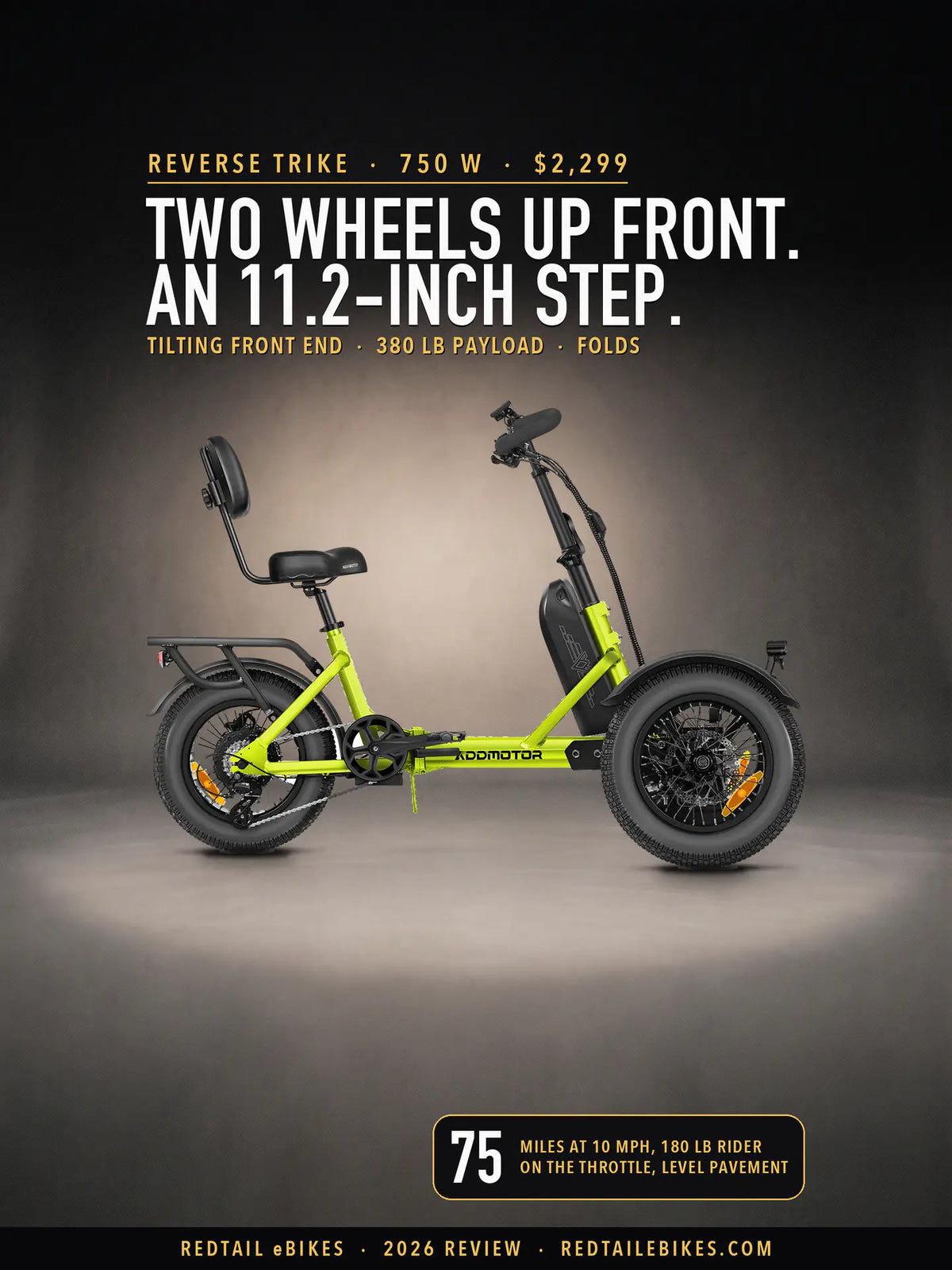
Share:
Minnesota eBike Laws (2026): All 87 Counties Checked
eBike Motor Guide (2026): Hub vs Mid-Drive, 26 Systems