



Quick Answer
West Virginia defines an e-bike in § 17C-1-70: two or three wheels, fully operable pedals, and "an electric motor of fewer than 750 watts," sorted into Class 1, 2 or 3. Inside that line you need no license, registration, title or insurance under § 17C-11-8(b). Riders under 15 wear a helmet, and state law sets no minimum age.
Read the watt line as written: "fewer than" puts a motor rated at exactly 750 watts outside it. Class 1 and Class 2 ride with a bicycle's rights on roads and trails where bicycles may go, and Class 3 stays off bike paths and trails unless the agency in charge "expressly permits" it.
Your town can say more. Of the 68 municipal codes we could read, 32 still print the under-16 Class 3 ban the Legislature struck in 2023, Parkersburg makes every e-bike rider wear a helmet and a fluorescent vest, and six codes set their bicycle helmet age above 15.
Shopping first? Of the 217 bikes we sell, 20 fit § 17C-1-70 as shipped, on the watt, pedal, wheel and speed figures their own listings print. The five below were chosen from that set for West Virginia's hills, rail-trails and towns, from $899 for the Qiolor TIGER JR. Every one ships free to West Virginia, with US support behind it.
Our five West Virginia picksIn this guide
- Are e-bikes legal in West Virginia?
- What West Virginia counts as an electric bicycle
- The 2023 rewrite, and the age rule it deleted
- What your bike becomes past the line
- License, registration and insurance
- Helmets and age
- The throttle clause that argues with itself
- Unlock menus and the tampering rule
- Lights, brakes and equipment
- Where you may ride
- Rail-trails and state parks
- Federal land: New River Gorge, Harpers Ferry and the Monongahela
- The Hatfield-McCoy Trails
- 230 towns: what the local codes add
- Riding under the influence
- The rebate, and who can claim it
- Our shelf against West Virginia's line
- Not an e-bike: mopeds, scooters and dirt bikes
- West Virginia eBike laws at a glance
- Which rule applies to you
- What the AI answers get wrong about West Virginia
- What a West Virginia e-bike ticket costs
- A West Virginia e-bike checklist
- If an officer stops you
- Renting an e-bike in West Virginia
- How West Virginia compares with its neighbors
- What changed, 2019 to 2026
- Where to read next
- The bottom line
- Why buy a West Virginia-legal e-bike from us
- Frequently asked questions
How we verified this guide
Every state rule below was read at the Legislature's own code site on September 26 and 27, 2026, and all 881 sections of the motor-vehicle chapters (17A, 17B, 17C, 17D and 17F) were read for e-bike terms rather than searched. Each bill named here was traced on its own history page, and the age rule's deletion was confirmed in the committee substitute's struck text.
The local layer is a census of all 230 incorporated places. Every one resolves to a code read in full or searched with a working control, or to no code published online, named either way. Figures for the bikes we sell come from our own listings, and the five picks' decisive figures were read at each maker's own site on September 26, 2026, with their prices and stock re-read on September 27.
Are e-bikes legal in West Virginia?
Yes, with no paperwork, as long as your machine fits the state's definition: on public roads in every class, and on the paths a bicycle can use if yours is a Class 1 or 2. The two sections that do the work are § 17C-1-70, which defines the electric bicycle, and § 17C-11-8, which sets its rules.
Under § 17C-11-8(a), the rider "has all of the rights and privileges and is subject to all of the duties applicable to the driver of a vehicle." Subsection (b) then lifts the machinery of motor-vehicle law: a person owning or operating an e-bike "is not subject to" the chapters on "registration, title, driver's license, and financial responsibility requirements."
So if your e-bike qualifies, you need no plate, no title, no license and no insurance, and you ride the road with a driver's rights and duties. What the law then adds is a short list: a class system, a Class 3 speedometer, a Class 3 limit on paths and trails, a helmet for riders under 15, a ban on riding impaired, and a ban on tampering.
One test decides everything else on this page. If your motor is rated under 750 watts, your bike has working pedals and two or three wheels, and it stops assisting at 20 mph (Class 1 or 2) or 28 mph while you pedal (Class 3), it is an e-bike in West Virginia. Miss any limb and your machine is something else, usually a moped.
What West Virginia counts as an electric bicycle
The definition is one sentence, and every word of it is a limb you can fail. § 17C-1-70 reads: "the term 'electric bicycle' means a two or three wheeled vehicle with fully operable pedals and an electric motor of fewer than 750 watts."
It then sorts machines into three classes. Class 1 "provides assistance only when the rider is pedaling" and stops at 20 mph; Class 2 "may be used exclusively to propel the bicycle" and "is not capable of providing assistance" at 20 mph; Class 3 assists only while you pedal and stops at 28 mph. The section also defines a "throttle" as "a device that controls the flow of power to the electric motor."
| Limb | What the statute says | What it means for your bike |
|---|---|---|
| Wheels | "two or three wheeled" | A trike qualifies; four wheels do not |
| Pedals | "fully operable pedals" | Footpegs alone take a machine out |
| Motor | "an electric motor of fewer than 750 watts" | 749 W is in; a 750 W rating is out |
| Class 1 | assists "only when the rider is pedaling," stops at 20 mph | Pedal assist to 20 mph |
| Class 2 | "may be used exclusively to propel," no assist at 20 mph | Throttle to 20 mph |
| Class 3 | assists only while pedaling, stops at 28 mph | Pedal assist to 28 mph, speedometer required |
Fewer than 750 watts means 750 is outside
West Virginia wrote its line exclusively. A motor "of fewer than 750 watts" can be rated at 749 watts, and a motor rated at 750 is past it.
That single word moves more than a third of our own shelf. Of the 217 bikes we list, 76 are rated at exactly 750 watts, and in West Virginia every one of them is outside the e-bike definition on its rating alone. In Maryland, Pennsylvania and Virginia, whose statutes write the ceiling inclusively, a 750-watt rating is inside.
The 2020 law used "less than 750 watts"; the 2023 rewrite changed the words to "fewer than" and kept the meaning. Neither version reaches 750.
Across all 217 bikes we sell, 37 are rated under 750 watts, 76 at exactly 750, 95 above it, and 9 print no rating.

Rated or peak? The Code does not say
A motor has a continuous rating and a short-burst peak, and a listing may print both. § 17C-1-70 says "an electric motor of fewer than 750 watts" and stops there: it does not say rated, nominal, continuous or peak, and no West Virginia agency page we read answers it.
Read as the rating, a motor sold as 500 W with an 1,100 W peak is a 500-watt motor and sits comfortably inside. Read as peak, the same motor is past the line. No West Virginia court has ruled on it in any reported decision we could find, so the question stays open both ways.
Our motor guide measures how far apart the two figures run. If you want no argument at all, choose a bike whose maker prints no peak above 750. Two of the five picks below print only a rating (the Eunorau G30-CARGO 2.0 and the DWMEIGI Hera); the other three print a peak at or above 750, and their cards say so.
Two or three wheels: trikes count
The wheel limb takes in trikes. "Two or three wheeled" brings adult electric trikes inside the definition, so a trike with pedals, a motor under 750 watts and a 20 mph limit is an e-bike here, with the same rights and the same freedom from registration.
That is a real buying fact. Two of our five West Virginia picks are trikes: a folding one, and a low step-through for riders who want three wheels under them.
One motor, or two
The statute speaks of "an electric motor" in the singular. A dual-motor bike with two 500-watt hubs has no motor over 750 watts, yet together they deliver more than 750.
Nothing in § 17C-1-70 settles whether the limb counts each motor or the pair, and we found no West Virginia ruling on it. Two dual-motor bikes on our shelf fall in that gap, and our screen reports them as unsettled rather than inside. If you want certainty, ride a single-motor bike under 750 watts.
Fitting a class, before and after 2023
The 2020 law required a class in terms. S.B. 660 defined an electric bicycle as a machine with "an electric motor of less than 750 watts that is a Class 1 electric bicycle or a Class 3 electric bicycle," according to its enrolled text.
The 2023 wording dropped that clause. It now says only that there is "a 'three-class system' to differentiate between the models and top-assisted speeds." Read one way, a pedal bike under 750 watts that fits no class (a throttle that pushes past 20 mph, say) is still an e-bike. Read the other way, the classes are the definition, and it is not.
The advice survives either reading: buy a bike its maker sells as Class 1, 2 or 3, and leave the speed setting where it ships.
The 2023 rewrite, and the age rule it deleted
West Virginia's e-bike law is six years old and has been rewritten once. S.B. 660 created it, passed March 6, 2020 and in effect June 4, 2020. It recognized only Class 1 and Class 3.
H.B. 2062 rewrote both sections in 2023. The Legislature's record shows it "Approved by Governor 3/8/2023," printed as Chapter 322 of the 2023 Acts, and in effect May 28, 2023. It added Class 2 and the throttle, gave Class 1 and Class 2 a bicycle's rights on roads and trails, added the rule that e-bikes get no "special access," and carried the 2020 Class 3 path rule forward unchanged.
It also deleted two age rules. The 2020 text said "(1) A person under 16 years of age may not operate a Class 3 electric bicycle" and let riders under 15 ride Class 3 only as passengers with an adult operator. The committee substitute strikes both lines, and the enrolled bill carries neither.
What remains in § 17C-11-8(i) is one clause, still numbered "(2)": a rider or passenger under 15 must wear a helmet. The "(1)" that numbering once followed is gone from the state's law, but it is still printed in 32 town codes, which the local section covers.
West Virginia law sets no minimum age for any class. If you read an under-16 Class 3 ban, you are reading the 2020 text: H.B. 2062 struck it, and it has not applied as state law since May 28, 2023.
What your bike becomes past the line
A machine that misses a limb of § 17C-1-70 does not become an unregulated bicycle. It lands in the motor-vehicle categories, each with its own license, registration and helmet duties.
The first stop is the moped. § 17C-1-5a defines one as a motorcycle or motor-driven cycle "equipped with two or three wheels, foot pedals to permit muscular propulsion, and an independent power source providing a maximum of two-brake horsepower," able to go no faster than 30 mph "unassisted," and it "excludes electric bicycles as defined in §17C-1-70." Two brake horsepower is 1,491.4 watts.
Above that, § 17C-1-5 makes a motor-driven cycle of any motorcycle "with not more than five brake horsepower," or 3,728.5 watts. Past that is a motorcycle under § 17C-1-4.
| Machine | Limb | What it needs in West Virginia |
|---|---|---|
| E-bike | pedals, 2 or 3 wheels, under 750 W, Class 1–3 | Nothing: no plate, title, license or insurance |
| Moped | pedals, 2 or 3 wheels, up to 2 bhp (1,491.4 W), 30 mph | Registration and title, insurance, a driver's license, and a motorcycle helmet, since a moped is defined as a kind of motorcycle |
| Motor-driven cycle | up to 5 bhp (3,728.5 W) | Registration and title, insurance, a motorcycle license or endorsement, helmet and eye protection |
| Motorcycle | a motor vehicle on up to three wheels | Registration and title, insurance, a motorcycle license or endorsement, helmet and eye protection |
So a 750-watt bike with pedals and a 20 mph limit is a moped on the published numbers in West Virginia, and a 1,000-watt pedal bike that can do 32 mph is past the moped's 30 mph and reads as a motor-driven cycle. Our e-moped guide is where to look if that is the machine you want to own openly.

License, registration and insurance
None, for a machine inside the definition. § 17C-11-8(b) says a person "owning or operating an electric bicycle is not subject to" the registration and title chapter (17A), the driver's license chapter (17B) or the financial-responsibility chapter (17D).
The 2020 act also wrote the exclusion into those chapters' own definitions: it excluded "an electric bicycle as defined in §17C-1-70" from the motorcycle definition in § 17A-1-1, according to S.B. 660's enrolled text.
A town can still ask. § 17C-2-8(a)(8) lets a local authority regulate "the operation of bicycles and requiring the registration and licensing of same, including the requirement of a registration fee." Six town codes require a bicycle license today, and Nitro requires a "motorized bicycle" to be registered; the local section lists them.
Insurance is a separate decision from the law. A homeowner's or renter's policy may or may not cover an e-bike, and the state requires neither, so read yours before you ride.
Helmets and age
A rider or passenger under 15 must wear a helmet. § 17C-11-8(i)(2) sends the duty through the Child Bicycle Safety Act: "A person under 15 years of age who is an operator or passenger on an electric bicycle shall wear a properly fitted and fastened bicycle helmet."
The helmet must be a "protective bicycle helmet," meaning one that "meets or exceeds" the standards of ANSI, Snell or ASTM for bicycling, as § 17C-11A-3(f) defines it. It is worn on "a public roadway, public bicycle path or other public right-of-way," under § 17C-11A-4.
The penalty falls on the parent. § 17C-11A-7 fines a parent or guardian $10, two hours of child-injury-prevention community service or both, lets the court waive a first fine on proof that a helmet was obtained, and makes a parent's inability to pay for the helmet "an absolute defense." § 17C-11A-6 keeps a violation out of any civil case as evidence of negligence.
Adults ride without a state helmet duty on any class. There is no state minimum age either: the under-16 Class 3 ban was deleted in 2023.
Where a town sets the helmet age higher
Six town codes set a bicycle helmet age above the state's 15: Clarksburg, Fairmont, South Charleston and Stonewood write it as under 18, Huntington as under 17, and Elkins as under 16. Westover's § 373.09 applies to "any person," with no age at all.
Two more go further on e-bikes by name, for nine town codes in all with a helmet rule wider than the state's. Vienna's 2025 ordinance requires a helmet on "an electric bicycle" through age 15, and Parkersburg requires one on every "motorized bicycle" at any age, which on its definition includes your e-bike.

Whether a town's bicycle helmet rule reaches your e-bike is argued both ways. § 17C-11-8(h)(1) makes Class 1 and Class 2 riders "subject to all of the duties of a traditional, non-electric bicycle," which carries a town's bicycle duties onto them.
Against that, 38 of the 68 codes we read define a bicycle as a device that "does not have a motor attached," as the state's § 17C-1-8 does, and five of these seven towns are among them. In those seven towns, wear the helmet and the question never arises.
The throttle clause that argues with itself
§ 17C-11-8 contains two subsections that do not agree. Subsection (e) says "The motor on an electric bicycle must disengage or cease to propel the electric bicycle when the operator stops pedaling, or when the operator applies the brakes and stops pedaling."
Subsection (g), added in 2023, says "Class 2 electric bicycles are permitted to use a throttle to propel the bicycle." A throttle propels the bike without pedaling, which subsection (e), read alone, forbids.
The 2023 act did not reconcile them; it left (e) in place and added (g) beside it. Read as a whole, the section's own definition of Class 2 as a motor that "may be used exclusively to propel the bicycle" and subsection (g) both describe a throttle bike, and the specific permission is the likelier reading. Read literally, (e) still says what it says.
What to do with that: a Class 2 throttle bike is sold and ridden across West Virginia under subsection (g). If you want no argument at all on a trail or in a park, pedal when you use the motor, which satisfies both subsections at once.
Unlock menus and the tampering rule
§ 17C-11-8(c) says "A person may not tamper with or modify an electric bicycle so as to change the motor-powered speed capability or motor engagement between pedal-assist and throttle-assist types of engagement." If a modification pushes a limit of § 17C-1-70 past its line, "that vehicle is no longer an electric bicycle."
Some of the bikes we sell ship with the change a menu away. Eunorau says of the Defender that riders "can UNLOCK the speed limit on the display for off-road use," and Qiolor says the TIGER JR's "default maximum speed is set to 20 MPH, which can be adjusted according to user preferences."
Whether changing a setting the maker built in counts as tampering is not something the section answers in words. The consequence is clear either way: a bike assisting past its class speed has left the definition, and with it the exemption from registration and licensing.
The same subsection carves out your own land: its rules "are not applicable to a modified electric bicycle operated solely and exclusively on a person's own property." Leave the setting where it ships on every public road and trail.
Lights, brakes and equipment
Your e-bike must meet the federal bicycle safety standard. § 17C-11-8(d) requires it to "comply with the equipment and manufacturing requirements for bicycles adopted by the United States Consumer Product Safety Commission (16 C.F.R. Part 1512)."
If you ride a Class 3, it must carry a speedometer "that displays the speed the electric bicycle is traveling in miles per hour," under subsection (f). No other class has that duty.
At night you follow the bicycle rules. § 17C-11-7 requires "a lamp on the front which emits a white light visible from a distance of at least five hundred feet" and "a red reflector on the rear" visible from 50 to 300 feet, and a brake that can "skid on dry, level and clean pavement." A red rear lamp may be added to the reflector.
The state writes no labeling duty. Nothing in § 17C-1-70 or § 17C-11-8 requires a class sticker. The one place in West Virginia that asks you for proof of class is federal land: New River Gorge.
Where you may ride
Public roads are open to a qualifying e-bike wherever bicycles may ride, with a vehicle driver's rights and duties under § 17C-11-8(a); a controlled-access road posted against bicycles under § 17C-7-13 is closed to you too.
On a roadway you ride like a cyclist: § 17C-11-5 puts you in the bike lane or "as close as practicable to the right-hand curb," with exceptions for passing, turning and a lane "too narrow for a bicycle and another vehicle to travel safely side by side," and no more than two abreast.
Paths and trails depend on the class. § 17C-11-8(h)(1) says Class 1 and Class 2 bikes "being used on roads and trails where traditional, non-electronic bicycle use is allowed will be given the same rights and privileges of a traditional, non-electric bicycle."
Class 3 is the exception. Under (h)(2), "A Class 3 electric bicycle may not be operated on a bicycle path, multiuse trail, or single-use trail unless it is within a highway or roadway," unless "the municipality, local authority, or governing body of a state agency that has jurisdiction over" the path "expressly permits that operation."
Two limits cut the other way. Subsection (h)(3) gives e-bikes no "special access beyond what traditional or non-electric bicycles are allowed," and (h)(4) leaves private owners free "to restrict or allow the operation of electric bicycles" on their land.
Sidewalks
State law has no sidewalk rule for bicycles or e-bikes at all; the whole of Chapter 17C carries none. The sidewalk is left to towns, and 36 of the 68 codes we read restrict bicycles there.
Where a town bars bicycles, the e-bike statute bars you as well. § 17C-11-8(h)(3) says e-bikes "will not be allowed on roads or trails or in areas where traditional, non-electric bicycle travel is prohibited," so a sidewalk closed to bicycles is closed to every class.
In 23 towns the code bars bicycles from every sidewalk, 18 of them outright and 5 unless council has marked a sidewalk as a bicycle route, and six more bar every rider 12 or older, or 15 or older, from every sidewalk. Parkersburg bars electric-assisted bicycles from all of its sidewalks by name. The local section lists every town.
If you do not know your town's rule, ride the street. No West Virginia law gives an e-bike a right to the sidewalk, and 36 of the 68 town codes we read keep bicycles off some or all of theirs.
Rail-trails and state parks
West Virginia's three state rail-trails take your Class 1 or Class 2 e-bike on the terms a bicycle rides them. Class 3 is the class to check before you go: the statute keeps it off multiuse trails unless the agency in charge "expressly permits" it, and only one of the three trails' official pages reads as a permission.
All three trails belong to the Section of Parks and Recreation. § 20-5-3 gives it the Greenbrier River Trail, the North Bend Rail Trail and the Elk River Trail, "including the protection of the trail from motorized vehicular traffic" on each. S.B. 501 added the Elk River Trail to that list, in effect May 12, 2020.
The parks' own rule is older than any e-bike law. 58 CSR 31, in force since June 1, 2006, keeps "motor vehicles including, but not limited to, trail bikes, motorbikes, snowmobiles, and all terrain vehicles" to public roads and posted routes, and lets "mountain and trail bicycles" use roads and trails.
The same rule defines those bicycles by their "pedals for propelling it by human power," and it allows a "motor driven vehicle" on the Greenbrier or North Bend trail only under a special use permit.
Neither text names an electric bicycle. The 2023 statute does: § 17C-11-8(h)(1) gives Class 1 and Class 2 "the same rights and privileges of a traditional, non-electric bicycle" on "roads and trails where traditional, non-electronic bicycle use is allowed," and bicycles are allowed on all three trails. The older "motorized vehicular traffic" wording could be read the other way, and no reported West Virginia decision has had to choose between the two.
| Trail | Length | What its manager says about e-bikes | Class 1 and 2 | Class 3 |
|---|---|---|---|---|
| Greenbrier River Trail | 78 miles | State Parks: "Class 1, 2, and 3 bicycle tires are permitted." The trail association: "Class 1 and Class 2 electric bicycles are allowed" | Ride | Permitted on the State Parks wording; the association names only 1 and 2 |
| North Bend Rail Trail | 72 miles | Nothing on e-bikes | Ride, under § 17C-11-8(h)(1) | Off it, absent express permission |
| Elk River Trail | 28 miles open of a proposed 72 | Nothing on e-bikes | Ride, under § 17C-11-8(h)(1) | Off it, absent express permission |
| Mon River trails, Morgantown | Not stated here | The conservancy: "Only non-motorized forms of transportation are allowed" | Contested | Off it, absent express permission |
The Greenbrier River Trail
The Greenbrier is the trail riders ask about by name, and its two sources part ways on one class. Its State Parks page says "Class 1, 2, and 3 bicycle tires are permitted," a sentence that reads as a permission for all three classes with one word out of place, and follows it with the under-15 helmet rule for e-bike riders.
The Greenbrier River Trail Association's visitor FAQ answers "Class 1 and Class 2 electric bicycles are allowed," asks riders to "be respectful of other trail users and don't fly past them," and notes "There is no dedicated place on the trail to charge these bikes." If you ride a Class 1 or 2, you are welcome under both texts; on a Class 3, you rely on the agency's single sentence.
Plan the 78 miles around your battery (our long-range guide sets out bikes built for distance), and set the tires for the surface: State Parks describes "packed limestone fines, so off-road bicycle tires are recommended." On the North Bend, the park's page counts 36 bridges and 10 tunnels, recommends "Wider track tires (above 1.5″)," and says "Bikers and hikers must yield to equine."
State parks, forests and campgrounds
Inside a state park or state forest the same two texts apply to you: 58 CSR 31 for where bicycles and motor vehicles may go, and § 17C-11-8(h)(1) for a Class 1 or 2 bike's right to go where the bicycles go. Bicycles "shall not be operated on horseback riding trails when they are open and operating as horseback riding trails," nor on any trail or road closed to them "by posted signs."
A breach is a misdemeanor under § 20-7-9: a fine of $20 to $300, 10 to 100 days in jail, or both. In a state park or state forest campground, 58 CSR 32, in force since May 19, 2025, bars bicycles after dark "except bicycles equipped with lights on both the front and rear," ridden with both lit.
Morgantown's trail system
The rail-trails around Morgantown sit under two texts that point different ways. The Mon River Trails Conservancy says "Only non-motorized forms of transportation are allowed with the exception of emergency and maintenance vehicles." Morgantown's own § 913.01 defines a shared-use path as one "designed for travel by pedestrians, bicycles, other nonmotorized transport, electric bicycles, electric scooters."
On a Class 1 or 2 you have § 17C-11-8(h)(1) and the city's definition on one side and the conservancy's rule on the other. Read the signs at the trailhead; where they say non-motorized, you ride the street.
West Virginia's share of the Great American Rail-Trail is the Panhandle Trail in the northern panhandle, and our route guide covers it with every other state on the line. Pipestem and Cass rent e-bikes inside the park system; the renting section has the details, and our 50-state trail atlas goes beyond West Virginia.
Federal land: New River Gorge, Harpers Ferry and the Monongahela
Federal land keeps e-bikes off almost every trail. New River Gorge opens one trail to e-bikes, Harpers Ferry keeps them to its streets, and the Monongahela National Forest keeps them off every trail.
| Place | Class 1 and 2 | Class 3 | Proof of class |
|---|---|---|---|
| New River Gorge, Gauley River, Bluestone | The Stone Cliff Trail, and park roads open to public vehicles | Park roads open to public vehicles only | A frame label or the maker's documentation, on the Stone Cliff Trail |
| Harpers Ferry | Streets where bicycles ride; no motor-only riding off vehicle roads | Same | None written |
| Monongahela National Forest | Roads open to public motor vehicles | Same | None written |
New River Gorge, the Gauley and the Bluestone
The New River Gorge National Park and Preserve, the Gauley River National Recreation Area and the Bluestone National Scenic River run under one superintendent's compendium, approved July 1, 2026. It opens a single trail: "The Stone Cliff Trail is the only trail open for e-bike use. Only Class 1 and Class 2 e-bikes may be used on the trail." The park's bicycling page lists that trail at 2.7 miles.
On it, under the compendium, riders "must be able to provide proof of their Class 1 or Class 2 e-bike classification either through manufacturer labeling on the e-bike frame or documentation from the manufacturer." Everywhere else, "Class 3 e-bikes are prohibited on all Park trails and administrative roads," while "Class 3 e-bikes may be used on all park roads that are open to public motor vehicle traffic."
The compendium draws the watt line where the state does. An e-bike there has "an electric motor of less than 750 watts (1 h.p.)," and a device at 750 watts or more "will be managed as a motor vehicle."
Carry the proof at New River Gorge. A class label on the frame, or the maker's own document naming the class, is what the compendium asks for on the Stone Cliff Trail. No other rule we read in West Virginia asks you to prove the class.
Harpers Ferry
Harpers Ferry National Historical Park allows e-bikes "where traditional bicycles are allowed" and prohibits them "where traditional bicycles are prohibited," under a compendium its superintendent signed on September 10, 2026. It adds: "Except where the use of motor vehicles by the public is allowed, using the electric motor to move an e-bike without pedaling is prohibited."
Where you may ride is short. "Cyclists are allowed to bike on the streets of Harpers Ferry, but are not permitted on sidewalks or park trails," says the park's bicycling page, and riding downhill from the entrance and Visitor Center parking lot is not permitted.
The towpath across the Potomac is the Chesapeake and Ohio Canal National Historical Park, on the Maryland side (our Maryland guide covers that state), and the footbridge asks riders to "dismount and walk your bicycle."
That bicycling page, last updated June 6, 2022, says helmets are "required by WV State Law for all riders under the age of 14." The Code's age is under 15, in § 17C-11A-4.
The Monongahela National Forest
The Monongahela National Forest "allows Class 1, 2, and 3 e-bikes on roads where public use of motorized vehicles is permitted," and its biking rules add: "Electronic bicycles (eBikes) are not allowed on Monongahela National Forest Trails." The forest's motor vehicle use map page states "No trails or areas (cross-country use) are open to motorized use on the Monongahela National Forest."
A sentence on the forest's page trips people up: "Although many National Forest roads are gated to exclude public motorized use, bicycles are permitted behind the gates." That permission is for your pedal bike, not your e-bike. Our mountain bike guide covers the class line on trails. Your e-bike rides only the roads the motor vehicle use map shows as open, and our public land guide sets out how national forests handle e-bikes everywhere.
The Hatfield-McCoy Trails
The Hatfield-McCoy system was built for off-highway machines, and one of its trail systems is single track for dirt bikes and e-bikes. The trails' own listing describes Tornado Single Trax, in Kanawha County, as "the first single track only trail system," "roughly 35 miles and open to dirt bikes and e-bikes," with its trailhead at 7900 Smith Creek Road in Tornado.
It is growing. WSAZ reported on September 16, 2026 that the Kanawha Parks and Recreation Board voted to take it "from 35 to 40 miles," on land the board already owns.
Riding it means riding under § 20-14-8. You need "a valid, nontransferable user permit issued by the authority and properly displayed"; nobody may be on a trail "from one-half hour after sunset until one-half hour before sunrise"; no child under 6 may be on any trail; and a rider under 16 stays "under the immediate supervision of, and within sight of," an adult at least 18.
Check your helmet before you load the bike. The trail rules say "Everyone must wear a DOT or Snell approved helmet and eye protection," and the statute's list for motor-vehicle riders names ANSI Z90.1, "Federal Motor Vehicle Safety Standard no. 218" and Snell's standards "for protective headgear for vehicle users." Read the label inside yours.
A violation is a misdemeanor with a fine of up to $100, and leaving the marked trail carries a $1,000 fine.
230 towns: what the local codes add
The town you ride in can change what the state's rules mean for you. Of the state's 230 incorporated places, 68 publish a code we could read: three wrote e-bike rules of their own, one adopted an e-bike amendment in August 2026 that is not yet in its published code, and 32 still print the under-16 rule the Legislature deleted in 2023.
The towns hold 601,282 people, 34.0% of the state's 1,769,979, by the Census Bureau's population estimates for 2024. The other two in three West Virginians live outside any town, where no municipal code applies to your ride.
| What the census found | Towns | People, 2024 | Share of town population |
|---|---|---|---|
| Code read in full, or searched with a working control | 68 | 476,245 | 79.2% |
| · E-bike rules of the town's own | 3 | 43,061 | 7.2% |
| · E-bike amendment adopted, text not yet published | 1 | 2,753 | 0.5% |
| · A copy of the state's e-bike rules, repealed age rule included | 31 | 164,526 | 27.4% |
| · A town rule whose reach to e-bikes is contested | 3 | 55,128 | 9.2% |
| · No e-bike rule found | 30 | 210,777 | 35.1% |
| No code published online | 161 | 123,513 | 20.5% |
| No code published at all (Shepherdstown) | 1 | 1,524 | 0.3% |
| All incorporated places | 230 | 601,282 | 100% |

Parkersburg, Vienna and Ravenswood wrote their own
Parkersburg calls your e-bike a "motorized bicycle." § 373.17, passed August 25, 2020, covers "a bicycle with two (2) or three (3) wheels, a seat or saddle, fully operative pedals for human propulsion, and an electric or gas powered motor" that can propel it "with or without pedal- assistance."
On Parkersburg's streets, § 373.17 asks five things of you and your electric motorized bicycle:
- It is "built by an original manufacturer" whose name is "clearly identified on such bicycle," so a home-built conversion would not meet it.
- Your headlight stays on "at all times on the street or highway," with a red rear lamp.
- You wear "a fluorescent vest, shirt or jacket."
- You and any passenger wear a helmet, at every age.
- You never ride "upon any public sidewalk."
The same section opens the city's paths: "Electric motorized bicycles shall be permitted on any designated multi-use path for pedestrians and bicycles as well as upon any bicycle path or trail within the City." That reads as the express permission § 17C-11-8(h)(2) asks for, so on a Class 3 you may use Parkersburg's own paths. A violation of the bicycle article is fined up to $50 under § 373.99.
Vienna wrote a full e-bike ordinance. § 375.03, passed October 23, 2025, copies the state's definition and classes, then says "No person fourteen (14) years of age or under may operate a Class 3 electric bicycle," with an exception for a rider under a parent's or guardian's "direct, physical supervision," "within line of sight and hearing distance," on streets posted 25 mph or less.
Under § 375.03, if you are 15 or younger you wear a helmet on any e-bike there, and the penalties climb from a "Written warning with corrective training" to $25 to $100, then $100 to $250. Vienna's older bicycle article still prints the state's 2020 under-16 rule, so the city's code carries two ages; the 2025 ordinance is the later text.
Ravenswood writes "bicycle or e bike" through its whole operating section, § 6.24.030, amended November 29, 2024. Where "a usable path for bicycles has been provided adjacent to a roadway, bicycle or e bike riders shall use such path and shall not use the roadway," and e-bikes stay off the sidewalks of the listed downtown blocks.
Under the heading "Riding in City Parks and Other BOPARC Venues," it adds: "Throttled e bikes shall not be operated on any trail or sidewalk." The same sentence sits in its parks section, § 2.16.030. On a Class 2 in a Ravenswood park, you keep to the roads.
Where a town's words may reach your e-bike
Nitro regulates a "motorized bicycle" under §§ 73.60 to 73.62, passed October 15, 2019: a bicycle "with two or three wheels, a seat or saddle, fully operative pedals for human propulsion, and an electric or gas powered motor," followed by the words "(but this definition excludes two- or three-wheeled vehicles)."
If that reaches your e-bike, Nitro asks for a free city registration permit with proof of liability insurance, a rider at least 16 "who have been issued a valid West Virginia driver's license," and streets posted 25 mph or less. It allows riding only from sunrise to two hours after sunset, with a helmet, and never on a sidewalk, multi-use path, bicycle path, trail or walking path.
We read its reach as contested. The definition's closing words exclude the two- and three-wheeled machines it opens with, and the ordinance predates the 2020 state law that exempts e-bikes from registration and licensing under § 17C-11-8(b).
Five towns' scooter rules are written in words a Class 1 or Class 2 e-bike fits. Charleston, South Charleston, Summersville, Wellsburg and Wheeling define a "motorized scooter" as a "non-balancing, tandem two-wheeled device" with handlebars, "designed to be stood upon or ridden by the operator," with an electric motor and a top speed of not more than 25 mph.
The consequences differ by town. South Charleston, Summersville and Wheeling prohibit motorized scooters on their streets and public property, and Wellsburg runs them under motorcycle traffic law with a motorcycle helmet.
Charleston leaves a "class 3 electric bicycle" out of the definition and no other class, and its § 114-918 sets 16 as the minimum age, keeps scooters off roads posted over 30 mph and off sidewalks, and allows no passenger, with fines of $100 to $500 for a first offense under § 114-920.
The other side is strong. § 17C-11-8(h)(1) gives Class 1 and Class 2 a bicycle's rights on roads, and § 17C-2-7 says no local authority may "enact or enforce any ordinance, rule, or regulation in conflict with the provisions of this chapter."
Each scooter article dates from 2003 to 2022, before the 2023 law gave Class 1 and Class 2 their bicycle rights. If you ride in one of these five towns, carry the maker's class documentation and keep to the rules a bicycle keeps.
32 codes still print the repealed age rule
Thirty-two town codes copy the 2020 state text, "under sixteen years of age may not operate a Class 3 electric bicycle," which H.B. 2062 deleted from state law in 2023. They are Barboursville, Bridgeport, Charles Town, Clarksburg, Dunbar, Gilbert, Glenville, Granville, Lewisburg, Man, Mannington, Marmet, Martinsburg, Moundsville, New Cumberland, Oceana, Paden City, Philippi, Point Pleasant, Ripley, South Charleston, Spencer, St. Albans, St. Marys, Star City, Summersville, Vienna, Westover, Wheeling, White Hall, White Sulphur Springs and Winfield.
Six of them also print the 2020 passenger rule ("A person under fifteen years of age may only be a passenger on a Class 3 electric bicycle"): Bridgeport, Philippi, Point Pleasant, St. Marys, White Hall and White Sulphur Springs. Four of those six print the 2020 definition too, under which an e-bike had to be "a Class 1 electric bicycle or a Class 3 electric bicycle," with no Class 2.
Whether a town copy still binds is a real question. § 17C-2-7 lets towns "adopt additional traffic regulations which are not in conflict" with the state chapter, and a town age floor the state no longer sets can be read as additional or as in conflict.
Until a court or the town settles it, a rider under 16 on a Class 3 in those 32 towns is inside state law and outside the town's printed words, so read your town's code before you decide.
Sidewalks, town by town
Thirty-six of the 68 codes restrict bicycles on sidewalks, and § 17C-11-8(h)(3) carries each restriction to your e-bike. Those 36 towns hold 306,249 people, 50.9% of the population that lives in towns.
- Every sidewalk, every rider (18): Barboursville, Bluefield, Clarksburg, Elkins, Kingwood, Lewisburg, Madison, Marlinton, Martinsburg, Moorefield, Moundsville, New Martinsville, Nitro, Oceana, Parsons, Pennsboro, Ripley and South Charleston.
- Every sidewalk unless council has marked it for bicycles (5): Charleston, Dunbar, Hurricane, Milton and Ranson.
- Every sidewalk from an age up (6): Charles Town, Parkersburg and St. Marys from 12; Granville, Vienna and Wheeling from 15.
- Part of the town, usually downtown (8): Beckley, Charles Town, Fairmont, Keyser, Philippi, Ravenswood, Summersville and Weston.
Parkersburg goes further for e-bikes by name: § 373.12(c)(5) says "A bicyclist may not operate an electric assisted bicycle on a sidewalk," even on the sidewalks a bicycle may use there.
Forty-one codes also carry a clause that reads "No person shall drive any vehicle, other than a bicycle, upon a sidewalk." Under a town definition of "bicycle" that excludes a device with a motor, your e-bike is that other vehicle, which reaches the sidewalk even in towns with no bicycle rule. Nineteen codes add a sidepath rule: where "a usable path for bicycles has been provided adjacent to a roadway," riders use it and leave the road.
Towns that license bicycles
Six codes require a bicycle license or registration: Elkins, Fairmont, Martinsburg, St. Marys, Weirton and Wellsburg. Fairmont exempts visitors in the city fewer than ten days, St. Marys and Weirton apply the rule to residents, and Weirton's license costs $0.50 a year. Huntington and Parkersburg offer a voluntary license, and Huntington requires one for delivery and rental bicycles.
§ 17C-11-8(h)(1) makes Class 1 and Class 2 riders subject to a bicycle's duties, which is the argument that a bicycle license rule reaches them; four of the six (Fairmont, Martinsburg, St. Marys and Wellsburg) define a bicycle as having no motor, which is the argument that it does not. Nitro's motorized bicycle permit, above, is the only local registration rule we found written for machines with motors.
Parks and town trails
Four towns write park rules that touch e-bikes. Ravenswood's throttle ban is above. Huntington's § 548.03 lets management close areas of Harris Riverfront Park to bicycles and scooters, and Oak Hill's 10.04.010 bars bicycles from City Park and Collins Park.
Morgantown's parks code, § 941.06(c), says "No person shall operate or cause to be operated any type of motor vehicle upon any area other than a designated public highway." It reaches an e-bike only if an e-bike is a "motor vehicle," and that is open.
The traffic chapter's § 17C-1-3 covers "every vehicle which is self-propelled," while § 1-8-1, enacted in 2025, leaves "electric bicycles" out of "motor vehicle" for its own purposes.
Fayetteville's amendment, adopted and not yet published
Fayetteville's council approved on second reading, on August 20, 2026, a motion "adding E-Bikes to Article 309," by a vote of 4 to 0, according to its meeting minutes. The first reading was on July 16, after a May 21 meeting at which the mayor said riders were using "scooters and E-Bikes on the health trail" without yielding to pedestrians.
Article 309 covers "skateboards, roller skates, roller blades, luge boards or any other personally propelled vehicle." As published today, it lets police "immediately impound the device" on a citation, fines a first offense up to $50 with one month's impoundment, and rises to $100 to $300 for a second within six months.
The amended text was not in the town's published code when we read it on September 26, 2026, so what it asks of e-bikes cannot be read yet.
The 162 towns we could not read
Of the 230 towns, 161 publish no code online, and Shepherdstown's code is not published at all; together they hold 125,037 people, 20.8% of the town population. Most are small; the two largest are Buckhannon, at 5,049, and Grafton, at 4,575. The full list is in the scope notes.
If you live in one of them, state law is the floor and town hall is the source: ask your town clerk whether the council has adopted a bicycle or e-bike ordinance. Parkersburg wrote its rule in 2020, Ravenswood in 2024 and Vienna in 2025, and Fayetteville's minutes show another on the way.
Riding under the influence
West Virginia wrote an impaired-riding rule into the e-bike section itself. § 17C-11-8(j) says: "A person under the influence of alcohol or controlled substances shall not operate a Class 1, Class 2 or Class 3 electric bicycle." Breaking it is a misdemeanor under § 17C-11-1(a), with the chapter's general penalty in § 17C-18-1: a fine of up to $100 or up to 10 days in jail for a first conviction.
Whether the full DUI statute applies as well is argued both ways. § 17C-5-2(e) reaches "Any person who drives a vehicle on any public highway or private road in this state" while impaired, with up to six months in jail, a fine of $100 to $500 and revocation of the "license to operate a motor vehicle."
An e-bike fits the Code's "vehicle": § 17C-1-2 covers every device that carries a person on a highway "except devices moved by human power," and § 17C-11-8(a) gives the rider "all of the duties applicable to the driver of a vehicle."
Against that, subsection (j) reads as the Legislature's own answer for e-bikes, and no reported West Virginia decision has applied § 17C-5-2 to one. Ride sober: if you ride impaired, do not count on the lighter penalty being the only one you face.
The rebate, and who can claim it
The state pays no e-bike rebate that we could find. The whole West Virginia Code names electric bicycles in six sections and none of them is about money, and the state Office of Energy's efficiency page lists no e-bike program. One utility does pay.
Appalachian Power's Go Electric program, open to "Residential customers in the Appalachian Power West Virginia service territory," lists "E-Bike $15 each" and "E-Bike - Battery Charger - D.O.E. Compliant $10 each," and the "Incentive received cannot exceed the cost of the equipment." Its FAQ sets the clock: "rebates must be submitted within 45 days of purchase or by January 15th of the following year, whichever comes first."
| Utility | West Virginia customers, 2024 | E-bike incentive |
|---|---|---|
| Appalachian Power | 418,138 | $15 per e-bike, $10 per DOE-compliant charger |
| Mon Power (FirstEnergy) | 397,195 | None: "Our energy efficiency programs are no longer available" |
| Potomac Edison (FirstEnergy) | 157,242 | None, same FirstEnergy page |
| Wheeling Power | 41,240 | Not read |
| Harrison Rural Electrification Association | 7,041 | None on the pages read |
| Black Diamond Power | 3,933 | Not read |
| Philippi municipal electric | 2,453 | None on the pages read |
| New Martinsville municipal electric | 1,738 | Not read |
| Craig-Botetourt Electric Cooperative | 493 | None on the pages read |
Customer counts are the Energy Information Administration's Form 861 for 2024. The FirstEnergy notice is on its West Virginia energy page, last modified September 18, 2018. Fifteen dollars will not change which bike you buy, so claim it if you are an Appalachian Power customer, and choose the bike on the law and the ride.
Our shelf against West Virginia's line
We screened all 217 bicycles we sell, as listed in our catalog on September 26, 2026, against § 17C-1-70, reading each listing's motor rating, pedals, wheels, top speed and throttle, which are the statute's own limbs. Five listings that are not bicycles (three scooters, an electric balance bike and an accessories kit) are left out of that count.
| Verdict against § 17C-1-70 | Bikes |
|---|---|
| Inside: pedals, two or three wheels, rated under 750 W, a class speed | 20 |
| Inside on each motor's rating, but with two motors (unsettled) | 2 |
| Outside: rated at 750 W, the figure "fewer than 750" excludes | 76 |
| Outside: rated over 750 W | 93 |
| Outside: assists past its class speed, or throttles past 20 mph | 8 |
| Outside: no pedals | 2 |
| Our listing does not settle the pedals | 12 |
| Our listing prints no top speed | 4 |
| All bicycles we sell | 217 |
Twenty of 217 clear the statute on their published figures, and two dual-motor bikes clear it motor by motor. The 76 at exactly 750 watts are the West Virginia trap: inside the line in Maryland, Pennsylvania and Virginia, outside it here.
Of the 179 outside, 89 read as mopeds on their published numbers, 73 as motor-driven cycles or motorcycles, and 2, without pedals, as motorcycles; for 15 more, our listings leave the moped question open. If the bike you want is one of the 16 our listings leave undecided, write to us with the model and we will read the maker's own figures before you order.

Five bikes that fit West Virginia
Each of the five below clears § 17C-1-70 on its maker's rated motor figure, its pedals, its wheels and an assist that stops at 20 mph or sooner, and each suits a different West Virginia ride. Two print only a rating; the other three also print a peak at or above 750 watts, which matters only on the peak reading of the statute.
 The CMB in Metallic Silver, in the image Vtuvia's own page shows for this model: a step-through frame with the motor at the cranks.
VTUVIA CMB 8-Speed
$1,399 · maker's list $1,899For the hills between you and work. A mid-drive pulls through the gears, and Vtuvia rates this one at 500 W with "175Nm torque for effortless hill climbing," the highest torque figure printed for any of the five picks. You get a step-through frame, a 100 mm hydraulic fork and a 48V 15Ah battery, sold as "Class 2 pedal assist with optional throttle."
Vtuvia also prints "750W Peak Mid-Drive Power." On the rated reading of "fewer than 750 watts" the CMB sits well inside; on a peak reading, 750 is the line itself. Vtuvia sets its top speed at 20 MPH "due to UL certification requirements" and lets the owner change it; keep it at 20 on public roads and trails. Free shipping to West Virginia, and US support behind it.
 The TIGER JR in black, in Qiolor's own product image: fat 20 × 4.0 tires under a retro frame.
Qiolor TIGER JR
$899 · maker's list $1,399The lowest price on this list, and at home on gravel. Qiolor's retro commuter runs a 500 W rear motor on CHAOYANG 20 × 4.0 tires with a suspension fork, and Qiolor rates it for "up to 70 miles with pedal assistance or 40 miles using just the throttle" on its 48V 15Ah battery. It weighs 87 lb, with a 400 lb maximum load.
Qiolor ships it "as a Class II e-bike" with its speed "set to 20 MPH," and says that setting "can be adjusted"; leave it where it ships on any public road or trail (the tampering rule explains why). Qiolor prints a 750 W peak beside the 500 W rating. Free shipping to West Virginia.
 The G30-CARGO 2.0 in orange, in Eunorau's own product image: a long rear rack on 20 × 3.0 tires.
Eunorau G30-CARGO 2.0
$1,699For the school run and the grocery haul. The G30-CARGO 2.0 carries a 440 lb payload on Kenda 20 × 3.0 tires, with a 48V/500W geared rear hub, a rear rack, fenders, lights and a 7-speed Shimano drivetrain. Eunorau rates its range at 35 to 65 miles "with dual batteries," and it stops assisting at 20 mph with only the 500 W rating printed.
Carrying a child? The 2023 law dropped the old Class 3 passenger rule, and a passenger under 15 still wears a helmet. Our G30-CARGO review has the rest. Free shipping to West Virginia.
 The Citytan M-315 in cyan, in Addmotor's own product image: a folding trike on 3.0-inch tires.
Addmotor Citytan M-315
$1,199Three wheels that fold. The Citytan M-315 is a folding electric trike with 3.0-inch tires, a 48V 13.5Ah battery and a 20 mph top speed, and Addmotor gives its payload as "230+80 LBS." It weighs "about 95 LBS (Include Battery)," by Addmotor's own answer.
Order the 500 W version for West Virginia: Addmotor also sells a 750 W version, and "fewer than 750 watts" leaves it out. Addmotor's spec strip prints "Peak 1100W" without naming the version; if you want no argument on the peak reading, the Hera below prints no peak. Free shipping to West Virginia.
 The Hera in blue, in DWMEIGI's own product image: a low step-through trike with a large rear basket.
DWMEIGI MG708 Hera
$1,499Three wheels and a low step. DWMEIGI's Hera is a three-wheeled step-through with a 15-inch down tube, 24-inch wheels, Shimano 7 gears and a 19 × 15 × 10-inch cargo basket, sized by DWMEIGI for riders from 4 ft 11 in to 6 ft 2 in.
Its 350 W motor and 15 mph top speed keep it far inside West Virginia's line, and DWMEIGI prints no peak figure. Range is 25 miles in "E-Bike Mode" and 35 in "Assisted Mode," by DWMEIGI's figures. Free shipping to West Virginia.
Two of the five, the Addmotor Citytan and the DWMEIGI Hera, are trikes because West Virginia's "two or three wheeled" wording lets them in.
The Eunorau G30-CARGO 2.0 is the one two-wheeler that prints only its 500 W rating, and the VTUVIA CMB 8-Speed and Qiolor TIGER JR are the two that print a 750 W peak beside it.
Want another model from the same makers? We carry more from Vtuvia, Qiolor, Eunorau, Addmotor and DWMEIGI; read each listing's motor rating against "fewer than 750 watts" before you order. Three of the makers have full profiles: Eunorau, Qiolor and Addmotor. All five assist to 20 mph or less, which also keeps them inside the Class 1 and Class 2 rights on rail-trails and on the Stone Cliff Trail, as long as you carry the class proof there.
Every pick ships free to West Virginia. All five clear § 17C-1-70 on their makers' own rated figures, and each comes with US support. Shop Pay installments are available at checkout.
Back to the five picksNot an e-bike: mopeds, scooters and dirt bikes
Three other machines get sold as e-bikes and ride under different West Virginia rules, and if you buy one expecting an e-bike's freedoms, you may find a motor vehicle's paperwork or a town's scooter ban instead.
A moped is where the largest group of over-the-line bikes lands: 89 of the 179 on our own shelf. § 17C-1-5a makes a moped of "every motorcycle or motor-driven cycle" with pedals, two or three wheels and up to two brake horsepower, whose power source can move it "unassisted, at a speed not to exceed 30 miles per hour."
On a moped you need registration, a title, insurance and a driver's license, and because the definition calls it a kind of motorcycle, § 17C-15-44 reads its helmet and eye-protection rule onto it. Our e-moped guide covers owning one openly.
A stand-up scooter has no West Virginia statute of its own: the whole Code uses the word "scooter" once, in a firearms section. The nearest definition, the "electric personal assistive mobility device" in § 17C-1-66, is "a self-balancing, two nontandem-wheeled device," so an ordinary kick-style e-scooter falls to town rules, including the five scooter articles in the local section.
An electric dirt bike with no pedals is outside § 17C-1-70 and outside the moped definition, which requires foot pedals. On a public road it is a motorcycle or motor-driven cycle, and you need a plate, a title and a motorcycle license; off-road, the Hatfield-McCoy system's Tornado Single Trax is built for it, under a trail permit. Our electric dirt bike guide answers where each state puts them.
West Virginia eBike laws at a glance
In West Virginia your e-bike needs no plate, title, license or insurance if its motor is rated under 750 watts and it has working pedals and a class; riders and passengers under 15 wear a helmet, and a Class 3 stays off paths and trails unless the agency in charge permits it.
| Question | The answer | Where it is written |
|---|---|---|
| What is an e-bike? | Two or three wheels, fully operable pedals, a motor "of fewer than 750 watts," Class 1, 2 or 3 | § 17C-1-70 |
| Is 750 W allowed? | No: "fewer than 750" excludes a 750 W rating | § 17C-1-70 |
| License, registration, title, insurance? | None | § 17C-11-8(b) |
| Minimum age? | None in state law since May 28, 2023 | § 17C-11-8(i) |
| Helmet? | Under 15, rider or passenger, any class | § 17C-11-8(i)(2); § 17C-11A-4 |
| Class 1 and 2 on trails? | Yes, where bicycles are allowed | § 17C-11-8(h)(1) |
| Class 3 on paths and trails? | No, unless the agency in charge expressly permits it | § 17C-11-8(h)(2) |
| Sidewalks? | No state rule; towns decide, and a town's bicycle ban reaches e-bikes | § 17C-11-8(h)(3) |
| Class 3 speedometer? | Required | § 17C-11-8(f) |
| Lights at night? | White front lamp visible 500 ft, red rear reflector | § 17C-11-7 |
| Changing the speed or throttle? | Banned; past a limit it stops being an e-bike | § 17C-11-8(c) |
| Riding impaired? | Banned for all three classes | § 17C-11-8(j) |
| Federal equipment standard? | 16 C.F.R. Part 1512 | § 17C-11-8(d) |
| New River Gorge trails? | Stone Cliff Trail only, Class 1 and 2, with proof of class | NPS compendium |
| Monongahela National Forest trails? | No e-bikes on trails | Forest Service |
Which rule applies to you
"I commute in Charleston on a Class 2 bike."
Ride the street with a bicycle's rights under § 17C-11-8(h)(1), and stay off the sidewalk: Charleston's § 114-706 says "No person shall ride any bicycle upon any sidewalk within the city" unless council has signed it as a bicycle route.
Carry the maker's class documentation, because the city's scooter article is written in words a Class 2 fits, and the documentation is how you show what the bike is. Our commuter guide has more city picks.
"My 14-year-old wants a Class 3."
State law allows it: no minimum age has applied since May 28, 2023, and the rider wears a helmet until 15. Two things can still stop the ride.
Vienna bars Class 3 riders 14 and younger except under a parent's or guardian's direct supervision on streets posted 25 mph or less, and 32 town codes still print the old under-16 rule. Class 3 stays off paths and trails everywhere unless the agency in charge permits it, so a Class 1 or 2 bike takes a teenager more places.
"I already own a 750-watt bike."
It is outside "fewer than 750 watts," so West Virginia reads it as a moped if it has pedals and stays at or under 30 mph: registration, a title, insurance, a driver's license and a motorcycle helmet. It loses the rail-trails and the Stone Cliff Trail, which are open to e-bikes, not mopeds. The fix going forward is a bike rated under 750; the five picks all are.
"I want to ride the Greenbrier River Trail."
Bring a Class 1 or Class 2 and you are welcome under both the State Parks page and the trail association's FAQ. A Class 3 rests on the State Parks sentence alone. Plan your charge before you set out, since the trail association notes no dedicated place on the trail to charge, and fit tires for packed limestone.
"We're heading to New River Gorge."
The Stone Cliff Trail is the one trail open to e-bikes, for Class 1 and 2 only, with a frame label or the maker's documentation showing the class. A Class 3 stays on park roads open to public vehicles. Every other trail in the park is closed to every class of e-bike.
"I hunt from an e-bike on a wildlife management area."
The management-area rule, 58 CSR 43, in force since May 9, 1995, says bicycles "are permitted only on roads normally open to public travel and designated routes as posted on the area," and bars motorbikes except where signs permit them. Read with § 17C-11-8(h)(1), a Class 1 or 2 follows the bicycle routes and a Class 3 keeps to the roads unless a posting expressly permits it.
H.B. 5066 would have prohibited e-bikes for hunting in 2024; it went to committee on January 24, 2024 and was not enacted. Our hunting guide covers every state.
"I'm riding in Parkersburg."
Bring a factory-built bike with the maker's name on it, turn the headlight on even in daylight, and wear a fluorescent vest and a helmet. Stay off every sidewalk, and use the city's paths and trails: Parkersburg permits electric bicycles on them by name, Class 3 included.
What the AI answers get wrong about West Virginia
We asked one AI search engine ten West Virginia e-bike questions on September 26, 2026, seven of them Google's own search suggestions, and checked each answer against the Code. Five of the ten said a Class 3 rider "must be at least 16." That rule was deleted by H.B. 2062 and has not been state law since May 28, 2023.
Three answers said the motor "cannot be more powerful than 750 watts," which puts a 750-watt motor inside a line the statute draws below it. Two tied a helmet to Class 3, where the Code ties it to age, under 15, on every class.
Another said every e-bike sold in West Virginia "must have a permanent label"; the words "label" and "labeling" appear nowhere in § 17C-1-70 or § 17C-11-8, and the only label rule we found is New River Gorge's proof-of-class requirement.
Three answers said e-bikes are "treated as bicycles," which is true for Class 1 and 2 on roads and trails where bicycles go and not for Class 3 there. One gave the governor's signature on H.B. 2062 as March 9, 2023; the Legislature's record says "Approved by Governor 3/8/2023."
Five of the ten answers cited a 2020 advocacy handout that predates the 2023 law, and no answer mentioned a town ordinance, a sidewalk, the Monongahela or the motor-disengage clause. Before you rely on an AI answer, check it against the section it should cite.
What a West Virginia e-bike ticket costs
| What went wrong | What it costs | Where it is written |
|---|---|---|
| Breaking an e-bike rule in § 17C-11-8 | A misdemeanor: up to $100 or 10 days for a first conviction; up to $200 or 20 days, or both, for a second within a year; up to $500 or six months, or both, after that | § 17C-11-1(a), § 17C-18-1 |
| A rider under 15 without a helmet | The parent or guardian is fined $10, given two hours of community service, or both; a first fine can be waived on proof of a helmet | § 17C-11A-7 |
| Riding impaired, if § 17C-5-2 applies | Up to six months in jail, $100 to $500, and license revocation | § 17C-5-2(e) |
| Breaking a state park, forest or rail-trail rule | $20 to $300, 10 to 100 days in jail, or both | § 20-7-9 |
| Hatfield-McCoy rules | Up to $100; $1,000 for leaving the marked trail | § 20-14-8(n) |
| Parkersburg's bicycle article | Up to $50 | § 373.99 |
| Vienna's e-bike ordinance | A written warning, then $25 to $100, then $100 to $250 | § 375.03 |
| Fayetteville's Article 309, if it reaches e-bikes | Up to $50 and a month's impoundment; $100 to $300 for a second within six months | § 309.99 |
| Charleston's scooter article, if it reaches e-bikes | $100 to $500 for a first offense; $250 to $500 after | § 114-920 |
A violation of the helmet rule is kept out of any civil case as evidence of negligence by § 17C-11A-6, and under § 17C-11A-7(c) a parent's inability to pay for the helmet is "an absolute defense."
A West Virginia e-bike checklist
Eight checks cover what West Virginia asks of you and your bike, from the watt rating to your town's code, and each one comes from a statute, a park rule or a town code quoted on this page.
- Motor rated under 750 watts. 749 is in; 750 is out.
- Pedals that work, two or three wheels, assist that stops at 20 mph (Class 1 or 2) or 28 mph while pedaling (Class 3).
- Class 3? A speedometer, and no paths or trails unless the agency in charge permits it.
- Speed and throttle settings left as shipped, unless you ride only on your own land.
- Under 15? A helmet, rider or passenger, on every class.
- A white headlight and a red rear reflector at night.
- The class label or the maker's documentation with you at New River Gorge, and in the five towns with scooter articles.
- Your town's code read for sidewalks, helmets, licensing and parks, or a call to the town clerk where no code is online.
If an officer stops you
Stop, stay calm and have the facts ready. Whether your bike is an e-bike turns on its motor rating, its class and its top speed, so carry them from the maker's label or spec sheet. A photo of the listing on your phone is better than nothing; New River Gorge asks for the maker's label on the frame or the maker's own documentation.
If you are cited, the ticket names the section. State rules are in Chapter 17C of the Code, and a town rule is in that town's published code, most of them linked in the local section. A citation under a town copy of the deleted under-16 rule is worth reading closely with § 17C-2-7 beside it.
Renting an e-bike in West Virginia
Three state parks list e-bike rentals on West Virginia State Parks' own pages. Pipestem Resort State Park charges "$35 per 1.5 hour session" from Memorial Day to Labor Day, for ages 8 and up with 8- to 12-year-olds accompanied by an adult, and riders under 17 need a parent's or guardian's signature on the waiver.
Cass Scenic Railroad State Park "has mountain bikes and e-bikes available for rent" at its Company Store, beside the Greenbrier River Trail. At Stonewall Resort, "Bikes, as well as 'E-Bikes' can be rented through Fat Tire Cycle & Sport on the property."
At Harpers Ferry the park's bicycling page lists five local rental businesses, and the park's e-bike rules above apply to whatever you rent. A rented e-bike is still held to its class: a Class 3 rental stays off paths and trails unless the agency in charge permits it, and a rider under 15 wears a helmet.
How West Virginia compares with its neighbors
| State | The motor limb, in its own words | Is a 750 W rating inside? | Our guide |
|---|---|---|---|
| West Virginia | "an electric motor of fewer than 750 watts" (§ 17C-1-70) | No | This page |
| Ohio | "electric motor of less than seven hundred fifty watts" (R.C. 4511.01) | No | Ohio |
| Pennsylvania | "rated at not more than 750 watts" (75 Pa.C.S. § 102) | Yes | Pennsylvania |
| Maryland | "motor with a rating of 750 watts or less" (Transp. § 11-117.1) | Yes | Maryland |
| Virginia | "electric motor with an input of no more than 750 watts" (§ 46.2-100) | Yes | Virginia |
| Kentucky | No e-bike definition in its statutes | No figure to meet | Kentucky |
West Virginia is not alone below the line. Texas uses the same words, "fewer than 750 watts," and Alabama, Arizona, Arkansas, Florida, Idaho, Illinois, Kansas, Louisiana, Maine, Missouri, New Hampshire, New York, Tennessee and Vermont write "less than," as Ohio, Mississippi and Wyoming do. Connecticut shares West Virginia's two words only until October 1, 2026, when P.A. 26-24 changes them to "not more than."
On the other side, Georgia, Iowa, Minnesota, Nevada, Oklahoma and Utah write "not more than," as Pennsylvania does. Montana, New Jersey, Oregon and the District of Columbia set no watt figure at all.
Crossing a border can change what your bike is. A 750-watt bike that is an e-bike in Pennsylvania, Maryland or Virginia is a moped on West Virginia's numbers, and West Virginia shares its exclusive wording with Ohio across the river.
What changed, 2019 to 2026
| Date | What changed |
|---|---|
| October 2, 2019 | New River Gorge opens the Stone Cliff Trail to Class 1 and 2 e-bikes, in a park news release |
| October 15, 2019 | Nitro regulates "motorized bicycles" by ordinance |
| May 12, 2020 | S.B. 501 puts the Elk River Trail, with the Greenbrier and North Bend, under Parks and Recreation |
| June 4, 2020 | S.B. 660, the first e-bike law: Class 1 and Class 3 only, an under-16 Class 3 ban |
| August 25, 2020 | Parkersburg's motorized bicycle ordinance |
| February 14, 2022 | S.B. 560, "Defining Class 2 e-bikes," passes the Senate and stops in House Judiciary |
| May 28, 2023 | H.B. 2062: Class 2 and the throttle, bicycle rights on trails, the age rule deleted |
| January 24, 2024 | H.B. 5066, to bar e-bikes from hunting, goes to committee and is not enacted |
| November 29, 2024 | Ravenswood writes "e bike" through its bicycle rules and bars throttled e-bikes from park trails |
| May 19, 2025 | 58 CSR 32 sets the after-dark lighting rule for bicycles in state campgrounds |
| July 3, 2025 | S.B. 573's § 1-8-1 limits power-source restrictions on vehicles, e-bikes excluded |
| October 23, 2025 | Vienna's e-bike ordinance |
| January 19, 2026 | S.B. 485, a "Behavior-Based E-Bike and Multi-Use Trail Mobility Act," goes to committee and is not enacted |
| July 1, 2026 | New River Gorge's current compendium is approved, keeping the Stone Cliff Trail rule |
| August 20, 2026 | Fayetteville adds e-bikes to Article 309 on second reading |
| September 16, 2026 | The Tornado Single Trax expansion is approved |
S.B. 485 would have replaced the classes on trails with "behavior-based" ones, set by conduct "rather than device design, wattage, labeling, or manufacturer class," with default limits of 12 to 15 mph on narrow natural-surface trails and 20 mph on paved paths. Its history page shows no action after its referral, so it changed nothing.

Where to read next
West Virginia's rules connect to several of our other guides: the 50-state table, the five neighboring states, federal land, hunting, the Great American Rail-Trail, and the machines past the watt line if that is the bike you want.
- Electric bike laws in every state, the 50-state table this page's row belongs to.
- The neighbors: Ohio, Pennsylvania, Maryland, Virginia and Kentucky.
- E-bikes on public land, for national forests and parks beyond the Monongahela and New River Gorge.
- E-bikes and hunting, state by state, with the West Virginia management-area rule in its national context.
- The Great American Rail-Trail on an e-bike, including the Panhandle Trail.
- Electric mopeds, for a bike past the line that you want to own openly.
- Dual-motor e-bikes, the machines "an electric motor" leaves unsettled.
- The full Eunorau G30-CARGO 2.0 review, for the cargo pick and the school run.
The bottom line
Buy a bike rated under 750 watts, with working pedals and assist that stops at its class speed, and West Virginia asks for nothing else on the road. No plate, title, license or insurance, no state minimum age, and a helmet only under 15.
Then check the ground you ride. Class 1 and 2 go where bicycles go; Class 3 stays off paths and trails unless the agency in charge says otherwise. New River Gorge opens one trail and asks for proof of class, and the Monongahela keeps e-bikes off its trails. Parkersburg, Vienna and Ravenswood wrote rules of their own, and 32 town codes, Vienna's older bicycle article among them, still print the age rule the state deleted.
The five picks all clear the watt line on their makers' own ratings. If you are between two of them, tell us where you ride and we will tell you which one fits.
Why buy a West Virginia-legal e-bike from us
Every figure about our bikes on this page is verified against the maker's published specification and screened against § 17C-1-70's own limbs, so you can check the statute yourself before you buy. For the 16 listings the screen leaves undecided, write to us and we will read the maker's figures for you before you order.
Shipping is free on every electric bike within the contiguous United States, West Virginia included, and orders are prepared and dispatched within one to three business days, according to our shipping policy. Support is US-based, by phone or email, before and after you buy.
With Shop Pay, the $899 TIGER JR could be split into 4 interest-free payments of $224.75 every 2 weeks. The four picks over $1,000 pay monthly instead: the $1,199 Citytan, for one, comes to 12 monthly payments of $108.22 at 15% APR.
Rates from 0-36% APR. Payment options through Shop Pay Installments are subject to an eligibility check and are provided by these lending partners: affirm.com/lenders. Options depend on your purchase amount, and a down payment may be required. State notices to consumers: affirm.com/licenses.
Five bikes, one line, free shipping to West Virginia. Each pick is rated under 750 watts on its maker's own figure, stops assisting by 20 mph, and comes with US support. Pay over time with Shop Pay at checkout.
Choose your West Virginia bikeFrequently asked questions
Are e-bikes street legal in West Virginia?
Yes. If your bike fits § 17C-1-70, rated under 750 watts with working pedals and a class speed, you ride public roads with a vehicle driver's rights and duties and need no plate, title, license or insurance under § 17C-11-8(b). If your machine is past any limb, it is usually a moped, which needs all four.
Do you need a license to ride an electric bike in West Virginia?
No. § 17C-11-8(b) takes your e-bike out of the driver's license, registration, title and financial-responsibility chapters. Six towns (Elkins, Fairmont, Martinsburg, St. Marys, Weirton and Wellsburg) license bicycles, and whether that reaches an e-bike is argued both ways, so check your town if you live in one of them.
What is the minimum age to ride an e-bike in West Virginia?
There is none in state law; what the state asks of your child is a helmet under 15. The 2020 ban on riders under 16 operating a Class 3 was deleted by H.B. 2062, effective May 28, 2023.
Vienna bars Class 3 riders 14 and younger except under a parent's or guardian's direct supervision on streets posted 25 mph or less, and 32 town codes still print the deleted under-16 rule, so read your town's code before your teenager rides a Class 3.
Does West Virginia have a helmet law for e-bikes?
Yes, by age. If you are under 15, you must wear "a properly fitted and fastened bicycle helmet" on any class, and so must any passenger under 15, under § 17C-11-8(i)(2).
As an adult you have no state helmet duty, but Parkersburg requires one on every e-bike rider, Vienna on e-bike riders 15 and younger, Westover on every bicycle rider, and six other towns extend their bicycle helmet rule to riders under 16, 17 or 18.
Is a 750W e-bike legal in West Virginia?
Not as an e-bike. The statute says "an electric motor of fewer than 750 watts," so if your motor is rated at 750 it is past the line and your bike reads as a moped: registration, a title, insurance, a driver's license and a motorcycle helmet. If yours is rated at 749 watts or less, it is inside.
Are Class 2 throttle e-bikes legal in West Virginia?
Yes, since May 28, 2023. § 17C-11-8(g) says "Class 2 electric bicycles are permitted to use a throttle to propel the bicycle," and on a Class 2 you have a bicycle's rights on roads and trails where bicycles go. Subsection (e), older wording that asks the motor to cut out when you stop pedaling, still sits beside it.
Where can I ride a Class 3 e-bike in West Virginia?
On roads, with a speedometer, anywhere you may ride a bicycle. Off the road, § 17C-11-8(h)(2) keeps your Class 3 off bicycle paths, multiuse trails and single-use trails unless the agency in charge "expressly permits" it; Parkersburg permits it on its city paths and trails, and the Greenbrier River Trail's State Parks page reads as a permission.
Are e-bikes allowed on sidewalks in West Virginia?
State law says nothing about sidewalks, so your town decides, and a town that bars bicycles bars your e-bike too under § 17C-11-8(h)(3). Thirty-six of the 68 town codes we read restrict bicycles on sidewalks, and Parkersburg bars "an electric assisted bicycle" from every sidewalk by name.
Are e-bikes allowed on the Greenbrier River Trail?
Yes, if yours is a Class 1 or Class 2, on both the State Parks page and the trail association's FAQ. For Class 3, the State Parks page reads "Class 1, 2, and 3 bicycle tires are permitted," while the association names only Classes 1 and 2. The association adds that the 78-mile trail has no dedicated place to charge, so plan your range before you set out.
Can I ride an e-bike at New River Gorge?
On one trail. The park's compendium says "The Stone Cliff Trail is the only trail open for e-bike use," for Class 1 and 2 only, and you must be able to show the class by the maker's label on the frame or the maker's own documentation. On a Class 3 you may use park roads open to public vehicles; every other park trail is closed to e-bikes.
Can I ride an e-bike on Monongahela National Forest trails?
No. The forest says "Electronic bicycles (eBikes) are not allowed on Monongahela National Forest Trails," and allows Class 1, 2 and 3 only on roads open to public motor vehicles, as its motor vehicle use map shows. A gated road you could ride on a pedal bike is closed to your e-bike.
Do you need a license for a moped in West Virginia?
Yes. A moped is a motor vehicle in West Virginia, so you need registration and a title, insurance and a driver's license. Your bike with pedals becomes a moped here when its motor is rated at 750 watts or more, up to two brake horsepower, and it stays at or under 30 mph.
Are electric scooters legal in West Virginia?
The state has no scooter statute: the whole Code uses the word "scooter" once, in a firearms section. Your town decides. Charleston allows motorized scooters on streets posted 30 mph or less for riders 16 and older, while South Charleston, Summersville and Wheeling prohibit them on streets and public property.
Are dirt bikes street legal in West Virginia?
Only as motorcycles or motor-driven cycles, so you need registration, a title, insurance and a motorcycle license or endorsement. An electric dirt bike without pedals is outside the e-bike definition and the moped definition alike. Off-road, you can ride Tornado Single Trax, in the Hatfield-McCoy system, on a dirt bike or an e-bike with a trail permit.
What is the legal e-bike speed limit in West Virginia?
The classes set where your motor must stop helping: 20 mph for Class 1 and Class 2, 28 mph for Class 3, which needs a speedometer. Posted speed limits apply to you as they do to any driver, and if you change your bike to assist faster than its class, it is no longer an e-bike under § 17C-11-8(c).
Did Senate Bill 485 change West Virginia e-bike trail law?
No. S.B. 485, the "Behavior-Based E-Bike and Multi-Use Trail Mobility Act," was introduced and sent to the Senate Transportation and Infrastructure Committee on January 19, 2026, and the Legislature's record shows no later action. The class rules in § 17C-11-8(h) still govern where you ride on trails.
Can I use an e-bike for hunting in West Virginia?
On wildlife management areas, bicycles "are permitted only on roads normally open to public travel and designated routes as posted on the area," under 58 CSR 43. On a Class 1 or 2 you follow those bicycle routes; on a Class 3 you keep to the roads unless a posting expressly permits it. H.B. 5066 of 2024, which would have barred e-bikes from hunting, was not enacted.
Where can I rent an e-bike in West Virginia?
Pipestem Resort State Park rents them at $35 for a 1.5-hour session from Memorial Day to Labor Day, Cass Scenic Railroad State Park rents them at its Company Store beside the Greenbrier River Trail, and Stonewall Resort rents them through the shop on its property. The same class rules apply to your rental as to a bike you own.
Is the Hatfield-McCoy trail system open to e-bikes?
Tornado Single Trax, in Kanawha County, is "open to dirt bikes and e-bikes," and a September 16, 2026 vote approved taking it from 35 to 40 miles. You need a Hatfield-McCoy permit; no one under 6 may ride; riders you bring who are under 16 stay in sight of an adult; and the trails close from half an hour after sunset.
What this page does not cover
County ordinances were outside this census, which covered West Virginia's 230 incorporated places; about two in three West Virginians live outside them, where state law and any county rule apply. Private land sets its own terms under § 17C-11-8(h)(4). This page is guidance for riders and is not legal advice for a particular dispute.
The towns with no code published online, 161 of them, are these:
- A to B (28): Addison (Webster Springs), Albright, Alderson, Anawalt, Anmoore, Athens, Auburn, Bancroft, Barrackville, Bath (Berkeley Springs), Bayard, Beech Bottom, Belington, Belle, Belmont, Benwood, Bethany, Bethlehem, Beverly, Blacksville, Bolivar, Bradshaw, Bramwell, Brandonville, Bruceton Mills, Buckhannon, Buffalo, Burnsville.
- C to F (30): Cairo, Camden-on-Gauley, Cameron, Capon Bridge, Carpendale, Cedar Grove, Chapmanville, Chester, Clay, Clearview, Clendenin, Cowen, Danville, Davis, Davy, Delbarton, Durbin, East Bank, Elizabeth, Elk Garden, Ellenboro, Fairview, Falling Spring, Farmington, Flatwoods, Flemington, Follansbee, Fort Gay, Franklin, Friendly.
- G to K (29): Gary, Gassaway, Gauley Bridge, Glasgow, Glen Dale, Grafton, Grant Town, Grantsville, Hambleton, Hamlin, Handley, Harman, Harpers Ferry, Harrisville, Hartford City, Hedgesville, Henderson, Hendricks, Hillsboro, Hinton, Hundred, Huttonsville, Iaeger, Jane Lew, Junior, Kenova, Kermit, Keystone, Kimball.
- L to M (17): Leon, Lester, Logan, Lumberport, Mabscott, Mason, Masontown, Matewan, McMechen, Meadow Bridge, Middlebourne, Mill Creek, Mitchell Heights, Monongah, Montrose, Mount Hope, Mullens.
- N to R (27): New Haven, Newburg, North Hills, Northfork, Oakvale, Paw Paw, Pax, Petersburg, Peterstown, Piedmont, Pine Grove, Pineville, Pleasant Valley, Poca, Pratt, Pullman, Quinwood, Rainelle, Reedsville, Reedy, Richwood, Ridgeley, Rivesville, Romney, Ronceverte, Rowlesburg, Rupert.
- S to T (13): Salem, Sand Fork, Sistersville, Smithers, Smithfield, Sophia, Sutton, Sylvester, Terra Alta, Thomas, Thurmond, Triadelphia, Tunnelton.
- U to Z (17): Union, Valley Grove, War, Wardensville, Wayne, Welch, West Hamlin, West Liberty, West Logan, West Milford, West Union, Whitesville, Williamson, Williamstown, Windsor Heights, Womelsdorf (Coalton), Worthington.
Shepherdstown publishes no code at all. Together the 162 hold 125,037 people.
How we verified this guide, in detail
Written by Milad Ghobadibeygvand, BScN (Western University, 2014), who writes this journal and reviews the bikes for it. Our evidence on this page is data and math: every figure about our bikes is verified against the maker's published specification and recomputed against § 17C-1-70's own limbs on the date stated.
Every rule is quoted from its primary source: the West Virginia Code at the Legislature's own site, the Code of State Rules at the Secretary of State, the Legislature's bill records, a federal park's or forest's own compendium or page, or a town's own code at its publisher. No rule rests on a summary, a competitor's guide or an AI answer.
Six re-runnable instruments back the page. The first three read the state's law: all 881 sections of Chapters 17A, 17B, 17C, 17D and 17F, all of Chapter 20, and a whole-Code search for every e-bike term with a working control.
The other three read the record around it: a ledger of the 25 e-bike and trail bills found by searching every session from 2019 to 2026, each read on its own history page; a census of all 230 towns against their own codes, with section-level links asserted against the saved text; and a screen of all 217 bicycles we sell against § 17C-1-70.
First-party datasets published with this guide:
-
research/state-laws/west-virginia/wv-local-ledger_20260927.csv: all 230 towns, population, code status and verdict -
research/state-laws/west-virginia/wv-local-findings_20260927.csvandwv-local-citations_20260927.csv: every town rule quoted, with its section-level link -
research/state-laws/west-virginia/wv-legal-product-screen_20260927.csv: all 217 bicycles we sell against the statute's limbs -
research/state-laws/west-virginia/wv-bill-status_20260927.csv: the 25 e-bike and trail bills, introduced 2020 to 2026 -
research/state-laws/west-virginia/wv-code-fulltext_20260927.csv: the whole-Code search, with its control -
research/state-laws/west-virginia/wv-amlegal-code-currency_20260927.csv: how current each of 53 town codes is -
research/state-laws/west-virginia/wv-utility-incentives_20260926.csv: every retail electric utility in the state, checked for an e-bike incentive -
keywords/harvest/west-virginia-ebike-laws_20260926.csv: the demand harvest behind this page's questions
Corrections go to support@redtailebikes.com, and we publish them.
Last verified: September 27, 2026. State code read September 26, 2026; town codes read September 26 and 27, 2026; makers' pages read September 26, 2026, with prices and stock re-read September 27, 2026.
The source register
Every rule on this page rests on a first-tier source you can open yourself: the Code, the bill records and the state rules, each land manager's own page, and each town's own code. The two trail groups and the one news report are cited only for what they say.
| Source | Tier | What it supports | Read |
|---|---|---|---|
| W. Va. Code, Chapter 17C and related sections | T1 statute | The definition, classes, rights, age and helmet rules, penalties | Sep 26–27, 2026 |
| W. Va. Code, Chapter 20 | T1 statute | Rail-trails, park penalties, the Hatfield-McCoy rules | Sep 26, 2026 |
| W. Va. Code § 1-8-1 | T1 statute | The power-source rule that excludes e-bikes | Sep 27, 2026 |
| West Virginia Legislature bill records | T1 legislative record | Enactment, effective dates, struck text, the bills that died | Sep 26, 2026 |
| Code of State Rules, 58 CSR 31, 32 and 43 | T1 regulation | State parks, campgrounds, rail-trails and wildlife management areas | Sep 27, 2026 |
| New River Gorge compendium | T1 land manager | The Stone Cliff Trail rule and proof of class | Sep 26, 2026 |
| Harpers Ferry compendium | T1 land manager | E-bikes where bicycles go; no motor-only riding | Sep 26, 2026 |
| Monongahela National Forest | T1 land manager | Roads only; no e-bikes on trails | Sep 26, 2026 |
| West Virginia State Parks | T1 land manager | Rail-trail pages and rentals | Sep 26, 2026 |
| Hatfield-McCoy Trails | T1 land manager | Tornado Single Trax and its rules | Sep 26, 2026 |
| Town codes at AmLegal, Municode and municipalcodeonline | T1 local law | Every ordinance quoted, at the town's own publisher | Sep 26–27, 2026 |
| Census Bureau population estimates | T1 federal statistics | Town and state populations, 2024 | Sep 26, 2026 |
| EIA Form 861 and the utilities' own pages | T1 federal statistics, T1 utility | Customer counts and the one e-bike incentive | Sep 26, 2026 |
| Neighboring states' statutes | T1 statute | Each neighbor's watt wording | Sep 24–26, 2026 |
| Greenbrier River Trail Association, Mon River Trails Conservancy | T3 trail group | What each group tells visitors | Sep 26–27, 2026 |
| WSAZ | T3 news | The Tornado expansion vote | Sep 26, 2026 |
| Our own catalog screen and the five picks' maker pages | First-party, T1 maker | 217 bikes against the statute; the five picks' figures, prices and stock | Sep 26–27, 2026 |
Limitations
What this page could not settle, and what would settle it, so you can see which answers are firm and which are open. Each item names the condition that retires it.
- 162 of the 230 towns could not be read: 161 publish no code online and Shepherdstown publishes none. They hold 125,037 people, 20.8% of the town population, and are unresolved, not clean. Expires when those codes are published or read by another route.
- Rated or peak watts. § 17C-1-70 says "an electric motor of fewer than 750 watts" and names neither. Expires on a West Virginia decision, an agency statement or an amendment.
- One motor or two. Whether the watt limb counts each motor or the pair is unsettled. Expires the same way.
- Class membership after 2023. Whether a bike under 750 watts that fits no class is still an e-bike is unsettled. Expires the same way.
- Subsections (e) and (g). The motor-disengage clause and the Class 2 throttle permission sit side by side unreconciled. Expires on an amendment or a decision.
- Maker unlock menus. Whether changing a built-in setting is "tamper with or modify" is unanswered in words. Expires the same way.
- Town copies of the deleted age rule. Whether the 32 town copies bind under § 17C-2-7 is unsettled. Expires when a court rules or the towns amend their codes.
- Town rules written for other machines. The reach of Nitro's motorized bicycle article and five towns' scooter articles to e-bikes is contested, as is the reach of bicycle helmet, license and sidewalk rules through § 17C-11-8(h)(1). Expires on a decision or an amendment.
- Impaired riding. Whether § 17C-5-2 applies to an e-bike beside § 17C-11-8(j) is unsettled. Expires on a reported decision.
- Fayetteville's amendment. Adopted August 20, 2026; its text was not in the town's published code, which is current through October 2, 2025. Expires when the amendment is codified.
- Class 3 on the Greenbrier River Trail. The State Parks page and the trail association differ. Expires when State Parks publishes a rule or a clarification.
- Case law. The search covered reported appellate and federal district opinions; circuit, magistrate and municipal rulings are not in that index. Expires with each new reported decision.
- Town code currency varies. The 53 codes at AmLegal run from "Complete to October 31, 2017" (Princeton) to local legislation current through July 20, 2026 (Charles Town), so a finding of no rule is only as current as each town's last codification. Expires at each town's next codification.
- Sixteen of our 217 listings leave the pedals or the top speed open, and the maker re-read covered the five picks, not every listing. Expires as those listings are completed from the makers' specifications.
- Three utilities could not be read: Wheeling Power, Black Diamond Power and New Martinsville's municipal utility. Expires on a successful read.
- The AI answers quoted come from one AI search engine on September 26, 2026. Other engines refused automated questions from this machine that day. Expires at the next panel run.
- Search volumes were not measured. No figure on this page is a search volume, and the questions it answers come from observed searches, forums and competitor headings. Expires when a keyword-volume pull is run.
References
Every source below was retrieved and read on the date stated. West Virginia Code citations point at the Legislature's own code site, and town ordinances at each town's own publisher.
- West Virginia Legislature. West Virginia Code § 17C-1-70, § 17C-1-70 (current version, as read). https://code.wvlegislature.gov/17C-1-70/ Accessed September 26, 2026.
- West Virginia Legislature. West Virginia Code § 17C-11-8, § 17C-11-8 (current version, as read). https://code.wvlegislature.gov/17C-11-8/ Accessed September 26, 2026.
- City of Parkersburg. Codified Ordinances of Parkersburg, § 373.17 (Ord. 0-1653, passed 2020-08-25). https://codelibrary.amlegal.com/codes/parkersburg/latest/parkersburg_wv/0-0-0-24146#JD_373.17 Accessed September 26, 2026.
- West Virginia Legislature. Senate Bill 660 (2020 Regular Session), bill history and enrolled text, Complete bill history; Com. Sub. enrolled text (2020-03-06). https://www.wvlegislature.gov/Bill_Status/bills_history.cfm?input=660&year=2020&sessiontype=RS&btype=bill Accessed September 26, 2026.
- West Virginia Legislature. Enrolled Committee Substitute for House Bill 2062 (2023), § 17C-11-8(i) (2023-03-08). https://www.wvlegislature.gov/bill_status/bills_text.cfm?billdoc=hb2062%20sub%20enr.htm&yr=2023&sesstype=RS&i=2062 Accessed September 26, 2026.
- West Virginia Legislature. House Bill 2062 (2023 Regular Session), bill history, Complete bill history, actions (2023-03-08). https://www.wvlegislature.gov/Bill_Status/bills_history.cfm?input=2062&year=2023&sessiontype=RS&btype=bill Accessed September 26, 2026.
- West Virginia Legislature. Committee Substitute for House Bill 2062 (2023), § 17C-11-8(i), struck text (2023). https://www.wvlegislature.gov/bill_status/bills_text.cfm?billdoc=hb2062%20sub.htm&yr=2023&sesstype=RS&i=2062 Accessed September 26, 2026.
- West Virginia Legislature. West Virginia Code § 17C-1-5a, § 17C-1-5a (current version, as read). https://code.wvlegislature.gov/17C-1-5A/ Accessed September 26, 2026.
- West Virginia Legislature. West Virginia Code § 17C-1-5, § 17C-1-5 (current version, as read). https://code.wvlegislature.gov/17C-1-5/ Accessed September 26, 2026.
- West Virginia Legislature. West Virginia Code § 17C-1-4, § 17C-1-4 (current version, as read). https://code.wvlegislature.gov/17C-1-4/ Accessed September 26, 2026.
- West Virginia Legislature. West Virginia Code § 17A-1-1, § 17A-1-1 (current version, as read). https://code.wvlegislature.gov/17A-1-1/ Accessed September 26, 2026.
- West Virginia Legislature. West Virginia Code § 17C-2-8, § 17C-2-8 (current version, as read). https://code.wvlegislature.gov/17C-2-8/ Accessed September 26, 2026.
- West Virginia Legislature. West Virginia Code § 17C-11A-3, § 17C-11A-3 (current version, as read). https://code.wvlegislature.gov/17C-11A-3/ Accessed September 26, 2026.
- West Virginia Legislature. West Virginia Code § 17C-11A-4, § 17C-11A-4 (current version, as read). https://code.wvlegislature.gov/17C-11A-4/ Accessed September 26, 2026.
- West Virginia Legislature. West Virginia Code § 17C-11A-7, § 17C-11A-7 (current version, as read). https://code.wvlegislature.gov/17C-11A-7/ Accessed September 26, 2026.
- West Virginia Legislature. West Virginia Code § 17C-11A-6, § 17C-11A-6 (current version, as read). https://code.wvlegislature.gov/17C-11A-6/ Accessed September 26, 2026.
- City of Westover. Codified Ordinances of Westover, § 373.09 (current codification, as read). https://codelibrary.amlegal.com/codes/westover/latest/westover_wv/0-0-0-4467#JD_373.09 Accessed September 26, 2026.
- West Virginia Legislature. West Virginia Code § 17C-1-8, § 17C-1-8 (current version, as read). https://code.wvlegislature.gov/17C-1-8/ Accessed September 26, 2026.
- Eunorau. DEFENDER, product page, specifications (undated). https://eunorau-ebike.com/products/defender Accessed September 26, 2026.
- Qiolor. TIGER JR, product page, specifications (undated). https://qiolor.com/products/tiger-jr Accessed September 26, 2026.
- West Virginia Legislature. West Virginia Code § 17C-11-7, § 17C-11-7 (current version, as read). https://code.wvlegislature.gov/17C-11-7/ Accessed September 26, 2026.
- West Virginia Legislature. West Virginia Code § 17C-7-13, § 17C-7-13 (current version, as read). https://code.wvlegislature.gov/17C-7-13/ Accessed September 26, 2026.
- West Virginia Legislature. West Virginia Code § 17C-11-5, § 17C-11-5 (current version, as read). https://code.wvlegislature.gov/17C-11-5/ Accessed September 26, 2026.
- West Virginia Legislature. West Virginia Code § 20-5-3, § 20-5-3 (current version, as read). https://code.wvlegislature.gov/20-5-3/ Accessed September 26, 2026.
- West Virginia Legislature. Senate Bill 501 (2020 Regular Session), bill history and signed enrolled text, Complete bill history; § 20-5-3(k) (2020). https://www.wvlegislature.gov/Bill_Status/bills_history.cfm?input=501&year=2020&sessiontype=RS&btype=bill Accessed September 26, 2026.
- West Virginia Secretary of State, Division of Natural Resources. 58 CSR 31, Public Use of West Virginia State Parks, State Forests, and State Wildlife Management Areas, §§ 58-31-2.19, 2.19.a, 2.19.b, 2.22, 3.2 (2006-06-01). https://apps.sos.wv.gov/adlaw/csr/readfile.aspx?DocId=16192&Format=PDF Accessed September 27, 2026.
- West Virginia State Parks. Greenbrier River Trail Activities, Biking (modified 2025-07-15, per the page's own metadata). https://wvstateparks.com/parks/greenbrier-river-trail/activities/ Accessed September 26, 2026.
- West Virginia State Parks. North Bend Rail Trail Activities, Biking (modified 2025-06-27, per the page's own metadata). https://wvstateparks.com/parks/north-bend-rail-trail/activities/ Accessed September 26, 2026.
- West Virginia State Parks. Elk River Trail Activities, Biking (modified 2025-02-14, per the page's own metadata). https://wvstateparks.com/parks/elk-river-trail/activities/ Accessed September 26, 2026.
- Mon River Trails Conservancy. Trail Rules & Tips, Trail rules (undated). https://montrails.org/trail-rules-tips/ Accessed September 27, 2026.
- Greenbrier River Trail Association. Plan Your Visit, Frequently Asked Questions, Are e-bikes allowed on the Greenbrier River Trail? (modified 2026-09-08, per the page's own metadata). https://www.greenbrierrivertrail.com/plan-your-visit/ Accessed September 26, 2026.
- West Virginia Legislature. West Virginia Code § 20-7-9, § 20-7-9 (current version, as read). https://code.wvlegislature.gov/20-7-9/ Accessed September 26, 2026.
- West Virginia Secretary of State, Division of Natural Resources. 58 CSR 32, Public Use of Campgrounds in West Virginia State Parks and State Forests and Campsites in State Rail Trails, § 58-32-2.12 (2025-05-19). https://apps.sos.wv.gov/adlaw/csr/readfile.aspx?DocId=58050&Format=PDF Accessed September 27, 2026.
- City of Morgantown. Code of Ordinances of Morgantown, § 913.01 (Ord. No. 21-09, 2021-04-20). https://library.municode.com/wv/morgantown/codes/code_of_ordinances?nodeId=PTNINESTUTPUSECO_CHONESTSIAR_ART913SIPA_S913.01DE Accessed September 26, 2026.
- National Park Service, New River Gorge National Park and Preserve. Superintendent's Compendium, 36 CFR 1.5 closures and use restrictions, e-bikes (2026-07-01). https://www.nps.gov/neri/learn/management/superintendents-compendium.htm Accessed September 26, 2026.
- National Park Service, New River Gorge National Park and Preserve. Bicycling, E-bikes; trail list (last updated September 16, 2022, as printed on the page). https://www.nps.gov/neri/planyourvisit/bicycling.htm Accessed September 26, 2026.
- National Park Service, Harpers Ferry National Historical Park. Superintendent's Compendium, E-bikes (2026-09-10). https://www.nps.gov/hafe/learn/management/superintendent-s-compendium-live.htm Accessed September 26, 2026.
- National Park Service, Harpers Ferry National Historical Park. Bicycling, Bicycling at Harpers Ferry; rentals (2022-06-06). https://www.nps.gov/hafe/planyourvisit/bicycling.htm Accessed September 26, 2026.
- USDA Forest Service, Monongahela National Forest. Biking, E-Biking; Rules and Regulations (last updated April 15, 2026, as printed on the page). https://www.fs.usda.gov/r09/monongahela/recreation/opportunities/biking Accessed September 26, 2026.
- USDA Forest Service, Monongahela National Forest. Motor Vehicle Use Maps, Motor Vehicle Use on Monongahela National Forest (last updated December 1, 2025, as printed on the page). https://www.fs.usda.gov/r09/monongahela/maps-guides/motor-vehicle-use-maps Accessed September 26, 2026.
- Hatfield-McCoy Regional Recreation Authority. Choose A Trail, Tornado (modified 2024-06-25, per the page's own metadata). https://trailsheaven.com/plan-your-trip/choose-a-trail/ Accessed September 26, 2026.
- WSAZ. Hatfield-McCoy Trail to expand in Kanawha County, Article (2026-09-16). https://www.wsaz.com/2026/09/16/hatfield-mccoy-trail-expand-kanawha-county/ Accessed September 26, 2026.
- West Virginia Legislature. West Virginia Code § 20-14-8, § 20-14-8 (current version, as read). https://code.wvlegislature.gov/20-14-8/ Accessed September 26, 2026.
- Hatfield-McCoy Regional Recreation Authority. Trail Rules & Regulations, General Rules (modified 2021-03-17, per the page's own metadata). https://trailsheaven.com/about-the-trails/trail-rules-regulations/ Accessed September 26, 2026.
- U.S. Census Bureau. Annual Estimates of the Resident Population for Incorporated Places, Vintage 2024 (West Virginia), SUMLEV 040 and 162, POPESTIMATE2024 (2025). https://www2.census.gov/programs-surveys/popest/datasets/2020-2024/cities/totals/sub-est2024_54.csv Accessed September 26, 2026.
- City of Parkersburg. Codified Ordinances of Parkersburg, § 373.99(a) (Ord. A-2747, passed 1974-08-13). https://codelibrary.amlegal.com/codes/parkersburg/latest/parkersburg_wv/0-0-0-24146#JD_373.99 Accessed September 26, 2026.
- City of Vienna. Codified Ordinances of Vienna, § 375.03 (Ord. 07-2025, passed 2025-10-23). https://codelibrary.amlegal.com/codes/vienna/latest/vienna_wv/0-0-0-19485#JD_375.03 Accessed September 26, 2026.
- City of Ravenswood. Ravenswood Municipal Code, 6.24.030 (Am. Ord. passed 2024-11-29). https://ravenswood.municipalcodeonline.com/book/print?type=ordinances&name=6.24.030_Operation Accessed September 26, 2026.
- City of Ravenswood. Ravenswood Municipal Code, 2.16.030 (Am. Ord. passed 2024-11-19). https://ravenswood.municipalcodeonline.com/book/print?type=ordinances&name=2.16.030_Board_Of_Parks_And_Recreation_Commissioners Accessed September 26, 2026.
- City of Nitro. Code of Ordinances of Nitro, §§ 73.60-73.62 (Ord. passed 2019-10-15). https://codelibrary.amlegal.com/codes/nitrowv/latest/nitro_wv/0-0-0-5318#JD_73.60 Accessed September 26, 2026.
- City of Charleston. Code of Ordinances of Charleston, § 114-915 (Bill No. 7956, 2022-08-15). https://library.municode.com/wv/charleston/codes/code_of_ordinances?nodeId=PTIICOOR_CH114TROR_ARTXIVMOSC_S114-915DE Accessed September 26, 2026.
- City of Charleston. Code of Ordinances of Charleston, § 114-918 (Bill No. 7956, 2022-08-15). https://library.municode.com/wv/charleston/codes/code_of_ordinances?nodeId=PTIICOOR_CH114TROR_ARTXIVMOSC_S114-918PRAC Accessed September 26, 2026.
- City of Charleston. Code of Ordinances of Charleston, § 114-920 (Bill No. 7956, 2022-08-15). https://library.municode.com/wv/charleston/codes/code_of_ordinances?nodeId=PTIICOOR_CH114TROR_ARTXIVMOSC_S114-920PE Accessed September 26, 2026.
- West Virginia Legislature. West Virginia Code § 17C-2-7, § 17C-2-7 (current version, as read). https://code.wvlegislature.gov/17C-2-7/ Accessed September 26, 2026.
- City of Parkersburg. Codified Ordinances of Parkersburg, § 373.12(a), (c)(5) (current codification, as read). https://codelibrary.amlegal.com/codes/parkersburg/latest/parkersburg_wv/0-0-0-5688#JD_373.12 Accessed September 26, 2026.
- City of Huntington. Codified Ordinances of Huntington, § 548.03 (current codification, as read). https://library.municode.com/wv/huntington/codes/code_of_ordinances?nodeId=CO_PTFIVEGEOFCO_ART548PAREAR_548.03BIOTTOVEHARIPA Accessed September 26, 2026.
- City of Oak Hill. Oak Hill Municipal Code, 10.04.010 (Ord. 2-19-91; 12-3-96). https://oakhill.municipalcodeonline.com/book/print?type=ordinances&name=10.04.010_Street_Obstructions_And_Special_Uses Accessed September 26, 2026.
- City of Morgantown. Code of Ordinances of Morgantown, § 941.06(c) (Ord. No. 16-37, 2016-07-19). https://library.municode.com/wv/morgantown/codes/code_of_ordinances?nodeId=PTNINESTUTPUSECO_CHFIVEOTPUSE_ART941PAREFA_S941.06MOVE Accessed September 26, 2026.
- West Virginia Legislature. West Virginia Code § 17C-1-3, § 17C-1-3 (current version, as read). https://code.wvlegislature.gov/17C-1-3/ Accessed September 26, 2026.
- West Virginia Legislature. West Virginia Code § 1-8-1, § 1-8-1 (current version, as read). https://code.wvlegislature.gov/1-8-1/ Accessed September 27, 2026.
- Town of Fayetteville. Council meeting minutes, August 20, 2026, 2nd reading adding E-Bikes to Article 309 (2026-08-20). https://codelibrary.amlegal.com/codes/fayetteville/latest/m/2026/8/20/ Accessed September 26, 2026.
- Town of Fayetteville. Codified Ordinances of Fayetteville, Article 309, §§ 309.01-309.99 (Passed 2025-05-15). https://codelibrary.amlegal.com/codes/fayetteville/latest/fayetteville_wv/0-0-0-16630 Accessed September 26, 2026.
- West Virginia Legislature. West Virginia Code § 17C-11-1, § 17C-11-1 (current version, as read). https://code.wvlegislature.gov/17C-11-1/ Accessed September 26, 2026.
- West Virginia Legislature. West Virginia Code § 17C-18-1, § 17C-18-1 (current version, as read). https://code.wvlegislature.gov/17C-18-1/ Accessed September 26, 2026.
- West Virginia Legislature. West Virginia Code § 17C-5-2, § 17C-5-2 (current version, as read). https://code.wvlegislature.gov/17C-5-2/ Accessed September 26, 2026.
- West Virginia Legislature. West Virginia Code § 17C-1-2, § 17C-1-2 (current version, as read). https://code.wvlegislature.gov/17C-1-2/ Accessed September 26, 2026.
- West Virginia Office of Energy. Energy Efficiency, Programs (modified 2026-04-27, per the page's own metadata). https://energywv.org/wv-energy-profile/energy-efficiency/ Accessed September 26, 2026.
- Appalachian Power (TakeCharge West Virginia). Go Electric Program, Available Rebates (undated). https://takechargewv.com/programs/for-your-home/go-electric Accessed September 26, 2026.
- Appalachian Power (TakeCharge West Virginia). Frequently Asked Questions, Go Electric Program (undated). https://takechargewv.com/resource/frequently-asked-questions Accessed September 26, 2026.
- U.S. Energy Information Administration. Form EIA-861, 2024 data, Sales_Ult_Cust_2024 and Short_Form_2024 (2024). https://www.eia.gov/electricity/data/eia861/ Accessed September 26, 2026.
- FirstEnergy. Save Energy: West Virginia, West Virginia (2018-09-18). https://www.firstenergycorp.com/save_energy/save_energy_west_virginia.html Accessed September 26, 2026.
- VTUVIA. CMB Mid-Drive Electric City Bike, product page, specifications (undated). https://vtuviaebike.com/products/cmb-mid-drive-500-watt-electric-city-bike-vtuvia-ebike Accessed September 26, 2026.
- Eunorau. G30-CARGO, product page, specifications (undated). https://eunorau-ebike.com/products/g30-cargo Accessed September 26, 2026.
- Addmotor. Citytan M-315 Folding eTrike, product page, specifications (undated). https://www.addmotor.com/products/citytan Accessed September 26, 2026.
- DWMEIGI. MG708 - HERA Urban Electric Tricycle, product page, specifications (undated). https://dwmeigi.com/products/mg708-hera-urban-electric-tricycle Accessed September 26, 2026.
- West Virginia Legislature. West Virginia Code § 17C-15-44, § 17C-15-44 (current version, as read). https://code.wvlegislature.gov/17C-15-44/ Accessed September 26, 2026.
- West Virginia Legislature. West Virginia Code § 17C-1-66, § 17C-1-66 (current version, as read). https://code.wvlegislature.gov/17C-1-66/ Accessed September 26, 2026.
- City of Charleston. Code of Ordinances of Charleston, § 114-706 (Code 1975, § 31-136). https://library.municode.com/wv/charleston/codes/code_of_ordinances?nodeId=PTIICOOR_CH114TROR_ARTIXBI_DIV1GE_S114-706RISI Accessed September 26, 2026.
- West Virginia Secretary of State, Division of Natural Resources. 58 CSR 43, West Virginia Wildlife Management Areas, §§ 58-43-2.5, 3.8.3, 7.1 (1995-05-09). https://apps.sos.wv.gov/adlaw/csr/readfile.aspx?DocId=16261&Format=PDF Accessed September 27, 2026.
- West Virginia Legislature. House Bill 5066 (2024 Regular Session), bill history, Last action (2024-01-24). https://www.wvlegislature.gov/Bill_Status/bills_history.cfm?input=5066&year=2024&sessiontype=RS&btype=bill Accessed September 26, 2026.
- West Virginia State Parks. Biking at Pipestem State Park, Bike Rentals; Rules (modified 2025-02-06, per the page's own metadata). https://wvstateparks.com/parks/pipestem-state-park/activities/biking-at-pipestem-state-park/ Accessed September 26, 2026.
- West Virginia State Parks. Activities at Cass Scenic Railroad State Park, Biking (modified 2026-07-11, per the page's own metadata). https://wvstateparks.com/parks/cass-scenic-railroad-state-park/activities/ Accessed September 26, 2026.
- West Virginia State Parks. Fireworks Dinner Party: Stonewall Resort, Outfitters Pass (undated). https://wvstateparks.com/event/fireworks-dinner-party-stonewall-resort/ Accessed September 27, 2026.
- Ohio Legislative Service Commission. Ohio Revised Code 4511.01, R.C. 4511.01 (current version, as read). https://codes.ohio.gov/ohio-revised-code/section-4511.01 Accessed September 24, 2026.
- Pennsylvania General Assembly. 75 Pa.C.S. § 102, § 102, pedalcycle with electric assist (current version, as read). https://www.palegis.us/statutes/consolidated/view-statute?txtType=HTM&ttl=75&div=0&chapter=1§ion=102 Accessed September 24, 2026.
- Maryland General Assembly. Md. Code, Transportation § 11-117.1, § 11-117.1 (current version, as read). https://mgaleg.maryland.gov/mgawebsite/Laws/StatuteText?article=gtr§ion=11-117.1&enactments=false Accessed September 24, 2026.
- Virginia General Assembly. Code of Virginia § 46.2-100, § 46.2-100 (current version, as read). https://law.lis.virginia.gov/vacode/title46.2/chapter1/section46.2-100/ Accessed September 24, 2026.
- Connecticut General Assembly. Public Act 26-24 (Substitute Senate Bill No. 413), § 26, amending C.G.S. § 14-1(31), effective October 1, 2026 (2026). https://www.cga.ct.gov/2026/ACT/PA/PDF/2026PA-00024-R00SB-00413-PA.PDF Accessed September 24, 2026.
- National Park Service, New River Gorge National Park and Preserve. National Park Service issues new policy concerning e-bikes, News release (2019-10-02). https://www.nps.gov/neri/learn/news/national-park-service-issues-new-policy-concerning-e-bikes.htm Accessed September 26, 2026.
- West Virginia Legislature. Senate Bill 485 (2026 Regular Session), bill history and introduced text, Last action; §§ 20-20-2, 20-20-3, 20-20-5 (2026-01-19). https://www.wvlegislature.gov/Bill_Status/bills_history.cfm?input=485&year=2026&sessiontype=RS&btype=bill Accessed September 26, 2026.
Image credit: cover photography generated with Nano Banana Pro on Playcut and composited in-house with real type; the scene is the New River Gorge Bridge, built only from features the National Park Service's own page for the bridge confirms, with the park's photographs as the reference. The five bikes are shown in their makers' own product images, scaled only.
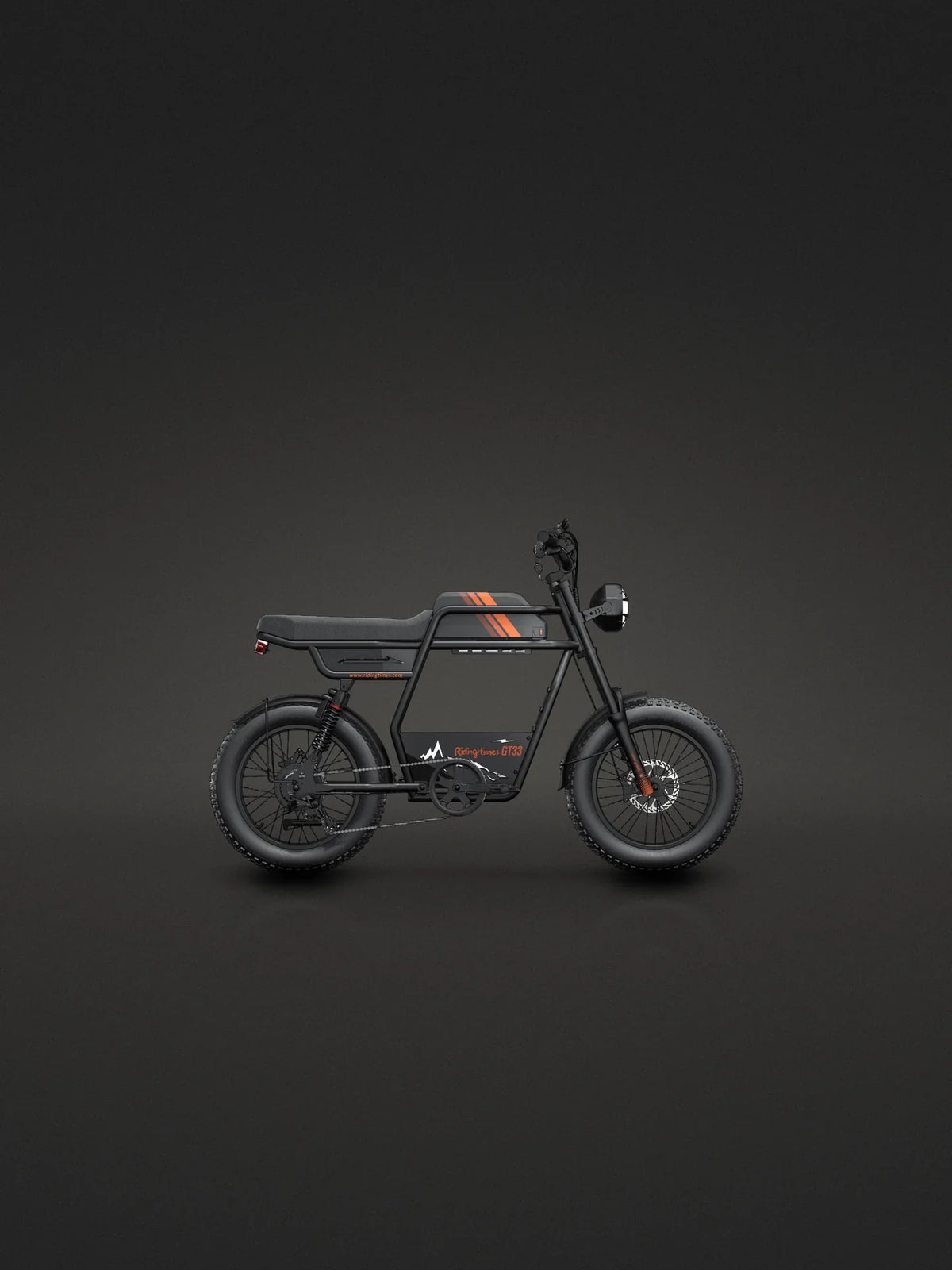
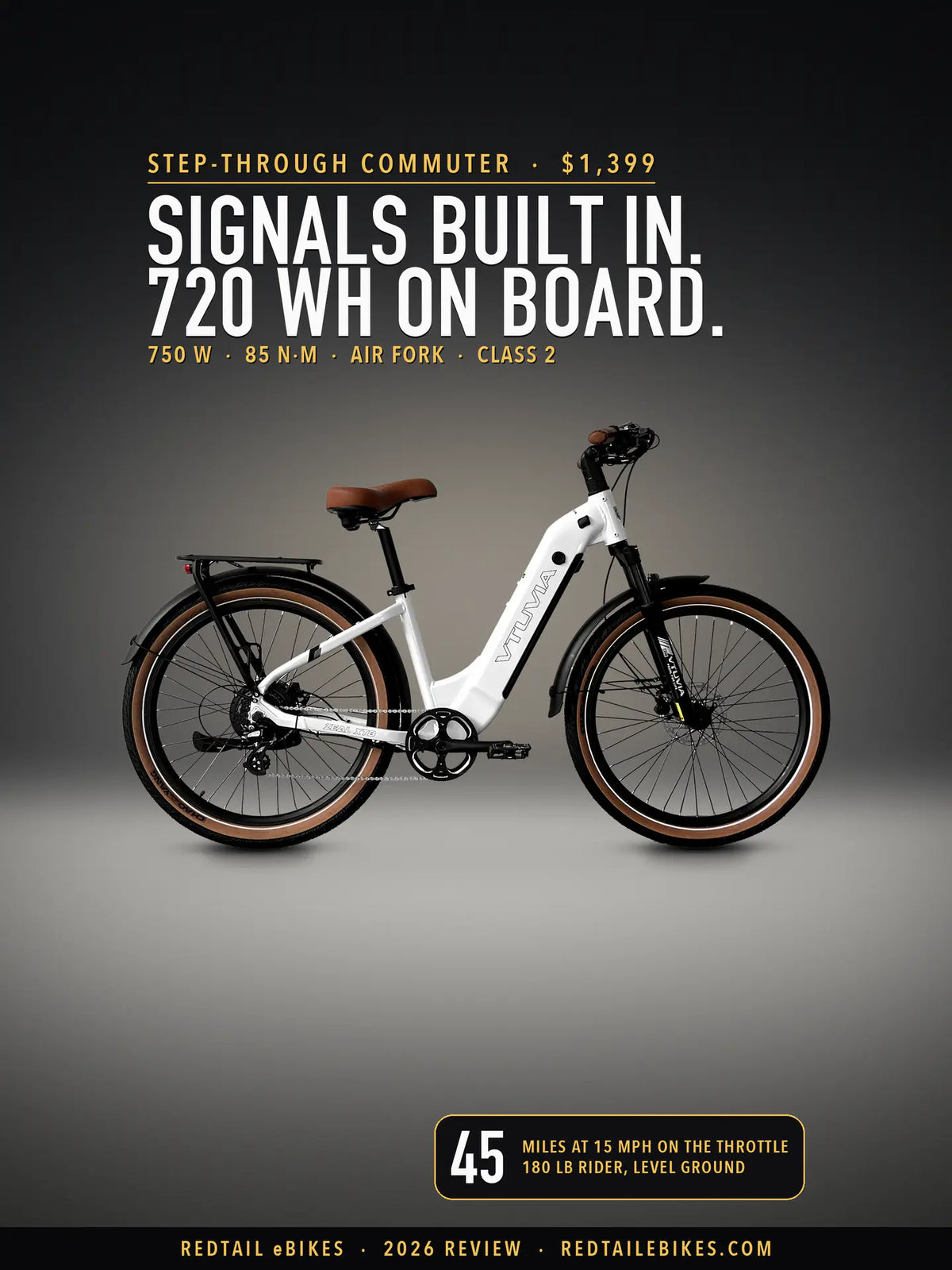
Share:
Smartravel Raptor ST202 Review 2026: GPS, 1,296 Wh
Best Hunting eBikes 2026: 12 Picks by Animal and Forest