

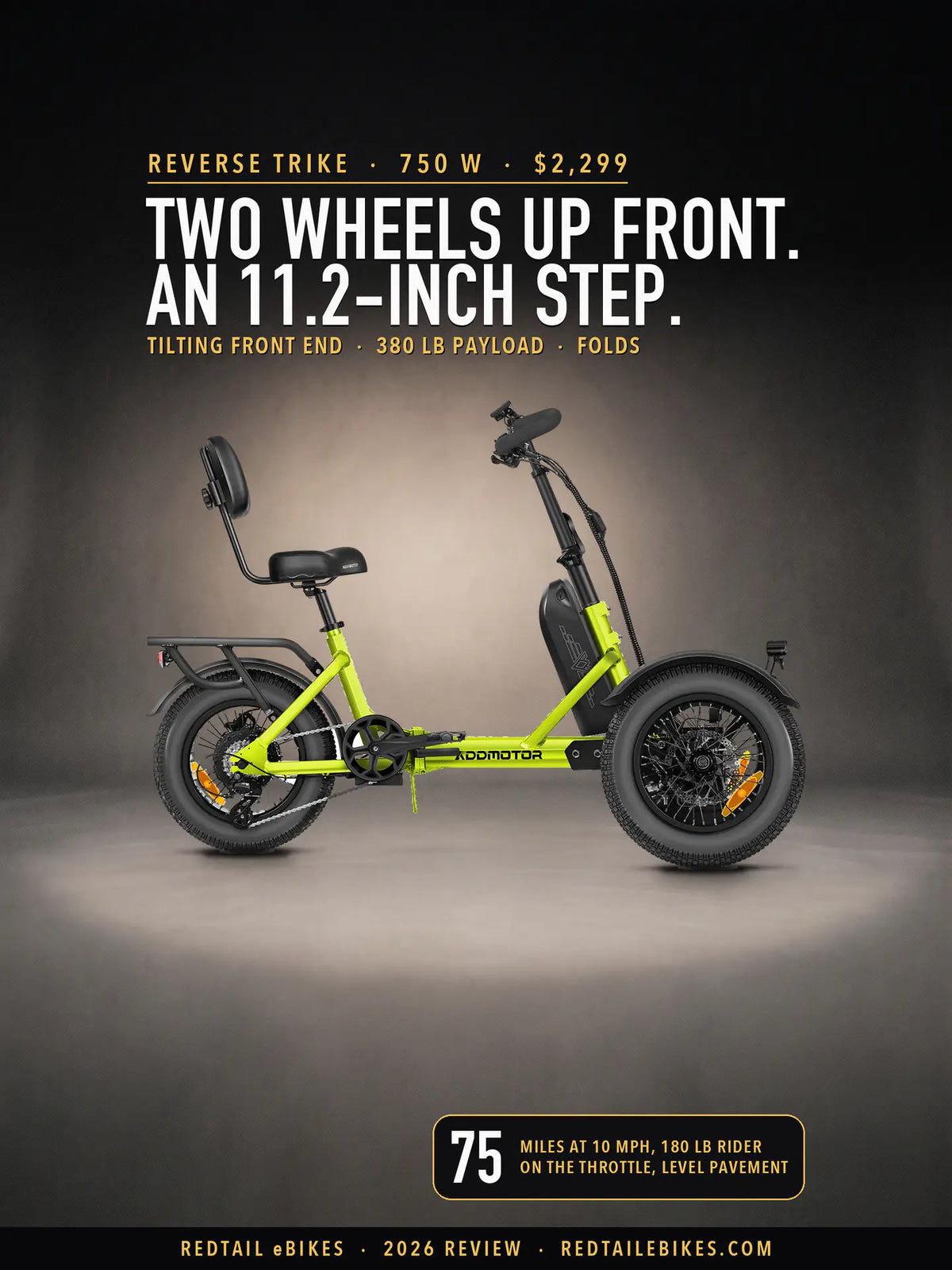

Reverse trike · two front wheels on a tilting, sprung front end · 750 W rear hub motor, 1,400 W peak and 90 N·m in Addmotor's posts · cadence sensor and left-hand thumb throttle · 48 V 20 Ah Samsung pack, 960 Wh · 11.2-inch standover · three hydraulic disc brakes and a parking brake · folds to 40.9 × 34.6 × 31.4 in · 380 lb payload · 15 mph · $2,299 on October 10, 2026 · verified October 10, 2026
Quick Answer — Addmotor's SpytanX is a $2,299 reverse trike for riders 4'9" to 5'9", with two tilting front wheels, a 750 W rear hub and a 15 mph top speed. At 12 mph on the throttle over level ground with 180 lb aboard, the 960 Wh pack lasts about 66 miles in our model; at its 380 lb payload, about 50.
Two numbers decide whether it suits you. One is where your inseam puts the saddle, which Addmotor's Size & Fit table lets travel from 27.5 to 34.2 inches above the ground (the saddle table); the other is what your state calls a 750 W three-wheeler (the class section).
Our store priced the SpytanX at $2,299 on October 10, 2026, in Neptune Blue and Olive Green, with $3,199 shown as the regular price. This button opens checkout for Neptune Blue; Olive Green is the same price, and Addmotor listed both colors in stock that day. Shipping is free inside the contiguous United States, and a carrier's damage is a claim we file for you.
Order it in Neptune BlueWhat this review covers
Specification · What it is · Against the Spytan 2 · Fit · Motor · Battery · Range · Carrying and golf · Brakes, lights and turning · Suspension and tires · Weight and folding · The Mercer fit test · Recalls · Class · Trails and courses · Green and red flags · Verdict · Checklist · Buying it from us · FAQ · Limitations · Bottom line · References
How we verified this Addmotor SpytanX review
Addmotor's own records are the base: its SpytanX product page with its tabs, product FAQ and size drawing, the trike's question board, and 13 of its posts that print SpytanX figures, read on September 28 and again on October 10, 2026. Price, colors, stock and Shop Pay plans were read from our own store on October 10.
This is a specification-verified review: each figure traces to Addmotor, a statute, our store, a study cited at the point of use, or arithmetic set out on the page, and the range and fit sections print their inputs beside their tables. We sell this trike, so the red flags carry the same weight as the green ones.
Written by Milad Ghobadibeygvand, BScN (Western University, 2014). Corrections: support@redtailebikes.com.
Addmotor's SpytanX specification
| As Addmotor publishes it | |
|---|---|
| Layout | two front wheels and one rear wheel; "16-Connecting Rods" for "tilting steering", in the page's feature copy |
| Frame | "6061 Aluminum Alloy", folding |
| Motor | "48V*750W Rear-Mounted Brushless Motor"; "750W Rear Hub Motor (1400W Peak, 90Nm Torque)" in Addmotor's post of September 4, 2025 |
| Sensor | "Speed Cadence Sensor" |
| Pedal assist | "7 Level Pedal Assist" |
| Throttle | "Left-Handed Thumb Throttle" |
| Controller | "Addmotor 25A Controller" |
| Battery | "48V*20 Ah Samsung UL-certified Battery", 960 Wh |
| Charger | "48V*2.0A 5 Pins US Standard DC Charger 5 Pins With Auto Magnetic Suction" |
| Range | "Up to 90 Miles (PAS1)" |
| Top speed | "Up to 15 MPH" |
| Brakes | "Hydraulic Disc Brakes"; "hydraulic disc brakes with 180mm rotors on each wheel" in the feature copy |
| Parking brake | yes |
| Suspension | "Front Suspension" |
| Gears | "Shimano 7-Speed", a "Shimano 7-Speed Rear Derailleur" and a "KMC Stainless Chain" |
| Display | "Addmotor 5-Inch LCD Display" |
| Saddle | "Saddle with Backrest" |
| Rims | "Aluminum Double Wall" |
| Lights | a headlight "Powered By Main Battery" and a taillight "with Brake Light Function" |
| Weight | "105 LBS (Include Battery)"; 109 lb in both comparison tables of Addmotor's post of September 4, 2025 |
| Payload | "380 LBS" |
| Codes | SKUs EB3274X (Neptune Blue) and EB3278X (Olive Green) |
Every rider gets the same frame. Addmotor's Size & Fit table prints one SpytanX column, and its size drawing repeats the same figures beside a front-basket size:
| Dimension | Addmotor's figure |
|---|---|
| Rider height | 4'9" to 5'9" |
| Tires | 16 × 4.0 in front and rear, "Slick Tread" |
| Saddle height | 27.5–34.2 in |
| Standover | 11.2 in |
| Handlebar height | 38.1–43.7 in |
| Reach | 18.9 in |
| Wheelbase | 47.2 in |
| Total length | 67.3 in |
| Total width | 37.4 in |
| Folded | 40.9 × 34.6 × 31.4 in, without the saddle |
| Front basket | 23.43 × 15.75 in |
Addmotor's Size & Fit, Technical and Performance tabs, first read September 28, 2026; on October 10 all 49 of their values were in place again. Our price was read the same day.
Two wheels up front that lean into a turn
A reverse trike puts its pair of wheels at the front and one wheel behind, the opposite of a delta trike, which carries its pair at the back. On the SpytanX the pair steers through a linkage Addmotor describes as "16-Connecting Rods", which it says "makes the two front wheels flexible for tilting steering", and the single rear wheel carries the motor.

Olive Green from the front, both front wheels in view, each with its own fender and headlight.
You sit on a "Saddle with Backrest" behind a frame that drops to 11.2 inches, pedal a Shimano 7-speed, and steer with a bar Addmotor's comparison image calls a "Butterfly handlebar (ergonomic, multi-grip)". The battery stands on the frame's front upright, behind the stem.

The linkage between the front wheels, with its two coil springs, in Addmotor's close-up.
The frame folds. Addmotor's feature copy says it "fits into most SUVs in three easy steps", and its product FAQ gives the folded size as 40.9 by 34.6 by 31.4 inches, with the seat removed and the frame and handlebars folded. Weight and folding are in their own section.
What changed from the Spytan 2
Addmotor sets the SpytanX beside its earlier two-front-wheel trike twice: in the Size & Fit table's "Spytan(Old)" column and in a comparison image that labels it the Spytan 2 Front Wheel eTrike, the name its posts use. The folded sizes and tires the two documents give for the older trike match, 50.4 by 42.1 by 31.5 inches on 16 × 3.0 front tires.
| SpytanX | Spytan 2, as Addmotor lists it | |
|---|---|---|
| Suspension | "Front Suspension Equipped" | "none (Counterweight-based stability)" |
| Steering | "Tilting steering + 16-linkage system" | "Standard steering + counterweights" |
| Handlebar | butterfly, 38.1–43.7 in | standard, 44.1 in |
| Front tires | 16 × 4.0 in | 16 × 3.0 in |
| Length · width | 67.3 · 37.4 in | 77.4 · 34.1 in |
| Folded | 40.9 × 34.6 × 31.4 in | 50.4 × 42.1 × 31.5 in |
Addmotor's comparison image and its Size & Fit table, read by eye and from the page's data on October 10, 2026; rider window, motor and battery are the same in both columns.
Read the SpytanX as the folding, suspended version of the layout. It is ten inches shorter than the older trike, three inches wider, and folds about ten inches shorter, by Addmotor's own figures.
Does the SpytanX fit you? 4'9" to 5'9" and an 11.2-inch step
From 4'11" to the window's 5'9" top, the 109% formula wants the saddle top 30.6 to 36.1 inches from the pedal for the median rider in the Army's survey, against a saddle Addmotor lists at 27.5 to 34.2 inches above the ground. The two are measured from different points, so the last step happens on the trike with a tape measure.
The formula is 109% of your inseam, measured from the pedal axle at the bottom of its stroke to the saddle top; Peveler and colleagues' 2005 comparison reports earlier research finding that setting "may be optimum when examining economy". Addmotor prints the saddle's height off the ground, but no bracket height and no crank length, so the table gives the distance your height calls for.
Fitting yourself takes three steps:
- Measure your inseam barefoot, against a wall, with a hardcover book pressed up between your legs as a saddle would sit; the floor to the book's spine is the figure.
- Find your height in the table below for the saddle-top-to-pedal distance.
- On the trike, point one crank down along the seat post, measure from the saddle top to the center of that pedal, and move the post until the two agree.

Addmotor's size drawing for the SpytanX. The formula subsection shows why no measurement is taken from it.
Will the saddle go low and high enough for me?
Your row gives the saddle-top-to-pedal distance at three settings. Read the third column first: it applies the 109% rule to the median inseam at your height. The two after it bracket that figure with 106%, where the recommended range Ferrer-Roca and colleagues cite begins, and 110.4%, where the range they propose ends.
| Your height | Typical inseam | Saddle top to pedal axle | At 106% | At 110.4% |
|---|---|---|---|---|
| 4'11" | 26.8–29.3 in | 30.6 in | 29.7 in | 31.0 in |
| 5'0" | 27.1–29.7 in | 31.0 in | 30.2 in | 31.4 in |
| 5'1" | 27.7–30.3 in | 31.8 in | 31.0 in | 32.3 in |
| 5'2" | 28.0–31.1 in | 32.2 in | 31.3 in | 32.6 in |
| 5'3" | 28.7–31.6 in | 32.8 in | 31.9 in | 33.2 in |
| 5'4" | 29.1–32.2 in | 33.3 in | 32.3 in | 33.7 in |
| 5'5" | 29.7–32.6 in | 33.8 in | 32.9 in | 34.3 in |
| 5'6" | 30.2–33.5 in | 34.5 in | 33.6 in | 34.9 in |
| 5'7" | 30.7–33.9 in | 35.1 in | 34.1 in | 35.5 in |
| 5'8" | 31.1–34.3 in | 35.6 in | 34.6 in | 36.0 in |
| 5'9" | 31.7–34.8 in | 36.1 in | 35.1 in | 36.6 in |
| 5'10" | 32.2–35.5 in | 36.8 in | 35.8 in | 37.3 in |
| 6'0" | 33.2–36.7 in | 38.1 in | 37.0 in | 38.6 in |
From the 6,068 bodies of the US Army's ANSUR II survey: each inseam range runs from that height's 5th to 95th percentile, and the three distances use its median. The survey holds 6 people at 4'9" and 13 at 4'10", too few for a row, so the table starts at 4'11"; your own inseam outranks your row, at 1.09 inches of saddle per inch of leg.
The pedal axle rides above the ground even at the bottom of the stroke, so each of Addmotor's settings sits closer to the pedal than its 27.5 or 34.2 inches. At the low end there is room: a 4'11" rider with the median 28.1-inch inseam needs 30.6 inches from the pedal, more than the 27.5 inches the lowest setting sits above the ground.
Near the top of the window, measure before you commit. At 5'9" the formula's 36.1 inches is counted from the pedal, while Addmotor's 34.2-inch top setting is counted from the ground, and only the trike in front of you converts one into the other. Send us your inseam and we will check it against the post with you.
Can I step through it at a stop?
Yes, and with room to spare. Barefoot, every surveyed rider from 4'11" to 6'4" steps over Addmotor's 11.2-inch standover.
| Your height | Typical inseam | Clear the 11.2 in standover, of 100 |
|---|---|---|
| 4'11" | 28.1 in | 100 |
| 5'0" | 28.4 in | 100 |
| 5'1" | 29.2 in | 100 |
| 5'2" | 29.5 in | 100 |
| 5'3" | 30.1 in | 100 |
| 5'4" | 30.5 in | 100 |
| 5'5" | 31.0 in | 100 |
| 5'6" | 31.7 in | 100 |
| 5'7" | 32.2 in | 100 |
| 5'8" | 32.6 in | 100 |
| 5'9" | 33.1 in | 100 |
| 5'10" | 33.8 in | 100 |
| 6'0" | 34.9 in | 100 |
Each height's barefoot inseams from the same survey, set against the 11.2-inch standover, with the median inseam printed. At 4'11", 95 of every 100 riders clear the frame by 15.6 inches or more.
That low point is the frame tube you step across to reach the saddle, so getting on and off at a crossing or beside the front rack is a step through, not a leg swung over.
Will I lean forward to reach the bars?
The lean is not computed for the SpytanX, because a grip position measured against the saddle is not published. Addmotor prints an 18.9-inch reach and a 38.1 to 43.7-inch handlebar height but no seat angle, and its drawing did not hold one scale well enough to measure them (the formula subsection shows the comparisons).
What Addmotor does publish is range and shape. The handlebar height adjusts over 5.6 inches, so you can raise the grips toward a more upright back, and the "Butterfly handlebar (ergonomic, multi-grip)" in its comparison image gives your hands more than one place to rest.
How much weight goes through my hands?
This is not computed either. The load on your hands follows from how far you lean, and the lean needs a grip position that is not published. For a sense of scale, ten road racers on their brake hoods in Carahalios's 2015 laboratory study put 15% of their weight on the bars, in a stretched posture an upright trike with a backrest does not ask for.
Set the bar by feel: raise it until your elbows stay soft with your back against the rest, then ride a few blocks before you change it. If your palms tingle on longer rides, padded gloves cut palm pressure by 10 to 28% across 36 riders in Slane and colleagues' measurements.
How do I set the saddle at home?
Set the post where your heel, resting on the pedal at its lowest point, leaves your leg straight. Riding on the ball of your foot then leaves the knee slightly bent; in Peveler and colleagues' comparison, that heel check put 70% of 19 trained cyclists inside a 25 to 35 degree bend, the range the cycling literature recommends for avoiding injury.
After a lap of the block, move the post a quarter inch at a time until the bend feels easy.
The fit arithmetic, step by step
The saddle table comes from a single rule: from the saddle top to the pedal axle at the bottom of the stroke, 1.09 times your inseam. For a 5'8" rider with the median inseam, 32.64 inches before rounding, the rule gives 35.6 inches; LeMond's rule, 88.3% of the inseam from the crank axle, puts the same rider at 28.8 inches.
The two rules count from different points, the pedal and the crank axle, and only a crank length links them. Addmotor publishes none, so each number stands as its own rule defines it.
| Input | Value | Source |
|---|---|---|
| Rider bodies | 6,068 (4,082 men, 1,986 women) | US Army ANSUR II, 2012 |
| Saddle rule | 109% of inseam; columns at 106% and 110.4% | Peveler et al., 2005; Ferrer-Roca et al., 2012 |
| Saddle height above the ground | 27.5 to 34.2 in | Addmotor's Size & Fit tab |
| Standover | 11.2 in | Addmotor's Size & Fit tab |
| Rider window | 4'9" to 5'9" | Addmotor's Size & Fit tab |
| Bracket height, crank length, seat angle, grip position | not published | Addmotor's tabs, read October 10, 2026 |
Measured against itself, the drawing does not hold one scale. Scaled by the 47.2-inch wheelbase, read straight or with the near front wheel carried back onto the trike's centerline, or by the 67.3-inch length, it reproduces at most two other printed dimensions within 3.5%:
| Dimension, as Addmotor lists it | Wheelbase scale | Front wheel centered | Length scale |
|---|---|---|---|
| wheelbase, 47.2 in | 47.2 in | 47.2 in | 47.3 in (+0.3%) |
| total length, 67.3 in | 67.1 in (−0.3%) | 66.9 in (−0.6%) | 67.3 in |
| standover, 11.2 in | 12.0 in (+6.7%) | 12.5 in (+11.6%) | 12.0 in (+7.0%) |
| rear tire, nominal, 20.0 in | 18.9 in (−5.7%) | 19.7 in (−1.4%) | 18.9 in (−5.5%) |
| reach, 18.9 in | 20.0 in (+6.0%) | 21.0 in (+10.8%) | 20.1 in (+6.3%) |
Points read on Addmotor's size drawing to ±3 px. The near front wheel is drawn 1.11 times the size of the rear because it stands about 16.7 inches closer to the camera; Addmotor's own dimension arrows imply 16.4 to 19.9 pixels per inch, so no seat angle, crank or grip position is taken from the drawing.
Before you pay, email your height and barefoot inseam to support@redtailebikes.com, and the reply gives your saddle distance and how it sits against the post. This button opens checkout for Olive Green; Neptune Blue sells at $2,299 too.
Olive Green, ready to orderThe motor: 750 W in the rear hub, 90 N·m, a thumb throttle
The motor sits in the rear wheel and is rated at 750 W. The Technical tab lists a "48V*750W Rear-Mounted Brushless Motor", and five of Addmotor's posts, from September 4, 2025 to October 8, 2026, add a 1,400 W peak and 90 N·m of torque.

The rear hub motor and its seven-speed freewheel, in Addmotor's close-up.
The assist follows your pedaling, and a throttle works with your feet still. The Performance tab lists a "Speed Cadence Sensor" with "7 Level Pedal Assist" and a "Left-Handed Thumb Throttle". One Addmotor post, of March 25, 2025, lists "Torque sensor" among the SpytanX's features; the tab names a cadence sensor, so ask us before you order if that difference matters to you.
A torque sensor reads how hard you press on the pedals; the Triketan M-330, from $2,099, and the Grandtan M-340, from $2,199, both carry one.
The top speed is "Up to 15 MPH" on the Technical tab, and Addmotor's product FAQ says the trike "is limited to a top speed of 15 MPH". An "Addmotor 25A Controller" and an "Addmotor 5-Inch LCD Display" run the system.
Seven Shimano gears carry your legs. Shift down before you stop so the next start shares the push between you and the motor; the gears change only your pedaling, because the hub motor turns at the wheel's own speed.
The 960 Wh Samsung pack and charging it
Twenty amp-hours at 48 volts is 960 watt-hours. The Technical tab lists a "48V*20 Ah Samsung UL-certified Battery", and Addmotor's post of February 11, 2026 calls it a "UL‑2271 Certified 48V 20Ah Samsung 21700 Cell Lithium‑ion Battery Pack (960Wh)".

The pack on the frame's front upright, in Addmotor's close-up.
Addmotor gives two charging times, and the charger's own rating accounts for both. The product FAQ says the pack "usually takes about 6–7 hours to charge completely", and the post of September 4, 2025 says "8–10 hrs".
At the charger's 2 amps, before charging losses, 20 amp-hours is 10 hours from empty and 8 hours from 20% left, the two ends of the post's range; the FAQ's 6 to 7 hours is what the same 2 amps put back into a pack with 30 to 40% left.
The charger is the Technical tab's "48V*2.0A 5 Pins US Standard DC Charger 5 Pins With Auto Magnetic Suction".
Addmotor puts its pack advice in three numbers:
- recharge "when it has a 10%-15% charge left", in its battery-health post;
- "keep your battery charge between 20% and 80% for the best lifespan", in its maintenance guide;
- charge "at room temperature (between 10 and 25 degrees Celsius)", 50 to 77 °F, from the same guide.
Range: how far a charge takes the SpytanX
On level pavement on the throttle, a full pack carries a 180 lb rider about 75 miles at 10 mph and 55 at the 15 mph cap; at the full 380 lb, the 12 mph ride runs about 50. Pedal easily at 12 mph and the 180 lb rider's charge reaches about 125 miles; hold 10 mph up a steady 8% grade on the throttle and it falls to about 13.
Three steps turn the tables into your own ride:
- Find your pace as a row in the first two tables, and your pedaling as a column.
- Add the climbs: each 1,000 feet at 10 mph on a 4 to 10% grade takes 134 to 156 Wh on the throttle, or 126 to 146 Wh with easy pedaling (the hills table).
- Correct for what you carry and the air temperature, then plan on 85% of the pack.
A row is a single steady ride. It is computed from Addmotor's figures, a comparable motor's published data, drum measurements of ten fat tires and a cycling-power model validated on an open road, and the formula subsection takes one ride through every step.
How many miles does each speed give, and how much do your legs add?
Slower is farther: on the throttle, 83 miles at 8 mph, 66 at 12 and 55 at 15. Air resistance grows with the square of speed, so the motor works harder at 15 mph than at 12 for every mile, even under the cap.
| Speed, flat | Per mile | Full charge | With 15% kept |
|---|---|---|---|
| 6 mph | 10.7 Wh | 90 mi | 76 mi |
| 8 mph | 11.6 Wh | 83 mi | 70 mi |
| 10 mph | 12.9 Wh | 75 mi | 63 mi |
| 12 mph | 14.5 Wh | 66 mi | 56 mi |
| 15 mph | 17.4 Wh | 55 mi | 47 mi |
180 lb on the trike, throttle only, on level pavement in 77 °F air. Holding back 15%, the right-hand column follows the top of Addmotor's "10%-15%" recharge advice.
Pedaling stretches every row. In this model, 75 W counts as easy pedaling and 150 W as steady. With the motor switched off, those two efforts would move a 180 lb rider on this trike at about 8.6 and 12.8 mph on level ground, which tells you which column you can hold.
| Speed, flat | Throttle only | Easy pedaling (75 W) | Steady pedaling (150 W) |
|---|---|---|---|
| 10 mph | 75 mi | 201 mi | legs alone |
| 12 mph | 66 mi | 125 mi | legs alone |
| 15 mph | 55 mi | 80 mi | 144 mi |
A full pack, 180 lb on the trike, level pavement. A cell marked "legs alone" is a pace your 150 W keeps up with the motor idle. Your legs supply most of the power in the 201-mile and 144-mile cells, so those two rest on the motor's light-load losses, the part of the model least checked (Limitations item 5).
Pick your pace, then your effort; the assist level only changes how you and the motor share the work.
Does shifting gears save battery?
Only through what your legs add. The motor sits in the rear hub and your chain drives the same wheel by a separate path, so at a given speed and grade the pack spends less only when you push harder:
| Your ride | Throttle only | Easy pedaling (75 W) | Steady pedaling (150 W) |
|---|---|---|---|
| 12 mph, flat | 14.5 Wh | 7.7 Wh | 0.0 Wh |
| 12 mph, 4% grade | 42.4 Wh | 34.4 Wh | 26.7 Wh |
| 12 mph, 8% grade | 75.8 Wh | 66.1 Wh | 56.9 Wh |
Watt-hours from the pack per mile, 180 lb aboard, 77 °F air. On the flat at 12 mph, 150 W from your legs holds the pace without the motor, so its draw falls to zero.
The right gear is the one that keeps your cadence easy to sustain, because a gear you can turn lets your legs take part of the load off the pack.
What does a climb cost the pack?
Each 1,000 feet of climbing at 10 mph on a 4 to 10% grade costs the pack 134 to 156 Wh more than the same distance on the flat, on the throttle, or 126 to 146 Wh with easy pedaling. Lifting rider and trike accounts for 69 to 80% of the throttle figure; heat in the motor and pack takes the rest.
With the trike's 105 lb and a 180 lb rider, 285 lb rises 1,000 feet for 107 Wh at the wheels. On an 8% grade at 10 mph on the throttle, the pack pays 148 Wh for those 1,000 feet.
| Grade | Per mile, throttle | Full charge, throttle | Full charge, easy pedaling |
|---|---|---|---|
| 2% | 26 Wh | 36 mi | 55 mi |
| 4% | 41 Wh | 23 mi | 31 mi |
| 6% | 57 Wh | 17 mi | 21 mi |
| 8% | 75 Wh | 13 mi | 15 mi |
| 10% | 95 Wh | 10 mi | 12 mi |
10 mph and 180 lb on the trike in each row, with 75 W of easy pedaling added in the right-hand column. The model takes nothing back on the way down, so each row prices the climb alone.
On a grade, extra weight shows up first as speed. The motor's torque caps the steady pace on each grade, and the full 380 lb lowers that cap:
| Grade | 180 lb | 380 lb | 380 lb, easy pedaling |
|---|---|---|---|
| 4% | 14.1 mph | 13.2 mph | 13.5 mph |
| 6% | 13.6 mph | 10.5 mph | 11.4 mph |
| 8% | 13.1 mph | 8.4 mph | 9.2 mph |
| 10% | 11.3 mph | 7.0 mph | 7.6 mph |
| 12% | 9.8 mph | 5.9 mph | 6.5 mph |
Each cell is the highest steady speed the model's motor sustains on that grade, with 180 lb aboard or Addmotor's full 380 lb payload, on the throttle unless the column says otherwise. Steady state only, no run-up into the grade, the motor's torque capped at the 90 N·m Addmotor's posts give.
At 12% the throttle alone cannot hold 10 mph in the model; add easy pedaling and it can, at about 9 miles to the charge, while at 15% neither holds it, so slow down and shift low on the steepest pitches.
Cost a hilly day as level miles plus climbing. On the throttle, 20 level miles at 12 mph take about 289 Wh and 1,000 feet of 8% grade about 148 Wh more, about 437 Wh for the day: 54% of the 816 Wh that 85% of the pack holds.
Does rider weight affect the SpytanX's range?
Weight moves the level-ground figures a little and the climbing figures a lot. Mass adds to the tires' drag and to the grade's pull but not to the air's, so a light and a heavy load drift further apart as the road tilts up.
| You plus your load | 10 mph flat, throttle | 12 mph flat, throttle | 8% climb, 10 mph |
|---|---|---|---|
| 100 lb | 87 mi | 76 mi | 18 mi |
| 130 lb | 82 mi | 72 mi | 16 mi |
| 180 lb | 75 mi | 66 mi | 13 mi |
| 220 lb | 69 mi | 62 mi | 11 mi |
| 260 lb | 65 mi | 59 mi | 10 mi |
| 300 lb | 61 mi | 55 mi | past the model's motor |
| 380 lb | 54 mi | 50 mi | past the model's motor |
Read the left column as your weight plus everything you carry; the model adds the trike's own 105 lb, and each cell is on the throttle alone. The last row is Addmotor's 380 lb payload; up 8% at 10 mph, 300 lb or more asks the model's motor for more than it holds, so pedal or ease to the 8.4 mph the climbing table gives at 380 lb.
From 180 lb to the full 380 lb, the 12 mph throttle ride drops from 66 miles to 50, about a quarter, and the 10 mph ride from 75 to 54. Addmotor does not split the 380 lb between rider and cargo, so plan with your own weight inside it, as the table does.
Addmotor's two weights for the trike change the answer by a mile at most. The Technical tab says 105 lb with the battery; its post of September 4, 2025 prints 109 lb. Run through the model at a 180 lb rider:
| Ride, throttle | At 105 lb (Technical tab) | At 109 lb (September 2025 post) |
|---|---|---|
| 10 mph, flat | 75 mi | 74 mi |
| 12 mph, flat | 66 mi | 66 mi |
| 10 mph, 8% climb | 13 mi | 13 mi |
180 lb aboard, the throttle only, a full pack, 77 °F air; the only input that changes between the columns is the trike's own weight.
How much range does cold weather take away?
About a fifth at freezing. At 10 mph on the throttle, the 75 miles of a 77 °F day fall to about 59 at 32 °F and about 54 at 14 °F.
| Air | Pack energy vs 77 °F | 10 mph flat, throttle |
|---|---|---|
| 95 °F | 99% | 78 mi |
| 77 °F | 100% | 75 mi |
| 68 °F | 98% | 71 mi |
| 50 °F | 93% | 64 mi |
| 41 °F | 91% | 61 mi |
| 32 °F | 89% (80–93) | 59 mi (53–62) |
| 14 °F | 82% (40–83) | 54 mi (26–54) |
The cells are assumed to match the air temperature, with 180 lb aboard on level ground. The central figures come from the energy McMaster University's measured LG HG2 cell delivered at a 0.5C discharge at 77, 50, 32 and 14 °F, interpolated for the rows between; Addmotor names Samsung cells, so Samsung's data sheets set the brackets.
The low end of each bracket is the smallest capacity a Samsung sheet lists at that temperature for one to four times capacity per hour (25R and 30Q at 32 °F, 35E at 14 °F); the high end is the most energy Casado and colleagues measured in 2025 at a gentler rate.
Cold air takes three bites at once. At 32 °F the cells return about 89% of the energy they hold at 77 °F, 80 to 93% across the sources, and the air grows about 9% denser, going by the U.S. Standard Atmosphere's gas law.
Rubber stiffens as well, so the model lifts rolling resistance by 0.5% for every °F under 77 °F (0.9% per °C), a slope that sits between Rothhämel's fit for a 42 mm tire and Bicycle Rolling Resistance's road-tire average, and freezes it at its 41 °F value below that.
Bring the pack inside to charge in winter. "Always charge your battery indoors at room temperature because cold weather can harm the battery cell if you charge it at lower temperatures," Addmotor's cold-weather post advises.
Do the tires or the riding position change the range?
On level ground the tire is the largest single input. On its drum, Bicycle Rolling Resistance measured ten 26 × 4.00 fat tires at 12 psi, 18 mph and a 94 lb load, and they took 23.2 to 42.1 W. None is a 16-inch or slick tire, so the model takes the ten's median coefficient, 0.0105, and brackets it with the lowest and the highest.
| Rolling resistance | 10 mph flat, throttle | 12 mph flat, throttle |
|---|---|---|
| 0.0070 · the lowest of ten fat tires | 91 mi | 79 mi |
| 0.0105 · the median of ten fat tires (used) | 75 mi | 66 mi |
| 0.0126 · the highest of ten fat tires | 67 mi | 61 mi |
Each cell spends a full charge with 180 lb aboard on level ground. The lowest, 0.0070, sits beside the 0.0070 field average Tengattini and Bigazzi measured for slick tires; the highest belongs to Kenda's Juggernaut Pro, whose own measurement page prints 0.01262.
Run the tires at their sidewall pressure: every coefficient here comes from an inflated tire. For the air, the model uses the drag area Tengattini and Bigazzi measured on 37 upright cruiser riders, 0.640 m², the posture a backrest seat puts you in; their 0.603 m² for 90 mountain-bike riders would lift the 12 mph throttle ride from 66 miles to 68.
Addmotor's 90 miles and its "50–70", as steady rides
Addmotor prints two range figures, and each lines up with a steady pace in the model. The Technical tab says "Up to 90 Miles (PAS1)", and its product FAQ adds that "real-world range varies around 50–70 miles".
| Addmotor's figure | Throttle only | Easy pedaling (75 W) |
|---|---|---|
| 90 mi on PAS1 | 5.9 mph | 14.2 mph |
| 70 mi, the FAQ's upper end | 11.2 mph | over 15 mph |
| 50 mi, the FAQ's lower end | over 15 mph | over 15 mph |
The steady level-ground pace at which the model spends all 960 Wh over each distance with 180 lb aboard. "Over 15 mph" means every pace up to the trike's cap goes farther than that distance.
Read that way, Addmotor's 90 miles is an unhurried ride: about 6 mph on the throttle, or about 14 mph with 75 W from your legs. The FAQ's 70 miles is a 180 lb rider near 11 mph on the throttle, and its 50 matches the model's full 380 lb load at 12 mph, the last row of the weight table.
Plan on 85% of your row. Addmotor's advice is to recharge "when it has a 10%-15% charge left", which on the throttle at 10 mph leaves 63 of the 75 miles.
For a longer-lived pack, stay inside the 20–80% band. Addmotor's maintenance guide puts it as "keep your battery charge between 20% and 80% for the best lifespan", a window of 576 Wh, 60% of the pack:
| Speed, flat | 20–80% band, throttle | 20–80% band, easy pedaling |
|---|---|---|
| 6 mph | 54 mi | legs alone |
| 8 mph | 50 mi | legs alone |
| 10 mph | 45 mi | 120 mi |
| 12 mph | 40 mi | 75 mi |
| 15 mph | 33 mi | 48 mi |
Miles within the band for 180 lb on level ground. At 6 and 8 mph the easy-pedaling cell reads "legs alone": 75 W by itself moves this rider at about 8.6 mph on level ground.
Find your row, hold back 15%, and add the climbs. At 10 mph on the throttle, every 1,000 feet climbed costs 134 to 156 Wh. A 180 lb rider on level ground on the throttle alone can plan on 63 miles at 10 mph and 47 at 15.
A day of 20 level miles at 12 mph plus 1,000 feet of 8% climbing draws about 437 Wh on the throttle, 54% of what 85% of the pack holds. Write to support@redtailebikes.com with your distance, your climbs, what you carry and your usual pace, and we will run your ride through the model before you buy. Neptune Blue is on this button; Olive Green costs the same.
Neptune Blue, $2,299The formula behind the range tables
A steady speed takes a steady flow of power at the rear wheel, and the model Martin and colleagues validated on an open road in 1998 gives it for constant speed in still air:
P = v × [ m × g × (Crr × cos θ + sin θ) + ½ × ρ × CdA × v² ]
P is the power at the wheels and v the road speed; m is the mass of trike, rider and load together, g is gravity and θ the angle of the slope; Crr is the tires' rolling resistance, ρ the density of the air and CdA the rider's drag area. The first term inside the brackets is tires and slope, the second the air. From the wheel back to the pack there are three steps:
- Your pedaling arrives at the wheel through a chain that is 97.7% efficient, as Martin and colleagues measured, and the motor makes up the difference.
- The motor is modeled on a comparable hub's published curve, Bafang's RM G0H0: its 2021 OEM workbook gives 510 rpm with no load, 426 rpm at rated load at 48 V, and "≥ 80" percent efficiency. The model keeps Bafang's curve at the SpytanX's 48 V and 750 W and sets the unloaded speed at 15.7 mph, the pace at which a 180 lb rider on the throttle just reaches Addmotor's 15 mph on the flat.
- The pack sheds some energy as heat on the way out, at the loss rate Arango, Lopez and Ceren measured on a 48 V pack.
Watts from the pack over the speed in mph is the watt-hours per mile, and from it miles = 960 Wh × the usable share of the pack's energy at that temperature ÷ watt-hours per mile.
| Input | Value used | Where it comes from |
|---|---|---|
| Trike | 105 lb, with the battery | Addmotor's Technical tab |
| Rider and load | 180 lb; the weight table also runs 100, 130, 220, 260, 300 and 380 | 380 lb is the payload on Addmotor's Technical tab |
| Battery | 48 V × 20 Ah = 960 Wh | Addmotor's Technical tab |
| Motor | 750 W at its rated speed, 15.7 mph unloaded, 80% at the rated point, torque capped at 90 N·m | Bafang OEM workbook 2021, RM G0H0; Addmotor's 750 W and 15 mph and the 90 N·m of its posts |
| Wheel | 20.0 in (508 mm) across, the 16 × 4.0 tire's nominal diameter | Addmotor's tire size; the 305 mm bead seat of a 16-inch decimal tire in Sheldon Brown's ISO size chart, plus twice the 4.0-inch tire |
| Rolling resistance | 0.0105, the median of ten 26 × 4.00 fat tires at 12 psi | Bicycle Rolling Resistance |
| Drag area | 0.640 m², 37 upright cruiser riders | Tengattini and Bigazzi, 2018 |
| Chain | 97.7%, your pedaling only | Martin et al., 1998 |
| Battery losses | 3.0% at 10 mph, more at climbing currents | Arango, Lopez and Ceren, 2021 |
| Air | 77 °F at sea-level pressure, 1.184 kg/m³ | U.S. Standard Atmosphere, 1976 |
| Cold | the share of a cell's energy left at each temperature | McMaster University's LG HG2 cell data |
One ride worked through, from the tires back to the cells: 180 lb aboard, 10 mph on the throttle, level pavement. Rider and trike come to 129.3 kg; holding 10 mph takes 93.6 W at the wheel, 59.7 W against rolling resistance and 33.8 W against the air.
On its 20-inch-tall 16 × 4.0 tire, the rear wheel turns 168 times a minute at that pace. Fitted to Bafang's published figures, the motor model carries 1.74 N·m of torque per amp, a 0.405 Ω winding and a 0.83 A no-load current, and this ride asks it for 5.3 N·m on 3.9 A at 75% efficiency, below its rated 80% because the load is light.
With the pack's own losses counted, the cells deliver 128.7 W, which at 10 mph is 12.87 Wh a mile: 960 ÷ 12.87 comes to about 74.6 miles, or 63.4 with 15% held back.
The model was first made to reproduce two published results:
| Check | Published figure | This model |
|---|---|---|
| Road physics, Martin and colleagues' worked example | 45.7 W for tires and grade, 158.8 W for the air | 45.7 W and 158.8 W |
| The comparable motor at Bafang's rated point | at least 80% efficient | 80% |
Row one is Martin and colleagues' Appendix I (8.36 m/s, a 90 kg system, a 0.3% grade); row two is the RM G0H0's rated point in Bafang's workbook. Were the motor 82% efficient, 2 points over Bafang's 80% floor, the 12 mph throttle ride would go from 66 miles to 75 (Limitations item 4).
No published ride of the SpytanX states its distance with the rider's weight and speed, so the model has no ride of this trike to check against.
Addmotor's three questions on its SpytanX board, its 13 posts with SpytanX figures, the one Reddit thread that names the trike and the captions of four YouTube videos that name it were read on October 10, 2026; none records a ride with its distance, and the range figures Addmotor prints state no speed or rider weight.
Carrying, and the golf question
Count yourself inside the 380 lb. Addmotor's Technical tab lists a "380 LBS" payload without splitting it between rider and cargo, and the weight table shows what each load does to the miles.

The front rack between the two front wheels, with a crate going on, in Addmotor's image.
The front rack sits between the two front wheels. Addmotor's buy box lists a "Front Rack for SPYTAN" at $109 and marks it "FREE" with the trike, and its size drawing gives a front basket size of 23.43 by 15.75 inches. A rear rack rides over the back wheel in Addmotor's images.
What ships with an order placed here is ours to answer, whatever the maker's checkout shows: email us before you order and we will confirm in writing whether the front rack comes with your trike.
On golf, Addmotor's own documents disagree, so ask before you buy for the course. Its feature copy calls the trike "Built For Golfer" and "Equipped with golf stand bag carrier and sand bottle"; its comparison image lists a "Standard Golf Kit"; its buy box sells a "Golf Stand For SpytanX" at $129; and its product FAQ says that "While it lacks a built-in holder, you can usually attach a universal bracket".

A golf bag in the front carrier, in Addmotor's image.
Email us the bag you carry and we will put in writing which carrier comes with an order here and what fits it.
A trailer carries more. Addmotor's buy box offers its "Addmotor 2026 Trailer For Trikes" with the SpytanX; before you order one, email us and we will confirm the hitch for your trike.
Stopping, parking and turning
Three hydraulic discs, one on each wheel, and a parking brake. The Performance tab lists "Hydraulic Disc Brakes" and answers "Yes" on its Parking Brake row, and the feature copy describes "hydraulic disc brakes with 180mm rotors on each wheel".

Addmotor's close-up of the lever and its parking-brake button.
On a slope, lock the parking brake before you load the front rack or get on or off.
Lean with it, and take turns slowly. The SpytanX's front wheels tilt with the steering, which Addmotor credits to its "16-connecting-rod design". Its post on the Freetan, of July 15, 2026, gives the rule it applies to every trike: "As with any electric trike, riders should reduce speed before turns and avoid abrupt steering inputs."
Measured evidence on the layout is thin, and the one study found is careful. In SWOV's 2024 field test of two prototype tilting tricycles with two front wheels, 28 active cyclists aged 57 to 71 rated the tilting trikes (very) positively, including on keeping their balance, where no difference from a regular two-wheeler was found.
The same riders rated the tilting trikes above a rigid tricycle for starting from a standstill, walking the trike and gaining and holding speed; on cornering the two trikes did not differ significantly, and the two-wheeler scored higher than both. The prototypes were not the SpytanX, and the authors call the study small-scale and based on riders' own ratings.
The lights run off the main pack. Each front fender carries a headlight in Addmotor's images, and the Performance tab lists a headlight "Powered By Main Battery" and a taillight "Controlled By Display with Brake Light Function".
Front suspension, fat tires and wet days
The suspension is at the front, where the two wheels steer. The Performance tab lists "Front Suspension", and the feature copy says it works "on the 2 front wheels", which hang from the linkage shown in the front-end image.

The rear wheel, its disc brake and the rear rack with its taillight, in Addmotor's close-up.
Addmotor gives the front tires two sizes. The Size & Fit table's SpytanX column reads 16 × 4.0 inches front and rear, "Slick Tread", as do its size drawing and comparison image; the feature copy describes "16''*3.0'' front wheels and 16''*4.0'' rear wheel", the sizes of the older Spytan's column. The range model uses the rear, 16 × 4.0 in every document.
The tires hold air. Asked on the board "Are the tires air filled?" on January 9, 2026, Addmotor answered on March 17, 2026: "Yes, they are air filled." In Addmotor's images the tread is a fine block pattern; the product FAQ advises that riders "ride cautiously and avoid sharp turns when wet".
105 pounds, 37.4 inches wide, and the fold
The trike weighs 105 lb with its battery, in the Technical tab's words "105 LBS (Include Battery)", a figure Addmotor's post of February 11, 2026 repeats; its post of September 4, 2025 lists 109 lb in both of its comparison tables. It is 67.3 inches long and 37.4 inches wide overall.
Measure the doorway before delivery. A door narrower than 37.4 inches turns the trike back unless you fold it, which brings the width to 34.6 inches; at 105 lb, a ground-level path from the curb counts for more than the stairs.

Folded into an SUV, in Addmotor's image.
Folding is how it travels by car. Addmotor's product FAQ says the trike "typically fits most larger SUVs" folded to 40.9 by 34.6 by 31.4 inches, and that "Removing the seat and folding the frame and handlebars allows for relatively easy transport and compact storage." For a hitch carrier instead, pick one rated for 105 lb and 37.4 inches of width.
Clear a 37.4-inch door or plan to fold. At 105 lb with its pack and 67.3 inches long, the SpytanX lives best on the ground floor, and folded it fits most larger SUVs in Addmotor's words.
The Mercer fit test
Each review we publish measures the same seven people, the Mercers, against its machine, so one page's fit answers can be set beside another's. Here each verdict comes from Addmotor's published window, standover or payload, or from the fit tables built on them.
| Member | Age · Height | Verdict | The number behind it |
|---|---|---|---|
| Frank Kowalski | 63 · 5'10" | An inch above Addmotor's window | Window 4'9" to 5'9"; the formula sets his saddle top 36.8 in from the pedal for the median rider his height |
| Ruth Kowalski | 61 · 5'5" | Inside the window, with a low step | She clears the 11.2-inch standover by 18.5 in or more, as 95 of 100 riders her height do |
| Jack Mercer | 48 · 6'1" | Four inches above the window | Window 4'9" to 5'9"; the formula sets his saddle top 38.8 in from the pedal |
| Dana Mercer | 45 · 5'7" | Inside the window | The formula sets her saddle top 35.1 in from the pedal, near the top of the post's range, so measure on the trike |
| Maya Torres | 32 · 5'6" | Inside the window | The formula sets her saddle top 34.5 in from the pedal, and she clears the standover by 19.0 in or more |
| Cole Mercer | 16 · 5'11" | Set by his state | His state's age rule for e-bikes decides whether a 16-year-old may ride it; at 5'11" he is two inches above the window |
| Ivy Mercer | 12 · — | Not as a passenger; as a rider, her state decides | The trike has one seat; her state's age rule decides whether a 12-year-old may operate an e-bike |
Ruth, Dana and Maya fall inside the 4'9" to 5'9" window; Frank, Jack and Cole stand above it. For the three taller riders, the Grandtan M-340 review covers a trike Addmotor sizes from 5'2" to 6'4".
Has it been recalled?
No. On October 10, 2026, none of the 10,047 recalls on the Consumer Product Safety Commission's full recall list, June 8, 1973 to October 8, 2026, named Addmotor, the SpytanX, its M-320X code or its SKUs EB3274X and EB3278X.
Every field of every record was read for Addmotor, ADDMOTOR, Add Motor, Addmotor Tech, Motan and Addrider, for 19 Addmotor model families with the Spytan and SpytanX among them, and for the model codes of Addmotor's range. The only code matches are two records carrying "M300", and both name laptops: Sony's 2006 recall of notebook batteries, which lists the Toshiba Portege M300, and Compaq's 2001 recall of notebook AC adapters, which lists the Armada M300.
Run on makers with known recalls, the same search found Ancheer in 1 record, Specialized in 79 and Trek in 40, so it finds a recall where one exists. None of the 375 entries on the CPSC's product safety warning listing, the agency's separate record of the warnings it issues, names Addmotor or the SpytanX, and the same read found the two warnings that name the brand used as its check.
Class and road rules: where a 750 W three-wheeler lands
Before the trike's specification, your state's definition settles the question. Addmotor's page lists 750 W, a throttle and 15 mph, and the federal definition draws a line at each of the first and last.
In 15 U.S.C. § 2085(b), a low-speed electric bicycle is "a two- or three-wheeled vehicle with fully operable pedals and an electric motor of less than 750 watts (1 h.p.)", and its motor alone, carrying a 170-pound rider on paved level ground, must keep it to "less than 20 mph".
| The federal definition asks for | The SpytanX, in Addmotor's figures |
|---|---|
| Two or three wheels | three |
| Fully operable pedals | pedals, a chain and a Shimano 7-speed |
| A motor of less than 750 watts | "48V*750W Rear-Mounted Brushless Motor" |
| Less than 20 mph on motor power, 170 lb rider | "Up to 15 MPH" |
Read October 10, 2026: the statute at § 2085(b), the trike on Addmotor's SpytanX page.
The 15 mph sits well under the federal speed line, and the 750 W rating sits on the federal watt line, which the statute writes as "less than". The statute measures its speed on motor power alone with a 170-pound rider, which a maker's published top speed does not report.
California's line is inclusive. In California Vehicle Code § 312.5(a), read September 28, 2026, an electric bicycle has "an electric motor that does not exceed 750 watts of power", and § 231 gives a bicycle "one or more wheels" and states "An electric bicycle is a bicycle."
Across the 50 states and DC, the wording decides. Screened on October 10, 2026 against each definition's watt wording, throttle rule, top speed, wheel count and Pennsylvania's weight limit, Addmotor's figures sit inside 25 jurisdictions' e-bike definitions and outside 23; Connecticut's leaves a three-wheeler open, and Alaska and Kentucky have no e-bike definition.
| Addmotor's figures fall… | Jurisdictions |
|---|---|
| Inside the e-bike definition (25) | CA, CO, DC, DE, GA, HI, IA, IN, MA, MD, MI, MN, NC, ND, NE, NM, NV, OK, OR, SC, SD, UT, VA, WA, WI |
| Outside it (23) | AL, AR, AZ, FL, ID, IL, KS, LA, ME, MO, MS, MT, NH, NJ, NY, OH, PA, RI, TN, TX, VT, WV, WY |
| Open for a three-wheeler (1) | CT |
| No e-bike definition (2) | AK, KY |
Screened October 10, 2026 against the definitions our state law atlas records. Of the 23 outside, 19 write the motor limit as "less than" or "fewer than" 750 watts, which a 750 W motor does not meet; New Jersey's definition admits assistance only while you pedal and names two wheels; Montana's and Rhode Island's take only two wheels; and Pennsylvania's takes in "A vehicle weighing not more than 100 pounds".
Pennsylvania turns on weight. 75 Pa.C.S. § 102 defines a pedalcycle with electric assist as "A vehicle weighing not more than 100 pounds with two or three wheels more than 11 inches in diameter", and Addmotor lists the SpytanX at 105 lb with its battery on its Technical tab and at 109 lb in its post of September 4, 2025, both above that line.
Pennsylvania riders should email us before ordering, and we will get Addmotor's written figure for the trike's weight as delivered.
Connecticut's line moved on October 1, 2026, when Public Act 26-24 § 26 set the motor at "not more than seven hundred fifty watts", while § 14-1 defines no "bicycle", so its wheel count is unsettled; for Connecticut, email us and we will confirm how a three-wheeler is treated.
On December 1, 2026, North Carolina splits its definition into three classes. The new text in Session Law 2026-46 still covers a bicycle "with two or three wheels" and "an electric motor of no more than 750" watts, so the SpytanX's row is inside before the change and after it.
A trike outside a state's e-bike definition does not leave the road code; it becomes a moped or some other class there, with that class's requirements. Our 50-state e-bike law atlas gives each state's answer, and our California e-bike law page goes deepest into one.
Read your state's row and then its own page before the first ride. In 25 jurisdictions Addmotor's figures sit inside the e-bike definition; if yours is elsewhere, send us its name and we will reply with its rule before you buy.
Trails, golf courses and public land
Off the street, whoever manages the ground decides where the SpytanX may go. On a golf course that is the course: Addmotor's product FAQ, answering whether the trike can be used on one, ends with "Please check local course rules."
On federal land, the Bureau of Land Management sets its own definition and the Forest Service decides e-bike access district by district. BLM's own definition, at 43 CFR 8340.0-5, is "a two- or three-wheeled cycle with fully operable pedals and an electric motor of not more than 750 watts (1 h.p.)", and the SpytanX's published 750 W falls within it.
A field office that lets e-bikes ride as bicycles lifts its off-road vehicle rules on a single condition, which the regulation states as "the motor is not exclusively propelling the e-bike for an extended period of time".
A long stretch on the thumb throttle is what that condition rules out. When you stop pedaling, the motor alone drives the trike; once the exception no longer applies, 43 CFR 8341.1 keeps an off-road vehicle to land designated "open to off-road vehicle use".
On National Forests the rule is the Forest Service's directives of March 31, 2022, recorded in the notice at 87 FR 41278 as "managing all classes of e-bikes as motor vehicles"; a Ranger District with a motor vehicle use map then bars riding "other than in accordance with those designations" under 36 CFR 261.13.
| Where you plan to ride | Who decides | What to read |
|---|---|---|
| A golf course | the course | its cart and vehicle rules |
| Private land | the owner | the owner's permission |
| A city or county park path | the park agency | its posted e-bike rule |
| A National Forest road or trail | the Ranger District | its motor vehicle use map (36 CFR 261.13) |
| BLM land | the field office | its e-bike decision and its open, limited and closed designations (43 CFR 8341.1) |
In each row, the land manager's own document decides.
Breaking BLM's off-road vehicle rules, in subparts 8341 and 8343, can bring "a fine of not more than $1,000" or imprisonment "for not longer than 12 months", or both, under 43 CFR 8340.0-7. Every agency's version is laid out in our public-land e-bike guide.
Name the course, park or field office you plan to ride, and our reply will quote its rule. Write to support@redtailebikes.com before you order. This button orders Olive Green at $2,299; Neptune Blue is the same price.
Buy the Olive Green, $2,299Green flags / Red flags
Green flags
- Two front wheels that tilt with the steering, on a linkage Addmotor calls "16-Connecting Rods", with suspension on the pair.
- Sized from 4'9" in Addmotor's table, with an 11.2-inch standover every surveyed rider from 4'11" to 6'4" clears barefoot.
- A frame that folds to 40.9 by 34.6 by 31.4 inches, which fits most larger SUVs in Addmotor's words.
- A 960 Wh Samsung pack that carries a 180 lb rider about 75 miles at 10 mph on level pavement on the throttle, and about 201 with easy pedaling.
- Hydraulic disc brakes on all three wheels, 180 mm rotors in Addmotor's feature copy, and a parking brake.
- A backrest saddle and a butterfly bar that adjusts over 5.6 inches of height.
- A front rack between the front wheels and a rear rack over the back wheel, both in Addmotor's images; ask us what an order here includes.
- $2,299 against the $3,199 regular price, with Shop Pay plans from $207.50 a month.
Red flags
Every item below is about fit: the rider the SpytanX does not suit, and where that rider goes next.
- Wrong if you are taller than 5'9". Addmotor sizes the SpytanX to 5'9"; the Grandtan M-340, sized from 5'2" to 6'4", is from $2,199 on our store.
- Wrong if you want assist that answers to how hard you push. The SpytanX's tab lists a cadence sensor; the Triketan M-330 carries a torque sensor, from $2,099.
- Wrong if 15 mph is too slow for your roads. The Landtan, a fat-tire delta trike, publishes 20 mph and costs $1,799.
- Wrong if you and your load top 380 lb. The Grandtan M-340 carries 450 lb in all, from $2,199.
- Wrong if the fold must be smaller or the trike lighter. The Citytri E-310 folds to 45.3 by 33.9 by 28.7 inches at 88 lb, from $1,599.
- Wrong if you want to sit back with the pedals out front. The Arisetan II M-360 is Addmotor's semi-recumbent, from $2,399.
- Wrong if you climb past 10% and want the motor to hold your pace. Above 10% at 10 mph the model needs your legs as well; for steep ground, our Grandtan Turbo review runs the numbers on a mid-drive at $3,299.
- Wrong if your door is under 37.4 inches and the trike must stay unfolded. Send us the width of the door and we will find a trike we sell that passes through it.
- Wrong if two adults want to ride together. The SpytanX has one seat; the M-380 tandem has two, from $3,899.
Buy it if / Buy something else if
Buy it if you stand 4'9" to 5'9", want two wheels in front that lean with you, a low frame to step across, a backrest, a front rack for errands or a golf bag, and a trike that folds into a larger SUV, with about 75 miles at 10 mph on the throttle for a 180 lb rider.
It asks for a rider inside Addmotor's window, a load that keeps you and your cargo at 380 lb or under, roads where 15 mph is enough, a door of 37.4 inches or a fold before it, and somewhere indoors to charge.
For $2,299, $900 below the $3,199 regular price, you get a 750 W rear hub with 90 N·m in Addmotor's posts and a 960 Wh Samsung pack, a sprung, tilting front end, three hydraulic discs, a parking brake, seven Shimano gears and a backrest saddle. On Shop Pay's 12-month sample plan the listing shows $207.50 a month at 15% APR, $2,490.00 in all.
Buy something else if you are taller than 5'9" or carry more than 380 lb, where the Grandtan M-340 is from $2,199; if you want a torque sensor, where the Triketan M-330 is from $2,099; or if you want 20 mph, where the Landtan is $1,799.
Our Addmotor brand profile sets the SpytanX beside Addmotor's other trikes and bikes on our shelf, and our e-bike reviews hub lists our other trike and e-bike reviews.
Before you buy: the checklist
Work through these ten before placing the $2,299 order; the first three decide whether and where you may ride it.
- Find your state's verdict in the class table and its full rules on its page in our law atlas.
- Ask each course, park or trail you plan to use for its rule; the manager of the ground decides.
- Take your height and inseam to the saddle table for your row; if you stand over 5'9", the Grandtan M-340 review is the one to read.
- Weigh yourself with what you will carry; the total must stay at or under 380 lb.
- Plan the cargo: the front rack, the rear rack, a golf carrier we confirm in writing, or a trailer.
- Measure the doorway and the parking space: 37.4 inches wide and 67.3 inches long, or 34.6 inches wide folded.
- Plan the transport: folded into a larger SUV, or a hitch carrier rated for 105 lb.
- Look up your ride in the range tables, add its climbs, and plan to leave 15% of the pack in reserve.
- Pick where it will charge: indoors, at 50 to 77 °F, with 6 to 10 hours to a full charge in Addmotor's two figures.
- Practice in an open lot before you ride in traffic, as Addmotor's post for new trike riders suggests with its route of "no obstacles or tight turns".
Buying it from us
Why buy the SpytanX from Redtail
Our listing priced the SpytanX at $2,299 in Neptune Blue and Olive Green on October 10, 2026, with $3,199 shown as the regular price, the same $2,299 Addmotor's own store showed that day. Our part begins when you order.

Neptune Blue, the second of the two colors.
| What you get | The detail |
|---|---|
| Price | $2,299 in Neptune Blue or Olive Green, read October 10, 2026 |
| Shipping | Free within the contiguous United States: prepared within 1–3 business days, and most arrive 5–10 business days after dispatch. For Alaska, Hawaii, US territories, P.O. boxes, remote areas and New York City addresses, email us first |
| Paying over time | Shop Pay's sample plans on our listing: $207.50 a month over 12 months at 15% APR, $2,490.00 in all, or $785.57 a month over 3 months, $2,356.71 in all. Rates range from 0 to 36% APR, subject to Shop Pay's eligibility check. Read October 10, 2026 |
| If something fails | Send photos and your order number. The claim comes to us, and we coordinate the repair or replacement. |
| If it arrives damaged | Note it with the carrier, email us photos within 48 hours, and we file the carrier claim and arrange a replacement or repair |
| Answers first | Send your height, inseam, load, route and course, and we will run the fit and range numbers and check the rules before you pay |
Each color has its own button.
| Color | $2,299 |
|---|---|
| Neptune Blue | Buy the Neptune Blue SpytanX |
| Olive Green | Buy the Olive Green SpytanX |
Each link opens checkout for that color at our October 10, 2026 price.
A change-of-mind return needs the trike still sealed in its factory packaging and a request within 72 hours of delivery; our refund policy then refunds it less a 15% restocking fee and return shipping, and canceling an order costs a 3% transaction fee. The fit, load and route questions are worth asking us first.
Every figure in this section was read from our store on October 10, 2026. If anything fails, you deal with us and we deal with Addmotor; Olive Green costs $2,299 as well.
Check out, Neptune BlueFrequently asked questions
How far can the Addmotor SpytanX go on one charge?
On its Technical tab, Addmotor gives "Up to 90 Miles (PAS1)". On the throttle over level pavement, the model gives a 180 lb rider about 75 miles at 10 mph and 55 at 15 mph, and about 50 at 12 mph with the full 380 lb aboard; every 1,000 feet of climbing at 10 mph takes another 134 to 156 Wh (the range tables).
What is the top speed of the SpytanX?
Addmotor publishes "Up to 15 MPH" on the Technical tab, and its product FAQ says the trike "is limited to a top speed of 15 MPH". Held at 15 mph on the throttle over level ground, a 180 lb rider's charge runs about 55 miles (speed and range).
What is a reverse trike?
A trike with its pair of wheels at the front and one at the back, the reverse of a delta trike. On the SpytanX the front pair steers on a tilting linkage and the single rear wheel carries the motor, which is why Addmotor names it the "SpytanX Reverse eTrike".
Are reverse trikes stable?
The one measured comparison found is SWOV's 2024 field test of two prototype tilting trikes with two front wheels: 28 cyclists aged 57 to 71 rated them (very) positively, with no difference from a two-wheeler on keeping balance. Addmotor's advice for every trike is to "reduce speed before turns" (turning).
How does the SpytanX's tilting front end help in corners?
The front wheels lean as you steer, on what Addmotor calls a "16-connecting-rod design". In SWOV's field test, riders rated the tilting trikes above a rigid trike for starting off and for gaining and holding speed, and rated the two-wheeler highest for cornering; slow down before each turn (turning).
Is a reverse trike better than a regular trike?
Better for a rider who wants the tilting front end and the 11.2-inch step at 15 mph. A delta trike such as the Landtan publishes 20 mph on a rear differential, at $1,799, and the red flags route each other rider.
How much weight can the SpytanX carry?
380 lb on Addmotor's Technical tab, with no split between rider and cargo, so count yourself inside it. At that load on level pavement, the 12 mph throttle ride computes to about 50 miles, and the motor holds about 8.4 mph up an 8% grade (the weight table).
How much does the Addmotor SpytanX weigh?
105 lb with the battery, in the Technical tab's words "105 LBS (Include Battery)"; Addmotor's post of September 4, 2025 lists 109 lb. It folds to 40.9 by 34.6 by 31.4 inches (weight and folding).
Is the SpytanX good for short riders?
It is sized for them: Addmotor's window runs from 4'9" to 5'9", the step is 11.2 inches, and the formula puts the saddle top 30.6 inches from the pedal for a 4'11" rider with the median inseam, 28.1 inches. Find your row in the saddle table.
Can you use the SpytanX on a golf course?
Where the course allows it. Addmotor's product FAQ answers "Generally, yes" and ends "Please check local course rules", and its feature copy calls the trike "Built For Golfer". Which golf carrier comes with an order here is a question to email us (carrying and golf).
Will the SpytanX fit in a car?
Folded, in most larger SUVs, in Addmotor's words: the product FAQ gives 40.9 by 34.6 by 31.4 inches with the seat removed and the frame and handlebars folded. Otherwise use a hitch carrier rated for 105 lb and 37.4 inches of width (weight and folding).
Is the SpytanX street legal, and what class is it?
Your state's words decide. On October 10, 2026, Addmotor's 750 W and 15 mph sit inside the e-bike definitions of 25 jurisdictions, California's "does not exceed 750 watts" among them, and outside 23, Pennsylvania among them on weight (the class table). Name your state in an email and we will send you its rule.
Are the SpytanX's tires air-filled?
Yes. Asked "Are the tires air filled?" on January 9, 2026, Addmotor answered on March 17, 2026: "Yes, they are air filled." Keep them at the pressure on their sidewalls; the range tables assume inflated tires (tires and range).
Is there a two-seat SpytanX?
The SpytanX seats one rider; a question about a two-seat version sat unanswered on its board on October 10, 2026. For two riders, the M-380 tandem seats two, from $3,899.
Is the Addmotor SpytanX worth it?
If you fit the 4'9" to 5'9" window and want a folding reverse trike at 15 mph, the case is $2,299 against the $3,199 regular price, about 75 miles at 10 mph for a 180 lb rider, and $207.50 a month over 12 months on Shop Pay at 15% APR (the verdict).
Limitations of this review
Twenty-three points this review leaves open:
- This is our product. Give the red flags the weight you give the green.
- Each figure is specification-verified against Addmotor's published documents, a statute, our store record, a study the range or fit sections cite, or arithmetic set out on this page.
- Each range row models a steady ride at a single speed and grade, without wind or stops; starts, headwinds and grass all cost more.
- Addmotor's motor is modeled on a Bafang motor's published curve. Addmotor prints the rating, peak and torque but no motor speeds; at 82% efficiency, above Bafang's 80% floor, the 12 mph throttle ride would run 75 miles against the table's 66.
- At light motor loads the model has the least to check against. If your legs do most of the work, as in the easy-pedaling column at 10 mph, the figure depends on motor losses that no published motor map could confirm.
- The model's no-load motor speed is chosen so a 180 lb rider on the throttle tops out at Addmotor's 15 mph; if the real motor is faster and a limiter holds it back, its draw near 15 mph would differ slightly.
- No published SpytanX ride gives its distance together with the rider's weight and speed; the sources read are listed at the end of the formula section.
- The tables spend the full 960 Wh. How much of the pack Addmotor's battery management releases is not stated; researchers at KIT measured 75% in use on one pedelec over a standard bench range test.
- The rolling-resistance figure comes from 26-inch fat tires, the median of ten at 12 psi, not from the SpytanX's 16 × 4.0, and a smaller wheel and Addmotor's "Slick Tread" each move it in a direction the drum did not measure; the tire table shows how far the answer moves.
- One laboratory cell anchors the cold table. Addmotor names no Samsung cell model, so the central line is McMaster University's measured LG HG2, bracketed by Samsung's and other published data.
- Nothing is measured on the size drawing. Tried at three scales, it matched no more than two other printed dimensions to within 3.5%, so the saddle table stops at the formula's distance from the pedal and a tape measure covers the step from the ground.
- Neither the cockpit lean nor the hand load is computed. Addmotor publishes no seat angle or grip position and the drawing could not supply them, so the cockpit and hand subsections give Addmotor's adjustment range; the hand figure cited comes from racers on a stretched back, a posture the backrest does not ask for.
- The saddle distances are a starting setting: each is the 109% rule at the median inseam for that height, and the heel check on your own trike settles the last quarter inch, toward the 25 to 35 degree knee range.
- The fit tables are built on soldiers: the 6,068 of ANSUR II, aged 17 to 58 and measured from 2010 to 2012, who are not a sample of the US public, so let your own inseam pick the row.
- Addmotor names the sensor two ways: "Speed Cadence Sensor" on the Performance tab and "Torque sensor" in its post of March 25, 2025. Email us before ordering and we will get Addmotor to confirm which one your trike has.
- Addmotor gives two charging times: about 6 to 7 hours in its product FAQ and 8 to 10 hours in its post of September 4, 2025; both are printed.
- Addmotor gives the front tires two sizes: 16 × 4.0 inches in its Size & Fit table, size drawing and comparison image, and 16 × 3.0 inches in its feature copy. The range model uses the rear tire, 16 × 4.0 in both.
- Addmotor gives two weights: 105 lb with the battery on its Technical tab and in its post of February 11, 2026, and 109 lb in both comparison tables of its post of September 4, 2025. The range tables use 105 lb, and the two run side by side differ by a mile at most.
- What ships in the box is not settled by Addmotor's checkout: its buy box marks a front rack free, and its documents disagree on the golf carrier. Before you order, we will tell you in writing what an order placed here includes.
- The turning evidence is one small study of other machines: SWOV's 2024 field test rated two prototype tilting trikes, not the SpytanX, with 28 riders' own ratings, and no rollover or cornering figure for the SpytanX itself was found.
- The class table reads each state's definition as our law atlas records it, screened October 10, 2026; a state can change its words, as Connecticut did on October 1 and North Carolina will on December 1, and three-wheeler wording outside the definition section was not read for every state.
- The Mercer verdicts come from the formula and Addmotor's window and from no fitting on the trike; the window alone routes the three members taller than 5'9".
- We read colors, prices and stock on October 10, 2026, while Addmotor's own site showed a sale price; when its prices move, ours move with them, and the Shop Pay terms change too.
The bottom line
At $2,299, the SpytanX puts a 750 W rear hub with 90 N·m in Addmotor's posts and a 960 Wh Samsung pack under a folding reverse-trike frame with two tilting, sprung front wheels, an 11.2-inch step, a backrest saddle, three hydraulic discs, a parking brake and a 380 lb payload.
The model puts a 180 lb rider on level pavement at about 75 miles at 10 mph on the throttle and 201 with easy pedaling, and a full 380 lb load at about 50 at 12 mph; climbing costs 134 to 156 Wh per 1,000 feet at 10 mph on the throttle.
The right owner stands 4'9" to 5'9", wants two wheels in front and a low step, rides where 15 mph is enough and where their state's words take in a 750 W three-wheeler, and has a door of 37.4 inches or the habit of folding.
On Shop Pay's 12-month sample plan that comes to $207.50 a month at 15% APR.
Two answers from us are worth having before checkout: your saddle distance from your inseam, and what your state calls a 750 W trike. Email us your height, your roads and your golf course, and the reply will carry the saddle figure and each place's rule.
Both colors are $2,299: Olive Green on this button and Neptune Blue beside it. Shop Pay spreads it over 12 months at $207.50 a month at 15% APR, shipping is free inside the contiguous United States, and a carrier's damage is a claim we file.
Your SpytanX, $2,299
Neptune Blue from the front, both front wheels in view.
Image credit: every image of the SpytanX on this page, its size drawing included, is Addmotor's own, cropped and resized and never retouched.
The cover's studio was generated on Playcut (playcut.ai) with Nano Banana Pro; the trike in it is Addmotor's own studio photograph at one uniform scale, unchanged, and the type is set over the studio.
Source register
What each document behind this review supports.
T1 is the record itself, read from whoever issued it: a statute, a federal regulation or notice, the maker's own product page, drawing, images, question board and posts, a federal agency's list, and our own store record.
T2 is a party's own publication about its product or its measurements: the motor maker's workbook and research groups' and laboratories' published measurements.
| Source | Tier | What it supports |
|---|---|---|
| Addmotor, SpytanX product page, its specification tabs, stat strip, feature copy, buy box and product FAQ | T1 (manufacturer, primary) | Every specification row, the window and dimensions, the range figures, top speed, payload, the add-ons, the golf and folding answers, the colors and stock |
| Addmotor's SpytanX size drawing and comparison image | T1 (manufacturer, primary) | The printed dimensions and the drawing's controls, the front basket size, the SpytanX against the Spytan 2 |
| Addmotor's SpytanX question board | T1 (manufacturer, primary) | Addmotor's dated answer on the tires, and the two-seat question |
| Addmotor's posts: March 25, 2025 (golf), September 4, 2025 (lineup), September 29, 2025 (Prime Month), November 3, 2025 (Black Friday), February 11, 2026 (technical analysis), July 15, 2026 (the Freetan), October 8, 2026 (Prime Month); battery health, battery maintenance, cold weather, new riders | T1 (manufacturer, primary) | Peak power and torque, the sensor's second name, the second charging time, the pack's certification wording, cornering and pack care |
| 15 U.S.C. § 2085 · Cal. Veh. Code § 312.5 · Cal. Veh. Code § 231 · 75 Pa.C.S. § 102 · Conn. Public Act 26-24 · N.C. Session Law 2026-46 | T1 (legislature, GPO) | The definitions and lines, quoted; Pennsylvania's weight limit; Connecticut's October 1 and North Carolina's December 1, 2026 changes |
| Our 50-state e-bike law atlas and the state definitions it records | T1 (statutes, as read into our atlas) | Each state's watt wording, throttle rule, speed, wheel count and Pennsylvania's weight limit, screened for the class table |
| 43 CFR 8340.0-5 · 43 CFR 8341.1 · 43 CFR 8340.0-7 · 36 CFR 261.13 · 87 FR 41278 | T1 (federal regulation and notice) | BLM and Forest Service rules for e-bikes and motorized vehicles, and the penalty |
| CPSC recall data · CPSC warning listing | T1 (federal agency) | The recall and warning reads and their controls |
| Redtail eBikes shipping policy, refund policy, our SpytanX listing and the listings of the trikes named in the red flags | T1 (first party) | Price, colors, Shop Pay terms, shipping scope and times, the damage window, claim handling, change-of-mind terms, the other trikes' prices |
| SWOV, R-2024-2 | T2 (research institute's own field test) | The ratings of two tilting tricycles against a rigid tricycle and a two-wheeler |
| Bafang workbook 2021 | T2 (motor maker, primary) | The comparable motor's speeds, rating, efficiency floor and torque |
| Martin et al., 1998 | T2 (own validation) | The cycling-power model, its worked example and chain efficiency |
| Bicycle Rolling Resistance (Kenda Juggernaut Pro, temperature test) · Rothhämel, 2023 | T2 (own published measurements) | Fat-tire rolling resistance and its change with temperature |
| Tengattini and Bigazzi, 2018 | T2 (own field measurements) | Drag areas, upright and mountain-bike; the slick-tire field average |
| Arango, Lopez and Ceren, 2021 · Schmitt, Decker and Doppelbauer, 2019 | T2 (own measurements) | Battery efficiency; usable pack energy on a measured pedelec |
| McMaster HG2 data; Samsung sheets (25R, 30Q, 35E); Casado et al., 2025 · U.S. Standard Atmosphere, 1976 | T2 / T1 | Cell energy by temperature and its brackets; air density |
| Sheldon Brown, tire sizing | T2 (reference table) | The 305 mm bead seat of a 16-inch decimal tire |
| US Army ANSUR II, 2012 | T1 (federal agency data) | The 6,068 bodies behind every fit figure |
| Peveler et al., 2005 · Peveler, Pounders and Bishop, 2007 · Ferrer-Roca et al., 2012 | T2 (peer-reviewed measurements) | The saddle formula, its published range, the knee target and the heel method |
| Carahalios, 2015 · Slane et al., 2011 | T2 (own published measurements) | The measured load on the bars, and hand pressure with and without padded gloves |
Expiry conditions
Re-read this page if Addmotor changes the SpytanX's price, specification, motor, battery, range figures, top speed, weight, payload, size drawing, add-ons, colors, product FAQ or question-board answers; if Addmotor's sale ends and its prices move; or if the colors, prices, stock or Shop Pay terms change on our store.
Re-read it too if a state changes its e-bike definition, once North Carolina's December 1, 2026 change is read into our atlas, or if a recall is published naming Addmotor, the SpytanX, EB3274X or EB3278X. Verified October 10, 2026.
References
The full bibliographic record for each document cited above, with the date it was retrieved.
- Addmotor Tech, SpytanX Reverse eTrike — product page (Size & Fit, Technical, Performance and Delivery tabs, stat strip, feature copy, buy box with its add-ons, product FAQ, colorway options, stock and prices, as served for the United States). Retrieved September 28, 2026; re-read October 10, 2026. https://www.addmotor.com/products/spytanx
- Addmotor Tech, SpytanX size drawing (m-320x-size), on the product page. Retrieved October 10, 2026. https://www.addmotor.com/u_file/2603/photo/m-320x-size_1773719992.png
- Addmotor Tech, SpytanX comparison image (SpytanX Reverse eTrike against the Spytan 2 Front Wheel eTrike), on the product page. Retrieved October 10, 2026. https://www.addmotor.com/u_file/2605/photo/320x-etrike_1779431662.png
- Addmotor Tech, SpytanX question board, Addmotor's dated answer cited here: q2620 (March 17, 2026); the unanswered q2915. Retrieved October 10, 2026. https://www.addmotor.com/question_p438/
- Addmotor Tech, Golf Like Never Before: The Future of On-Course Mobility with the SpytanX Reverse Electric Trike (blog, March 25, 2025). Retrieved October 10, 2026. https://www.addmotor.com/blog/reverse-electric-trikes-for-golfing
- Addmotor Tech, Addmotor Electric Trike Redefines Personal Transport — Part 1 (blog, September 4, 2025), the SpytanX spotlight. Retrieved October 10, 2026. https://www.addmotor.com/blog/addmotor-electric-trike-redefines-personal-transportation-part-1-models-scenarios
- Addmotor Tech, Addmotor Prime Month 2025: Save Up to $900 on Electric Trikes (blog, September 29, 2025). Retrieved October 10, 2026. https://www.addmotor.com/blog/addmotor-prime-month-2025-electric-trike-deals
- Addmotor Tech, Addmotor Black Friday 2025: Save Big on Electric Trikes (blog, November 3, 2025). Retrieved October 10, 2026. https://www.addmotor.com/blog/addmotor-black-friday-2025-electric-trikes-sale
- Addmotor Tech, Addmotor SpytanX Technical Analysis: An Innovative Solution for Golfers and Active Riders (blog, February 11, 2026). Retrieved October 10, 2026. https://www.addmotor.com/blog/addmotor-spytanx-technical-analysis-innovative-solution-for-golfers-active-riders
- Addmotor Tech, Addmotor Freetan M-368X: A Semi-Recumbent Electric Trike Designed for Seniors (blog, July 15, 2026), its safety note. Retrieved September 24, 2026. https://www.addmotor.com/blog/freetan-m368x-electric-trike-for-seniors
- Addmotor Tech, Addmotor 2026 Prime Month Electric Trike Unbeatable Deals (blog, October 8, 2026). Retrieved October 10, 2026. https://www.addmotor.com/blog/addmotor-2026-prime-month-etrike-deals
- Addmotor Tech, Tips for New Addmotor Electric Tricycle Riders (blog, January 29, 2023). Retrieved September 28, 2026. https://www.addmotor.com/blog/tips-for-new-addmotor-electric-tricycle-riders
- Addmotor Tech, 7 Tips for Electric Bike Battery Health (blog). Retrieved September 28, 2026. https://www.addmotor.com/blog/7-tips-for-electric-bike-battery-health
- Addmotor Tech, A Complete Guide to Ebike Battery Maintenance (blog, February 26, 2025). Retrieved September 28, 2026. https://www.addmotor.com/blog/a-complete-guide-to-ebike-battery-maintenance
- Addmotor Tech, 4 Tips For Riding Electric Tricycle in Cold Weather (blog). Retrieved September 28, 2026. https://www.addmotor.com/blog/4-tips-for-riding-electric-tricycle-in-cold-weather
- US Government Publishing Office, 15 U.S.C. § 2085 — Low-speed electric bicycles, subsection (b). Retrieved September 28, 2026. https://www.govinfo.gov/content/pkg/USCODE-2024-title15/html/USCODE-2024-title15-chap47-sec2085.htm
- California Legislative Information, California Vehicle Code § 312.5, subdivision (a). Retrieved September 28, 2026. https://leginfo.legislature.ca.gov/faces/codes_displaySection.xhtml?lawCode=VEH§ionNum=312.5.
- California Legislative Information, California Vehicle Code § 231. Retrieved September 28, 2026. https://leginfo.legislature.ca.gov/faces/codes_displaySection.xhtml?lawCode=VEH§ionNum=231.
- Pennsylvania General Assembly, 75 Pa.C.S. § 102 — Definitions, "Pedalcycle with electric assist". Retrieved October 10, 2026. https://www.palegis.us/statutes/consolidated/view-statute?txtType=HTM&ttl=75&div=0&chapter=1§ion=102
- Connecticut General Assembly, Public Act 26-24, section 26 (C.G.S. § 14-1(31), effective October 1, 2026). Retrieved September 28, 2026. https://www.cga.ct.gov/2026/ACT/PA/PDF/2026PA-00024-R00SB-00413-PA.PDF
- Connecticut General Assembly, C.G.S. § 14-1 — Definitions. Retrieved September 28, 2026. https://www.cga.ct.gov/current/pub/chap_246.htm#sec_14-1
- North Carolina General Assembly, Session Law 2026-46, section 19 (G.S. 20-4.01(7a), effective December 1, 2026). Retrieved September 16, 2026. https://www.ncleg.gov/EnactedLegislation/SessionLaws/HTML/2025-2026/SL2026-46.html
- Bureau of Land Management, 43 CFR § 8340.0-5 — Definitions, paragraphs (a)(5) and (j) (85 FR 69223, Nov. 2, 2020). Retrieved September 28, 2026. https://www.ecfr.gov/current/title-43/subtitle-B/chapter-II/subchapter-H/part-8340/subpart-8340/section-8340.0-5
- Bureau of Land Management, 43 CFR § 8341.1 — Regulations governing use. Retrieved September 28, 2026. https://www.ecfr.gov/current/title-43/subtitle-B/chapter-II/subchapter-H/part-8340/subpart-8341/section-8341.1
- Bureau of Land Management, 43 CFR § 8340.0-7 — Penalties. Retrieved September 28, 2026. https://www.ecfr.gov/current/title-43/subtitle-B/chapter-II/subchapter-H/part-8340/subpart-8340/section-8340.0-7
- Forest Service, US Department of Agriculture, 36 CFR § 261.13 — Motor vehicle use. Retrieved September 28, 2026. https://www.ecfr.gov/current/title-36/chapter-II/subchapter-B/part-261/subpart-A/section-261.13
- US Forest Service, Directive Publication Notice, 87 FR 41278 (July 12, 2022), recording the final e-bike directives issued March 31, 2022. Retrieved September 28, 2026. https://www.federalregister.gov/documents/2022/07/12/2022-14777/directive-publication-notice
- US Consumer Product Safety Commission, Recall data, the full list of 10,047 recalls (June 8, 1973 to October 8, 2026), every field read for Addmotor, ADDMOTOR, Add Motor, Addmotor Tech, Motan and Addrider, 19 Addmotor model families including Spytan and SpytanX, the model codes including M-320X, and the SKUs EB3274X and EB3278X, with controls Ancheer / Specialized / Trek; and the Product safety warning listing (complete CSV, 375 entries). Retrieved October 10, 2026. https://www.saferproducts.gov/ · https://www.cpsc.gov/s3fs-public/recall-data/product_safety_warning_listing.csv
- Redtail eBikes, Shipping policy and Refund policy. Retrieved October 10, 2026. https://redtailebikes.com/policies/shipping-policy · https://redtailebikes.com/policies/refund-policy
- Redtail eBikes, Addmotor SpytanX Reverse eTrike listing (prices, colors, orderability, Shop Pay plans, claim terms), and the listings of the Grandtan M-340, Triketan M-330, Landtan, Citytri E-310, Arisetan II M-360, Grandtan Turbo and M-380. Retrieved October 10, 2026. https://redtailebikes.com/products/addmotor-spytanx-reverse-etrike
- Stelling, A., Hettema, Z. J. A. and Boele, M. J., Ervaringen met een elektrische kanteldriewieler: Praktijktest in de provincie Fryslân (User experience with an electric tilting tricycle), SWOV report R-2024-2 (The Hague, 2024), English summary and section 3.3; read from the Internet Archive's capture of September 25, 2024. Retrieved October 10, 2026. https://swov.nl/sites/default/files/bestanden/downloads/R-2024-02.pdf
- BAFANG, Workbook OEM 2021, MOTORS table, RM G0H0 column: n0, nT, rated power, efficiency, maximum torque at 48 V. Retrieved September 23, 2026. https://www.bafang-e.com/Uploaded/Labels/BAFANG%20Workbook%20OEM%202021.pdf
- Martin, J. C., Milliken, D. L., Cobb, J. E., McFadden, K. L. and Coggan, A. R., Validation of a Mathematical Model for Road Cycling Power, Journal of Applied Biomechanics 14(3):276–291 (1998), Eq. 14 and Appendix I; doi 10.1123/jab.14.3.276. Retrieved September 23, 2026. https://collections.lib.utah.edu/dl_files/b4/8e/b48ef26086091662c561e673d7bd990d77868437.pdf
- Bierman, J., Fat Bike Tires Test Results, BicycleRollingResistance.com, rolling resistance at 12 psi, 28.8 km/h, 42.5 kg. Retrieved September 25, 2026. https://www.bicyclerollingresistance.com/fat-bike-reviews
- Bierman, J., Kenda Juggernaut Pro 2016, BicycleRollingResistance.com, rolling-resistance results. Retrieved September 25, 2026. https://www.bicyclerollingresistance.com/fat-bike-reviews/kenda-juggernaut-pro-2016
- Bierman, J., CRR at Different Temperatures: Examining Temperature Dependence of Rolling Resistance, BicycleRollingResistance.com. Retrieved September 23, 2026. https://www.bicyclerollingresistance.com/specials/crr-temperature-test
- Rothhämel, M., On rolling resistance of bicycle tyres with ambient temperature in focus, International Journal of Vehicle Systems Modelling and Testing 17:67–80 (2023); doi 10.1504/IJVSMT.2023.132317. Retrieved September 23, 2026. https://www.inderscience.com/filter.php?aid=132317
- Tengattini, S. and Bigazzi, A. Y., Physical characteristics and resistance parameters of typical urban cyclists, Journal of Sports Sciences 36(20):2383–2391 (2018), Table 4; doi 10.1080/02640414.2018.1458587. Retrieved September 23, 2026. https://civil-reactlab.sites.olt.ubc.ca/files/2022/11/Tengattini_2018_Physical-characteristics-and-resistance-parameters-of-typical-urban-cyclists.pdf
- Brown, S., Tire Sizing Systems, SheldonBrown.com, the ISO bead-seat diameters. Retrieved September 28, 2026. https://www.sheldonbrown.com/tire-sizing.html
- Arango, I., Lopez, C. and Ceren, A., Improving the Autonomy of a Mid-Drive Motor Electric Bicycle Based on System Efficiency Maps and Its Performance, World Electric Vehicle Journal 12(2):59 (2021), Eq. (40); doi 10.3390/wevj12020059. Retrieved September 23, 2026. https://mdpi-res.com/d_attachment/wevj/wevj-12-00059/article_deploy/wevj-12-00059.pdf
- Schmitt, M., Decker, S. and Doppelbauer, M., Measuring and Characterization of a Pedal Electric Cycle (Pedelec) on a Full System Test-Bench with Full Range Emulation of a Cyclist, EPE'19 ECCE Europe (IEEE, 2019); doi 10.23919/EPE.2019.8915567. Retrieved September 23, 2026. https://publikationen.bibliothek.kit.edu/1000100371/50695920
- Kollmeyer, P. et al., LG 18650HG2 Li-ion Battery Data, Mendeley Data v2, McMaster University; doi 10.17632/b5mj79w5w9.2 (0.5C discharge files, recomputed). Retrieved September 23, 2026. https://doi.org/10.17632/b5mj79w5w9.2
- Samsung SDI, Specification of Product INR18650-25R, § 7.6 Temperature dependence of discharge capacity. Retrieved September 23, 2026. https://e2e.ti.com/cfs-file/__key/communityserver-discussions-components-files/196/4628.130109_5F00_INR18650_2D00_25R-Cell-SPEC-_2800_3_2900_-_2800_1_2900_.pdf
- Samsung SDI, Specification of Product INR18650-30Q, discharge characteristics by temperature. Retrieved September 23, 2026. https://e2e.ti.com/cfs-file/__key/communityserver-discussions-components-files/196/INR18650_2D00_30Q_5F00_datasheet.PDF
- Samsung SDI, Technical Information INR18650-35E, discharge by temperature. Retrieved September 23, 2026. https://enerpower.de/wp/wp-content/uploads/2016/03/Technical_Information_INR18650-35E.pdf
- Casado, P., Blanes, J. M., Garrigós, A., Marroquí, D. and Torres, C., Evaluation of commercial Li-Ion 18650 battery cells for deep space applications, Journal of Power Sources 638:236552 (2025); doi 10.1016/j.jpowsour.2025.236552. Retrieved September 23, 2026. https://doi.org/10.1016/j.jpowsour.2025.236552
- NOAA, NASA and USAF, U.S. Standard Atmosphere, 1976 (NOAA-S/T 76-1562). Retrieved September 23, 2026. https://ntrs.nasa.gov/api/citations/19770009539/downloads/19770009539.pdf
- US Army, For good measure: Natick releases raw data from Army-wide anthropometric survey (ANSUR II, 2012). Retrieved September 25, 2026. https://www.army.mil/article/188601/for_good_measure_natick_releases_raw_data_from_army_wide_anthropometric_survey
- Peveler, W., Bishop, P., Smith, J., Richardson, M. and Whitehorn, E., Comparing Methods for Setting Saddle Height in Trained Cyclists, Journal of Exercise Physiology Online 8(1):51–55 (2005), abstract and results. Retrieved September 25, 2026. https://www.asep.org/asep/asep/JEPonlineFEBRUARY2005_PevelerSaddle.doc
- Peveler, W. W., Pounders, J. D. and Bishop, P. A., Effects of saddle height on anaerobic power production in cycling, Journal of Strength and Conditioning Research 21(4):1023–1027 (2007), abstract. Retrieved September 25, 2026. https://pubmed.ncbi.nlm.nih.gov/18076230/
- Ferrer-Roca, V., Roig, A., Galilea, P. and García-López, J., Influence of saddle height on lower limb kinematics in well-trained cyclists: static vs. dynamic evaluation in bike fitting, Journal of Strength and Conditioning Research 26(11):3025–3029 (2012), abstract. Retrieved September 25, 2026. https://pubmed.ncbi.nlm.nih.gov/22190163/
- Carahalios, A., An Analysis of the Bicycle-Rider Interface Forces in Stationary Road Cycling (M.S. thesis, University of Colorado Boulder, 2015), the BRIF study abstract. Retrieved September 25, 2026. https://scholar.colorado.edu/downloads/70795789x
- Slane, J., Timmerman, M., Ploeg, H. L. and Thelen, D. G., The influence of glove and hand position on pressure over the ulnar nerve during cycling, Clinical Biomechanics 26(6):642–648 (2011), abstract. Retrieved September 25, 2026. https://pubmed.ncbi.nlm.nih.gov/21458120/


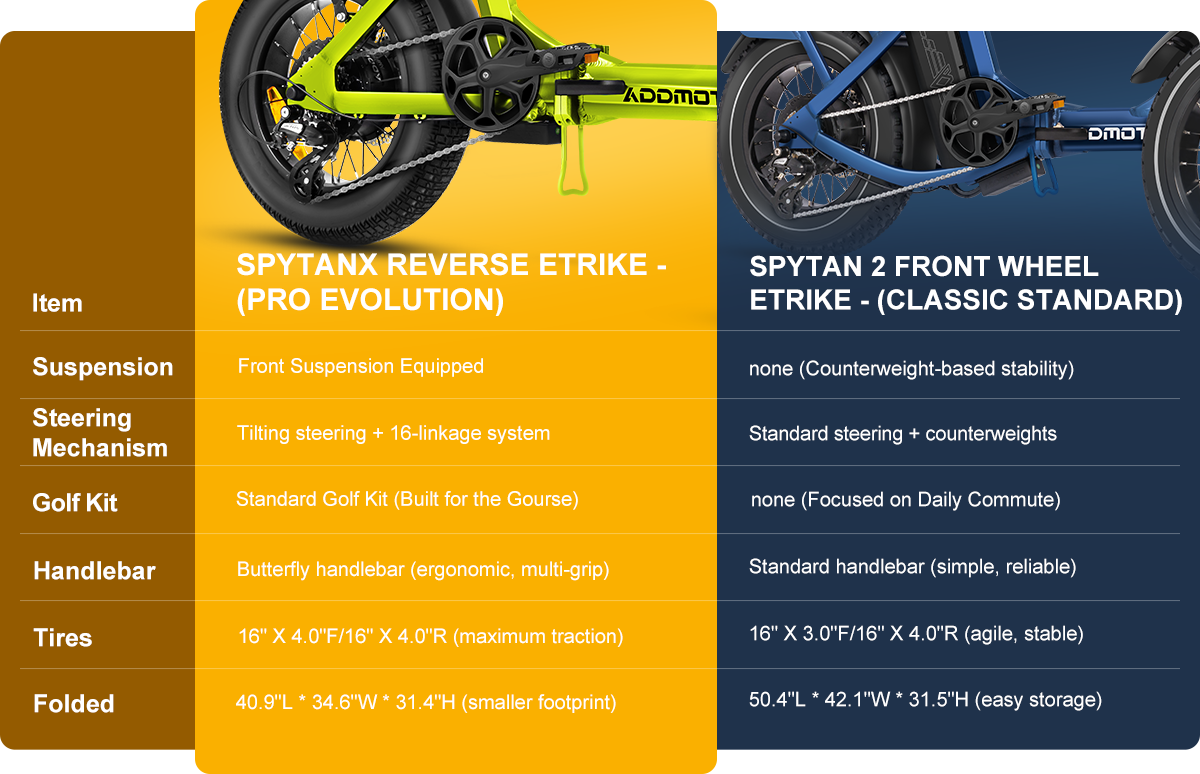
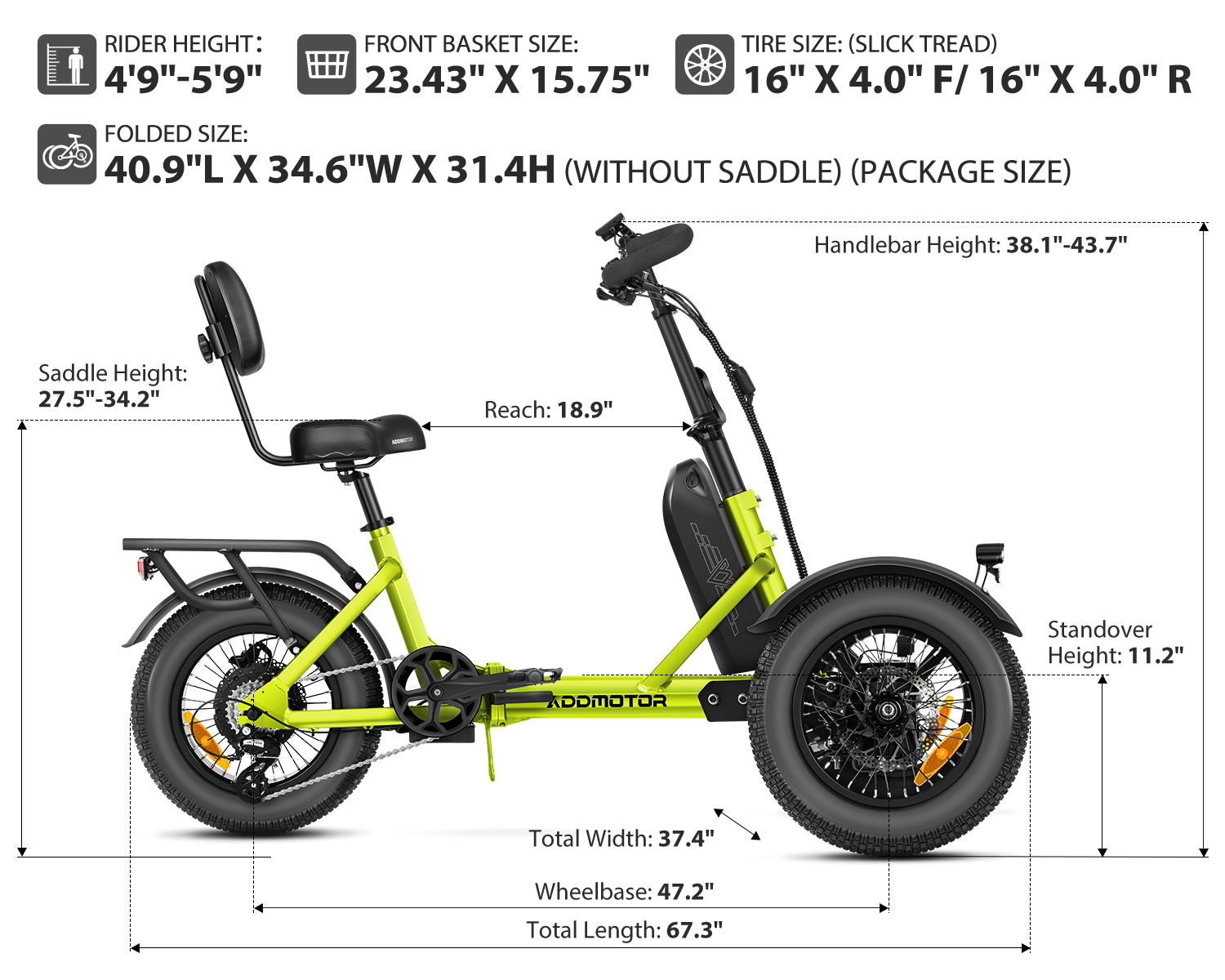
Share:
eBike Shops in Ohio (2026): 139 Verified Stores
Bike Trails in Washington State 2026: Where eBikes Ride