

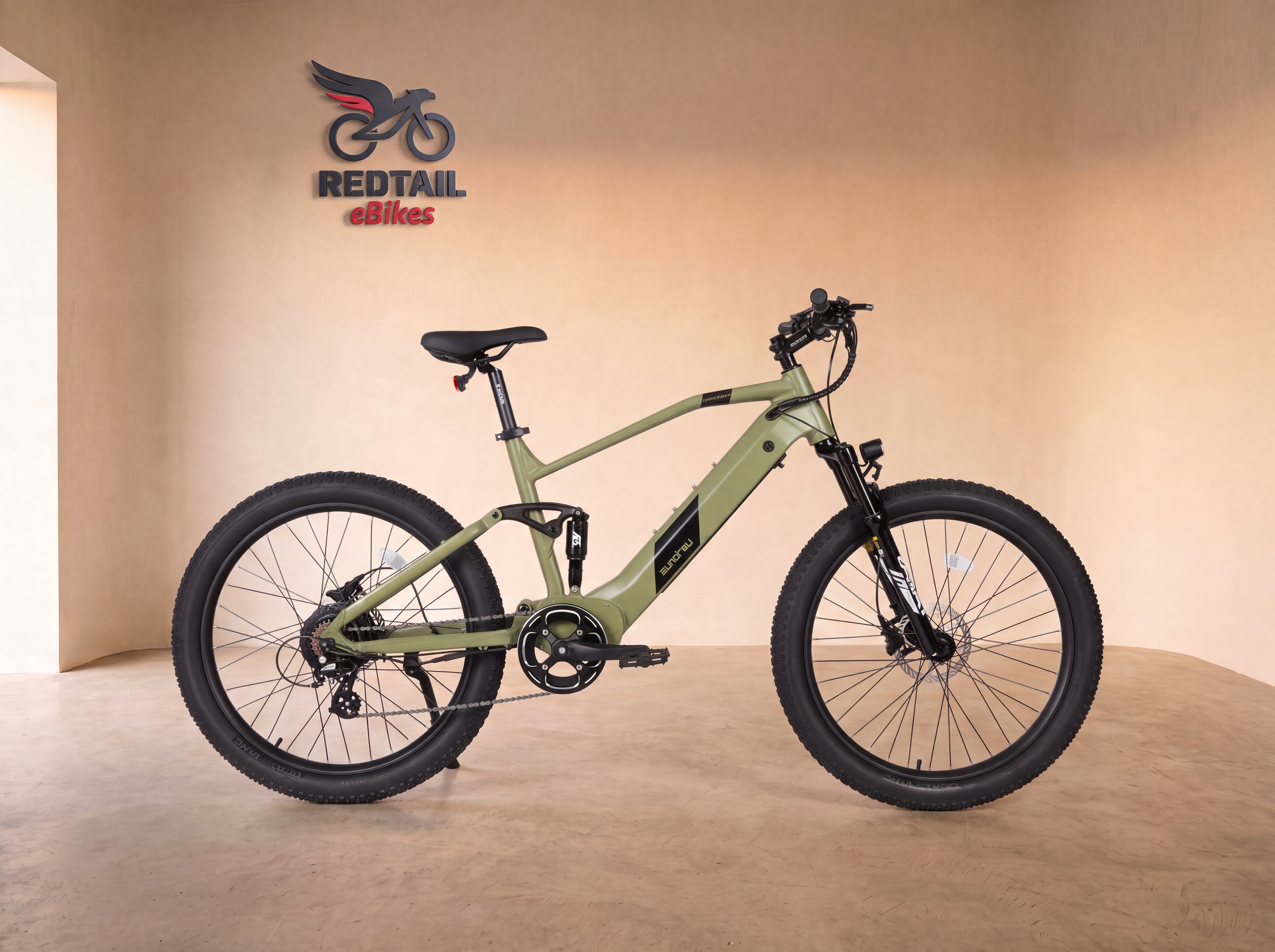
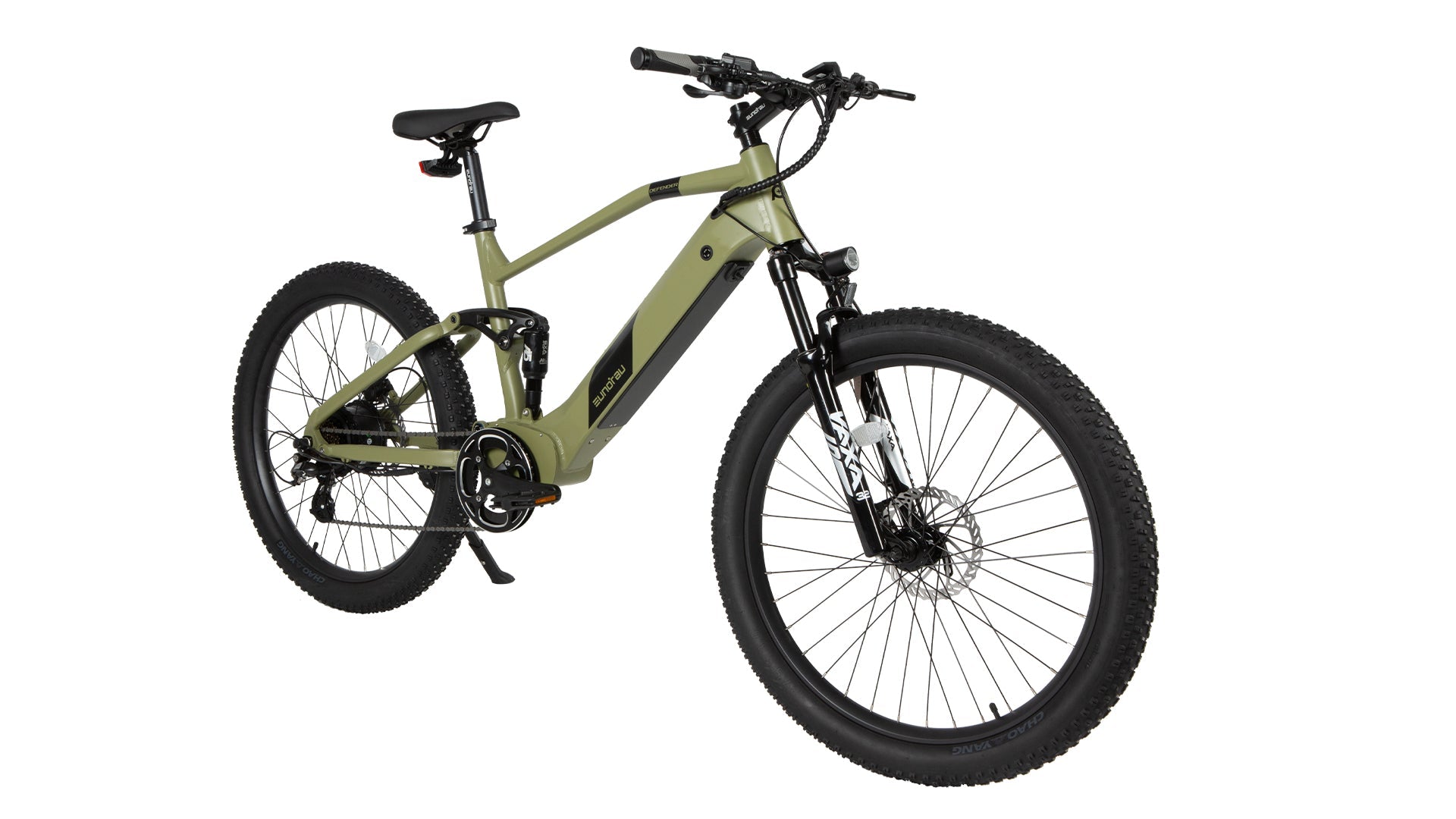


Eunorau Defender Full-Suspension Fat eBike

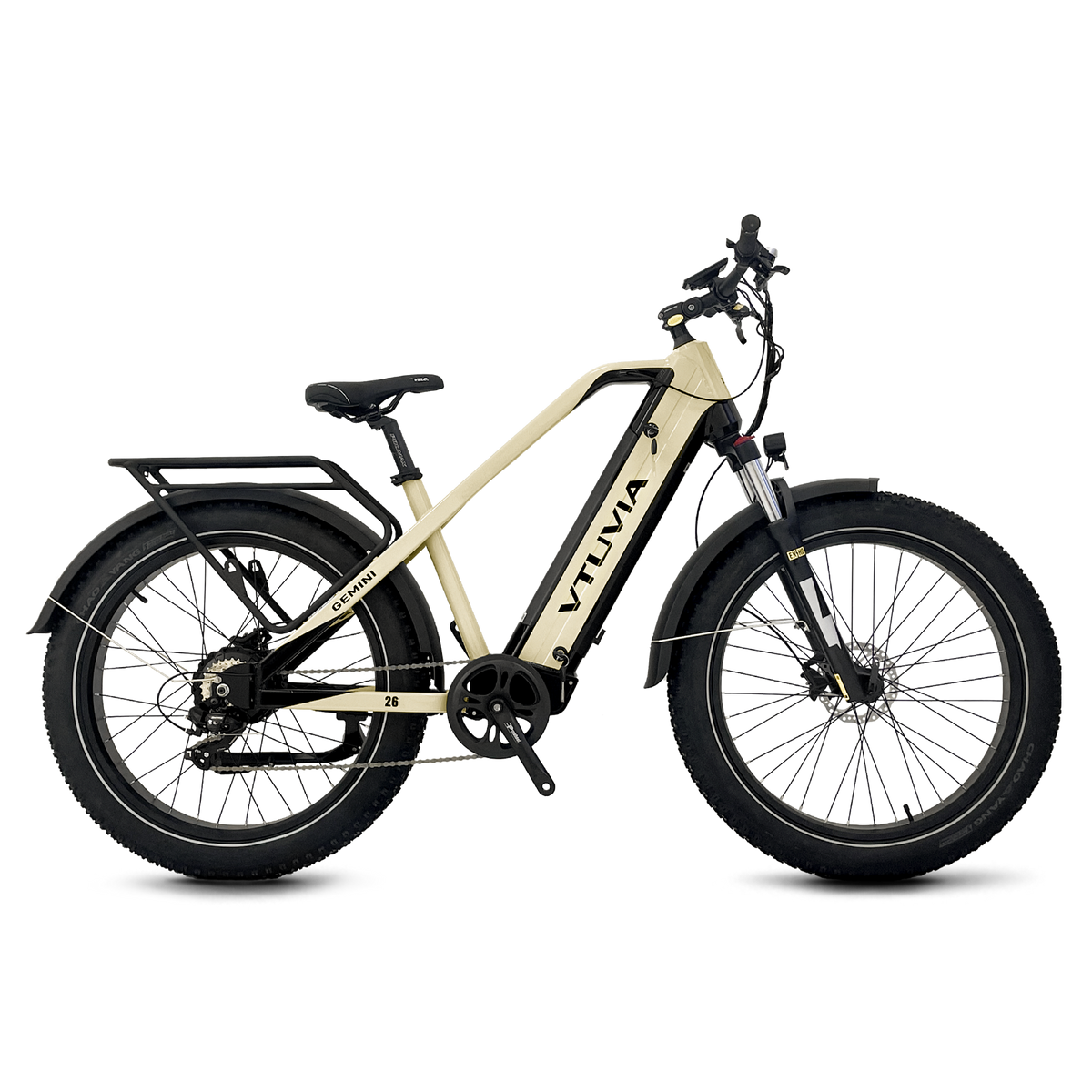


VTUVIA Gemini 1000W Long-Range All-Terrain Electric Bike
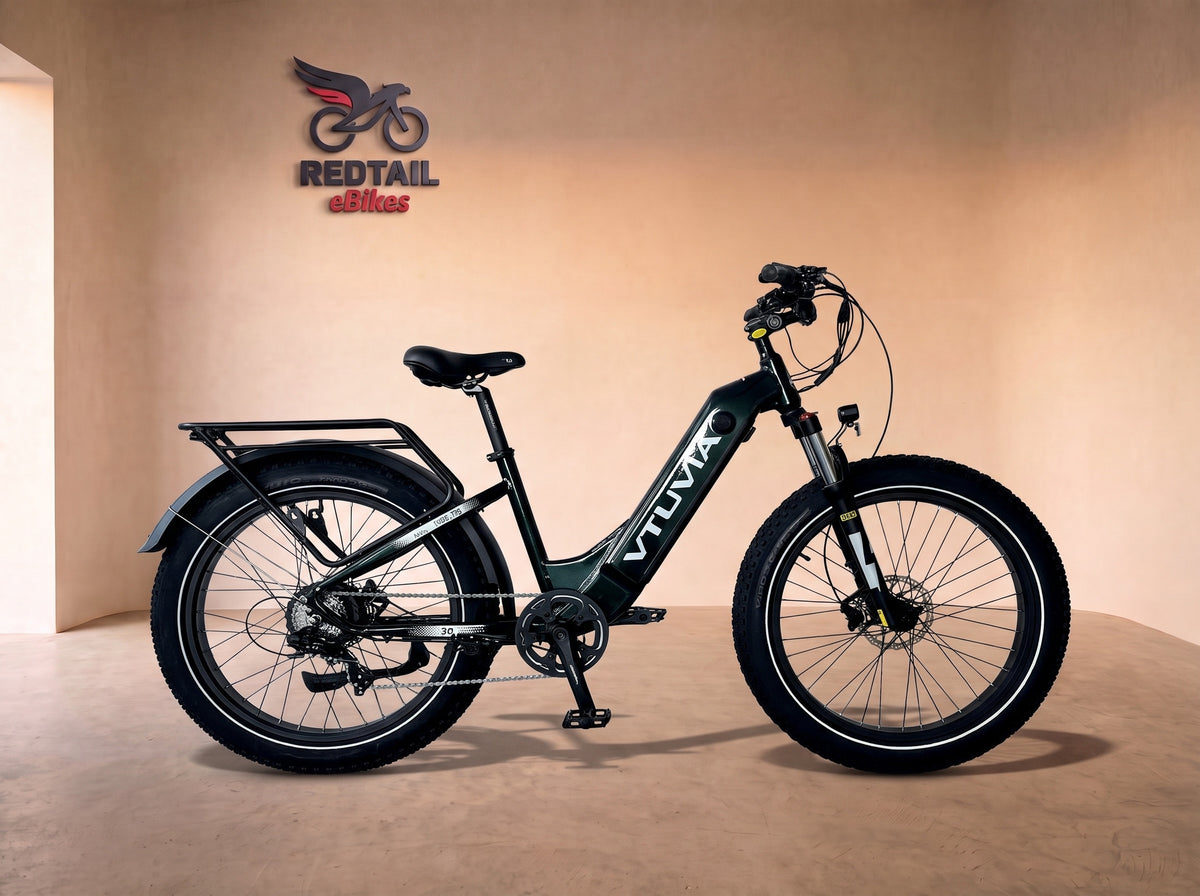
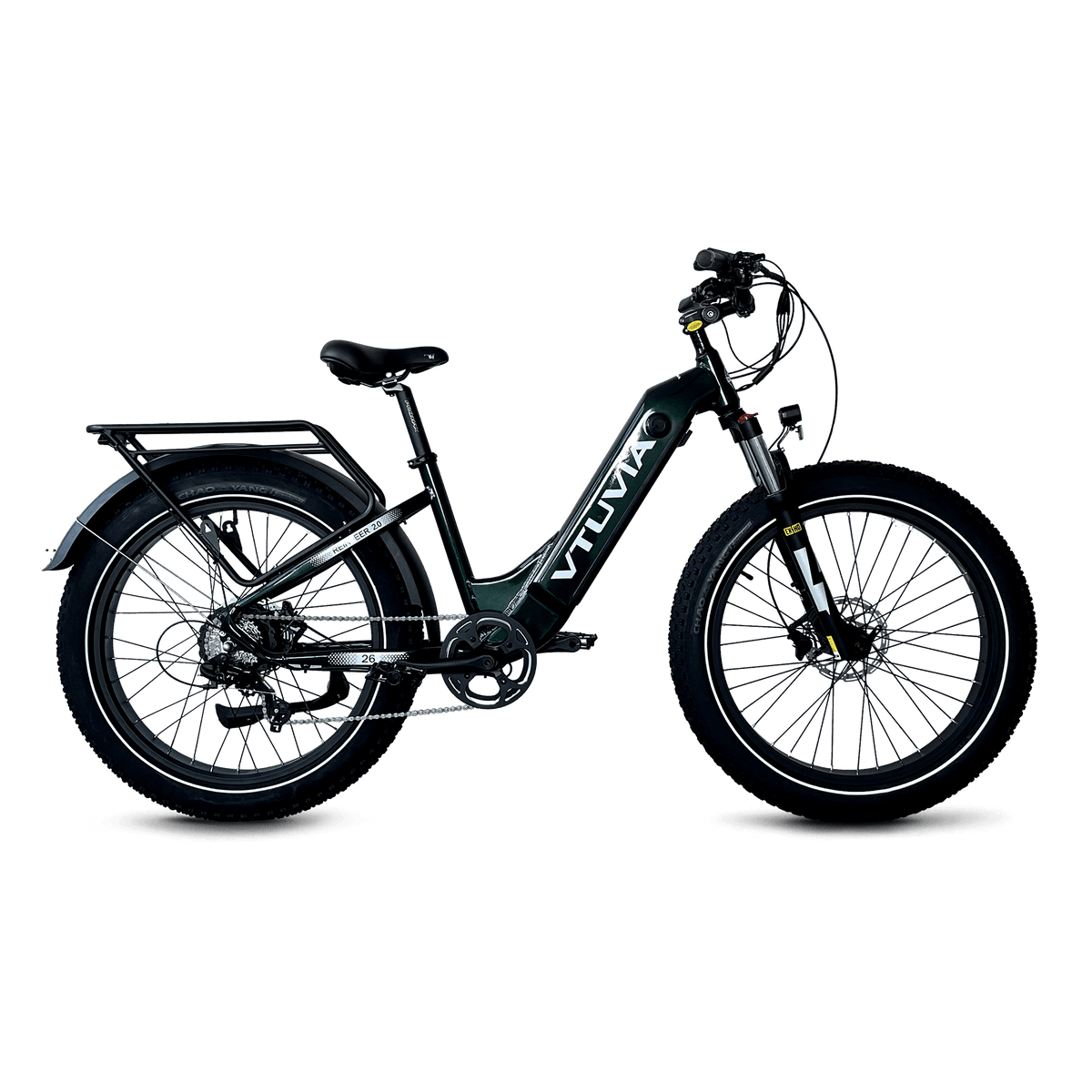


VTUVIA Reindeer 2.0 Step-Through Fat Tire Electric Bike
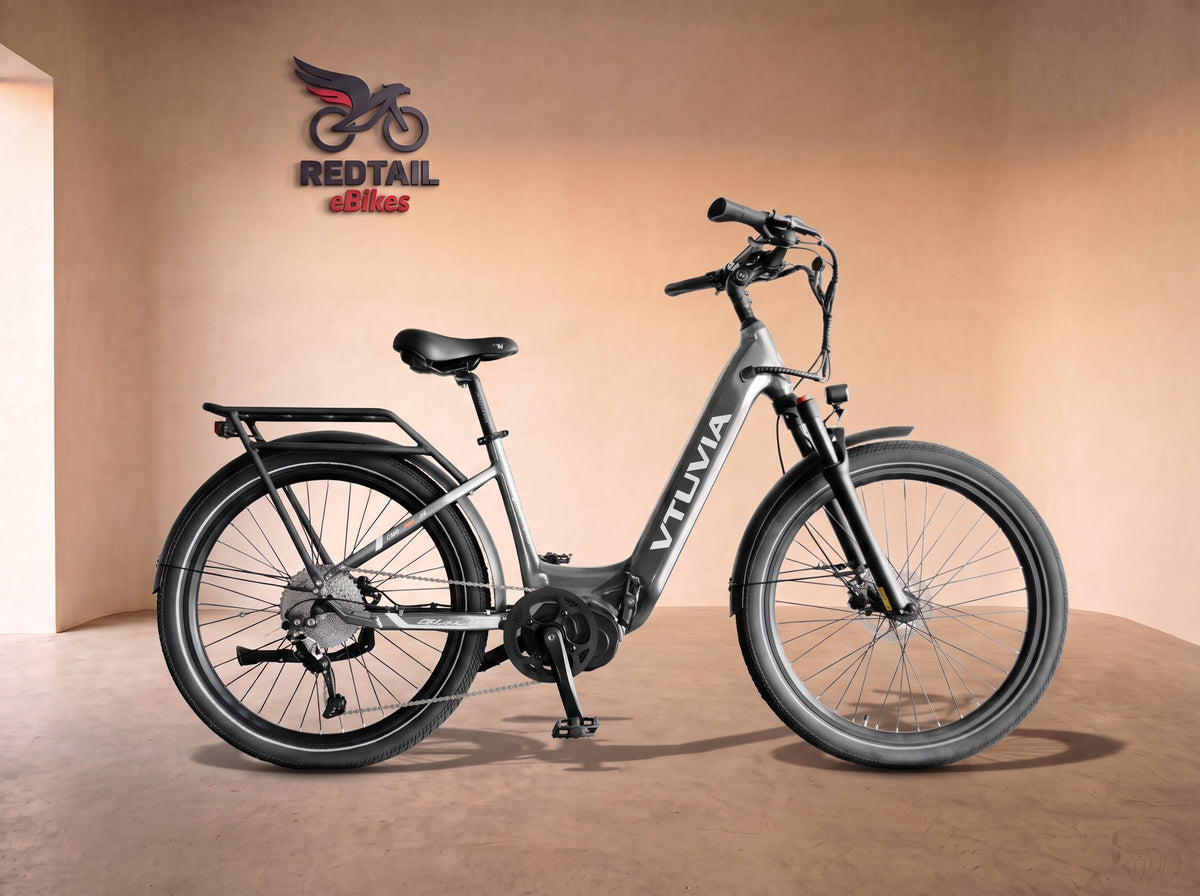
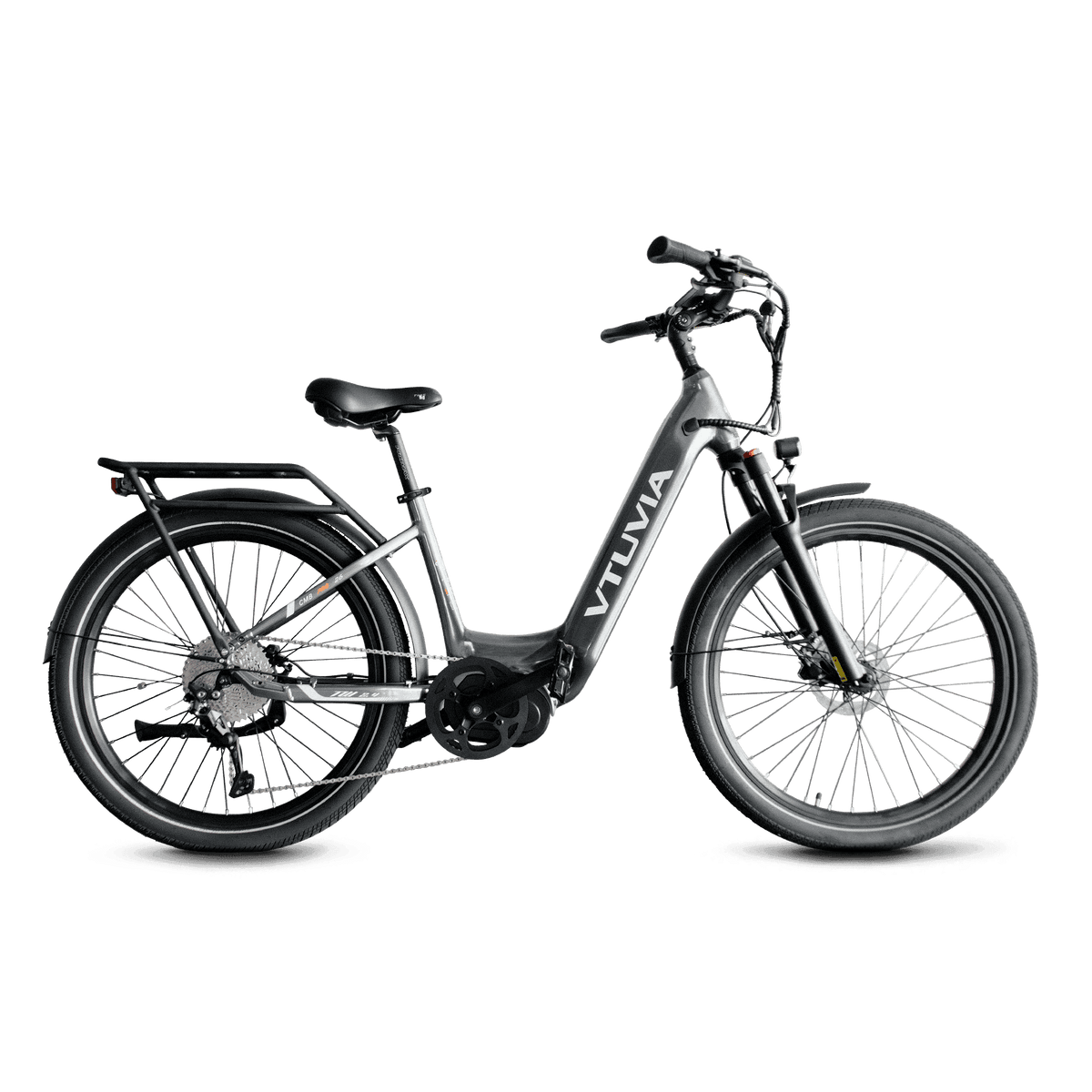

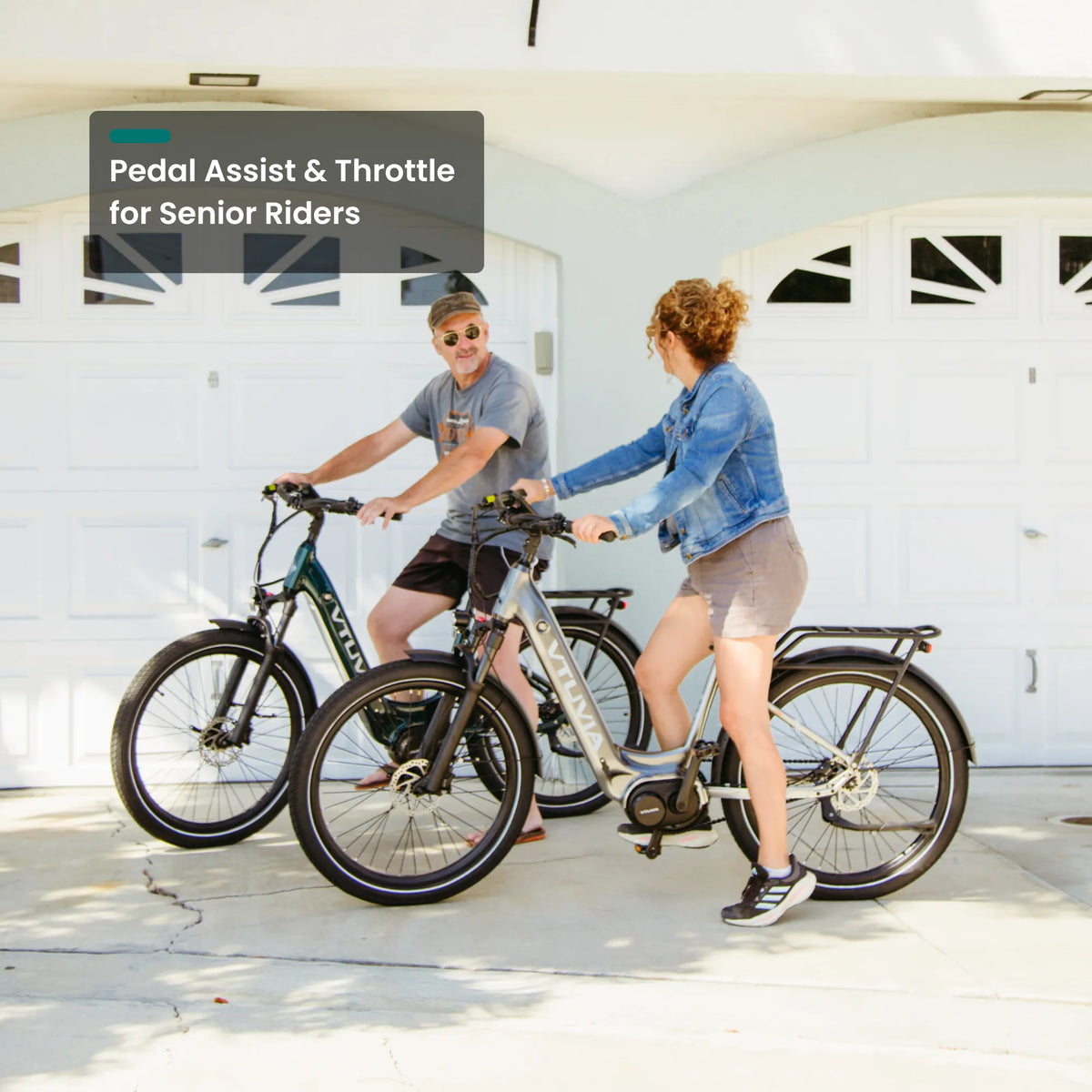
VTUVIA CMB 8-Speed Mid-Drive City Electric Bike

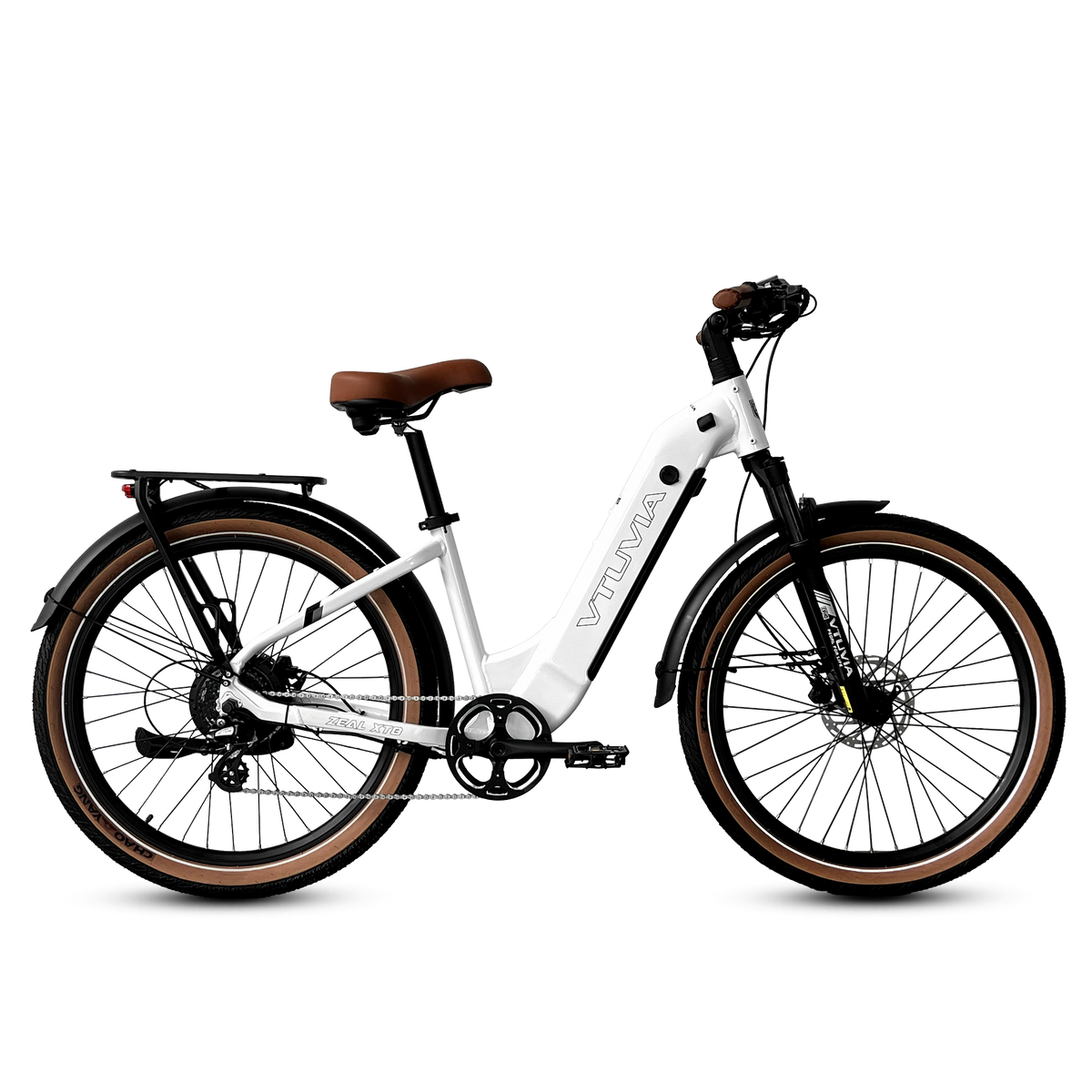
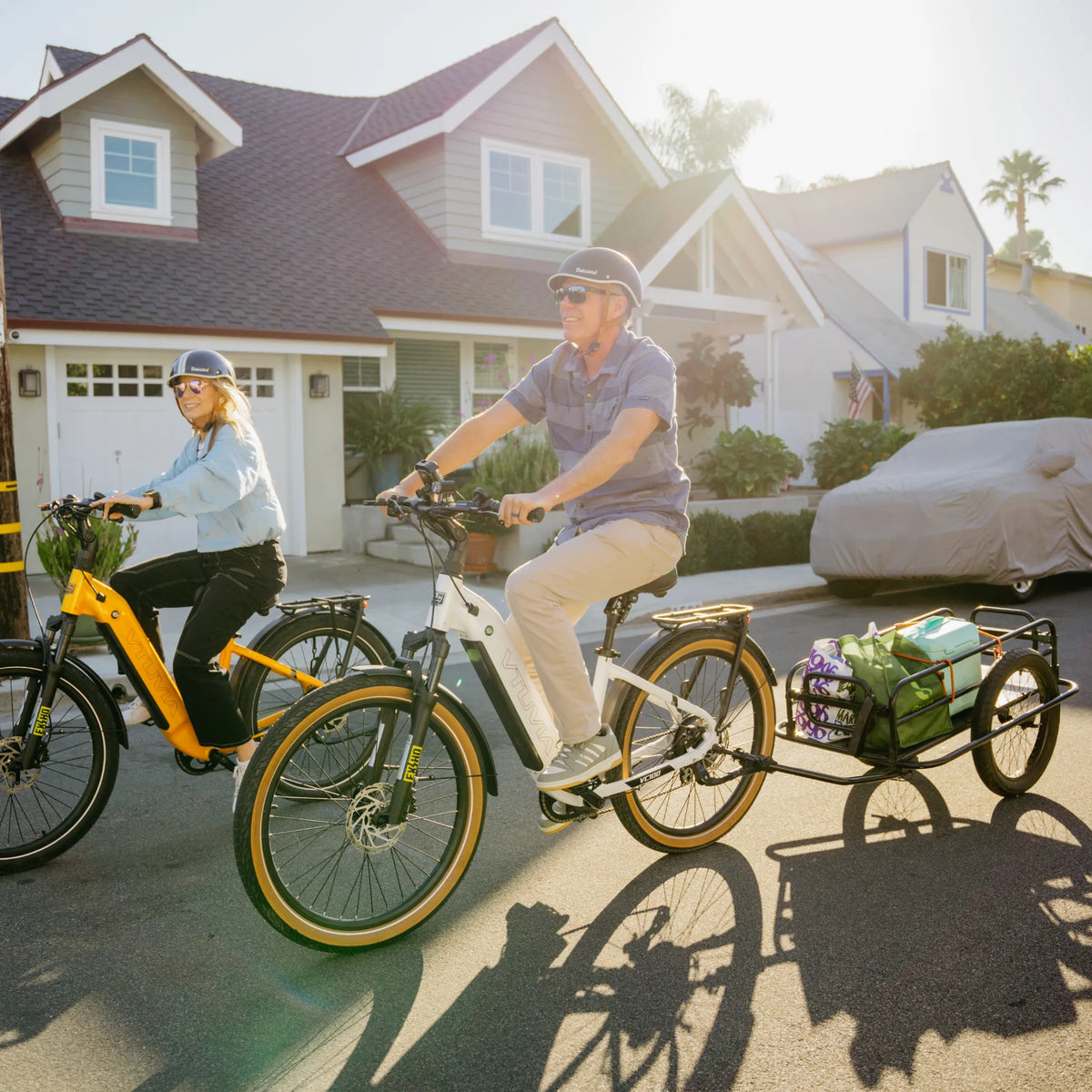

VTUVIA Zeal XT8 750W Step-Through Commuter Electric Bike


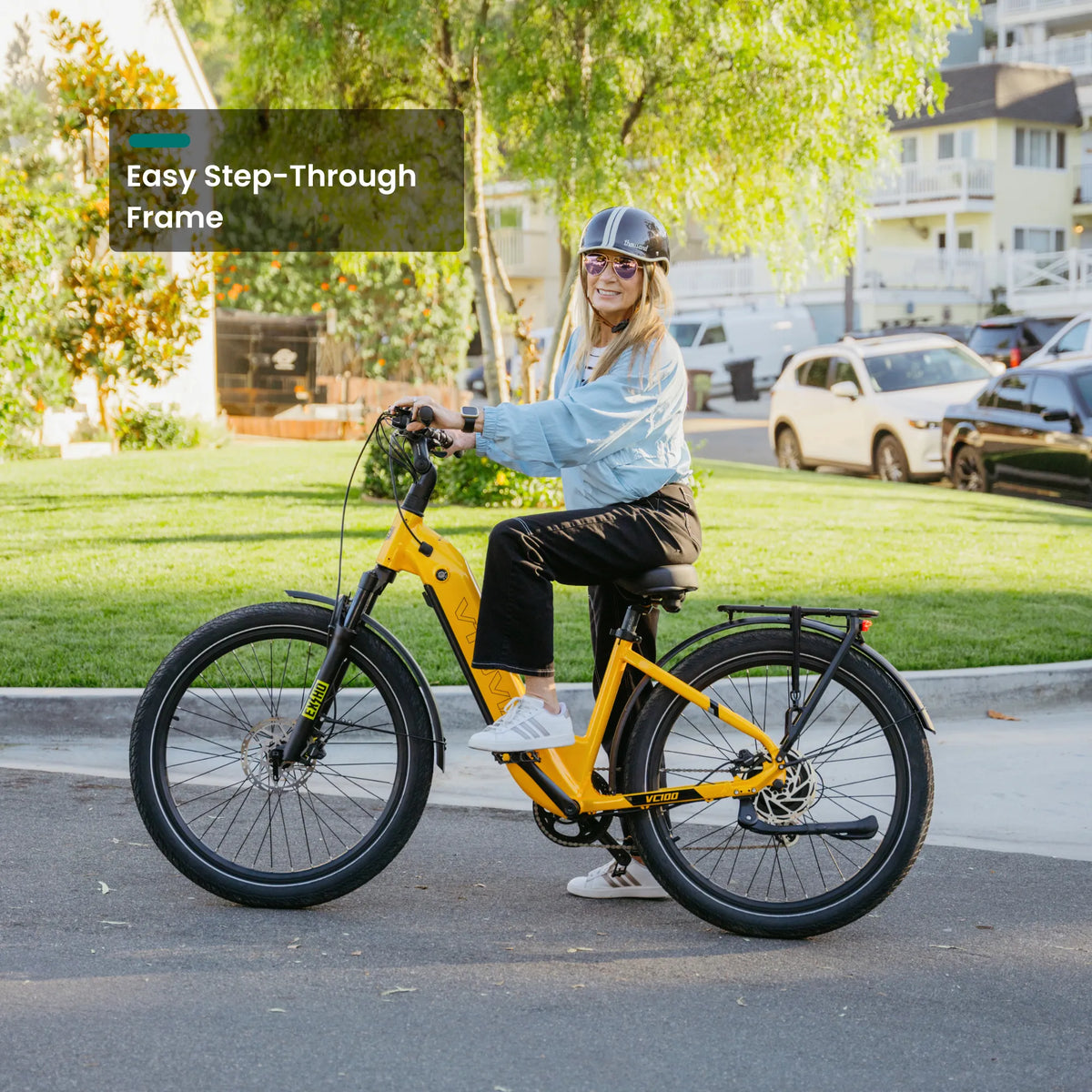

VTUVIA Zeal LT7 Step-Through Commuter Electric Bike

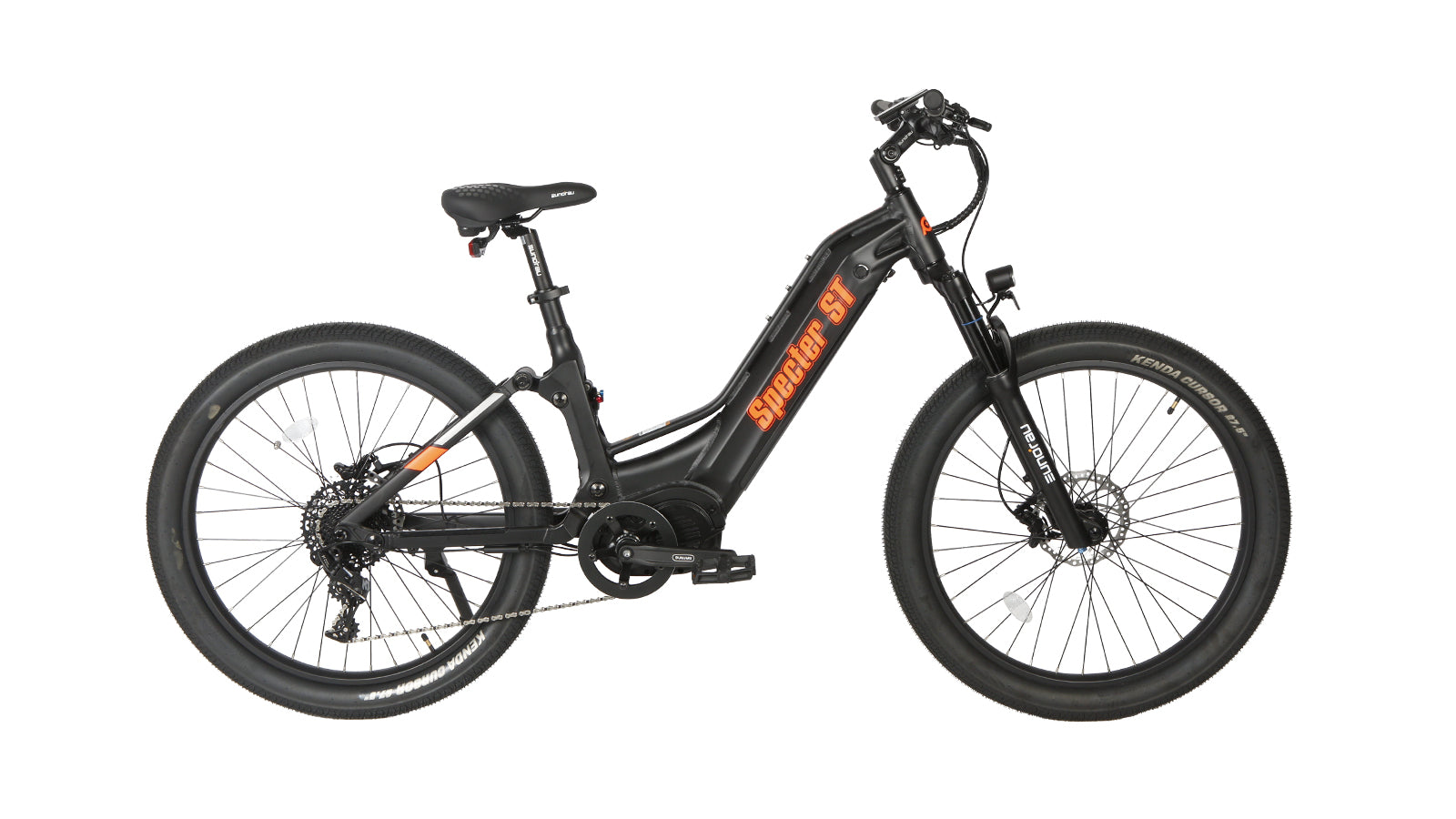
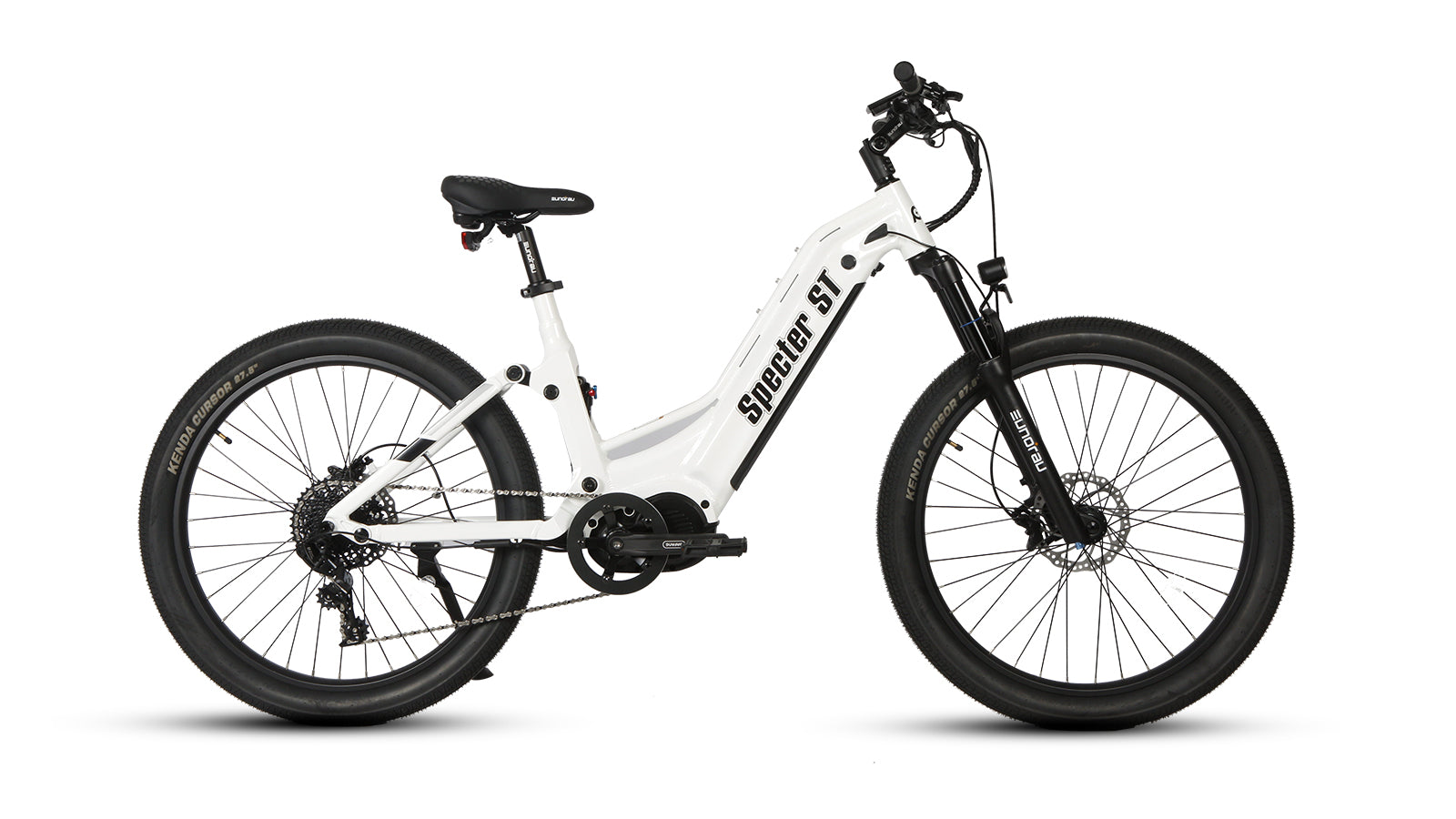
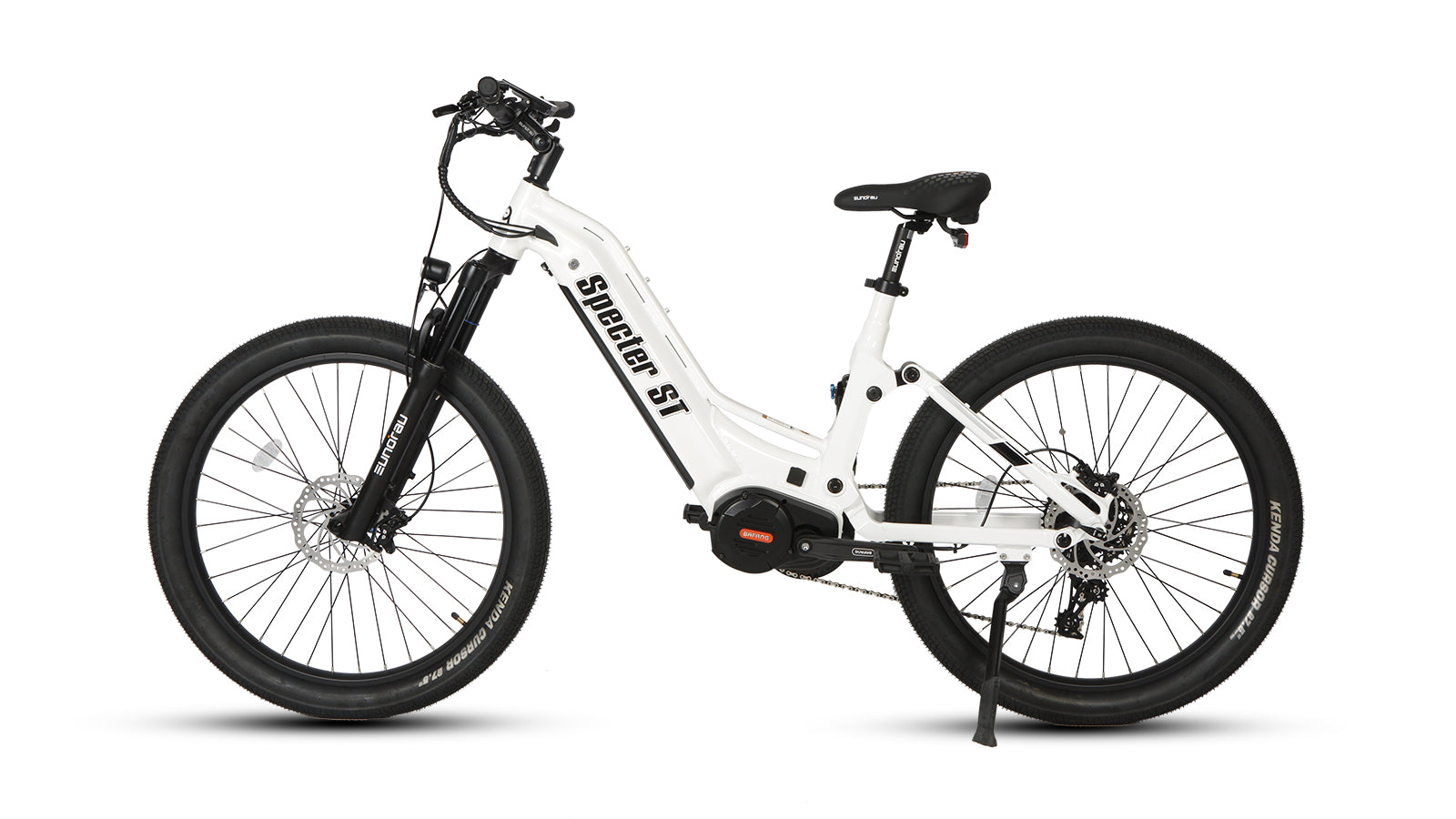
Eunorau SPECTER-ST 2.0 Step-Thru eMTB

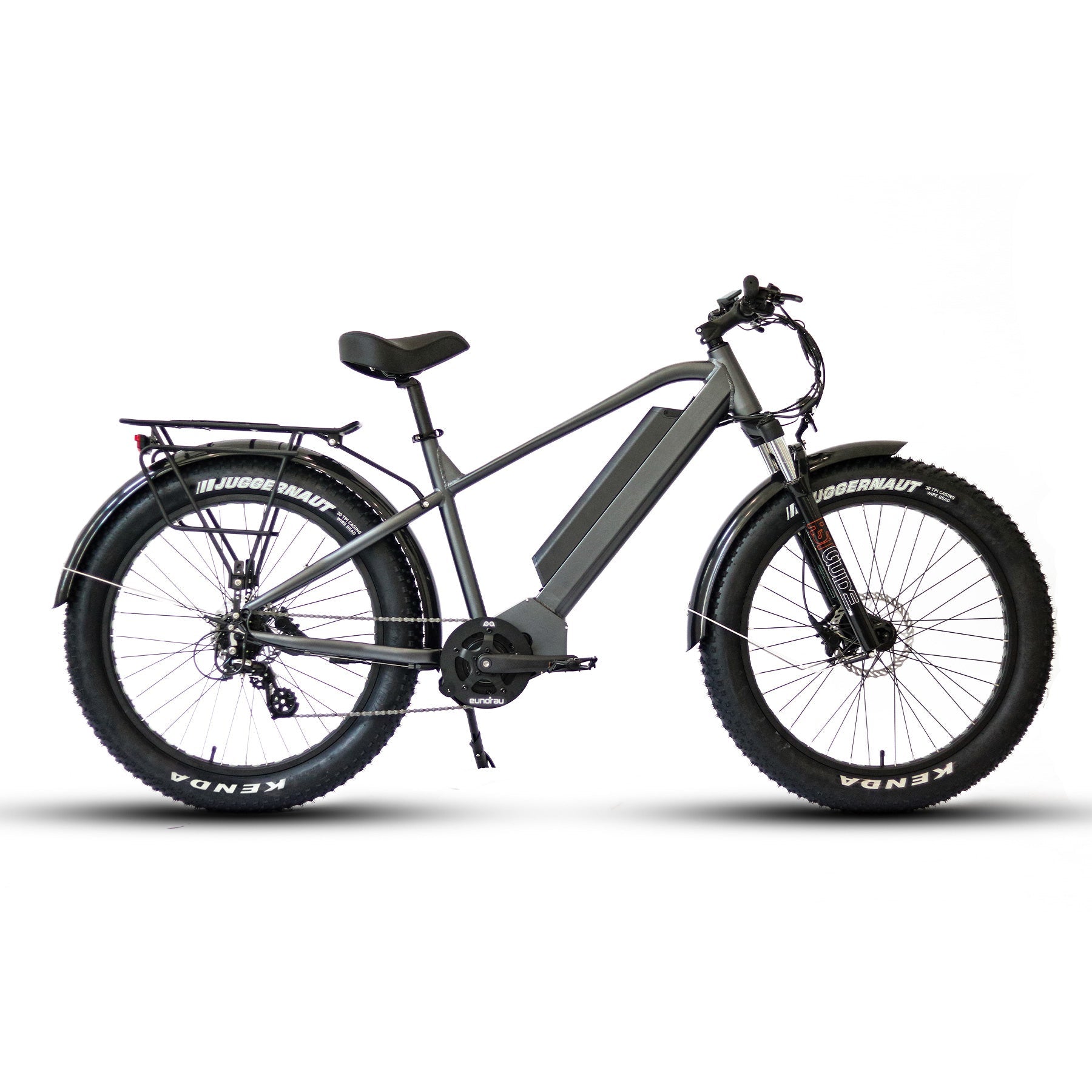


Eunorau FAT-HD 1.0 Pro Mid-Drive Fat eBike (Hunter X7)


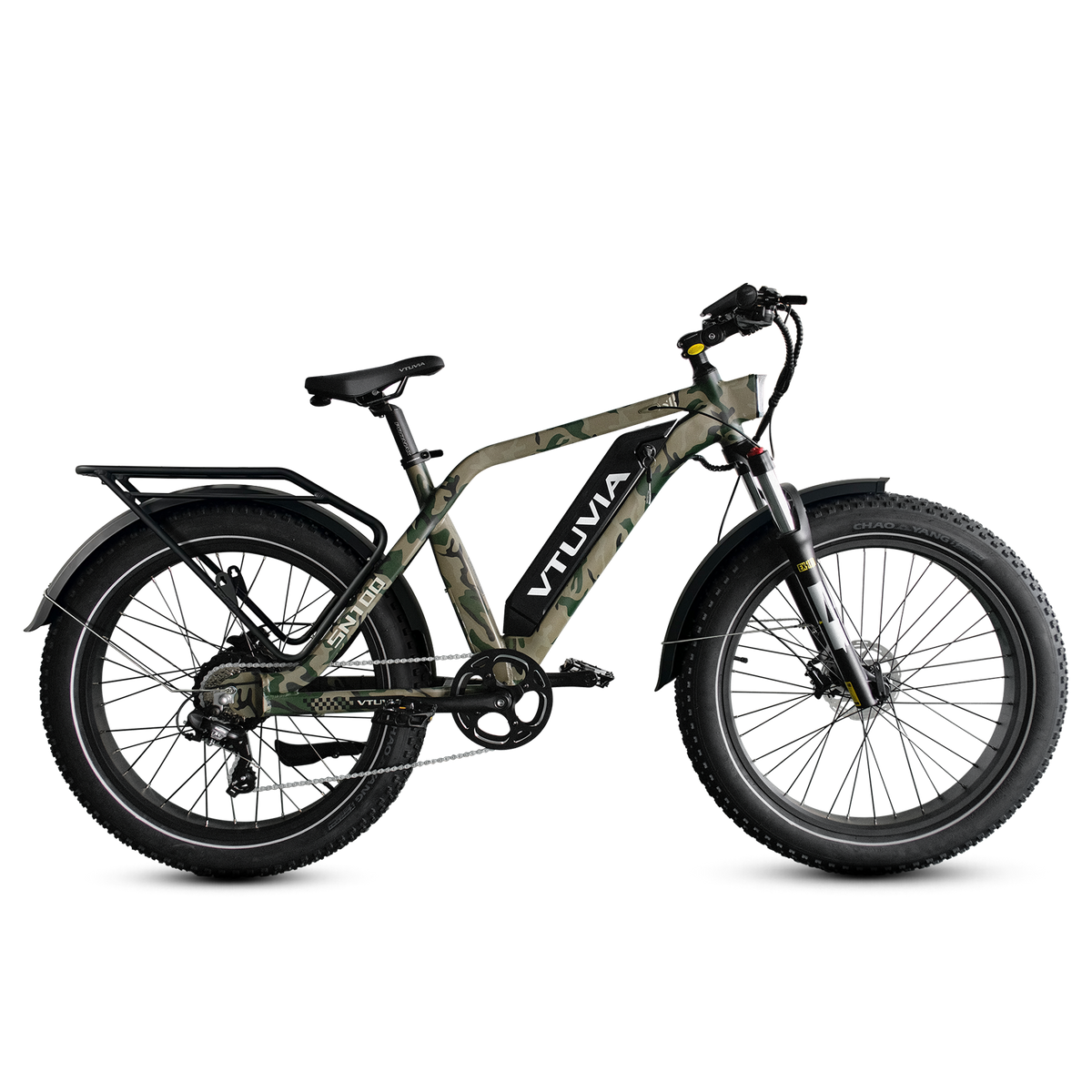
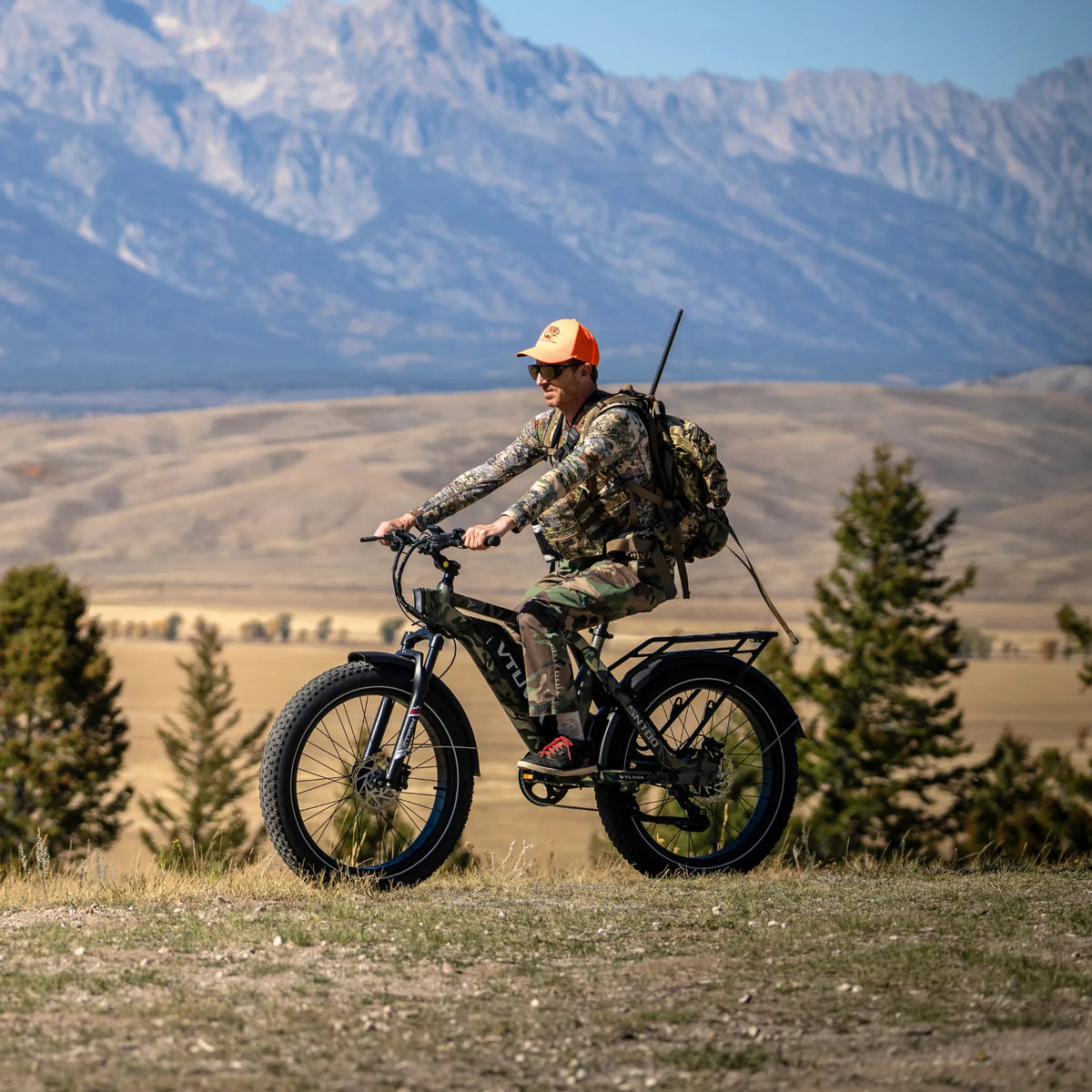
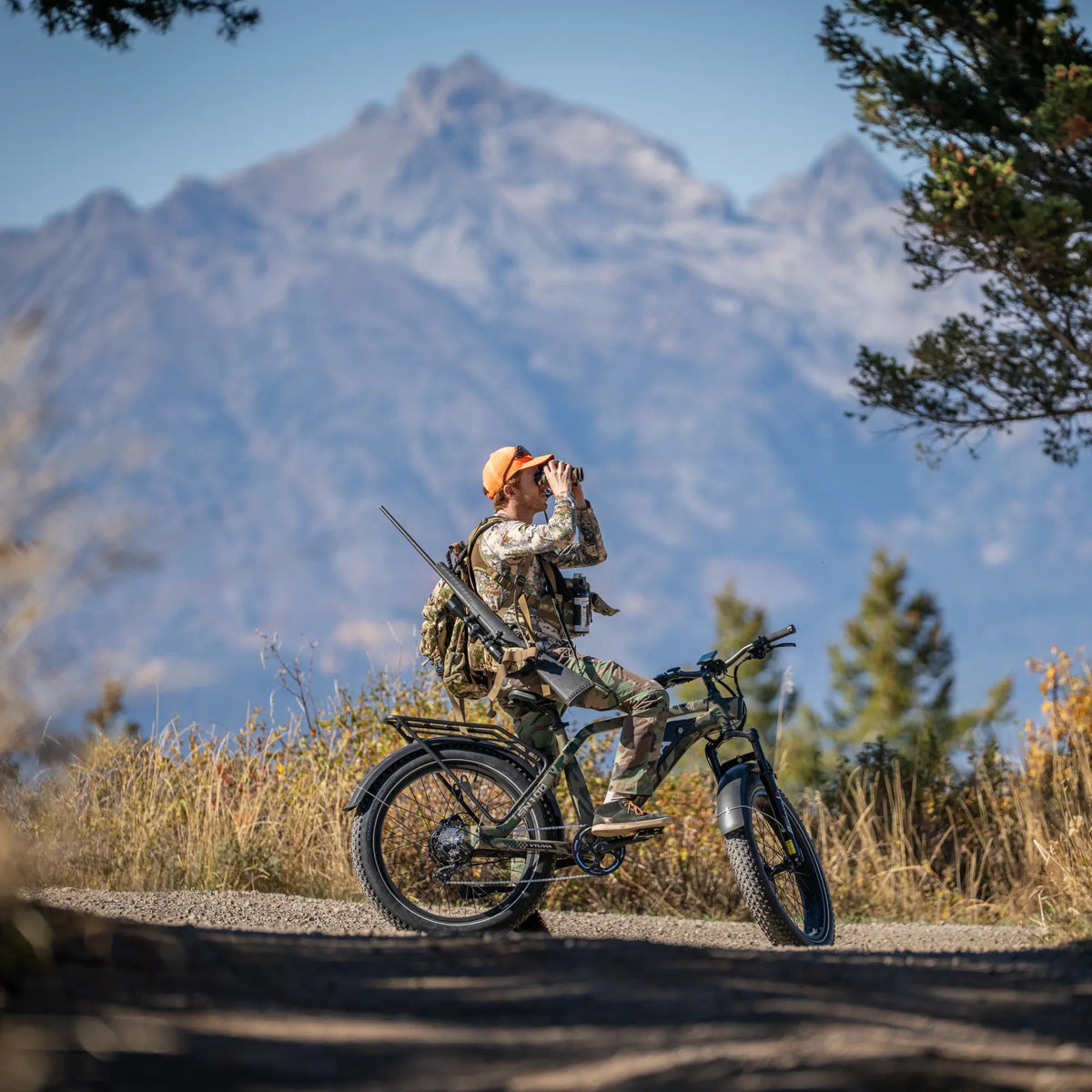
VTUVIA SN100 750W Fat Tire Hunting Electric Mountain Bike
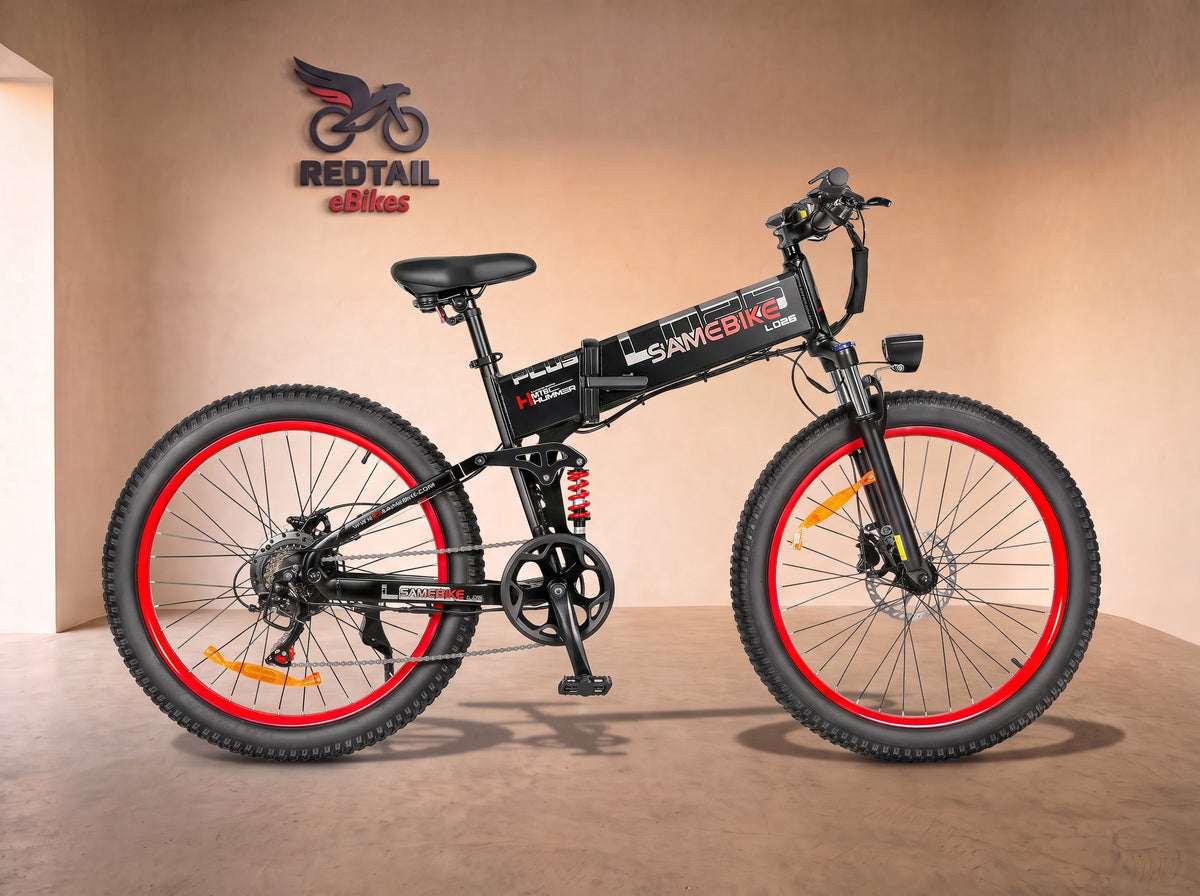

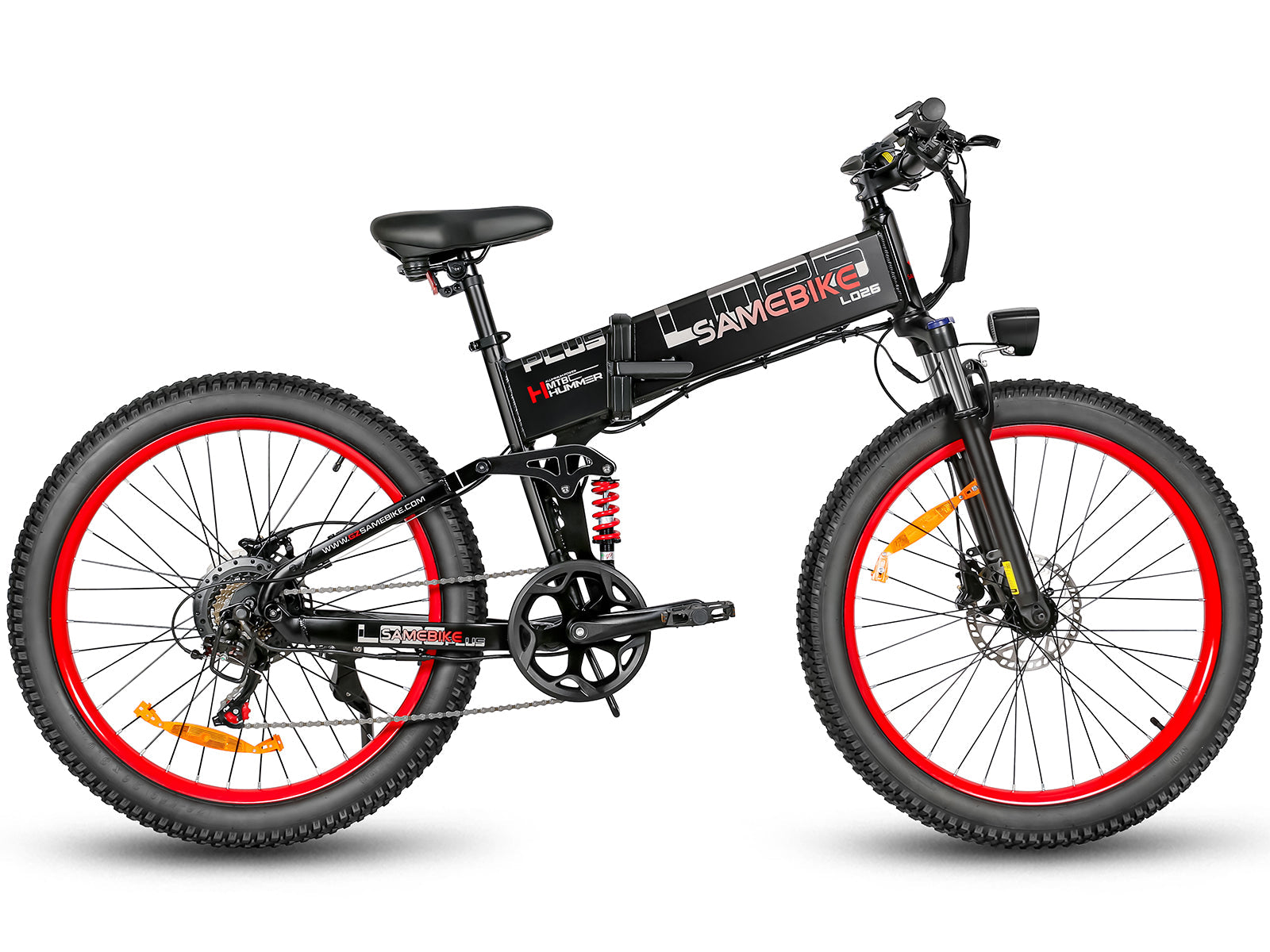

Samebike LO26 Plus Folding Fat Tire Electric Bike
Buyer's Guide
Electric Mountain Bikes: Buyer's Guide
Redtail carries 24 electric mountain and off-road bikes from $1,299 to $3,999 — 16 full-suspension, 8 mid-drive, across eight brands, every one shipped free to the lower 48. An electric mountain bike is a trail bike that climbs: suspension and real torque turn the ascent into the part of the ride you repeat.
That is the whole case for the category. Grippy tires and a motor with useful torque take the part of the ride you used to endure and make it the part you look forward to, so you session a hill instead of surviving it once.
Full suspension or a hardtail
This is the first decision, and it is the one riders ask about most. 16 of the 24 bikes above run suspension at both ends; the other 8 have a fork up front and a rigid rear. A rear shock keeps the back wheel in contact with the ground when the trail turns rough, which buys you control on descents and traction on broken climbs. A hardtail puts the same money into the motor, the battery or the brakes instead, and it is lighter and has less to service.
Rough, rooted, rocky ground is where full suspension earns its price. The Eunorau SPECTER-S 3.0 at $2,999 is the clearest example on this shelf: a 140 mm inverted fork and a DNM rear shock, with a Bafang M620 mid-drive and SRAM NX 11-speed behind them. If the ground you ride is loose rather than broken, the Eunorau Defender at $1,599 is the cheapest way onto a full-suspension fat frame here. Our guide to e-bike suspension works through travel, lockouts and what each system is actually for.
Mid-drive or hub motor
8 of the 24 drive the cranks; the other 16 drive a wheel hub. A mid-drive turns the bike's own gears, so on a steep sustained climb you can shift into a low gear and let the motor work where it is efficient. That is the reason the serious climbing bikes here are mid-drives: the Eunorau FAT-HS at $3,449 runs a Bafang M615 rated to 160 N·m, and the URUS 2.0 at $3,999 a 500 W mid-drive rated to 120 N·m.
A hub motor is simpler, cheaper and quieter, and on rolling ground you will not miss the gearing. The Defender's 500 W rear hub makes 60 N·m and carries 300 lb at $1,599 — less torque on paper, and enough for fire roads and moderate climbs. How e-bike motors differ sets out the trade in full.
Electric mountain bikes under $1,500
6 of the 24 sit under $1,500, and the shelf starts at $1,299, so this is not a category you have to spend three thousand dollars to enter. At $1,299 the Freesky Ranger Air M-540 pairs two 2,000 W peak motors with a 48V 25Ah pack, four-piston hydraulic brakes and full suspension on a step-through frame. The Eurostar Turbo M-410 is the same drivetrain on a diamond EMTB frame with a 120 mm fork, at the same price — pick between them on geometry, not on power.
At $1,499 the Samebike M20-III takes a different route: two 1,000 W hubs, two 48V 18Ah batteries totalling 1,728 Wh — the largest capacity Samebike sells — full suspension and hydraulic discs. All three of these publish a top speed above the 28 mph ceiling the US e-bike classes stop at — 34 mph on both Freeskys, 31 mph on the Samebike — so read the section on where you can ride before you choose one.
The VTUVIA SN100 is also $1,299, and it is a hardtail built for weight rather than travel: 750 W and 85 N·m through 26 × 4.0-inch tires, a 672 Wh LG pack rated to 70 miles, 400 lb of capacity for rider plus gear, and certification to UL 2271 and UL 2849.
The $1,500 to $2,000 band
Seven bikes land here, between the six under $1,500 and the eleven at $2,000 and up. The Freesky Swift Horse Ultra X-6E at $1,599 is the one built around a named motor — a 4,000 W peak Bafang rather than an unbranded hub — with a 48V 35Ah LG pack Freesky rates at 87–140 miles on an 83 lb EMTB frame.
At $1,859 the Tesway X9 Ultra is the most powerful machine on this page: a 60 V system with dual motors to 4,000 W peak and 240 N·m, on full suspension and 26 × 4.0 casings. Tesway publishes 43 mph for it, which puts it firmly in the private-land column rather than the bike-path one.
$2,000 and up
11 bikes sit at $2,000 or more — the largest of the three bands, and what the money buys is the drivetrain. The SPECTER-S 3.0 and the step-through SPECTER-ST 2.0 are both $2,999 with a 1,000 W mid-drive and full suspension. The FAT-HS at $3,449 is the back-country pick — 160 N·m, 720 Wh, 300 lb payload, two frame sizes — and the URUS 2.0 at $3,999 is the full-suspension eMTB at the top of the range, listed by Eunorau as Class 3 and UL certified.
If your problem is traction rather than gradient, the DEFENDER-S 2.0 at $2,799 puts a 750 W hub at each wheel — 1,500 W combined — on a four-bar full-suspension frame with an air shock. The rest of our dual-motor range is built on the same idea.
Step-through frames and smaller riders
A high top tube is awkward on a loaded bike and worse on a slope, and it is the reason step-through versions exist rather than a concession. The SPECTER-ST 2.0 is the one to know here: the same 1,000 W mid-drive and full suspension as the SPECTER-S, on a step-thru frame, listed by Eunorau as Class 3 with a UL-certified battery — and the second 48V 15Ah battery is included. The Freesky Ranger Air M-540 is the step-through at the other end of the price range, at $1,299.
Check the published rider-height range before you order rather than after. Eunorau sizes the URUS and the Defender for riders 5'3" to 6'4", and the FAT-HS comes in two frame sizes.
Hunting, ranch and back-country
A hunting bike is judged on what it will carry and how quietly it gets there, not on fork travel. The VTUVIA SN100 at $1,299 is the direct answer — camo, 400 lb of capacity, and certification to UL 2271 and UL 2849 — and it is a hardtail on purpose, because the weight budget goes into payload rather than a shock. When the ground is steep as well as unimproved, the FAT-HS adds the gearing: 160 N·m through nine speeds, 300 lb of payload, in two frame sizes. Our hunting e-bike guide matches both to terrain and load.
Where you can ride one, and how they are classified
Worth settling before you order, because it decides where the bike is legal rather than where it is capable. Most US states run the three-class system, and the bikes here sit on both sides of it. The Defender is listed as a Class 2 e-bike at 20 mph and the URUS 2.0 as Class 3 — those belong on shared-use paths where your state allows a motor at all.
Five machines here do not. Freesky rates the Ranger Air M-540 and the Eurostar Turbo M-410 at 34 mph and the Swift Horse Ultra X-6E at 38 mph; Samebike lists the M20-III at 31 mph; Tesway publishes 43 mph for the X9 Ultra. Every one of those figures is above the 28 mph ceiling the federal low-speed electric bicycle definition and each state's three-class framework stop at, which puts those five on private land, designated OHV areas and motorized routes rather than on a bike path — and no setup change alters that.
Separately, land managers set their own rules for trail access, so a legal e-bike is not automatically a permitted one on a given trail. Our state-by-state e-bike law guide gives you your own state's statute, and the full electric mountain bike buying guide matches every one of these machines to a rider and a use.
What to look for
- Suspension travel, not just the word — 100 mm handles fire roads; 140 mm like the SPECTER-S is for genuinely rough descending.
- Where the motor sits — cranks for sustained steep climbing, hub for simplicity and price.
- Battery in watt-hours — this shelf runs from 672 Wh to 1,728 Wh, and hills spend it quickly.
- Payload — published figures here reach 400 lb. Check it against your weight plus pack and gear.
- Brakes — hydraulic discs are the floor on a heavy bike; four-piston on the fast ones.
- Battery certification — UL 2271 or UL 2849 in the maker's own specification, which several bikes here carry.
Why buy your electric mountain bike at Redtail
Every bike above ships free to the lower 48, is priced in USD, and is backed by a US support desk that files the warranty claim with the manufacturer for you instead of handing you a form. Shop Pay instalments are available at checkout. 23 of the 24 have a variant you can buy today. Our figures are the manufacturers' own published specifications, verified against the maker's page and recomputed rather than repeated — and where a maker does not publish a number, we say so instead of filling the gap. If nothing here is right for your ground, the fat-tire range, the commuter range and the full e-bike range are a click away.
Electric mountain bike FAQs
How much does an electric mountain bike cost?
On this shelf, $1,299 to $3,999. Six of the 24 sit under $1,500 and eleven at $2,000 or more. The step up in price mostly buys the drivetrain: mid-drive motors and longer-travel suspension live at the top, hub motors and shorter forks at the bottom.
Are electric mountain bikes worth it?
If your riding is limited by the climb, yes — a motor turns the ascent into something you repeat rather than ration, and that is the whole case. If you ride flat ground or pavement, you are paying for weight and suspension you will not use, and our commuter range is the better buy.
Are electric mountain bikes legal?
The Class 1, 2 and 3 machines here are treated as e-bikes in most US states, with 28 mph as the ceiling. Five bikes above publish more than that — the Freesky Ranger Air M-540 and Eurostar Turbo M-410 at 34 mph, the Swift Horse Ultra X-6E at 38 mph, the Samebike M20-III at 31 mph and the Tesway X9 Ultra at 43 mph — and those belong on private land, OHV areas and motorized routes rather than on a bike path. Trail access is set separately again by whoever manages the land.
What is the cheapest electric mountain bike you sell?
$1,299, where the Freesky Ranger Air M-540, the Eurostar Turbo M-410 and the VTUVIA SN100 all start — and six of the 24 bikes above are under $1,500. The Ranger Air M-540 is the one we would point a first-time trail rider at: two 2,000 W peak motors, full suspension and four-piston hydraulic brakes on a step-through frame.
How much is a full-suspension electric mountain bike?
From $1,299 here. Sixteen of the 24 run suspension at both ends, so full suspension is not the premium feature on this shelf that it is elsewhere — the Eunorau Defender is $1,599 and the Freesky Ranger Air M-540 is $1,299.
Hardtail or full suspension?
Full suspension for rough, rooted, rocky descending and for traction on broken climbs. A hardtail for fire roads, gravel and mixed ground, where the same money buys a better motor, a bigger battery or stronger brakes and you carry less weight.
Are electric mountain bikes fast?
The classed ones top out at 20 or 28 mph of assistance, which is a legal limit rather than a hardware one. Five machines above publish more — 31 to 43 mph — and those are off-road machines rather than faster bike-path bikes. Where a maker publishes no top speed for a bike, we do not print one.
What should I look for in an electric mountain bike?
Four numbers decide most of it: suspension travel, where the motor sits, the battery in watt-hours, and the payload rating against your own weight plus gear. Then the brakes, and whether the battery carries a UL certification in the maker's own specification.
Blog posts