
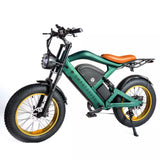
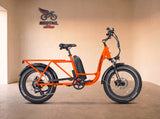
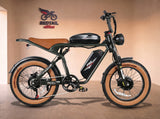
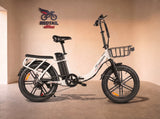

By Milad Ghobadibeygvand, BScN (Western University, 2014), Redtail eBikes. Every specification, price and rule on this page was read at its own source and dated. · Verified September 6, 2026; picks, prices and ranges re-verified September 26, 2026; Addmotor prices October 4, 2026; the CY20 Pro's October 19, 2026.
10 picks · 4 brands · 9 of 10 cover a 40-mile shift on every reading · 3 cover 60 · 4 rider types · $519 to $2,099 · every spec read at the maker · 37 pages measured, 0 cite the federal statute that defines an e-bike
Quick Answer: The best ebike for delivery is the one that covers your whole shift. Outside New York City, the Addmotor Graoopro at $1,499 covers 68 derated miles on one battery and carries 450 pounds. In the city, start from the $1,399 VTUVIA CMB 8-Speed, which names UL 2849 and UL 2271; for short hops, the $519 Samebike CY20 Pro Spoked folds.
For groceries, the Addmotor Garootan M-81 at $1,099 is a cargo frame at commuter money. In New York City, read the rule every guide gets backwards first: the law puts the cost of a compliant bike on the app.
Key facts (verified September 6, 2026; picks, prices and ranges re-verified September 26, 2026; Addmotor prices October 4, 2026; the CY20 Pro's October 19, 2026):
- Plan on a 40 to 60-mile day, and one battery is borderline. Running each maker's own watt-hour figure against its own published range, then multiplying by 0.65, nine of the ten picks cover a 40-mile shift in the configuration this guide recommends on every reading, and three cover 60 (our arithmetic, method and inputs). Three get there with the second battery their maker sells, and the guide prices them that way; one of those, the META275 1.0, covers 40 on one reading of Eunorau's figures and falls a mile short on the other. Downtime is the real cost on a delivery bike, so find your nearest bench first in the verified US e-bike store directory.
- New York City agrees, and pays for it. Its trade-in program issues two batteries per rider, and says why: "Participants will receive two batteries because many delivery workers report that a full day of work often requires the use of two batteries" (NYC Department of Consumer and Worker Protection, October 23, 2024).
- In New York City the platform buys the bike. Local Law 95 of 2025 says a compliant device "shall be provided at the expense of such delivery service", that a service "shall not require, as a term of employment or as a term of any contract" that a worker provide one at their own expense, and that failing to buy one "shall not be the basis for the deactivation of such worker" (enacted text, Local Law 95 of 2025, § 20-1526).
- New York's Class 3 is 25 mph, not the 28 you keep reading. State law defines Class Three as ceasing assistance at twenty-five miles per hour, and only in a city with a population over one million (NY Vehicle and Traffic Law § 102-c).
- No license is needed for a class-legal e-bike in 47 states and the District of Columbia, whose codes treat it as a bicycle (our state-by-state table). New Jersey is the exception: every e-bike there must be registered, and its rider needs an e-bike license or a driver's license (NJ MVC). The federal definition underneath is a motor of less than 750 watts and under 20 mph on motor power alone with a 170-pound rider (15 U.S.C. § 2085).
- New York City sets a pay floor. App-based delivery workers must be paid at least $22.13 an hour excluding tips, the rate from the first pay period on or after April 1, 2026, up from $21.44 (NYC DCWP, January 26, 2026).
How we verified this
Every specification that decides a pick below was read on the manufacturer's own product page and the page was saved on the day it was read: September 6, 2026 for the first build, and September 26, 2026 for every pick, when five replacements joined the page. Nothing here rests on our own product listings.
Every rule was read in the instrument that makes it. The New York City certification duty comes from the enacted text of the local law not from a press release about it.
The class definitions come from the state vehicle code and the federal definition from the United States Code. Where two published figures disagree, this page says which one it used and why.
Prices and stock were pulled live from our own storefront on September 26, 2026, and Addmotor's again on October 4, 2026, and the CY20 Pro's on October 30, 2026, Samebike's own checkout price with its Black Friday code BF80; every buy link goes to a checked variant. Every range figure below is computed from the makers' published numbers, and the arithmetic is labelled as such.
Demand: 5,973 distinct queries were harvested from four independent sources — 4,242 autocomplete strings across three widening rounds on Google plus three on Bing, DuckDuckGo and YouTube, 935 headings from the pages ranking for this topic, 726 forum threads, and a 20-prompt AI-search panel staged along the buying journey.
65 distinct questions are answered on this page and 7 are recorded as dropped with reasons. No People-Also-Ask box could be captured on any of 72 attempts, which is recorded as a failure to look not as an absence.
No search volumes appear anywhere on this page. The paid keyword instrument was unavailable, nothing was billed, and no figure was substituted from anywhere else, so this guide states no volume, no difficulty and no intent number at all.
Disclosure: Redtail eBikes sells all ten bikes recommended here. We also sell bikes that did not clear this guide's screen, and they are not recommended.

A waterfront path at first light, of the kind New York's greenway network is built from. New York City is the only place in the country with a law that says who has to pay for a delivery rider's bike.
New to e-bikes entirely? Start with our complete electric bike buying guide. If your question is really about budget and not duty, the best electric bikes under $1,500 covers the same shelf from the price side. This page assumes you are about to work the bike.
In this guide
- How we verified this
- What DoorDash, Uber Eats and Grubhub actually require
- The rule almost every guide gets backwards
- Class 1, 2 and 3, and the number New York changes
- How much range a delivery shift actually needs
- How we picked the best ebike for delivery, and what decides it
- Short hops in a dense city
- Long shifts of 40 to 60 miles
- Groceries and big orders
- Apartment riders who carry it in to charge
- Where you deliver decides the rule
- What it costs, and what it pays back
- Gear, theft and your first week
- Riding through rain, cold and hills
- The honest ledger
- Frequently asked questions
- Bottom line
- Limitations
- Source register
- Primary sources
What DoorDash, Uber Eats and Grubhub actually require
Set your vehicle type to bicycle in the app and you are a bike courier. Genuinely, most of it is that, and the requirements sit lighter than the ones for a car.
DoorDash asks that you be at least 18, with a smartphone and a background check. The floor is higher in fourteen states: 21 in California for new applicants, and 19 in Arizona, Colorado, Delaware, Florida, Georgia, Idaho, Kentucky, Montana, New Jersey, New Mexico, Texas, Utah and West Virginia (DoorDash Dasher requirements). DoorDash's own bike page puts the equipment bar at one line: "To earn money, all you need is a smartphone and bike" (DoorDash Bike Dashing).
Uber's requirements for delivery by bicycle or on foot are an ID and a profile photo in place of a driver's license, and there is no vehicle inspection of the kind cars go through (Uber, deliver by bike).
Bike mode is not everywhere. DoorDash offers it in dense urban markets and says availability depends on your location, so check your zone before you buy anything (DoorDash Bike Dashing).
Two things are worth knowing before you shop.
The apps subsidize bikes, and the discounts are published. DoorDash lists 20% off a Dirwin purchase with free shipping and assembly, 15% off Whizz rental and rent-to-own plans, and 50% off a three-month Swobbee battery-swap subscription. Those partners are live in New York City, San Francisco, Washington DC, Philadelphia, Chicago and Jersey City (DoorDash Bike Dashing).
New York City also requires safety training of every delivery worker on a bike or e-bike, run through the Department of Transportation's portal, with the certificate shared back to the app (Uber, NYC bike vest and ID regulations).
| Platform | Minimum age | Document needed | Vehicle inspection | Bike mode available |
|---|---|---|---|---|
| DoorDash | 18, 19 in 13 states, 21 in California for new applicants | Government photo ID | None for bicycle | Dense urban markets, location dependent |
| Uber Eats | 18 | ID and a profile photo | None for bicycle or on foot | Varies by city |
| Grubhub | not published for bicycle | not published for bicycle | not published for bicycle | not published |
Grubhub is in this section's heading because riders search for it together with the other two, and this guide could not find a published bicycle-requirements document for it. The gap is in what we could retrieve, and it is no kind of statement about the platform: ask Grubhub directly before you buy a bike for it.
Age and document rows come from each platform's own published requirements; where a platform publishes nothing for a column, the table says so instead of guessing.
Do you need a driver's license to deliver by bike?
Not in 47 states and the District of Columbia, provided the machine is a bicycle in law (our state-by-state table). New Jersey is the exception: every e-bike rider there needs an e-bike license or a driver's license, and the bike must be registered (NJ MVC).
Federal law defines a low-speed electric bicycle as a two- or three-wheeled vehicle with working pedals and a motor under 750 watts, whose top speed on motor power alone, with a 170-pound rider on level pavement, is under 20 mph. That definition makes it a consumer product regulated by the Consumer Product Safety Commission and not as a motor vehicle (15 U.S.C. § 2085).
Cross either line and the answer can change, because the machine may stop being a bicycle under your state's code. This guide therefore screens every pick on published wattage and published top speed before it looks at anything else.
How old do you have to be to deliver by bike?
Eighteen in most of the country, 19 in the thirteen states DoorDash names, and 21 in California for new applicants (DoorDash Dasher requirements). Uber sets 18 for delivery by bicycle or on foot (Uber, deliver by bike).
The rule almost every guide gets backwards
One finding changed how this page is written.
We read every page that ranks for this topic on September 6, 2026 and counted what each tells a delivery rider about the law. Thirty-eight URLs came back, two of which turned out to be the same document at two addresses, so the denominator below is 37.
Not one cites the federal statute that defines an electric bicycle. One names any New York City local law. Three mention the 15 mph limit that applies to every e-bike in the largest delivery market in the country. Twelve mention UL certification at all, and eight link a .gov source of any kind.
The count is in the source register, page by page, with the method.
That matters because of what the law actually says.
New York City's Local Law 95 of 2025 requires that a powered mobility device used by a contracted delivery worker meet the city's certification standard. Every guide that mentions it frames this as your problem: buy a UL-certified bike or lose your account. The enacted text says close to the opposite.
Any such powered mobility device shall be provided at the expense of such delivery service, provided such delivery service may permit a contracted delivery worker to make deliveries using a personal compliant delivery device, and provided further that such delivery service shall not require, as a term of employment or as a term of any contract, any of its contracted delivery workers to provide such a device at the expense of such worker. Failure by a contracted delivery worker to obtain a compliant delivery device at the expense of such worker shall not be the basis for the deactivation of such worker.
That is the second half of § 20-1526(a), quoted from the local law as filed with the City Clerk. The first sentence, omitted above for length, requires that the device meet the compliant standard at all (Local Law 95 of 2025).
The Council's own summary puts it the same way: responsibility for compliance "would fall on the delivery service", which "could not require that the worker obtain a compliant device as a term of employment" (New York City Council, August 14, 2025).
An app can satisfy the law two other ways, and both are in the text. It can contribute to a trade-in program at a published annual volume, 1,600 devices a year for a service with at least 5,000 workers and 500 for a smaller one. Or it can buy subscription access to compliant bikes for at least half its contracted workers for at least 52 weeks (Local Law 95 of 2025, § 20-1526(b) and (c)).
The law was passed by the Council on June 30, 2025 and became law unsigned on July 31, 2025, and its own final section says it "takes effect 180 days after it becomes law", which lands in late January 2026 (Local Law 95 of 2025, § 3 and the City Clerk's certification).
The one-line version In New York City the cost of a compliant device falls on the delivery app, not on you: an app cannot require you to buy one, and not buying one cannot cost you your account.
What this means if you are about to buy. New York City is not the only place with a certification rule, and the others bind the seller rather than the rider.
Since January 1, 2026, selling, leasing or distributing an e-bike or a spare battery in California has required accredited-lab testing to a standard such as UL 2849 or EN 15194, with the lab's mark on the product (California Health and Safety Code § 26302). A bike you already own stays legal.
From July 27, 2026, San Francisco goes further. Its fire code bans selling or delivering an uncertified e-bike or replacement battery to any address in the city, at $500 for a first violation and $1,000 after, which reaches online sellers shipping in (San Francisco Fire Code § 326.2). Our California e-bike laws page works through both.
So before you buy anywhere, ask for the certificate covering your exact model and your exact battery, and check the certificate itself, never the marketing line.
Among the picks below, the VTUVIA CMB 8-Speed is the one whose spec table names both UL 2849 and UL 2271 today. Start from it if you deliver in New York City or buy into California, and ask for the certificate either way.
Inside New York City, ask your platform what it is doing about Local Law 95 before you spend your own money, because the statute says the device is meant to come at the service's expense.
What UL 2849 and UL 2271 actually cover
They are two different tests and the difference decides what a claim is worth. UL 2271 covers the battery pack. UL 2849 covers the whole electrical system of the bike, the drivetrain and the charger together, and includes the battery as part of that evaluation. A bike can carry a UL 2271 battery without the system being certified to UL 2849.
New York City has required both since Local Law 39 of 2023, which took effect on September 16, 2023. It bans the sale, lease or rental in the city of an e-bike not certified to UL 2849, a battery not certified to UL 2271, or a scooter not certified to UL 2272 (City of New York, Department of Consumer and Worker Protection).
Two later laws let the city padlock a repeat-offending retailer and gave the Fire Department concurrent enforcement, with penalties up to $2,000 per device type.
The reason is not paperwork. By late October 2023, New York City had recorded 224 lithium-ion battery fires, 122 injuries and 14 deaths for the year, and at the same point in 2024 the totals were 222 fires, 88 injuries and four deaths (NYC DCWP, October 23, 2024). UL Standards & Engagement puts the full-year 2023 toll at 18 deaths from e-mobility fires, and reports one death in 2025 on the FDNY commissioner's count (UL Standards & Engagement).
Of the picks below, the VTUVIA CMB 8-Speed names both in its spec table: UL 2271 for the battery and UL 2849 for the e-bike system. Samebike's own product photograph of the CY20 Pro Spoked carries a TÜV SÜD mark reading UL 2849.
Addmotor names UL 2271 for the Graoopro and the Garootan M-81. Eunorau's spec grids mark the META275 1.0, MAX-CARGO 2.0 and META20 1.0 "UL certified"; for New York City work, ask Eunorau which standard the certificate names before you buy.
Class 1, 2 and 3, and the number New York changes
Three classes, and almost every guide states the third one wrong for the state where most of this work happens.
| Class | What the motor does | Assistance stops at |
|---|---|---|
| Class 1 | Assists only while you pedal | 20 mph |
| Class 2 | Can propel the bike on throttle alone | 20 mph |
| Class 3 | Assists to a higher speed | 28 mph in most states, 25 mph in New York |
New York's definition is its own. State law defines a bicycle with electric assist as no more than thirty-six inches wide with a motor under 750 watts, and defines Class Three as ceasing to provide assistance at twenty-five miles per hour, available only in a city with a population of more than one million (NY VTL § 102-c). In practice that means New York City, and only there.
On top of the class rules, New York City set a 15 mph citywide speed limit for e-bikes, e-scooters and pedal-assist commercial bicycles, effective October 24, 2025, after the final rule was published in the City Record on September 24, 2025 (Office of the Mayor, September 24, 2025). It applies across all five boroughs including paths in city parks.
For a courier that reshuffles the priorities. A 28 mph top speed is not the asset it looks like in a city that caps you at 15. What earns money in a dense zone is how fast the bike leaves a standstill, how well it stops with 30 pounds of food on the back, and whether the battery lasts the shift.
E-bike or moped: the choice is legal, not mechanical
The honest version of this comparison is not about speed, it is about legal category, and it decides three costs at once.
A class-legal e-bike is a bicycle in most state codes, which is why in most states it needs no license, no registration and no insurance; New Jersey licenses and registers every e-bike. A moped generally is a motor vehicle, which usually means all three.
That single distinction is the reason bike couriers keep their fixed costs near zero, and it is the reason this guide screens hard on published wattage and speed instead of treating those numbers as marketing.
How much range a delivery shift actually needs
Every guide on this topic quotes a range band and a battery size in the same paragraph and never divides one by the other. So we did.
The method, so you can check it. Take each maker's own published watt-hour figure. Divide by that maker's own best published range claim for a single battery. That gives watt-hours per mile at the maker's most optimistic assumption, which makes it a floor on consumption not a realistic one.
Then multiply the range claim by 0.65. That figure is a planning assumption and not a measurement: the answer engines return a 60 to 75% real-world band for this question and no source in the ranking set attributes it, so this guide takes 0.65, slightly below the middle of that band, and applies it to every bike identically. Use a different multiplier if you have better information; the arithmetic is published so you can.
Shift length is taken as 40 to 60 miles a day. That is the range the answer engines return for this question and no source in the ranking set attributes it, so this guide treats it as a planning assumption and not as a measurement. The independent support for the conclusion it leads to, that a long day needs two batteries, is New York City's own two-battery issue, cited below.
The single-battery part matters more than it sounds. Eunorau publishes a two-battery range as the headline on all three of its bikes here.
The META275 1.0 page reads "35-65 Miles (48V 13Ah Battery+ Second Battery 17Ah)", the MAX-CARGO 2.0 page publishes only "Up to 80 Miles (Dual Battery)", and the META20 1.0 page "Up to 100 Miles (48V 15Ah Battery+ Second Battery 15Ah)". Dividing one pack's watt-hours by a two-pack range would make each look roughly twice as efficient as it is.
The result across our ten picks: implied consumption runs from 8.6 to 17.8 watt-hours per mile where a maker publishes a single-battery claim. Nine cover a 40-mile shift in the configuration recommended here on every reading, and three cover 60.
Seven do it on one battery and two on the pair their maker sells; the META275 1.0 covers 40 on one reading of Eunorau's figures and falls a mile short on the other. This guide quotes the Eunorau machines at the two-battery price.
| Pick | Pack | Maker's range | Wh per mile | Derated |
|---|---|---|---|---|
| VTUVIA CMB 8-Speed | 691 Wh | 80 mi | 8.6 | 52 mi |
| VTUVIA Zeal XT8 | 720 Wh | 80 mi | 9.0 | 52 mi |
| Addmotor Graoopro | 960 Wh | 105 mi | 9.1 | 68 mi |
| Addmotor Foldtan M-160 | 960 Wh | 105 mi | 9.1 | 68 mi |
| Addmotor Garootan M-81 | 720 Wh | 75 mi | 9.6 | 49 mi |
| Samebike CY20 Pro (Spoked) | 624 Wh | 100 km (62 mi) | 10.1 | 40 mi |
| VTUVIA E-Cozy | 720 Wh | 70 mi | 10.3 | 46 mi |
| Eunorau META275 1.0 | 624 Wh + 720 Wh pack | 35 mi on one; 65 mi with a 17 Ah second pack | 17.8 | 39 to 49 mi on two |
| Eunorau MAX-CARGO 2.0 | 672 Wh + 720 Wh pack | 80 mi on two batteries | — | 52 mi on two batteries |
| Eunorau META20 1.0 | 720 Wh + 720 Wh pack | 100 mi on two batteries | — | 65 mi on two batteries |
Six of these watt-hour figures are computed from the maker's own published voltage and amp-hours instead of printed as watt-hours: the three Eunorau bikes and the three Addmotor bikes.
The META275 1.0 row needs one more sentence. Eunorau's 65-mile claim assumes a 17 Ah second pack; the second pack on our shelf is the 15 Ah one, which Eunorau also lists for this bike. The pair's 1,344 watt-hours give 49 derated miles at the rate Eunorau's single-pack claim implies and 39 at the rate its dual claim implies, so plan on 39.
Where a maker prints watt-hours and volts-times-amp-hours that do not reconcile, this guide uses the arithmetic from the voltage and amp-hours, and applies that rule to every bike here identically.
Samebike publishes its range in kilometers, and the 62 miles in the table is 100 km converted. Every range figure here is computed from the makers' published numbers, with the same derate applied to all ten.
The number that matters is the one on the right, because it answers whether one shift fits on one charge. A long day does not fit on one battery, and that is not our opinion.
New York City's Department of Transportation issues two batteries to every rider in its trade-in program, and states the reason plainly: "Participants will receive two batteries because many delivery workers report that a full day of work often requires the use of two batteries" (NYC DCWP, October 23, 2024). A city agency spending public money reached the same conclusion the arithmetic does.
Cold and hills move the number the wrong way, and a loaded bike is worse than an empty one on both counts. Plan the shift on the derated column.
The one-line version Buy for the battery. A delivery day is 40 to 60 miles, nine picks here cover 40 in the configuration we recommend, and three cover 60. If your days run long, the cheapest fix is a second pack on a bike whose maker sells one; the 15 Ah Eunorau pack is $636.00 on our shelf and fits all three Eunorau bikes here.
Do you need two batteries?
If your days run past about 45 miles, yes, and it is cheaper than buying a bigger bike. Three of the picks here are built for it. Eunorau publishes an optional second pack for the META275 1.0, the MAX-CARGO 2.0 and the META20 1.0, and rates the META20 at 100 miles and the cargo bike at 80 with the pair fitted.
| Pick | Bike | Second pack | Total | Miles, two packs |
|---|---|---|---|---|
| META275 1.0 | $1,399 | $636.00 | $2,035.00 | 39 to 49 |
| MAX-CARGO 2.0 | $1,699 | $636.00 | $2,335.00 | 52 |
| META20 1.0 | $1,699 | $636.00 | $2,335.00 | 65 |
The three Eunorau picks take the same 48-volt 15 amp-hour second pack. Order it with the bike and the second half of a long day is charged before the first half starts.
See the $636.00 second batteryIf you are hauling your own loads rather than working an app, our cargo e-bike guide ranks the same frames on payload and dual-battery range.
A spare battery is also a second device, which nobody mentions. Under a certification rule it has to meet the same standard as the first, and in a building with a charging policy it counts as a second thing you are plugging in. Buy the spare from the maker of the bike, and keep the paperwork for both.
What the battery costs you per mile
Where a maker publishes a cycle rating you can use it. Addmotor rates the Foldtan M-160's pack for 1,000 to 1,500 charge cycles (Addmotor, Foldtan M-160). Most guides quote a wider 500 to 1,000 band with nobody attached to it, and then convert it to "three to five years", which is a commuter's arithmetic. A courier's is different.
Run it properly. At a derated 45 miles a charge, a rider doing 50 miles a day reaches a full cycle most working days. Five days a week, fifty weeks a year, and 250 cycles a year: a 1,000-cycle pack is a four-year part on this job, and a 500-cycle one is a two-year part.
The real replacement clock on this job runs on that arithmetic. It is the strongest argument for buying the bike with the bigger pack over the bigger motor: a battery that covers the shift in one cycle instead of one and a bit ages more slowly for the same work.
Every bike below is live on our shelf today with free shipping to the lower 48, except the three Addmotor picks to New York City addresses, and one US support desk for any warranty claim. If you would rather browse the whole commuter shelf than read ten write-ups, start here.
See the commuter rangeHow we picked the best ebike for delivery, and what decides it
Four rider situations, taken from what people actually search and ask, never from a category list. Each has a price ladder filled from different brands, so that no single supplier carries a section, and no brand supplies more than a third of the page.
Every pick had to clear four gates:
- The brand is one we stock and are cleared to recommend.
- The model was approved for this page before it was written.
- The decisive specifications were read on the manufacturer's own page, and the page was saved.
- The machine passes this guide's street screen: a published top speed, or a published class, at or under 28 mph, and a published nominal motor rating at or under 750 watts.
Those are the two numbers US class law is written around. Eight picks publish a speed figure; the VTUVIA Zeal XT8 and E-Cozy publish Class 2, which is 20 mph by definition.
That screen removed one machine that had otherwise been approved for this page. Its published nominal rating is 1,000 watts, which is over the 750-watt line.
Its published 40 km/h maximum is 25 mph and would have passed the speed test on its own, so it is the wattage that decides it. The bike is a capable one and we sell it; it is simply not the bike for a bike lane and a 15 mph city.
The folding area therefore ships two picks and no budget pick. Riders on that budget should read the Samebike CY20 Pro below, which folds and clears the screen.
The short-hops area ships two picks as well. Among the bikes we sell from brands still below their one-third share, one clears both this street screen and the 40-mile arithmetic, and it is a full-suspension tricycle, the wrong machine for a dense grid. So the area stops at two rather than filling the slot with the wrong bike.
Specifications were not the only input. Owner reviews, forum threads and independent tests were read for every pick, which is why you will read about a charger's amperage and a published weight not only a motor rating.
The Ridstar Q20 family was excluded for two 2026 CPSC stop-use warnings. Warning 26-337, March 19, 2026: "The e-bikes' batteries and wires can ignite, posing a fire hazard to consumers," with 11 fire reports; Warning 26-584, June 25, 2026: "The front wheel can detach without warning, posing a crash hazard to consumers," with 32 detachment and 31 injury reports. The manufacturer "has refused to agree to an acceptable recall," so no recall exists.
Which motor type suits a delivery duty cycle
For flat, dense, stop-and-go work, a hub motor is the practical answer. Power arrives from a standstill with no shifting to think about, and a throttle moves the bike independently of your legs, which is what you want at the two hundredth intersection of the day. On a route with a long sustained climb and a loaded rack, a mid-drive uses the bike's gears and works less hard for it.
Every pick here but one is a hub-drive machine, and that is deliberate: the duty cycle this page is about is starts and stops not summits. The exception is the VTUVIA CMB 8-Speed, a mid-drive with a thumb throttle, for the rider whose short hops include hills. If your zone is genuinely hilly, our guide to e-bike motors works through what each type costs you over a year.
The ten at a glance
| Pick | Price | Payload | Derated range |
|---|---|---|---|
| Samebike CY20 Pro Spoked | $519 | 331 lb | 40 mi |
| VTUVIA CMB 8-Speed | $1,399 | 300 lb | 52 mi |
| VTUVIA Zeal XT8 | $1,399 | 350 lb | 52 mi |
| Addmotor Graoopro | $1,499 | 450 lb | 68 mi |
| Eunorau META275 1.0 | $1,399 + $636.00 pack | 286 lb | 39 to 49 mi on two |
| Addmotor Garootan M-81 | $1,099 | 400 lb | 49 mi |
| VTUVIA E-Cozy | $2,099 | 450 lb | 46 mi |
| Eunorau MAX-CARGO 2.0 | $1,699 + $636.00 pack | 440 lb | 52 mi on two |
| Eunorau META20 1.0 | $1,699 + $636.00 pack | 286 lb | 65 mi on two |
| Addmotor Foldtan M-160 | $1,499 | 300 lb | 68 mi |
Payload is the maker's published figure, converted to pounds where the maker prints kilograms. Derated range is the maker's best published claim at 65%, by the method in the range section.
Short hops in a dense city
The classic food-delivery shift. Two to three miles a run, a pickup and a drop, a curb every hundred yards, and a bag that has to arrive level. What matters is acceleration from rest, braking with weight on the back, and a bike you can leave locked outside a restaurant twenty times a night.
This area has two picks, a folder at the bottom of the price range and a certified mid-drive above it. If broken pavement is what wears you down, the Zeal XT8 in the next area carries an air suspension fork.
Budget — Samebike CY20 Pro (Spoked Wheel), $519

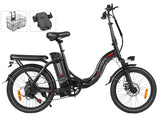
A dusk pickup on a flat residential block. The fold and the seatpost battery are why this one also answers the apartment question. A TÜV SÜD badge reading UL 2849 is part of Samebike's own pictures of this Spoked Wheel.
Who it is for. A new rider testing whether this work suits them, on a zone that is flat and tight. What ride it is for. Short hops, a few hours at a time, with the bike coming indoors afterwards.
What decides it. A 48-volt 13 amp-hour pack, computed to 624 watt-hours from Samebike's own published figures, at a price where the lock and the bag are a real share of what you spend. The spoked-wheel version is the one to buy: it is the same $519 as the solid-wheel twin and carries 48 volts against the twin's 36, which is what you feel pulling away with a loaded rack.
The rest is honest for the money. A 500-watt rated hub peaking at 800, 32 km/h maximum which is 20 mph, mechanical 160 mm discs front and rear, dual suspension, a Shimano 7-speed, a thumb throttle and a 150 kg payload rating (Samebike US, CY20 Pro Spoked). It folds in seconds, which is why it is also the answer for the folding section's empty budget slot.
Who should not buy it. Riders on a hilly zone. Samebike rates this motor at 500 watts, and a courier climbing all day asks more of a motor than a commuter does. Read the VTUVIA CMB 8-Speed below instead, which puts 175 N·m through eight gears.
Add the CY20 Pro Spoked to your cart — $519
Mid — VTUVIA CMB 8-Speed, $1,399

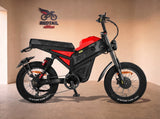
VTUVIA's own photograph of the CMB 8-Speed. The motor sits at the cranks and drives the same eight gears the rider shifts.
Who it is for. A courier whose zone has hills in it, or who needs a bike that names its certification in writing. What ride it is for. Stop-start city shifts with climbs between the drops.
What decides it. It is the only pick on this page whose spec table names both UL 2271 for the battery and UL 2849 for the whole system, the pair New York City writes into law, and the only mid-drive: 500 watts making 175 N·m through a Shimano 8-speed, with dual LOGAN hydraulic brakes and a thumb throttle for the standing start (VTUVIA, CMB 8-Speed).
VTUVIA publishes a 691.2 watt-hour LG pack and 80 miles on pedal assist, which derates to 52, and says the bike is "built to the IP67-rated standard". It ships as a Class 2 capped at 20 mph. VTUVIA lists it at $1,899 and sells it at $1,399, which is our price too. At its full 300 lb, our CMB 8-Speed review computes about 38 level miles at 15 mph on the throttle.
Who should not buy it. A rider over 6 ft 1 in, where VTUVIA's size chart ends, and a rider hauling stacked orders: its total capacity is 300 pounds. Read the Garootan M-81 for loads.
Add the CMB 8-Speed to your cart — $1,399
Long shifts of 40 to 60 miles
Suburban zones, spread-out restaurants and eight-hour days. The runs are longer, the stops are fewer, and the thing that ends your shift is the battery, and not your legs. This is where the arithmetic above starts deciding your income.
Budget — VTUVIA Zeal XT8, $1,399

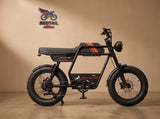
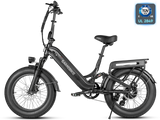
VTUVIA's own photograph of the Zeal XT8: a 720 watt-hour pack in the down tube and an air fork up front.
Who it is for. The rider whose shift is longer than their battery, on roads that are not always smooth. What ride it is for. Full days on a commuter frame.
What decides it. A 720 watt-hour LG pack with 80 miles claimed on pedal assist, which derates to 52 and covers a 40-mile day on one charge, on a 750-watt rear hub rated at 85 N·m, with an air suspension fork with lockout, dual Tektro hydraulic brakes and VTUVIA's V-Adapt torque sensor (VTUVIA, Zeal XT8).
VTUVIA lists it at $1,799 and sells it at $1,399, which is our price too. Our Zeal XT8 review computes what a full load costs: about 37 miles at 15 mph on the throttle with 350 lb aboard.
Who should not buy it. A rider hauling more than a food bag, because VTUVIA rates the rear rack at 50 pounds and the whole bike at 350; for stacked orders, read the Graoopro below, a long-tail rated to 450 pounds of payload. Riders under 5 ft 3 in, where VTUVIA's chart begins, should look at the CMB 8-Speed.
Add the Zeal XT8 to your cart — $1,399
Mid — Addmotor Graoopro, $1,499

Addmotor's own photograph of the Graoopro in Neptune Blue, the color in stock today. The long rack is built for boxes and bags.
Who it is for. A rider carrying real weight over real distance, whose day ends when the battery does. What ride it is for. Long shifts with stacked orders on the back.
What decides it. A 48-volt 20 amp-hour pack, 960 watt-hours by the arithmetic, with Addmotor's estimate of "Up to 105+ Miles" at its lowest assist level. That derates to 68 miles, a 60-mile day on one battery, and it comes with 450 pounds of payload, a torque sensor and a 750-watt rear hub rated at 80 N·m (Addmotor, Graoopro). Speed by speed, and load by load up to the full 450 pounds, our Graoopro review runs the same pack through its own range model.
Who should not buy it. A rider threading a dense downtown grid or lifting the bike over curbs all night, because it is a long-tail at 72 pounds. And a rider who wants hydraulic brakes, because this one stops on mechanical discs; read the Zeal XT8 above.
And any rider with a New York City address: Addmotor does not deliver its bikes to New York City addresses, billing addresses included, under Local Law 39 (Addmotor's delivery terms), so read the Zeal XT8 for distance or the MAX-CARGO 2.0 for loads.
Add the Graoopro to your cart — $1,499
Premium — Eunorau META275 1.0, $1,259

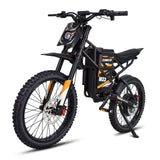
A long suburban arterial with the box strapped down. The second battery Eunorau sells for this bike is the cheaper answer to that road.
Who it is for. A rider putting in real hours who wants a torque sensor not a cadence sensor. What ride it is for. Long, mostly flat days with a rack load.
What decides it, and read this one carefully. Eunorau publishes "35-65 Miles (48V 13Ah Battery+ Second Battery 17Ah)" for this bike (Eunorau, META275 1.0). On its single 48-volt 13 amp-hour pack, 624 watt-hours by the arithmetic, the derated range is 23 miles, which does not cover a 40-mile day. What makes it a pick anyway is the second pack Eunorau sells for this frame, which is what the arithmetic and New York City both say a full day needs.
Read the pack size before you buy it. Eunorau's 65 miles assumes a 17 amp-hour second pack, and the one on our shelf is the 15 amp-hour pack at $636.00, which Eunorau also lists for this bike.
With it fitted, Eunorau's own figures give 49 derated miles at the single-pack rate and 39 at the rate its dual claim implies. Plan on the 39: the honest price of this bike for delivery work is $2,035.00, and it suits a day of about 40 miles, not 60.
An independent review of the META275 line describes it as filling roles including "running delivery services", which is a third party reaching the same conclusion about the same bike (RideReview, Eunorau META275; Electrek review). Eunorau publishes a two-year limited warranty.
Who should not buy it. A rider buying one battery, and a rider hauling more than a food bag; Eunorau rates it to 286 pounds. Either way, read the Graoopro above, which covers a long day on one pack and carries 450 pounds.
Add the META275 1.0 to your cart — $1,259
Groceries and big orders
Grocery platforms, stacked orders and catering runs. Payload stops being a number on a spec sheet and becomes the reason a rack bends. What decides this area is how the load is carried.
Budget — Addmotor Garootan M-81 Cargo, $1,099

Two crates, four bags, one trip. A cargo frame at commuter money is the whole argument for this pick.
Who it is for. A rider moving into grocery or bulk work who does not want to spend cargo-bike money to find out if it suits them. What ride it is for. Loaded runs on city streets, kids and crates as easily as orders.
What decides it. It is a purpose-built cargo frame at commuter money, on a 48-volt 15 amp-hour Samsung pack computed to 720 watt-hours, with a 750-watt rear hub and 400 pounds of published payload (Addmotor, Garootan M-81). Addmotor publishes UL 2271 for the battery, and its page carries 75 miles at assist level 1, which derates to 49.
Forty-nine derated miles is a full short-hop day and most of a long one, and it is more useful on a cargo bike than a bigger headline would be.
Who should not buy it. A rider who needs the bike to fold or to come indoors. It is a cargo bike and behaves like one, so read the folding picks instead. Addmotor's size chart for this frame runs from 5 ft 4 in to 5 ft 9 in, so riders outside that band should sit on one first.
In New York City, where Addmotor does not deliver, read the MAX-CARGO 2.0 or the E-Cozy instead.
For a loaded day, our full Garootan M-81 review computes how far a charge goes with crates aboard and what your state's code says about a child on the rack.
Add the Garootan M-81 to your cart — $1,099
Mid — VTUVIA E-Cozy Electric Trike, $2,099

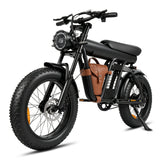
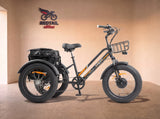
VTUVIA's own photograph of the E-Cozy: three wheels, a basket between the rear two, and a seat with a backrest.
Who it is for. A grocery courier who wants the load to stand still while it is packed. What ride it is for. Grocery and pharmacy runs at neighbourhood pace, with bags that should not tip.
What decides it. Three wheels and 450 pounds of total capacity, with a rear basket of 19.3 × 18.1 × 9.3 inches and a front basket of 13.4 × 11.4 × 3.9, on a 720 watt-hour pack claimed at 70 miles that derates to 46, with a torque sensor and hydraulic disc brakes front and rear (VTUVIA, E-Cozy). A tricycle stands on its own while you load it, which a two-wheeled cargo bike does not. At VTUVIA's rated 450 lb, our VTUVIA E-Cozy review computes about 27 level miles at 15 mph on the throttle, and about 31 at 331 lb, the 150 kg its manual gives as the maximum load including the rider.
Who should not buy it. A rider working a tight downtown grid, where a three-wheeler is harder to park and to thread, and anyone who lifts the bike: VTUVIA's net weight is 95 pounds. Read the Garootan M-81 for a two-wheeled cargo frame.
Add the E-Cozy to your cart — $2,099
Premium — Eunorau MAX-CARGO 2.0, $1,444

Fully loaded on a residential street at the end of the day. The second battery option is what turns this into an all-day machine.
Who it is for. A full-time hauler who wants the range problem solved at the same time as the load problem. What ride it is for. All-day cargo work.
What decides it. A 750-watt rear hub, 440 pounds of payload, a 48-volt 14 amp-hour Samsung pack computed to 672 watt-hours, and a published second-battery option (Eunorau, MAX-CARGO 2.0). Eunorau lists the second pack as optional and it is $636.00 on our shelf, so a two-battery MAX-CARGO is $2,335.00 and that is the configuration this guide recommends and judges.
Eunorau quotes its 80-mile range for the two-battery configuration, so that is the configuration the table judges and the one to buy: $1,699 for the bike and $636.00 for the second pack, $2,335.00 together, for a derated 52 miles and 440 pounds of payload.
It is also the pick a third party independently frames as a delivery bike: a published video review is titled "$1,699 DELIVERY E-BIKE with MASSIVE RANGE", at this exact price.
Who should not buy it. Taller riders. The rear rack sits where a lowered seat would go, which is a real fit constraint, and Eunorau prints 85 pounds in its spec block and 78 in its geometry chart, so either way it is a lot of bike to lift. If seat height or lifting is your issue, read the Garootan M-81.
Add the MAX-CARGO 2.0 to your cart — $1,444
Apartment riders who carry it in to charge
If your bike sleeps in your apartment, the fold and the weight decide everything else. Our folding e-bike guide measures the folded boxes if storage is your binding constraint. This is also the group with the least choice, and this section is shorter than the others for a reason.
This area has one price point, and that is the honest description of it. The bike that would have filled the budget slot does not clear this guide's street screen, and no weaker substitute was put in its place. What is left are two machines a hundred dollars apart before the second pack the lighter one needs for a long day, so treat them as a choice between carrying weight and covering distance not as a price ladder.
On this budget, buy the Samebike CY20 Pro Spoked at $519 from the first area. It folds, it clears the screen, and its battery comes out of the seatpost so you can carry the pack upstairs without the bike.
The lighter one — Eunorau META20 1.0, $1,699

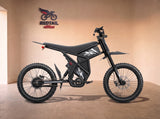
Eunorau's own photograph of the META20 1.0. It folds at a hinge in the frame and takes Eunorau's optional second battery.
Who it is for. A rider in a walk-up who charges indoors, carries the bike up, and still works full days. What ride it is for. Mixed shifts where the bike also has to fit in a hallway or a trunk.
What decides it. At 63.4 pounds it is the lighter of the two folding picks by 18 pounds, and it takes a second battery: Eunorau rates the pair at "Up to 100 Miles", which derates to 65 and covers a 60-mile day (Eunorau, META20 1.0). The second 15 amp-hour pack is $636.00 on our shelf, so the delivery price is $2,335.00.
It carries a torque sensor and hydraulic brakes on 180 mm rotors, and our META20 review walks through the fold and the fit.
Who should not buy it. A rider who wants one battery to cover the day should read the Foldtan M-160 below, which does it on one pack; the META20's 100-mile rating is for the pair. And a rider who, with cargo, is over the 286-pound total payload Eunorau publishes.
Add the META20 1.0 to your cart — $1,529
The longer-range one — Addmotor Foldtan M-160, $1,499

Up the last flight with the bag already parked. The 180 mm hydraulic rotors are the part you notice on the way back down.
Who it is for. The rider with the longest day and the smallest storage space. What ride it is for. Full shifts, then up the stairs.
What decides it. It clears a 60-mile shift on one battery, on a 48-volt 20 amp-hour pack computed to 960 watt-hours, with 105 miles claimed at assist level 1 and 68 derated miles by our arithmetic. It carries hydraulic mineral-oil discs on two 180 mm rotors, a torque sensor and a 750-watt rear hub (Addmotor, Foldtan M-160). The META20 publishes the same 180 mm hydraulic set-up, and on a loaded bike that stops constantly, that is where money should go.
Only the Graoopro matches it on usable range from one battery, and this one folds.
Who should not buy it. A rider who wants the lightest bike to carry. At a published 81.6 pounds this is the heavier of the two folding picks, so if the stairs are the whole problem, read the META20 1.0 at 63.4 pounds instead.
The META20 is also the folding pick for a New York City address, because Addmotor does not deliver its bikes to New York City addresses, billing addresses included, under Local Law 39.
Add the Foldtan M-160 to your cart — $1,499
Where you deliver decides the rule
Class law is state law, and the differences are not decorative. A machine that is a bicycle in one state is a motor vehicle in the next, which changes licensing, registration and insurance together. These are the states this page's readers ask about most, with what each one turns on.
| State | What decides it there | Our page |
|---|---|---|
| New York | Class 3 stops at 25 mph and only in a city over one million; NYC caps all e-bikes at 15 mph, and Addmotor does not deliver to NYC addresses | New York e-bike laws |
| California | Class rules, plus battery certification required to sell since January 1, 2026, and San Francisco bans delivering an uncertified bike into the city from July 27, 2026 | California e-bike laws |
| Massachusetts | There is no Class 3 in the statute | Massachusetts e-bike laws |
| Illinois | The ceiling is written as less than 750 W, which excludes bikes rated at exactly 750 | Illinois e-bike laws |
| New Jersey | Every e-bike registered and every rider licensed; a throttle bike, or assist past 20 mph up to 28, also needs insurance (NJ MVC; P.L.2025, c.285) | New Jersey e-bike law |
| Arizona | A 750 W bike fails the state test | Arizona e-bike laws |
| Pennsylvania | 16 and over, 750 W and a 100 lb weight limit | Pennsylvania e-bike laws |
| Texas | State rules plus 60 checked city ordinances | Texas e-bike laws |
| Florida | State rules with the city ordinances checked separately | Florida e-bike laws |
| Washington | State rules plus 27 city ordinances | Washington e-bike laws |
| Colorado | Every city checked against the state rule | Colorado e-bike laws |
| Ohio | 479 of 924 city codes read | Ohio e-bike laws |
| Michigan | 533 cities checked against the state rule | Michigan e-bike laws |
| North Carolina | Three classes took effect on December 1 | North Carolina e-bike laws |
| Minnesota | All 87 counties checked | Minnesota e-bike laws |
If your state is not listed, our state-by-state table covers all fifty in one place, and the shops directory is where to go if you would rather buy in person in New York City.
Before a shift, open the e-bike finder set to stop-and-go riding, give it your state, height, weight and the miles you cover in a day, and it sets aside every machine outside your state's e-bike definition, then favors range that covers your day with a quarter to spare.
What enforcement actually looks like
Enforcement in this category runs at the seller more than the rider. New York City sets fines at a maximum penalty of $2,000 per device type, can padlock a repeat-offending retailer, and gave the Fire Department concurrent enforcement authority over the certification law (NYC DCWP).
For a rider, the practical exposures are different. A non-compliant machine can be impounded, a battery can be confiscated, and a platform can deactivate an account. Those penalties are why the class screen on this page reads the published nominal wattage and never the peak.
If police stop you
A police stop on a delivery shift is a paperwork moment, and it goes better if the paperwork exists. Keep this playbook on your phone.
| What they ask | What answers it |
|---|---|
| Is that a bicycle? | The class label on the frame, or the maker's spec page showing a nominal rating at or under 750 W |
| How fast does it go? | The published top speed, and the assist class the bike is set to |
| Is it certified? | The UL 2849 or UL 2271 certificate for your exact model and battery, if your city requires one |
| Are you working? | Your platform account and, in New York City, your Department of Transportation safety-training certificate |
None of that is legal advice, and a stop is decided by the officer in front of you and the code in your state. What you can control is having the published figures to hand.
What it costs, and what it pays back
Search this question and you get an hourly figure quoted to the cent with no method behind it. We are not going to add another one. This page publishes no earnings estimate, because we do not have delivery-earnings data, the platforms do not publish per-mode pay, and a retailer inventing a number is what makes this topic untrustworthy.
What can be checked, we will check.
One city publishes a floor. New York City requires app-based delivery workers to be paid at least $22.13 an hour excluding tips, the rate from the first pay period on or after April 1, 2026, after a 3.2% inflation adjustment from $21.44.
From January 26, 2026 the same floor covers grocery delivery workers, apps must pay within seven calendar days of a pay period ending, and platforms must offer customers a tipping option at checkout (NYC DCWP, January 26, 2026). Nowhere else in the country has an equivalent, so treat that number as a New York fact not a national one.
The cost side is knowable, and most of it is not the bike. Your bike is a one-off. Your battery is a consumable on the clock described above. Your consumables are tires, brake pads, and a chain and cassette that wear at a rate set by how many times a day you stop not by how many miles you ride.
A lock is not optional and the usual guidance is to spend five to ten per cent of the bike's price on it, which at $1,499 is $75 to $150.
What the apps put back. DoorDash publishes partner discounts of 20% off a Dirwin purchase with free shipping and assembly, 15% off Whizz rentals and rent-to-own plans, and 50% off a three-month Swobbee battery-swap subscription in six named cities (DoorDash Bike Dashing). In New York City, Local Law 95 goes further and puts the device itself on the platform's side of the ledger, which is worth asking about before you spend anything.
Paying for it. Every bike on this page can be paid with Klarna at checkout.
Delivery e-bikes and your tax return
If you deliver as an independent contractor, business expenses are generally deductible on Schedule C, and that ordinarily includes equipment you use for the work. We are a bike shop not a tax adviser, and this is where our answer stops.
The rules on deducting a purchase outright against depreciating it, and on which mileage methods apply to a bicycle, are genuinely not simple. Every source ranking for this question is a lender, an accounting firm's marketing blog or a tax-prep chain, never the agency that decides it.
The IRS discontinued Publication 535 after the 2022 revision and now points to a guide to business expense resources in its place; start there and with the Schedule C guidance, and keep the receipt and a mileage log from your first shift.
Before you buy, ask the app If you deliver in New York City, Local Law 95 puts the compliant bike on the delivery service's side of the ledger and says that not buying one yourself cannot be grounds for deactivation. That question is worth asking before you spend anything.
Gear, theft and your first week
The questions riders ask each other are not the questions the buying guides answer. These are the four that come up most in the forum threads we read.
Locking. Lock through the frame and the rear wheel to something fixed. Two locks of different types beat one expensive lock, because they need two different tools. Photograph the locked bike at each stop if you carry insurance, because policies commonly require the bike to be secured to a fixed object for a theft claim to stand.
Theft is the loudest worry in the threads, by a distance. A rider is off the bike, indoors and out of sight twenty or more times a shift, which is a different exposure from a commuter's two. Register the serial number with your local police program and keep photographs of the bike, its serial and any distinguishing marks. If you are buying to work, budget for the lock in the same purchase not the next one.
Drinks. This comes up more than any other cargo question, and the answers riders give each other are consistent: carry drinks upright and separately from hot food, add a rigid divider inside the bag instead of trusting the bag's own dividers, and slow down for curbs instead of trying to catch a spill. A rack that takes a rigid box beats a rack that takes a soft bag.
Charging where you live. If you rent, ask before you buy. Some buildings restrict charging lithium batteries indoors, and a bike whose battery detaches gives you options a bike with a fixed pack does not.
VTUVIA publishes a removable battery on the CMB 8-Speed, and Samebike a removable one on the CY20 Pro, whose battery lives in the seatpost and lifts out with it. For any other pick, ask how the pack comes out before you sign a lease that restricts indoor charging.
Riding through rain, cold and hills
You do not get to choose the weather on a shift, so choose the bike for the worst of it.
Rain. Look for a published IP rating and treat "water resistant" without a number as no answer. IPX4 handles splashes and wet roads. IPX5 handles sustained rain and road spray, which is a working standard for this job. IPX6 handles heavy rain and strong spray.
Two picks here name a rating on the pages we read: VTUVIA says the CMB 8-Speed is "built to the IP67-rated standard", and Samebike says the whole CY20 Pro "meets the IP64 standard". Where this guide is silent on a rating, buy the bike on the other numbers and ask before you ride it through a winter. Ride around standing water, never through it, and dry the battery contacts and display when you get home.
Cold. A lithium battery gives up capacity in the cold, and the working figures people quote sit around 20 to 30% in genuinely cold weather. The gap between finishing your shift and calling it early sits right there, so in winter plan against the derated column in the range table and then take some more off. Store the battery indoors and fit it to the bike when you leave, and never leave it out overnight.
Hills. Climbing costs multiples of what flat riding costs, and it is where the cheapest bikes in any guide run out of answers. On a hilly zone, buy the biggest battery you can afford before the fastest bike, and expect the pack to age faster.
The weather rule Buy a published IP rating, never the word "waterproof", plan winter shifts against the derated range column and then take more off, and store the battery indoors. Cold and hills both move the number the wrong way, and a loaded bike is worse on both.
The honest ledger
What these bikes do well for this job. They start quickly from rest, which is most of the work. They cost nothing to park. They carry a real load without a license in 47 states and the District of Columbia. Nine of the ten cover a 40-mile shift on every reading as configured here, and the CMB 8-Speed names both UL 2849 and UL 2271, the certification pair New York City writes into law.
Where they are the wrong tool. A bike is a poor answer to a zone where single runs are ten miles or more, and an honest guide should say so instead of selling you one. The long-shift picks above are for spread-out suburbs where the runs are still short and the day is long, which is a different problem.
It is a poor answer if you cannot store it securely, because theft is the failure mode this job produces most. And it is a poor answer if your shifts routinely run past 60 miles, because two bikes here cover that on a single charge, the Graoopro and the Foldtan M-160, and a second battery is another purchase.
What this page does not claim. Every figure here is a maker's published specification or arithmetic on it, and no earnings figure appears anywhere on the page. Where a cell in our tables shows a dash, the maker's published figures do not support one, and none has been inferred.
Frequently asked questions
Does DoorDash allow e-bikes?
Yes, in markets where bike delivery is offered. You select Bicycle as your vehicle type in the Dasher app, and DoorDash's own bike page sets the equipment bar at a smartphone and a bike. Availability depends on your location, so check your zone before buying (DoorDash Bike Dashing).
Do you need a license to ride an e-bike for delivery?
Not in 47 states and the District of Columbia, for a machine that is a bicycle in law. New Jersey is the exception: every e-bike rider there needs an e-bike license or a driver's license, and the bike must be registered (NJ MVC).
Federal law defines a low-speed electric bicycle as having working pedals, a motor of less than 750 watts and a motor-only top speed under 20 mph (15 U.S.C. § 2085). Above those figures your state's own code decides, which is why this guide screens every pick on published wattage and speed.
Do delivery workers need a UL-certified e-bike in New York City?
The device has to be compliant, and the law puts the cost on the platform. Local Law 95 of 2025 says a compliant device "shall be provided at the expense of such delivery service" and that a service cannot require a worker to supply one at their own expense as a term of employment or contract (Local Law 95 of 2025). Ask your app what it is doing before you buy your own.
What is the New York City e-bike speed limit?
15 mph citywide, for e-bikes, e-scooters and pedal-assist commercial bicycles, in effect since October 24, 2025 and applying in all five boroughs including paths in city parks (Office of the Mayor, September 24, 2025).
How much range does a delivery e-bike need?
Plan on 40 to 60 miles a day and buy against the derated figure not the headline. Nine of the ten picks cover 40 derated miles in the configuration this guide recommends on every reading, and three cover 60.
Seven do it on one battery. The three Eunorau bikes are quoted with the second pack their maker sells, which is how this guide recommends and prices them; for the META275 1.0, Eunorau's figures put that pair at 39 to 49 derated miles. New York City's own trade-in program issues two batteries per rider because "a full day of work often requires the use of two batteries" (NYC DCWP).
Is an advertised e-bike range accurate?
Treat it as a ceiling reached in ideal conditions, often at the lowest assist level. This guide derates every claim to 65% before deciding whether a bike covers a shift, and states that assumption openly.
Do you need insurance to deliver by e-bike?
We found no US state that requires insurance for a class-legal e-bike, and Uber notes that bicycle couriers do not need the vehicle insurance car drivers do. Check your own state before relying on that, because this guide did not read all fifty codes on the insurance question.
Many riders buy theft cover anyway. Policies commonly require the bike to be locked to a fixed object for a claim to stand, so read that clause before you rely on it.
Hub motor or mid-drive for delivery?
Hub, for flat stop-and-go work, because power arrives instantly from rest with no shifting and a throttle moves the bike independently of your legs. Mid-drive earns its place on sustained climbs with a load.
Can you write off a delivery e-bike on your taxes?
Business expenses are generally deductible on Schedule C for an independent contractor, and equipment used for the work ordinarily qualifies. The detail is genuinely complicated and we are not qualified to give it, so read the IRS's own guidance and keep receipts and a mileage log from day one.
Can you ride a delivery e-bike in the rain?
Yes, within the bike's published IP rating, and no further. IPX5 or better is a sensible working standard for a job you cannot reschedule. Avoid standing water and pressure washing, and dry the contacts and display afterwards.
What is the best budget e-bike for delivery?
The Samebike CY20 Pro (Spoked Wheel) at $519, on a flat zone. It folds, its 48-volt pack computes to 624 watt-hours, and it clears 40 derated miles. On hills, spend up to the VTUVIA CMB 8-Speed at $1,399 instead, which puts 175 N·m through eight gears.
Is an e-bike or a moped better for delivery?
For most riders, the e-bike, and the reason is legal and not mechanical. A class-legal e-bike is a bicycle in most state codes, so in most states it needs no license, registration or insurance; New Jersey licenses and registers every e-bike. A moped is usually a motor vehicle, which typically means all three and a running cost the bike does not have.
How many miles can a delivery e-bike go on one charge?
Between 23 and 68 miles on one battery on the derated figures in this guide, depending on the bike, and up to 65 on the pair of batteries Eunorau sells for its bikes. Published single-battery claims run from 35 to 105 miles, and this page multiplies each by 0.65 before deciding whether a bike covers a shift. The Addmotor Graoopro and Foldtan M-160 both clear 60 derated miles on a single charge.
What type of e-bike do delivery riders use?
Whatever the zone demands. In dense city work it is usually a compact bike with a rack and a throttle; on long suburban shifts it is a big-battery machine; on grocery and bulk work it is a purpose-built cargo frame. Browse the full commuter shelf or the cargo shelf if you would rather compare by category than by pick.
Bottom line
If your zone is flat and tight and you are still deciding whether this job is for you, buy the Samebike CY20 Pro (Spoked Wheel) at $519 and a good lock, and find out cheaply.
If you are working full days, buy for the battery before the motor. Two picks carry 960 watt-hours, the largest single pack here: the Addmotor Graoopro at $1,499 and the Addmotor Foldtan M-160 at $1,499. Both reach 68 derated miles on one charge; the Graoopro carries the bigger load and the Foldtan folds, and neither can be delivered to a New York City address.
The cheapest way to 52 derated miles, in the city or out of it, is the VTUVIA Zeal XT8 or the CMB 8-Speed, both at $1,399.
If you carry your bike indoors, the Addmotor Foldtan M-160 at $1,499 covers a 60-mile shift on one charge and folds, and the Eunorau META20 1.0 is 18 pounds lighter, does it on two, and is the one of the pair for a New York City address.
And if you deliver in New York City, two things come before any of that.
Ask your platform what it is doing about Local Law 95, because the statute says the compliant bike is meant to arrive at the service's expense and that not buying one yourself cannot cost you your account.
If you are buying anyway, start from the pick whose spec table names both UL 2849 and UL 2271 today, the VTUVIA CMB 8-Speed. For anything else, ask the maker for the certificate covering your exact model and battery first.
If the load is your binding constraint and the distance is not, the cargo shelf is where the payload numbers live. Every bike on it ships free to the lower 48, Addmotor's to New York City addresses excepted, with one US support desk for any warranty claim.
See the cargo rangeWhy buy it from us. Every bike here ships free to the lower 48, except that the three Addmotor picks cannot go to a New York City address. Every one comes with a US support desk that handles any warranty claim and a return window if the fit is wrong, so take your time deciding.
If you want to talk it through against your actual zone and your actual shift length, email support@redtailebikes.com and describe the route and not the bike.
Limitations
- Every figure is the maker's, read and recomputed. Every specification is the manufacturer's published figure, read on the maker's own page and saved that day: September 6, 2026 for the first build, September 26, 2026 for every pick. Addmotor's specification tabs for the Foldtan M-160 did not load on September 26, so its figures come from the specification strip and the feature sections of the same product page, read that day. The range arithmetic is arithmetic on those published figures, and its assumptions are stated in full in the range section.
- This page publishes no search volume, difficulty or intent figure. Our keyword tool returned "does not have enough API units to complete this request", nothing was billed, and no number was substituted from anywhere else.
- This page publishes no earnings estimate. The only pay figure here is New York City's statutory minimum, which is a legal floor in one city, and no kind of estimate of what a rider earns.
- The forum evidence is partial and the denominator is published. 726 threads were recovered across 24 subreddits, but 90 of 168 subreddit and query pairs were still unread after three passes against an archive that rate-limits. Nothing here should be read as "riders do not discuss X".
- No People-Also-Ask box could be captured, on any of 72 attempts across six SERP shapes. The looking failed; the boxes may well be there.
- Two of the ten picks name an IP rating on the pages we read, and the same is true of one or two other fields. Where this guide is silent, we found no published figure, and none has been inferred.
- The effective date of Local Law 95 is computed, not quoted. The statute says only that it "takes effect 180 days after it becomes law", and the City Clerk records it becoming law unsigned on July 31, 2025. That places it in late January 2026. It is commonly reported as January 26, 2026, one day from an exclusive count of the statutory period.
- Two 2023 fire-death figures circulate, and they cover different windows. The City's release of October 23, 2024 compares year-to-date totals, 14 deaths by late October 2023; UL Standards & Engagement reports 18 for the full year. This page prints both, each with its window.
- Certification claims are the makers' own. Where a maker publishes a certification statement or mark, this page repeats it as the maker's claim and links it. A buyer relying on certification for a legal requirement should ask for the certificate covering their exact model and battery.
- The Ridstar Q20 exclusion rests on the Commission's two warnings as published, linked in the screening section, and on nothing measured here; the three models those warnings name were listed on our own store on September 11, 2026.
This page expires when any of the following changes: a price on our storefront; a specification on a manufacturer's page; New York City's speed limit, certification duty or minimum pay rate; the federal definition in 15 U.S.C. § 2085; or a platform's stated bike requirements. It is scheduled for re-verification within 90 days.
Source register
Sources are graded by what they are not by how convenient they were.
T1, primary law and government record. 15 U.S.C. § 2085; CPSC product safety warnings 26-337 and 26-584; NY Vehicle and Traffic Law § 102-c; the enacted text of New York City Local Law 95 of 2025; New York City Council press record; NYC Department of Consumer and Worker Protection releases 041-24, 043-24 and 009-26; the Office of the Mayor release of September 24, 2025; the NYC DOT e-bike trade-in program site.
T2, first-party operator documents. DoorDash Dasher requirements and Bike Dashing pages; Uber's delivery requirements and its New York City bike vest and ID regulations FAQ.
T2, manufacturer specification pages. Samebike US, VTUVIA, Eunorau and Addmotor product pages for each of the ten picks, fetched and deposited on September 6 and September 26, 2026.
T3, independent testing and review. Electric Bike Report, BikeRide, Tom's Guide, Electrek, The Inertia, Ebike Escape, RideReview, webBikeWorld and Electrified Reviews, used for owner-reported behavior and never for a specification.
T4, observed testimony. Reddit threads from delivery and cycling communities, used to establish what riders ask and worry about, never as a statistic.
T5 sources are not cited on this page.
Original measurements published here. Two, both reproducible from committed scripts. The watt-hours-per-mile table is computed by compute_delivery_energy_20260926.py from published figures. The count of what the ranking pages say about the law is measured by measure_delivery_serp_coverage.py across the whole ranking set, with its detectors validated on a positive and a negative control before any zero was reported. Thirty-eight URLs were fetched and none failed; two resolved to the same document, so the published denominator is 37.
Primary sources
Each numbered entry is a document this page cites, with its publisher, its title and the date it was read, linked to the page that carries the claim itself rather than to a homepage.
- 15 U.S.C. § 2085, Low-speed electric bicycles. Legal Information Institute, Cornell Law School. Retrieved September 6, 2026. https://www.law.cornell.edu/uscode/text/15/2085
- New York Vehicle and Traffic Law § 102-c, Bicycle with electric assist. New York State Senate. Retrieved September 6, 2026. https://www.nysenate.gov/legislation/laws/VAT/102-C
- Local Law No. 95 of 2025 (Council Int. No. 30-B of 2024), A Local Law to amend the administrative code of the city of New York, in relation to safe delivery device access for contracted delivery workers. Passed June 30, 2025; returned unsigned by the Mayor July 31, 2025. Retrieved September 6, 2026. https://intro.nyc/local-laws/2025-95
- New York City Council, Three NYC Council Bills to Expand Protections for Delivery Workers and Advance Sustainable Delivery Industry Become Law. August 14, 2025. Retrieved September 6, 2026. https://council.nyc.gov/press/2025/08/14/2939/
- City of New York, Department of Consumer and Worker Protection, Major Victory for NYC Delivery Workers: Landmark Protections Take Effect Today, release 009-26. January 26, 2026. Retrieved September 6, 2026. https://www.nyc.gov/site/dca/news/009-26/major-victory-nyc-delivery-workers-landmark-protections-take-effect-today
- City of New York, Department of Consumer and Worker Protection, E-Bike Trade-In Program to Keep New Yorkers Safe From Lithium-Ion Battery Fires, release 043-24. October 23, 2024. Retrieved September 6, 2026. https://www.nyc.gov/site/dca/news/043-24/mayor-adams-finalized-e-bike-trade-in-program-keep-new-yorkers-safe-lithium-ion
- City of New York, Department of Consumer and Worker Protection, New Enforcement Powers to Prevent Sale of Dangerous, Uncertified Batteries and Micromobility Devices, release 041-24. Retrieved September 6, 2026. https://www.nyc.gov/site/dca/news/041-24/mayor-adams-speaker-adams-new-enforcement-powers-prevent-sale-dangerous-
- Office of the Mayor, City of New York, Mayor Adams Announces Citywide Speed Limit for E-Bikes to Go Into Effect. September 24, 2025. Retrieved September 6, 2026. https://www.nyc.gov/mayors-office/news/2025/09/mayor-adams-announces-citywide-speed-limit-for-e-bikes-to-go-int
- New York City Department of Transportation, E-Bike Trade-In Program. Retrieved September 6, 2026. https://ebike-trade.nyc.gov/
- DoorDash, Requirements for Dashing, Dasher Support. Retrieved September 6, 2026. https://help.doordash.com/en-us/dashers/article/requirements-for-dashing
- DoorDash, Bike Delivery: Deliver on a Bike or E-Bike, Dasher Central. Retrieved September 6, 2026. https://dasher.doordash.com/en-us/about/bike-dashing
- Uber, Become a Delivery Driver Using Uber Eats. Retrieved September 6, 2026. https://www.uber.com/us/en/deliver/
- Uber, NYC Bike Courier Regulations FAQ. Retrieved September 6, 2026. https://www.uber.com/us/en/blog/nyc-bike-vest-and-id-regulation-faq/
- Internal Revenue Service, Publication 535, Business Expenses. Retrieved September 6, 2026. https://www.irs.gov/publications/p535
- Internal Revenue Service, About Schedule C (Form 1040). Retrieved September 6, 2026. https://www.irs.gov/forms-pubs/about-schedule-c-form-1040
- SAMEBIKE US, CY20 PRO Spoked Wheel Portable Commuter Peak 800W Electric Bike. Retrieved September 26, 2026. https://us.samebike.com/products/cy20-pro-spoked-wheel-portable-commuter-powerful-peak-800w-electric-bike
- VTUVIA, CMB 8-Speed Ebike. Retrieved September 26, 2026. https://vtuviaebike.com/products/cmb-mid-drive-500-watt-electric-city-bike-vtuvia-ebike
- VTUVIA, Zeal XT8 Ebike. Retrieved September 26, 2026. https://vtuviaebike.com/products/zeal-xt8-high-power-step-through-ebike-for-hilly-commutes-and-long-distance-riding
- VTUVIA, E-Cozy Electric Trike. Retrieved September 26, 2026. https://vtuviaebike.com/products/vtuvia-e-cozy-most-comfortable-electric-bike
- Addmotor, Graoopro Cargo eBike, Technical and Performance tabs. Retrieved September 26, 2026. https://www.addmotor.com/products/graoopro
- EUNORAU, META20 1.0 Folding eBike. Retrieved September 26, 2026. https://eunorau-ebike.com/products/meta-20-1
- EUNORAU, META275 1.0 City Cruiser eBike. Retrieved September 26, 2026. https://eunorau-ebike.com/products/meta-275-1
- EUNORAU, MAX-CARGO 2.0. Retrieved September 26, 2026. https://eunorau-ebike.com/products/max-cargo
- Addmotor, GAROOTAN M-81 Cargo Electric Bike. Retrieved September 26, 2026. https://www.addmotor.com/products/m-81
- Addmotor, FOLDTAN M-160 Folding Electric Bike. Retrieved September 26, 2026. https://www.addmotor.com/products/foldtan-m-160
- U.S. Consumer Product Safety Commission, product safety warning 26-337, Ridstar Q20 and Q20 Pro e-bikes, fire hazard, issued March 19, 2026. Retrieved September 11, 2026. https://www.cpsc.gov/Warnings/2026/CPSC-Warns-Consumers-to-Immediately-Stop-Using-Ridstar-E-Bikes-Due-to-Fire-Hazard-Risk-of-Serious-Injury-or-Death
- U.S. Consumer Product Safety Commission, product safety warning 26-584, Ridstar Q20 and Q20 Lite e-bikes, crash hazard, issued June 25, 2026. Retrieved September 11, 2026. https://www.cpsc.gov/Warnings/2026/CPSC-Warns-Consumers-to-Stop-Using-Ridstar-E-Bikes-Immediately-Due-to-Crash-Hazard-Risk-of-Serious-Injury-or-Death
- New Jersey Legislature, P.L.2025, c.285, R.S.39:1-1 definitions of "low-speed electric bicycle" and "motorized bicycle". Retrieved September 26, 2026. https://pub.njleg.gov/Bills/2024/PL25/285_.HTM
- New Jersey Motor Vehicle Commission, E-Bikes, age and license, registration and insurance. Retrieved September 26, 2026. https://www.nj.gov/mvc/vehicletopics/ebike.htm


Share:
Eahora Juliet Pro II Review 2026: 60 Miles or 220
Electric Bike Buying Guide: How to Choose in 2026